


Listen: the breakdown
Market briefing: Weekly inflows into XRP and SOL spot ETFs just cratered more than 94 percent, while Bitcoin ETFs kept drawing cash. BTC traded near 85,897 dollars as the split in institutional appetite widened.
- XRP and SOL spot ETF weekly inflows fell more than 94 percent in a single week.
- SOL ETF inflows dropped from over 188 million dollars the prior week.
- Bitcoin ETFs kept drawing cash as altcoin ETF demand cooled sharply.
Weekly inflows into XRP and SOL spot ETFs just collapsed more than 94 percent while Bitcoin ETFs kept pulling cash. Is institutional money quietly rotating out of altcoins?
The past week told a very different story than the one before it. Weekly inflows into XRP spot ETFs fell by roughly 94 percent. Solana spot ETFs saw the same cooling, with inflows dropping from more than 188 million dollars the previous week. Combined, the two altcoin products lost more than 94 percent of their weekly intake.
Yet XRP still held a positive net flow streak. Money kept arriving, just far less of it. That nuance matters, because a slowdown is not the same as a reversal.
The contrast sits with Bitcoin. While altcoin ETFs went quiet, Bitcoin ETFs kept drawing cash. Institutional capital did not leave crypto. It appears to have narrowed its focus to the one asset it treats as the anchor.
Prices, meanwhile, barely noticed. XRP traded at 1.51 dollars, up about 1.3 percent on the day. SOL sat near 121 dollars, essentially flat. The flow data screamed while the tape shrugged, which is usually the point before the two sit down for a conversation.
That gap between institutional behavior and retail price action is the real story here. Smart money allocates in weeks. Retail reacts in hours. When the two disagree this sharply, one side is early and the other is late.
Institutional money is picking Bitcoin first
ETF inflows are the cleanest signal we have of institutional conviction. They are regulated, reported, and slow to move. So when inflows into two major altcoin products drop 94 percent in a week, it tells us something real about where large allocators want their risk.
The message reads as a flight to quality inside crypto. Capital is not fleeing the asset class. Bitcoin ETFs still drew cash. Instead, allocators appear to be concentrating exposure in the asset they treat as the reserve.
This is how risk-off behavior usually looks under the surface. Speculative bets get trimmed first, and the core position gets defended. To an institution, XRP and SOL are the speculative sleeve. Bitcoin is the ballast.
The transmission runs through liquidity. Altcoin ETFs feed spot demand, which supports order books and tightens spreads. When that demand thins, the bid underneath XRP and SOL gets shallower. Prices can hold for a while on inertia, and then a single large seller finds there is far less there to absorb the hit.
That is why flow data leads price. The plumbing changes before the number on the screen does.
Thin flows leave altcoins exposed
Start with Bitcoin, because everything downstream keys off it. Continued ETF inflows give BTC a structural bid that altcoins now lack. That widens the quality gap. In a cooling tape, money that stays in crypto tends to huddle in Bitcoin first.
Ethereum sits in the middle. It is not the direct subject of this data, but it rides the same current. If institutions are trimming altcoin risk broadly, ETH feels the draft even without its own bad headline.
Then the alts themselves. XRP and SOL are the names in focus, and they carry the clearest downside. With ETF demand down 94 percent, the marginal institutional buyer has largely stepped back. The crowd buying here is increasingly retail.
Here is the mechanism. Thinner institutional flows mean shallower books, and shallower books mean sharper moves in both directions. XRP near 1.51 and SOL near 121 look calm, but calm on low institutional demand is fragile, not safe.
If Bitcoin itself wobbles, alts usually fall harder and faster. Lower liquidity amplifies the drop. That is the honest risk this flow collapse flags for anyone long XRP or SOL into a weak tape.
The flow data that decides direction
The single number to track is next week's flow print. This week was one weak week after a strong one. One data point is a wobble. Two in a row is a trend.
Confirmation of the bearish read looks like this. Inflows stay depressed or turn negative. XRP loses its positive net flow streak. Bitcoin ETFs keep drawing cash while altcoin products bleed. That combination would mark a genuine rotation, not a pause.
Invalidation looks different. Flows snap back next week toward the prior pace, and the 94 percent drop reveals itself as a one-off lull. In that case, the slowdown was noise, and the altcoin bid returns.
Watch price confirmation alongside the flows. If XRP and SOL start underperforming Bitcoin on down days and failing to keep up on green days, the flow weakness is bleeding into the tape. Relative strength is the tell.
Also watch whether retail steps in to replace the missing institutional bid. Retail can hold a price up for a stretch, but it rarely holds it up through a real Bitcoin flush. So the question is simple. Who is left buying XRP and SOL here, and how deep are their pockets?
What drying altcoin demand means near support
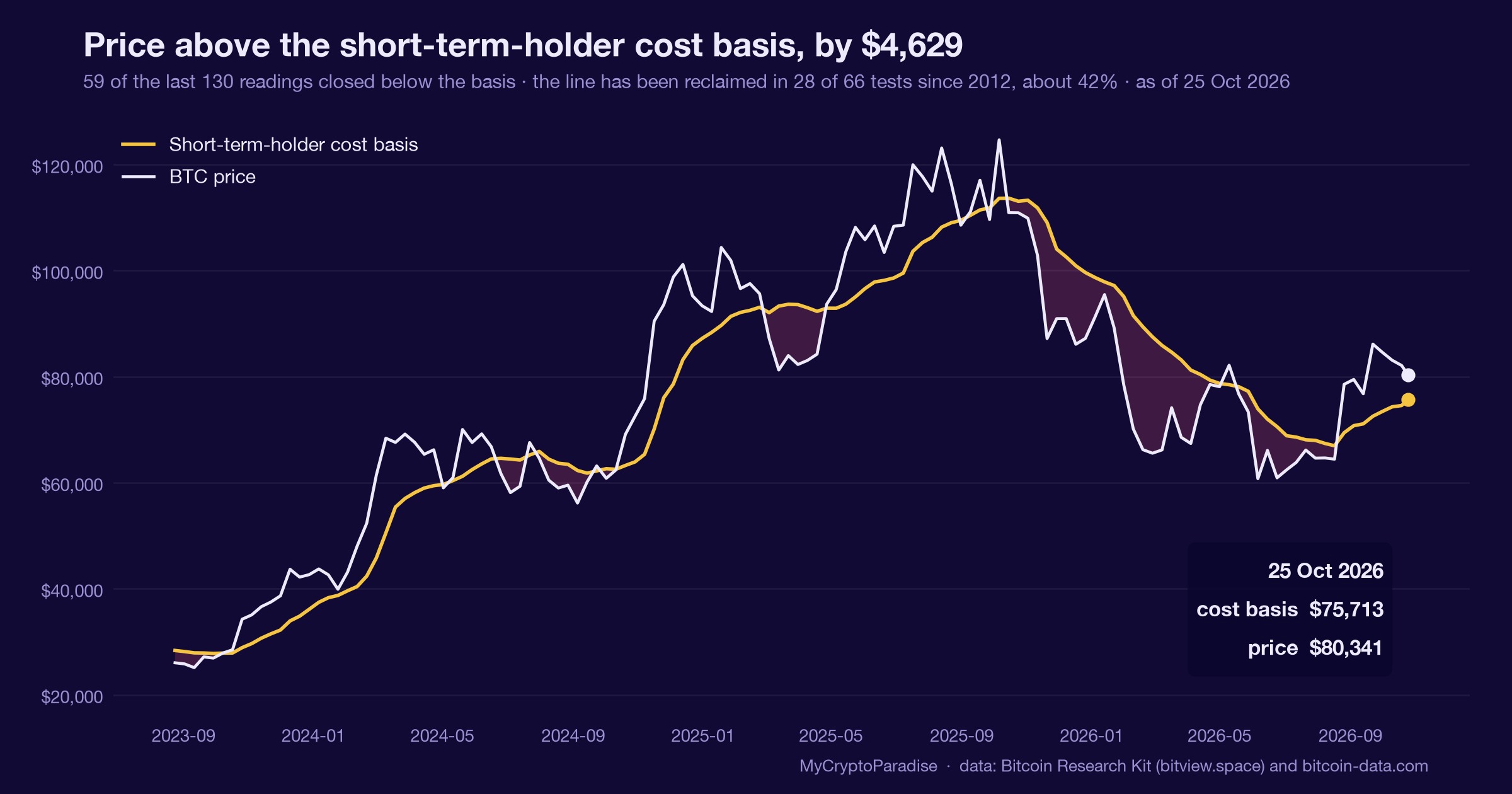
The ParadiseTeam reads this flow collapse through Bitcoin, because that is where the whole board hinges. BTC was trading near 85,897 dollars as of 04:19 UTC, caught between support around 82,000 and the heavy resistance band at 88,000 to 90,000.
That position matters for altcoins. If Bitcoin bounces from 82,000, XRP and SOL may get a reflex lift. But with institutional ETF demand for them down 94 percent, that bounce would run on retail fuel, not deep pockets. Thin fuel burns fast.
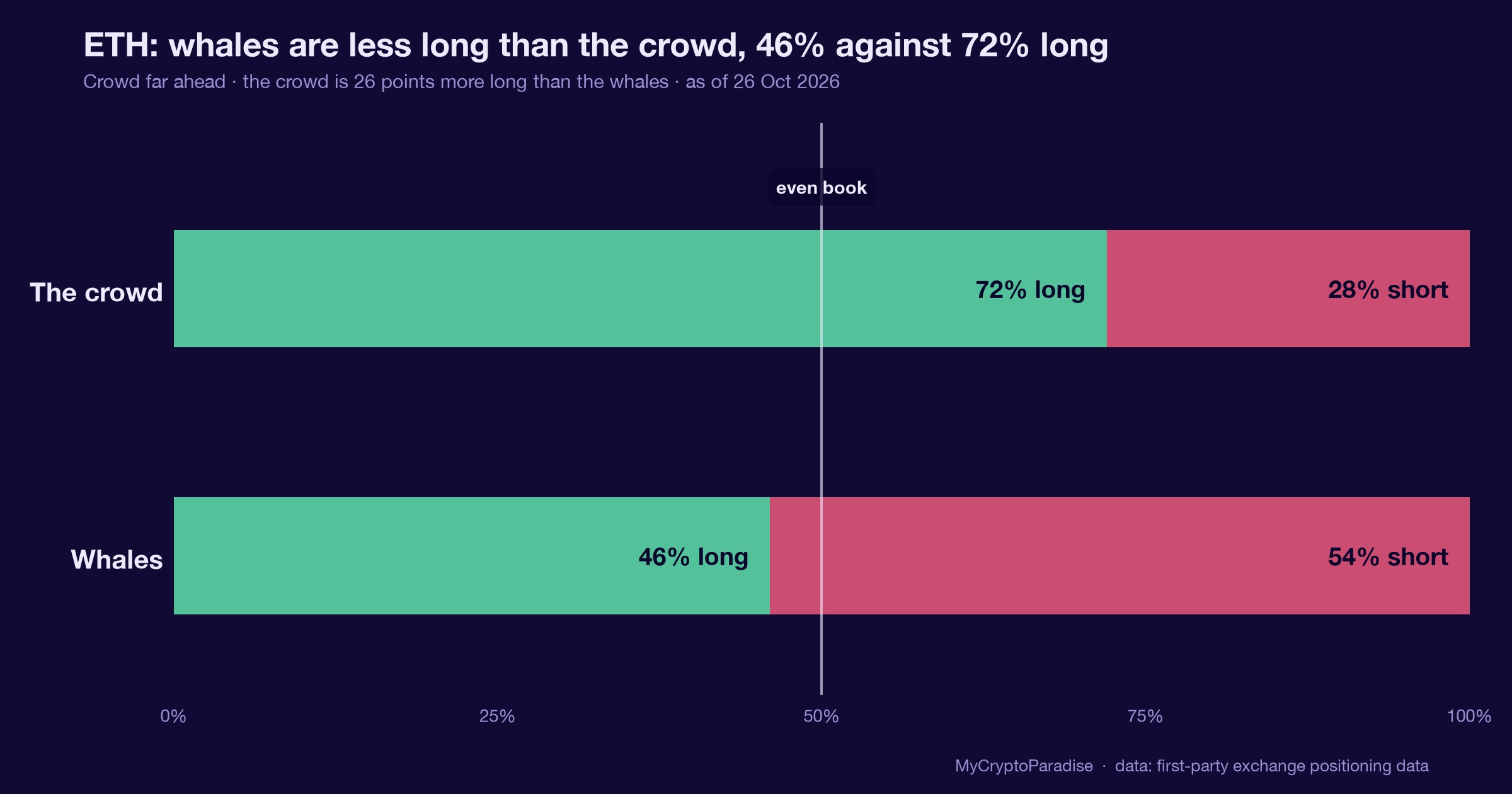
The bigger caution sits overhead. The ParadiseTeam is watching the 88,000 to 90,000 zone closely. Whales are leaning sellers, roughly 65 percent, and a rejection there would pull the whole complex lower. Alts starved of institutional flow tend to fall hardest in that kind of move.
So the altcoin flow collapse and the macro map point the same way. A short-term bounce is plausible while fearful retail gets squeezed. The durable risk is a rejection at resistance that drags XRP and SOL down with Bitcoin toward the 55,000 to 44,000 macro zone.
The tell is simple. Watch whether the missing institutional bid returns before BTC tests resistance. If it does not, strength into 90,000 is where smart money is more likely distributing than accumulating.
The read behind this: we framed this story through our own market analysis, Can Bitcoin Bounce From Support?
Track it live: our Crypto Fear and Greed Index and the live crypto funding rates both update in real time, so you can watch this shift for yourself.
Related coverage
For exact entries, targets, and stop losses with full risk management, that is what ParadiseFamilyVIP is for. New to reading these moves? Start with our crypto trading strategies guide.
ParadiseTeam is monitoring the market situation closely, and we are taking these developments into consideration while building our trading tactics inside ParadiseFamilyVIP.
Crypto trading involves substantial risk. Prices are volatile and you can lose money. This article is educational and is not financial advice. Past performance does not guarantee future results.
Will altcoin ETF inflows recover next week or keep falling?
How 18 Paradisers are calling it
The first call is still open
Free account, no password. Members just sign in.
Follow this topic: XRP news








Join the discussion 4
Ah, the usual altcoin dance, isn't it? 🤔 When premiums get thin on these, I just widen my spreads and let the market decide. Cheers!
i hold my own xrp, dont need etf to do that. better to keep it off the exchanges when things get shaky.
Holding off-exchange is sound. But the ETF structure itself is a distinct liquidity funnel for institutional capital, separate from self-custody.
The liquidity drain on these specific alt ETFs is telling, less about the coins themselves and more about the risk appetite and herd instinct. Reminds me of the early days, watching capital flee traditional banks.