

Listen: the breakdown
Developing story: This story is still unfolding. We are tracking it and will update this article as more details are confirmed.
Market briefing: Germany's finance ministry wants to end tax-free long-term crypto gains, taxing coins bought after 2026 at a flat 25%. BTC traded near $79,322, up 1.3% on the day, and barely blinked.
- Germany's finance ministry has proposed a flat 25% tax on crypto gains for coins bought after December 31, 2026.
- Existing holdings keep the one-year tax-free rule, with an annual exemption around €1,000, so nothing changes retroactively.
- The draft still needs parliamentary approval, and effect dates are quoted as 2027 or 2028, meaning near-term price impact is small.
The German crypto tax proposal would end tax-free long-term Bitcoin gains for future buyers. But with a 2027 start and parliament yet to vote, does it change anything for price today?
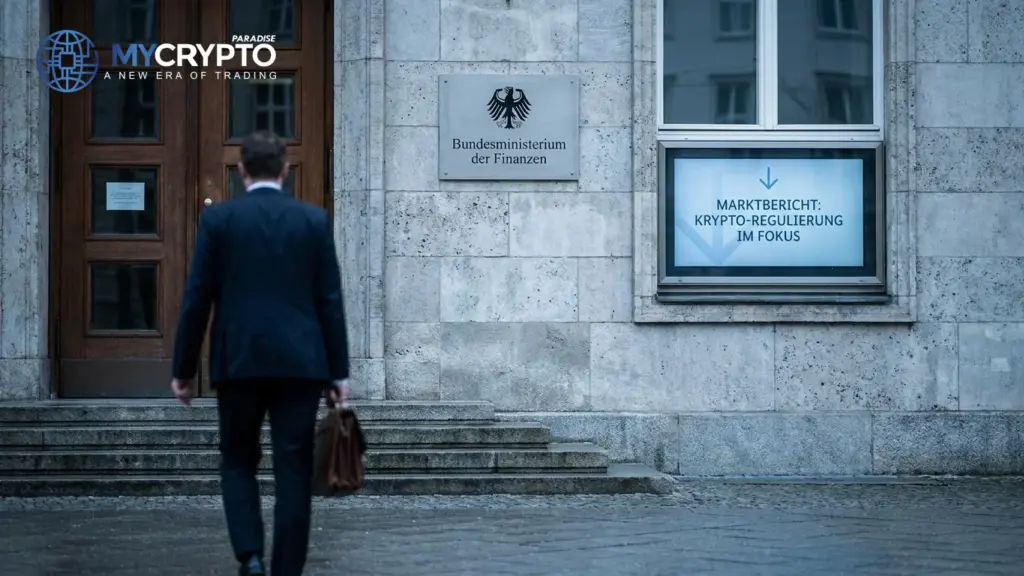
Germany's finance ministry has put forward a draft bill to end tax-free gains for long-term crypto holders. Coins bought after December 31, 2026 would face a flat 25% tax when sold. The stated aim is to treat crypto like other financial assets, nothing more exotic than that.
The detail that matters is timing. Existing holdings keep the current one-year holding rule, and gains under the annual exemption of roughly €1,000 stay untouched. So this is a forward-looking change, not a retroactive grab on today's stack.
The start date is not even settled. Some readings put it at 2027, others at 2028. Either way, the rule reaches nobody's current position, and the draft still has to survive a parliamentary vote before it becomes law.
Markets treated it accordingly. Bitcoin was trading near $79,322, up about 1.3% on the day, as the headline crossed. A tax that lands on hypothetical future purchases, in one economy, years from now, is not the kind of thing that moves a global order book.
Still, it belongs to a wider story we have tracked all week: regulators steadily folding crypto into the ordinary tax and rules framework. Each step is small. The direction of travel is not. Germany is simply the latest to say the quiet part out loud, and to schedule it for a future nobody has to worry about yet.
A distant deadline reshapes German holding math
The transmission here is about incentives, not immediate flows. Germany's long-standing appeal was simple: hold crypto for a year, sell it tax-free. That rule rewarded patience and made the country friendly to long-term Bitcoin accumulation.
Remove it for future buyers, and the calculus for fresh German capital changes. A flat 25% on gains lowers the after-tax reward for buying and holding from 2027 onward. On the margin, that makes long-term accumulation there less attractive than it was.
But margin is the key word. The proposal grandfathers everything held today, so no existing German holder is forced to reconsider anything. The pressure, if it arrives, is on tomorrow's buyer, not today's.
That is why we file this under macro narrative rather than macro shock. It reinforces a theme of rising regulatory friction across major economies. It does not create a supply event, a forced seller, or a deadline anyone must beat.
There is also the small matter that the bill is a draft. Finance ministries propose many things. Parliaments pass fewer of them, and rarely in their original shape. So the honest read is that this reduces one structural tailwind for future European inflows. In a market already short on new money, another closed door matters more for sentiment than for this week's price.
Where the liquidity actually flows from here
Start with what did not happen. Bitcoin held near $79,322 as the news landed, still green on the day. There was no liquidation wave, no visible German seller rushing the exits. A proposal aimed at 2027 gives nobody a reason to sell in September 2026.
The liquidity effect is therefore slow and indirect. If it bites at all, it shows up as fewer new long-term buyers in one region over the coming years, not as a sudden drain today. That is a headwind on the inflow side, not a hit to spot supply.
For BTC, the practical impact this week is close to zero. The order book cares about ETF flows, whale positioning, and macro liquidity far more than a future German tax line.
ETH and the broader alt complex inherit the same logic, only weaker. If long-term accumulation cools in a major European economy, the assets furthest out on the risk curve feel it last, when new money is already scarce. Alts live on the marginal buyer, and this proposal quietly discourages one class of them.
The cleaner point is what this does to the wider tape. It adds another brick to the wall of regulatory friction stories we have covered all week. None is decisive alone. Together they describe a market where the easy, tax-free case for holding is being chipped away, one jurisdiction at a time.
Parliament, not price, decides this one
The signal to track is legislative, not technical. This is a draft, so the first real checkpoint is whether it clears parliamentary committees intact or gets watered down. Tax proposals routinely soften on the way through.
Watch the start date next. A 2027 effective date behaves very differently from 2028, and any grandfathering tweak could widen or narrow who is actually affected. The wider the exemption, the smaller the real-world bite.
Confirmation that this matters would be other major economies echoing the move in the same window. A single German draft is a data point. A cluster of aligned proposals across Europe would turn a narrative into a genuine structural headwind for long-term holding.
Invalidation is just as plausible. If the bill stalls, gets diluted, or the exemption threshold rises meaningfully, the story quietly deflates and stops mattering to positioning at all.
On price, the tell is the absence of a tell. Because this is future-dated, any sharp BTC move in the coming days almost certainly comes from something else: ETF flows, whale activity, or macro liquidity, not this tax line. So the practical instruction is to keep this in the sentiment column, not the catalyst column. If Bitcoin sells off this week, look elsewhere for the cause. This proposal is a slow-burn variable, and slow-burn variables rarely explain a fast candle.
Reading a 2027 rule against 79K
The ParadiseTeam sees this proposal as sentiment texture, not a level-mover. With BTC near $79,322 as of the print, a tax that reaches nobody until 2027 changes none of the lines that actually matter right now.
Our higher-timeframe bias stays bearish, and this news does nothing to soften it. The $79,000 area has already broken to the downside and now acts as resistance. Price is retesting $77,700, our next key support, with $77,000 just beneath it.
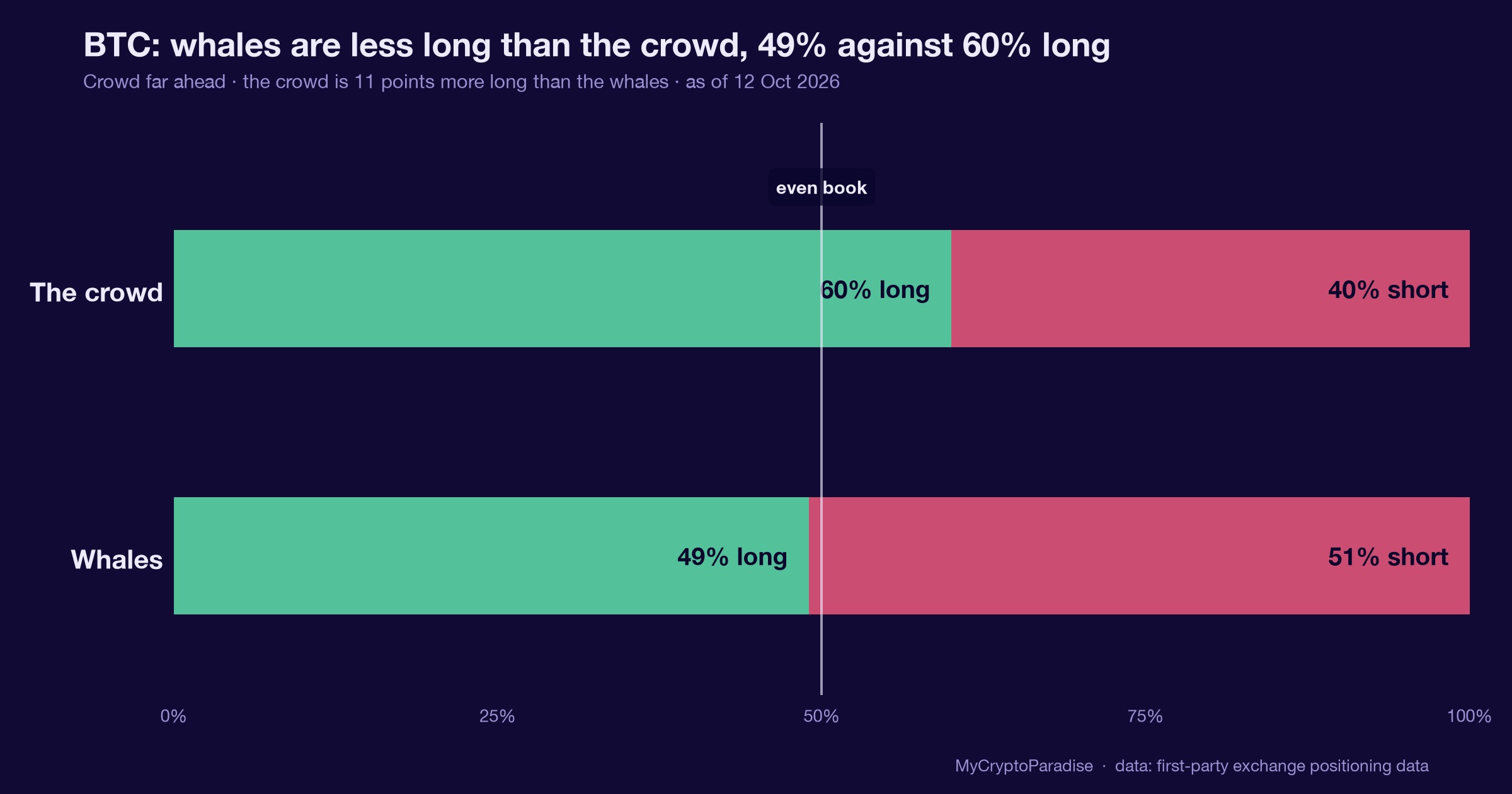
That structure is the story, not Germany. Spot CVD (cumulative volume delta) and whale flow suggest smart money already distributed most of what it accumulated near $61,000, and did so without a big price pop. Regulatory friction like this simply fits that quieter distribution backdrop.
Retail participation sits near record lows, so there is little fresh capital for this news to scare off in the first place. In that sense the proposal is almost academic: it discourages a buyer who is already absent.
We are watching a clean loss of $77,700 as the trigger for the next leg toward the $58,000 zone, which our weekly read expects to break on the way to a deeper $44,000 C-wave target. A reclaim of $77,700 from below would force a rethink.
Bottom line from the ParadiseTeam: trade the levels, not the headline. This tax line is a slow structural variable, and probabilities, not certainty, still favour one more flush before any durable turn.
The read behind this: we framed this story through our own market analysis, Bitcoin Breaks $79K: Where Is Next Support?
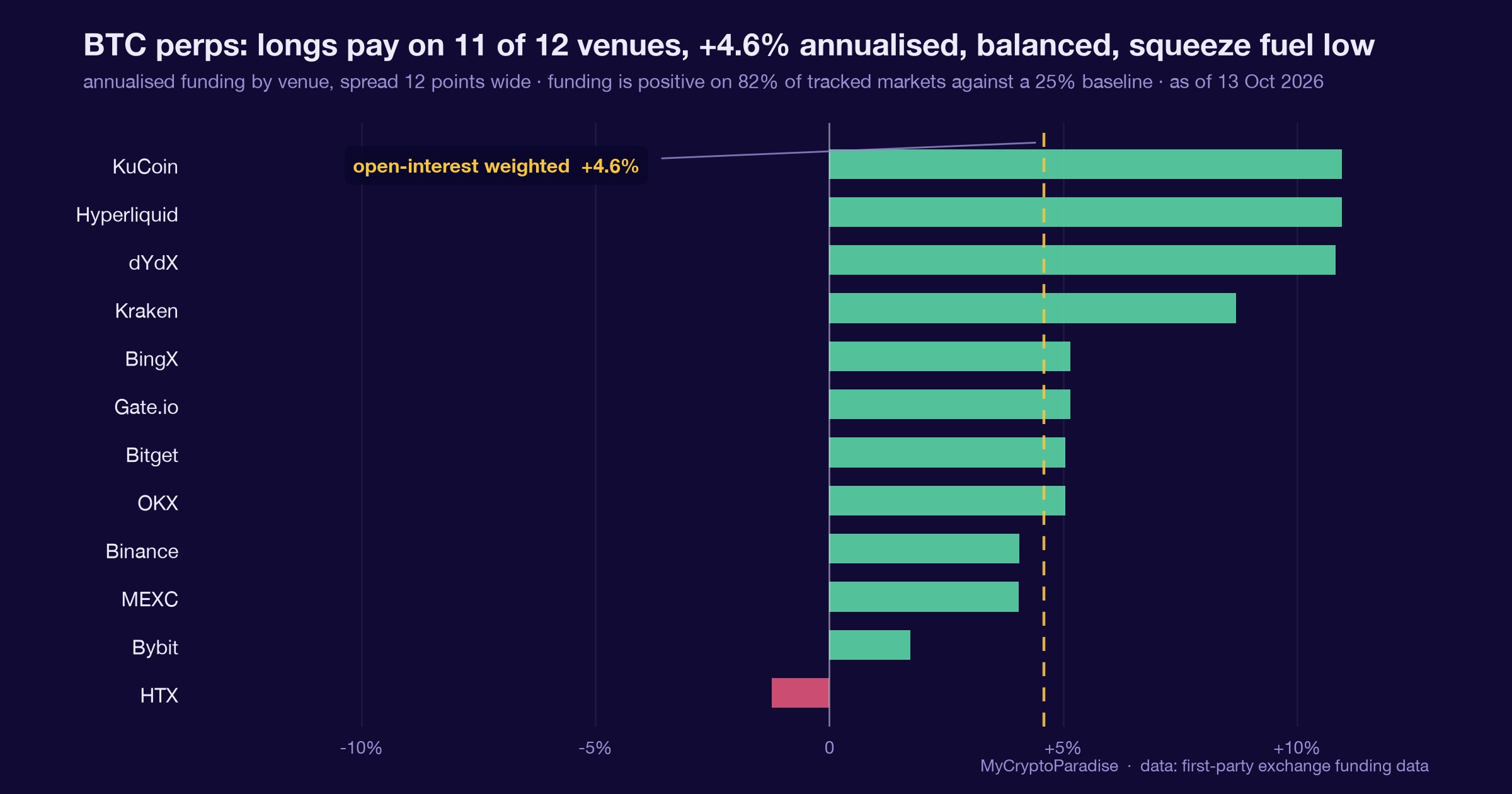
Track it live: our live crypto funding rates and the Crypto Fear and Greed Index both update in real time, so you can watch this shift for yourself.
Related coverage
For exact entries, targets, and stop losses with full risk management, that is what ParadiseFamilyVIP is for. New to reading these moves? Start with our crypto trading strategies guide.
ParadiseTeam is monitoring the market situation closely, and we are taking these developments into consideration while building our trading tactics inside ParadiseFamilyVIP.
Crypto trading involves substantial risk. Prices are volatile and you can lose money. This article is educational and is not financial advice. Past performance does not guarantee future results.
Will Germany's proposed 25% crypto tax pass parliament in its current form?
This is how 34 Paradisers are calling it. Tap your call.
No calls on this one yet. Tap yours to be the first.
Free account, no password. Members just sign in.









Join the discussion 3
These regulatory considerations add another variable to long-term load calculations for holding. The market tends to price in such structural changes.
Absolutely not, this is exactly the kind of move that just strangles growth and innovation. Been there, done that, and it's a mess!! 😡
oh, but Rahul, what about how this affects new projects trying to get investment? 😬 feels like a chill wind for those guys. 🌬️