


Listen: the breakdown
Market briefing: Garden Finance pulled its app after an attacker drained roughly $450,000 in USDT from its HTLC contracts across four chains. BTC sat near $65,127 and shrugged, with ETH firmer at $1,946.
- Attacker drained about $450,000 in USDT from Garden Finance HTLC contracts.
- The exploit hit Ethereum, Base, Arbitrum, and BNB Smart Chain at once.
- Majors barely reacted: BTC near $65,127, ETH up 3.5%, BNB up 0.5%.
The Garden Finance exploit drained $450,000 and forced the app offline. Small in dollars, loud in fear. So does a cross-chain HTLC breach actually move the market, or just the mood?
Garden Finance disabled its application after an attacker exploited its HTLC contracts. HTLC (hashed timelock contract) is the escrow logic that lets value move across chains without a trusted middleman. When that logic breaks, the bridge itself becomes the target.
The drain totalled roughly $450,000 in USDT. It did not stay on one chain. The attacker pulled funds across Ethereum, Base, Arbitrum, and BNB Smart Chain, hitting the same contract design in four places at once.
That cross-chain footprint is the detail worth pausing on. It suggests a flaw in shared code, not a single misconfigured deployment. Disabling the app is the correct defensive reflex, because you stop the bleeding before you diagnose the wound.
Still, the honest framing matters more than the drama. In a market where nine-figure hacks arrive with grim regularity, $450,000 is a rounding error. The protocol's users lost real money, and that is not trivial to them. The broader market simply did not notice.
We saw the proof in the tape. BTC traded near $65,127, up on the day. ETH sat around $1,946, up 3.5%, with its one-hour change a flat 0.2%. BNB near $572 barely twitched. A genuine liquidity shock leaves fingerprints on price. This one left none.
So we treat it as what it is: a security incident for one protocol, not a catalyst for the asset class. The story is real. Its market weight is not.
Why a cross-chain drain still barely registers
The transmission mechanism from a small DeFi exploit to broad market price is weak, and it is worth understanding why. A hack matters to the market when it either freezes a large pool of liquidity or breaks confidence in an asset people hold at scale. This did neither.
$450,000 does not move funding, does not force liquidations, and does not drain a systemically important pool. The capital simply left one protocol's contracts. The rest of DeFi kept clearing.
Where small exploits do have reach is sentiment, not liquidity. Each headline of a bridge breach feeds a slow drip of retail unease. It reinforces the story that DeFi is fragile and that cross-chain infrastructure is where the bodies are buried.
That unease is real, but it is diffuse. It nudges a nervous trader toward a short or toward sitting out. It does not shift the balance sheet of the market.
The cross-chain angle deserves a note, though. Attacks that replicate across Ethereum, Base, Arbitrum, and BNB Smart Chain remind everyone that shared code carries shared risk. One design flaw becomes four incidents. That is a structural lesson for builders and auditors more than a pricing input for BTC or ETH.
So the macro read is plain. This event changes the mood at the margin. It does not change the plumbing. When the fear is louder than the liquidity effect, the fear is usually the tradeable signal, not the loss itself.
How the exploit rippled across BTC, ETH, and alts
Trace the impact through the usual chain and it goes almost nowhere. Start with BTC, the market's liquidity anchor. It traded near $65,127 and stayed green on the day. A breach that mattered would have pulled it down first. It did not.
ETH is the more relevant read here, since the exploit touched Ethereum directly. Yet ETH sat around $1,946, up 3.5% over 24 hours, with a one-hour move of just 0.2%. The chain hosting part of the drain barely blinked. That is your clearest evidence the market priced this as noise.
BNB Smart Chain was also hit, and BNB tells the same story. Near $572, up 0.5%, one-hour change 0.1%. Flat. If holders of an affected chain's token are not selling, contagion is not spreading.
Alts are where retail fear usually shows up hardest, because thin books amplify emotion. We would expect a wobble in bridge and DeFi tokens on a headline like this. Any such wobble is idiosyncratic, tied to the affected corner, not a market-wide risk-off.
The takeaway is that this exploit produced a localized dent and a broad shrug. The liquidity cascade this piece is meant to trace simply did not fire. That absence is itself information. It tells you where the market's attention actually sits, and it is not on a $450,000 HTLC drain.
What confirms this stays contained versus spreads
The next few days decide whether this stays a footnote or becomes something more. The first thing to watch is scope. If the drained figure holds near $450,000 and no further contracts are hit, the incident is contained and the market is right to ignore it.
Containment invalidates any bearish reading fast. A protocol pausing, patching, and communicating clearly is the normal, boring path. Boring is bullish for confidence, even if no one cheers it.
The real risk sits in the cross-chain design. Watch whether other protocols using similar HTLC logic report probing or copycat attempts. Shared code means a proven exploit can travel. If it does, the story stops being about one app.
Watch the affected chain tokens for any delayed reaction, though so far ETH near $1,946 and BNB near $572 show none. A late slide would signal fear catching up to price. Continued stability confirms the market has moved on.
More broadly, keep your eyes on the level that actually matters. BTC near $65,127 is the number driving positioning, not this exploit. If BTC holds its medium-timeframe support and pushes higher, this hack disappears from the conversation entirely.
The invalidation for treating this as minor would be a cluster of similar breaches in a short window, enough to genuinely dent DeFi trust. Absent that, the confirmation is simply the tape staying calm, which is what it has done so far.
What this exploit means for current positioning
The ParadiseTeam reads this exploit as a sentiment event, not a structure event, and the distinction drives everything. With BTC near $65,127 and holding its medium-timeframe support, our bias stays cautiously constructive toward a final push into the $69,000 to $79,000 zone. A $450,000 HTLC drain does not touch that thesis.
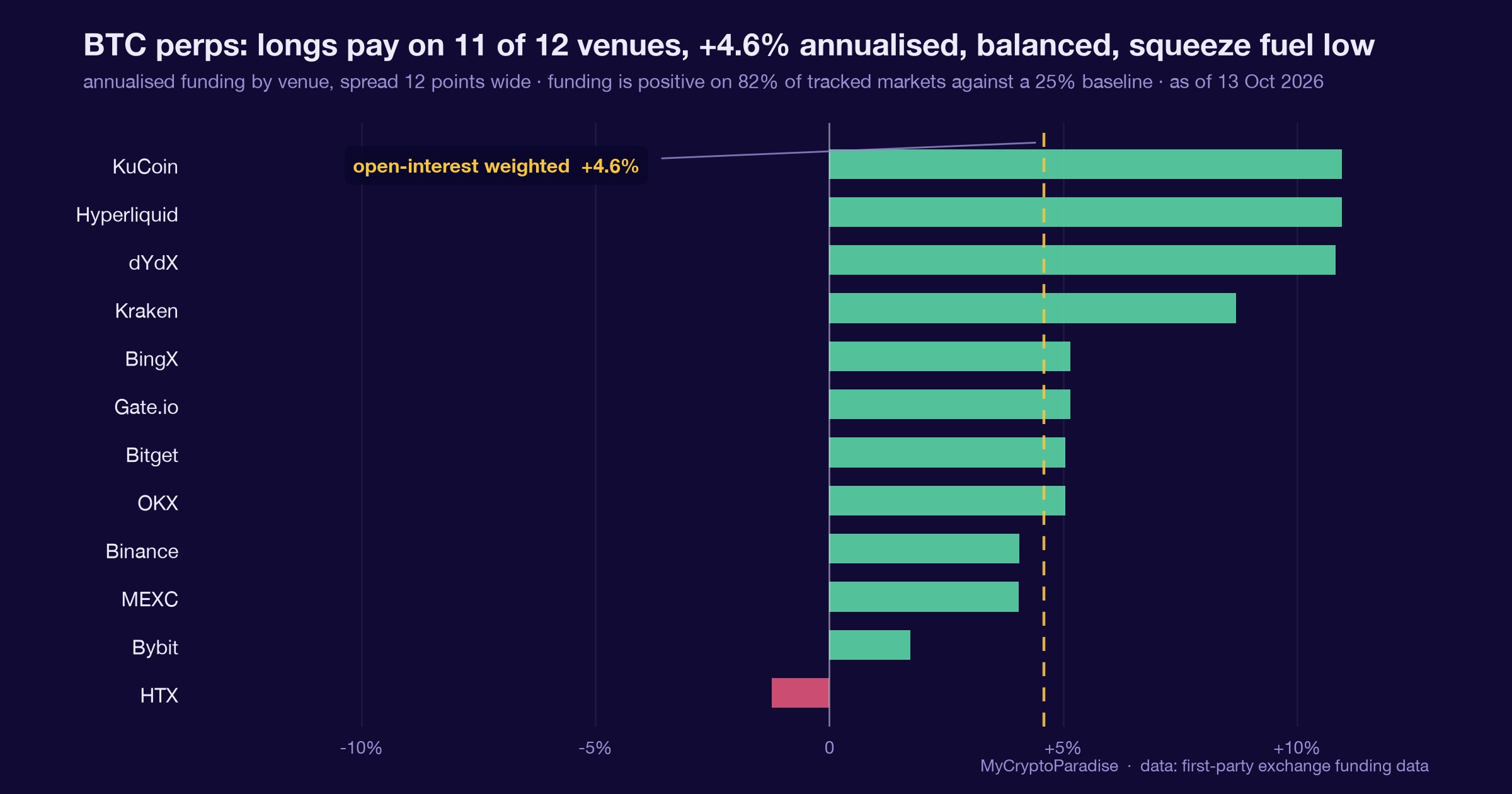
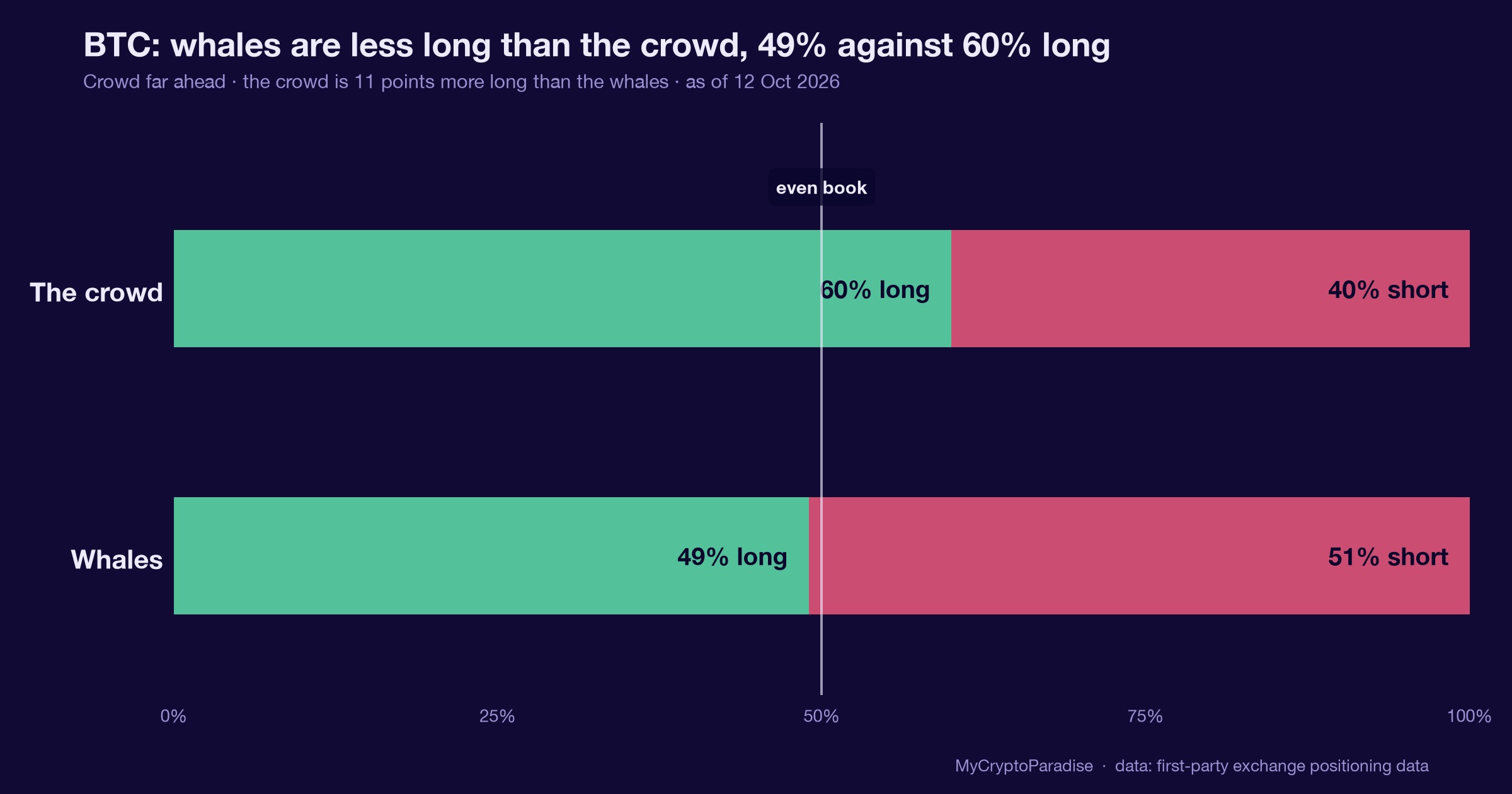
Here is the edge. Minor hacks are precisely the kind of headline that hardens retail into shorts. Funding on retail-heavy venues already leans neutral to negative, and crowd sentiment is bearish. Each fear story adds a little more fuel to that short book.
Smart money sits on the other side. Funding on the pro side reads positive, positioning leans long, and that posture is built to absorb exactly this kind of nervous selling. When retail shorts a market on noise, it hands the larger players cheaper longs and a supply of stops to run.
We are honest that this is a read, not a confirmed cause. There is no single decisive catalyst today, and this exploit is not it. Our tell remains BTC's grip on support and the reaction into $69,000, that magical number.
We are also watching the bearish divergence on the daily, price making higher highs while MACD makes lower highs. That keeps us disciplined about the retrace we expect toward $61,000 to $60,000 before any deeper move toward the $55,000 to $44,000 macro zone. This hack changes none of those levels. It only tests who panics on the way.
Track it live: our Crypto Fear and Greed Index and the live crypto funding rates both update in real time, so you can watch this shift for yourself.
Related coverage
For exact entries, targets, and stop losses with full risk management, that is what ParadiseFamilyVIP is for. New to reading these moves? Start with our crypto trading strategies guide.
ParadiseTeam is monitoring the market situation closely, and we are taking these developments into consideration while building our trading tactics inside ParadiseFamilyVIP.
Crypto trading involves substantial risk. Prices are volatile and you can lose money. This article is educational and is not financial advice. Past performance does not guarantee future results.
Does this exploit change your near-term crypto bias at all?
This is how the Paradisers are calling it. Tap your call.
No calls on this one yet. Tap yours to be the first.
Free account, no password. Members just sign in.










Join the discussion
No comments yet. Members, share how you are reading this.