


Developing story update (July 27, 2026, 06:05 UTC):
STORJ crashes -15% as Storj Labs files for Chapter 11 bankruptcy. Storj Labs, the company behind the decentralized cloud storage network Storj, has filed for Chapter 11 bankruptcy protecti. STORJ crashes -15% as Storj Labs files for Chapter 11 bankruptcy. Storj Labs, the company behind the decentralized cloud storage network Storj, has filed for Chapter 11 bankruptcy protection to restructure legacy debt while keeping the network fully operational. The company previously raised around $35 million, including roughly $30 million through its 2017 token sale. STORJ is now do
Listen: the breakdown
Market briefing: Storj Labs has filed Chapter 11 to clean up legacy debt while it keeps running. It barely moved majors: BTC sits near $65,096, up 1.5% on the day, with ETH stronger at $1,940.
- Storj Labs filed voluntary Chapter 11 to address legacy debt while operations continue.
- The company behind the Storj storage network had raised roughly $35 million.
- Majors shrugged: BTC near $65,096 up 1.5%, ETH near $1,940 up 4.2% on the day.
The Storj Labs Chapter 11 filing added one more bankruptcy to the crypto ledger, yet BTC never blinked. So who is actually rattled by this news?
Storj Labs has voluntarily filed for Chapter 11 bankruptcy protection. The company behind the decentralized cloud storage network Storj says it is restructuring to deal with legacy debt while the network keeps running. So this is a balance-sheet cleanup, not a shutdown.
The number that frames it is roughly $35 million. That is what Storj Labs had raised over its life. Chapter 11 is the reorganization route, which means the firm wants to survive its creditors rather than liquidate. Continuity is the whole point of the filing.
For traders, the honest read starts with what did not happen. BTC was trading near $65,096 as of the print, up about 1.5% on the day. ETH was firmer, near $1,940 and up 4.2%. Neither major registered the news in any meaningful way.
We have seen this pattern across enough cycles to recognize it. A project-level insolvency lands, the headline reads grim, and the majors carry on as if nothing happened. The gap between a scary word like bankruptcy and the actual tape is the story here.
This extends a thread we touched earlier today with another failed operator. One bankruptcy is an event. A steady drip of them is a phase, and phases are where positioning matters more than headlines.
Why one insolvency barely dents liquidity
A single project bankruptcy does not drain market liquidity. Storj Labs restructuring its own debt is contained to Storj Labs. There is no cross-margin contagion here, no exchange with customer funds frozen, no lending desk unwinding collateral into the order book. That is the transmission mechanism that actually moves BTC, and it is absent.
So why does the news still matter to us? Because it feeds sentiment, and sentiment moves the crowd before it moves price. Each bankruptcy headline reinforces the retail narrative that the sector is fragile. That narrative pushes retail toward short positions and defensive posture.
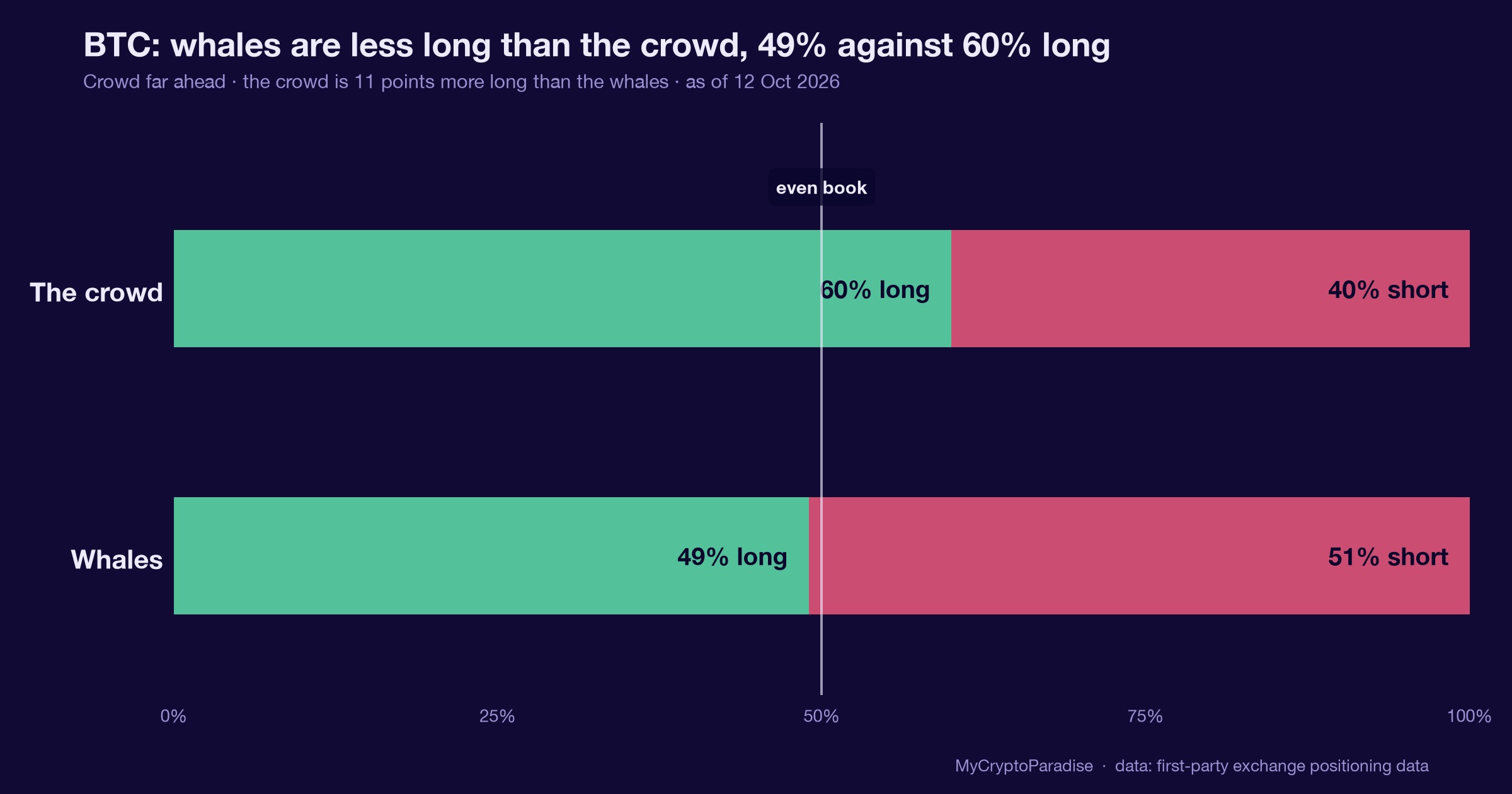
Here is where our edge lives. When negative news accumulates but the majors refuse to break, you get a widening split. Retail leans bearish on the story. Smart money reads the lack of price damage as a tell that selling pressure is being absorbed.
The mechanism is simple. Fear manufactures sellers and short-sellers. Those shorts become fuel, because every short is a future buyer who must eventually cover. When a market absorbs bad news without dropping, the people positioned short are the ones quietly trapped.
Storj alone is not the catalyst. It is one more brick in a wall of fear that smart money is happy to see retail build, because that wall becomes their liquidity later.
How the majors absorbed the bankruptcy news
Start at the top of the stack. BTC near $65,096 with a 1.5% daily gain and a flat 1-hour candle tells you the filing produced no forced selling in the largest, deepest market. When the anchor does not move, the cascade never starts.
ETH tells an even clearer story. Up 4.2% on the day and firm on the hour, it actually outperformed BTC while this bankruptcy headline circulated. That is not how a market behaves when it fears contagion from a storage project.
Alts are where a project insolvency could theoretically bite, since Storj is an alt-layer story. Yet there was no visible broad alt flush tied to this event. The selling, such as it was, looks isolated and minor rather than systemic.
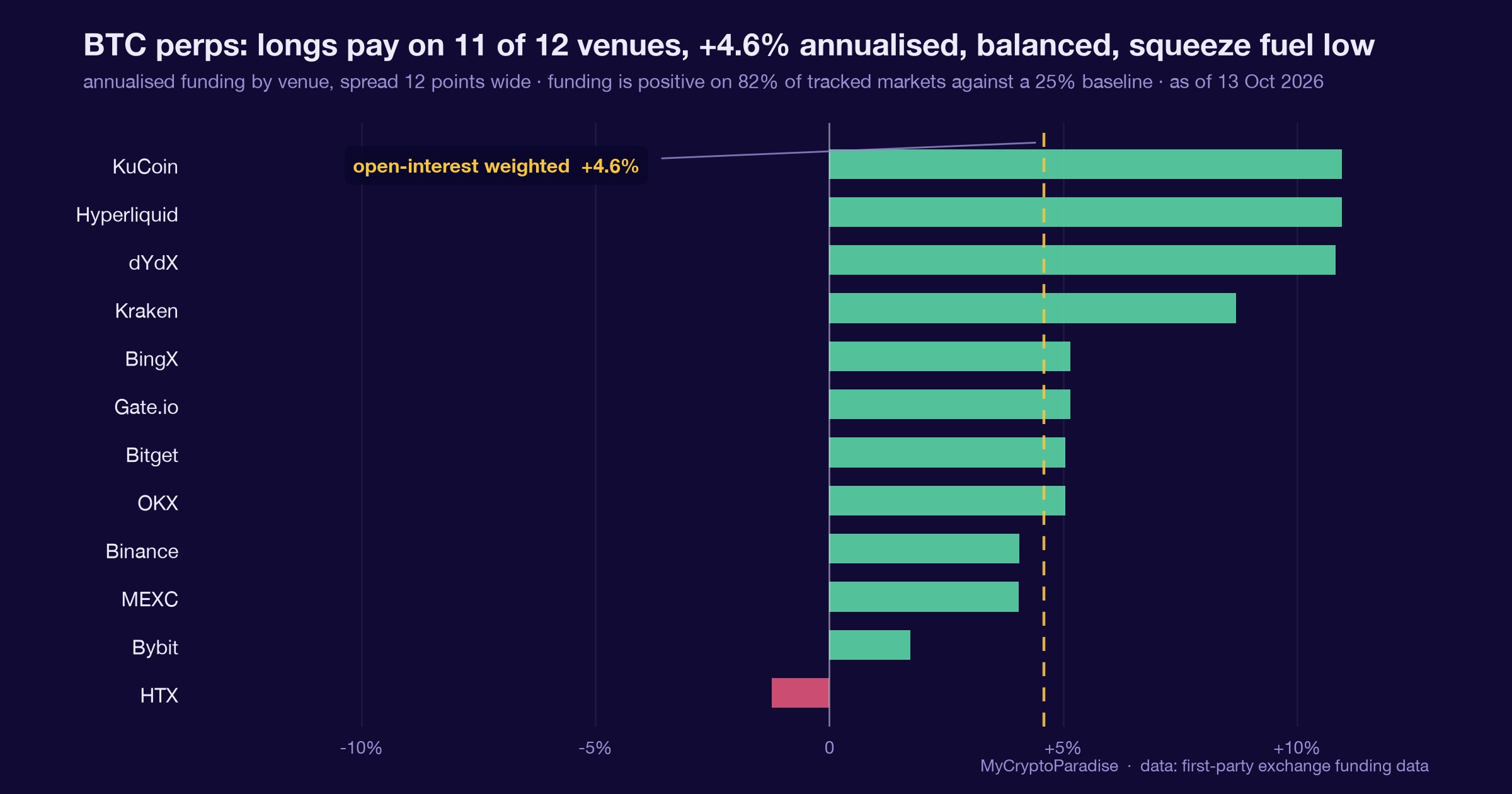
Think about who is on each side of that non-move. Retail reads bankruptcy and reaches for shorts or sells spot into weakness. Smart money, holding longs with positive funding rates, sits ready to absorb that supply without letting price crack.
The result is a market that ate a negative headline and stayed green. For a strategist, an absorbed shock is more informative than a rally. It shows where the real positioning sits, and right now it sits under price, not on top of it.
Signals that confirm or break the read
The first thing to watch is whether this stays contained. Confirmation of our read is simple: BTC holds its footing and no larger crypto operator follows Storj into the same week. Contained insolvencies are noise, not trend.
Invalidation would look very different. If a second, larger failure appears and funding rates on major venues flip hard negative alongside a clean break of BTC support, then fear is becoming a real de-risking wave, not a counter-indicator. That is when we respect the downside.
Watch open interest, or OI (open interest), the total value of live derivatives contracts. Rising OI while price holds and shorts pile in is the trapped-crowd setup we want. Falling OI into calm price is just apathy, which is less actionable.
Keep an eye on daily momentum too. Price has been printing higher highs while the daily MACD histogram prints lower highs, a bearish divergence. A confirmed daily RSI (relative strength index) bearish cross would argue the final push is tiring, regardless of any single bankruptcy.
So the checklist is short and honest. Contained failure plus held support plus crowded shorts keeps the constructive read alive. A second domino plus broken support plus negative funding flips it. We let the tape, not the headline, cast the deciding vote.
What the filing signals for market positioning
The ParadiseTeam treats the Storj filing as noise around a level, not a change to the level. With BTC near $65,096, the map is unchanged: a possible final push toward $69,000 and then $79,000, before any secondary wave lower.
A project bankruptcy that fails to dent price actually supports that map. It confirms that current bad news is being absorbed, consistent with smart money holding longs and positive funding while retail leans short. Bearish headlines into strong support tend to feed accumulation, not distribution.
The ParadiseTeam is watching $69,000 as the first magnet and $79,000 as the higher-probability target for this wave. That zone is where our caution rises, because a bullish tape into resistance is where distribution usually hides.
Below, the plan respects a retrace toward $61,000 to $60,000 as a potential re-entry area for the secondary wave. A deeper macro bottom zone sits at $55,000 to $44,000, and it needs real capitulation to confirm, not a lone storage bankruptcy.
Risk note, not advice: size for the scenario where the divergence wins and the push fails. Define your SL (stop-loss) and TP (take-profit) before entry and keep R:R (risk-to-reward) honest. Storj changes the mood, not the math. The market votes at the levels, and so do we.
Track it live: our live crypto funding rates and the Crypto Fear and Greed Index both update in real time, so you can watch this shift for yourself.
Related coverage
For exact entries, targets, and stop losses with full risk management, that is what ParadiseFamilyVIP is for. New to reading these moves? Start with our crypto trading strategies guide.
ParadiseTeam is monitoring the market situation closely, and we are taking these developments into consideration while building our trading tactics inside ParadiseFamilyVIP.
Crypto trading involves substantial risk. Prices are volatile and you can lose money. This article is educational and is not financial advice. Past performance does not guarantee future results.
After the Storj filing, what does BTC do next from here?
This is how the Paradisers are calling it. Tap your call.
No calls on this one yet. Tap yours to be the first.
Free account, no password. Members just sign in.







Join the discussion
No comments yet. Members, share how you are reading this.