

Listen: the breakdown
Market briefing: A Bitcoin whale just broke four years of silence to shift 730 BTC, worth roughly 46 million dollars, as Coldcard exploit fears spread. BTC was trading near 62,777 dollars, down 1.1 percent on the day.
- A whale moved 730 BTC (about $46M) after four years of dormancy.
- The Coldcard exploit, near $89M across 4,500 addresses, is the likely motive.
- BTC was near $62,777, down 1.1% over 24 hours, structure still leaning down.
A four-year dormant Bitcoin whale just moved 730 BTC as Coldcard exploit fear spreads. Is this smart money running scared, or simply securing coins before the next dip?
A Bitcoin whale that sat still for four years just moved. The wallet shifted 730 BTC, worth roughly 46 million dollars, into a fresh address. Coins accumulated across seven years suddenly changed homes in a single sweep.
On the surface this looks dramatic. In practice it may be defensive housekeeping. Blockchain analytics flagged the recent Coldcard exploit as the probable motive, and that reframes the whole event.
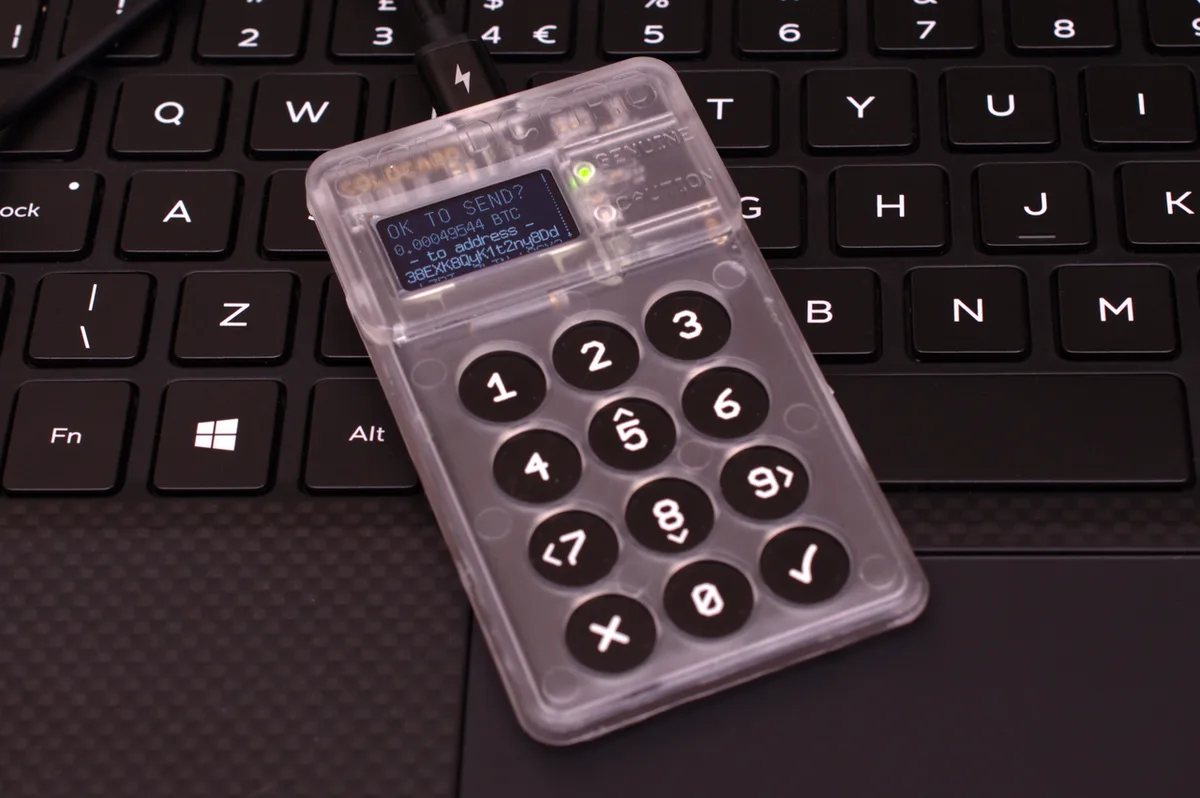
The Coldcard exploit is not small. It has touched around 4,500 addresses, with losses estimated near 89 million dollars. Between 01:10 and 01:51 UTC, 1,082.65 BTC were swept across six blocks. When an attack drains coins that fast, holders with old wallets do the obvious thing: they move.
So the story here is not a whale dumping into the market. It is a whale hardening its position after watching others lose theirs. A transfer is not a sale, and that distinction matters for price.
Bitcoin barely reacted. It was trading near 62,777 dollars, down 1.1 percent on the day, when the move surfaced. No liquidity shock, no cascade, just another large wallet reshuffling coins in a nervous week that already saw Trump Media send 2,628 BTC, about 165 million dollars, to Crypto.com. Large money is moving, but moving is not the same as selling.
Why a security scare moves coins not price
The transmission mechanism here is fear, not supply. A dormant whale moving 730 BTC does not add sell pressure by itself. Coins going to a new self-custody address never hit an order book. So the direct price effect is close to zero.
The indirect effect is where it bites. The Coldcard exploit plants a simple, ugly question in every large holder's mind: are my old wallets still safe? That question spreads faster than any single transaction. It nudges holders toward action, and action in a jittery market usually means caution.
Caution is a macro variable. When confidence in cold storage wobbles, some coins migrate to exchanges, some to fresh wallets, and sentiment tightens across the board. None of this is bullish in the near term. It thickens the fog rather than clearing it.
We want to be honest about causation. There is no single confirmed catalyst forcing Bitcoin lower today. The Coldcard link to this whale is an interpretation, a reasonable read of timing and behaviour, not a proven cause.
That honesty is the point. Security scares rarely crash price on day one. They erode conviction quietly, and eroded conviction is what turns a shallow dip into a deeper one. This is how a headline about one wallet feeds a broader mood of hesitation.
How the whale move ripples across BTC and alts
Start with BTC, because everything downstream keys off it. The 730 BTC move did not dent the tape. Price held near 62,777 dollars, down 1.1 percent, which tells you this was absorbed as a non-event on liquidity terms.
That calm is deceptive. Underneath, the structure is soft. We see lower lows on price, weakening momentum, and declining bullish volume on every attempt to reclaim resistance. A stable price sitting on a weak base is not strength, it is patience running out.
ETH and the majors inherit that softness. When Bitcoin drifts and confidence in custody wobbles, altcoins do not lead a rally. They wait. Liquidity stays parked in BTC and stablecoins until the security noise settles.
Alts feel it most. Smaller caps live on borrowed risk appetite, and risk appetite is exactly what a Coldcard-style scare drains first. So the ripple order is familiar: BTC absorbs, ETH hesitates, alts bleed thinnest.
The uncomfortable truth is that nothing here is a clean catalyst. This whale, Trump Media's 165 million dollar transfer, the exploit itself, none of them alone moves the market decisively. Together they build a mood, and the mood right now favours patience over pursuit.
What confirms the dip and what cancels it
The near-term map is simple to watch, harder to trade. Our attention sits on the 63,000 dollar resistance zone. As long as Bitcoin keeps failing there on falling volume, the path of least resistance points down.
Watch reclaim attempts closely. A push back above 63,000 that holds, on rising and genuine buying volume, would challenge the bearish read. Weak, low-volume pokes above that level do the opposite, they invite sellers.
The 62,500 dollar area is the pivot in the middle. If price reclaims it and defends it as support, the immediate downside eases. If 62,500 flips into resistance instead, that is your tell the dip has more room to run.
Below that, the 61,000 to 59,000 dollar band is the zone we care about most. It is where we expect coins to change hands from impatient sellers to patient buyers. A clean, high-volume defence there would confirm accumulation.
Invalidation cuts both ways. A decisive break and hold above resistance argues the dip is done early. A break below 59,000 that keeps going warns the weekly bearish target near 44,000 is back in play. On the security front, a fresh wave of dormant wallets moving would signal the Coldcard fear is spreading, not fading.
What this whale signals for accumulation
The ParadiseTeam reads this whale move as noise around a signal, not the signal itself. A defensive transfer after a custody scare tells us caution is real, but it does not sell the coins into anyone's bids. So it does not change our levels. It confirms the mood behind them.
Our near-term bias stays bearish, leaning toward the 61,000 to 59,000 dollar band. With BTC near 62,777 dollars and 63,000 acting as resistance, the room above looks capped and the room below looks open.
Here is the edge. Retail longs are still crowded with positive funding, yet the long squeeze probability reads low, near 10 percent. That means the crowd has not capitulated. Coins have not fully rotated to stronger hands. A market that has not scared its longs yet rarely bottoms.
So we treat this as pre-accumulation, not accumulation. Smart money is securing coins, watching, and waiting for cheaper prices while retail holds on. The 61k-59k zone is where those two groups likely trade places.
We stay patient by design. A high probability, high risk-to-reward (risk-to-reward) entry lives in that lower band, not up here at resistance. Chasing strength that keeps failing on thin volume is how retail funds the next dip. We would rather let the whales finish being nervous first.
Track it live: our Crypto Fear and Greed Index and the live crypto funding rates both update in real time, so you can watch this shift for yourself.
Related coverage
For exact entries, targets, and stop losses with full risk management, that is what ParadiseFamilyVIP is for. New to reading these moves? Start with our crypto trading strategies guide.
ParadiseTeam is monitoring the market situation closely, and we are taking these developments into consideration while building our trading tactics inside ParadiseFamilyVIP.
Crypto trading involves substantial risk. Prices are volatile and you can lose money. This article is educational and is not financial advice. Past performance does not guarantee future results.






Join the discussion
No comments yet. Members, share how you are reading this.