

In short
A Bitcoin trading signal is a suggested trade, usually an entry price, a target, and a stop-loss for BTC. A good signal is not a tip to follow blindly. It is a structured idea you can check against your own plan. The signals worth using share three traits: clear risk management, a defined invalidation level, and honest communication when a call fails. Weak signals promise certainty and hide their losses. Strong ones treat risk first and profit second. Your job is to evaluate the process behind each signal, not chase the loudest promise on the screen.
What is different here
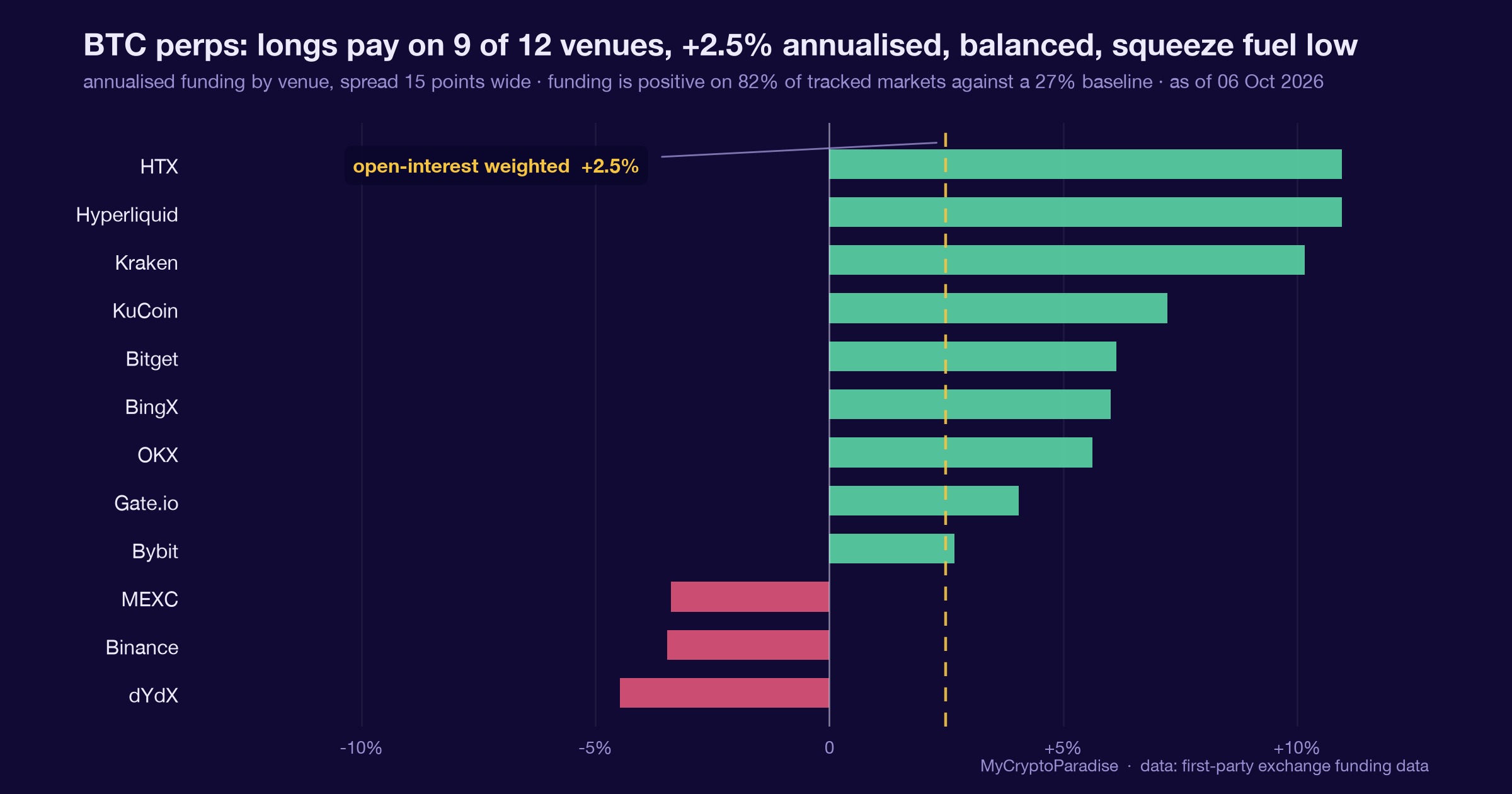
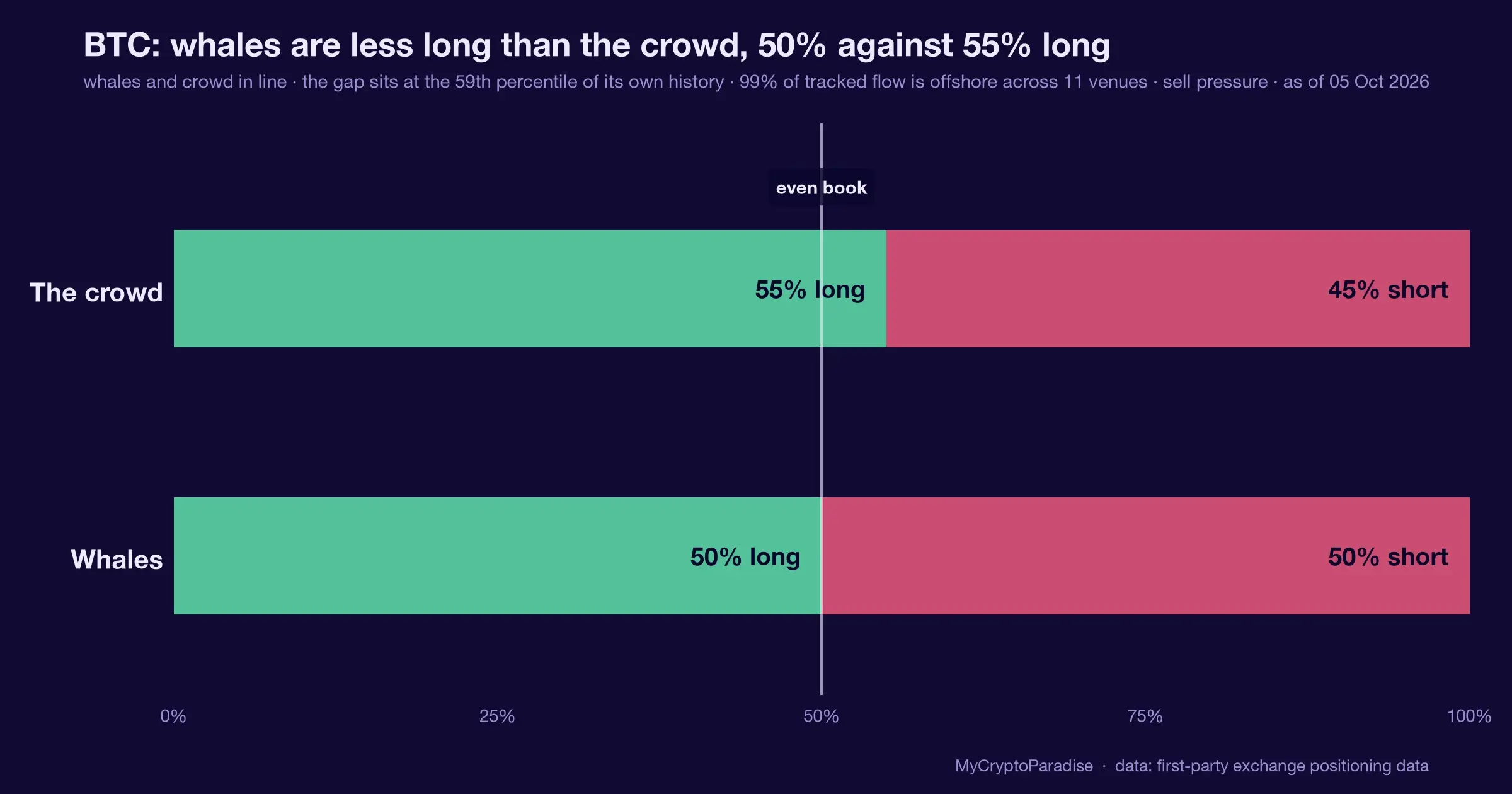
The ParadiseTeam reads live positioning across all major exchanges before a Bitcoin setup is shared, so the risk level is set first.
What are Bitcoin trading signals?
A Bitcoin trading signal is a suggested BTC trade shared by an analyst or service. It names an entry zone, a profit target, and a stop-loss level. The best signals also explain the reasoning and the level that would prove the idea wrong. Treat each one as a hypothesis, not an order.
Most Bitcoin signals arrive in a Telegram channel or a trading room. They tell you where to buy, where to take profit, and where to cut the trade if price moves against you. The format looks simple, which is exactly why it is easy to misuse.
The value is not in the numbers alone. It sits in the thinking behind them. A signal that says “long BTC at ~62,000, stop at ~60,500” means little without a reason and an invalidation. Learning to read the charts yourself turns a signal from a command into a check you can question.
What makes a Bitcoin signal effective?
An effective Bitcoin signal states its risk before its reward. It gives a precise entry, a stop-loss, and a target, so you can size the position sensibly. It explains the setup in a sentence. Above all, it defines the price that proves the idea wrong, which caps your loss.
The strongest Bitcoin signals tend to share a few habits:
- A defined stop-loss on every call, no exceptions.
- A risk-to-reward ratio stated up front.
- Reasoning you can check against the chart.
- Honest updates when a trade is stopped out.
Notice what is missing from that list: a promise. A signal that leads with reward and hides the risk is selling excitement, not edge. Effective calls are almost boring, because discipline is boring.
How does risk management change how you use signals?
Risk management decides how much a losing signal can cost you, before you ever enter. A common rule is to risk a small, fixed percentage of your account per trade. That way one wrong Bitcoin call cannot damage the account. The signal picks the direction; your risk rule protects the capital.
Position sizing is the quiet skill that separates traders who last from those who blow up. Even a signal with a strong win rate will hit losing streaks. If each loss is small and fixed, a streak is survivable. If you size by conviction or emotion, one bad run ends the account. We cover the common risk management mistakes that catch active traders, and almost all of them start with position size.
A stop-loss order automatically closes a trade at a set price, capping the loss on that position. Most major exchanges document how their stop-loss orders work, and understanding the mechanics matters before you act on any signal.
How do you evaluate a Bitcoin signal provider?
Judge a provider on transparency, not on screenshots of wins. Look for a public, dated track record that shows losses as well as gains. Check whether they teach the reasoning or just hand you numbers. Strong providers welcome questions and never promise certain profit.
Screenshots prove nothing. Anyone can crop a winning trade and delete the losers. What you want is a track record you can audit: dated entries, dated exits, and the losses left in plain sight. Ask how the provider communicates when a call fails, because that moment reveals more than a hundred green candles.
Red flags to walk away from
Some warning signs should end your evaluation immediately:
- Promises of certain profit, or claims a trade is guaranteed to win.
- No public track record, only screenshots.
- Pressure to act fast or fear of missing out.
- Anonymous operators with no verifiable history.
Before you follow any Bitcoin signal service, run it through a short due-diligence pass.
For a deeper framework, our guide to evaluating signal services walks through each test in detail. Free channels with tens of thousands of members work differently from smaller rooms. It helps to understand how large signal groups operate before you trust their calls.
Should you combine signals with your own analysis?
Yes. A signal should confirm or challenge a view you already hold, not replace your judgement. When a Bitcoin call matches your own read of the chart, your confidence is earned. When it clashes, that friction is useful. It forces you to ask which analysis is stronger.
Blind following is comfortable, right up until it is not. When you know the reasoning, you can hold a trade through noise or exit early with a clear head. When you do not, every red candle becomes a decision made in fear. Signals are a tool for sharpening your own process, not a replacement for having one.
What are the real risks of trading with signals?
The biggest risk is dependence: following calls without understanding them, then panicking when one fails. Others include over-leverage, chasing entries after price has moved, and trusting providers who hide their losing trades. Bitcoin is volatile, and no signal removes that. Treat every call as probability, never a promise.
Regulators repeatedly warn that promises of certain profit are a classic sign of fraud. The SEC’s Bitcoin investor alert lists these warning signs in plain language. Any Bitcoin signal service that promises certain profit is telling you the one thing that cannot be true.
Used well, signals shorten your learning curve and surface setups you might miss. Used badly, they become a way to lose money quickly while feeling informed. The difference is not the signal. It is the risk discipline you bring to it.
Frequently asked questions
Can Bitcoin signals guarantee profit?
No. No honest signal can guarantee profit, because Bitcoin’s price is uncertain and every trade can lose. A promise of certainty is a warning sign, not a feature. Good signals raise your odds through structure and risk control. They still expect losing trades, and they plan for them in advance.
Are free Bitcoin signals worth using?
Free signals can be useful for learning, but treat them with extra care. Free channels often lack a verified track record and may push volume over quality. Judge a free signal by the same tests as a paid one: clear stops, honest updates, and reasoning you can check yourself.
How much of my account should one Bitcoin signal risk?
Many disciplined traders risk only a small, fixed percentage of their account per trade, often around one to two percent. The exact figure is personal. The principle is not: keep each loss small enough that a losing streak cannot end your account. The signal never decides your position size.
Do I still need my own analysis if I follow signals?
Yes. Signals work best as a second opinion, not a substitute for your own judgement. When you understand why a Bitcoin trade is suggested, you can size it, hold it, or skip it with confidence. Blind following is the fastest way to panic when a call goes wrong.
Crypto trading involves substantial risk and is not suitable for everyone. Nothing here is financial advice; it is education only. Never risk more than you can afford to lose.




Join the discussion
No comments yet. Members, share how you are reading this.