

Listen: the breakdown
Developing story update (October 06, 2026, 13:34 UTC):
Update: the custody proposal is now formally dated October 1, 2026, and the fine print clarifies its reach. Alongside investment advisers, regulated funds would also be allowed to self-custody digital assets under the stated conditions, and the plan would permit state trust companies to serve as custodians for client and fund crypto assets.
The scope is narrower than a blanket crypto rule. Based on our sources, the Advisers Act custody amendments would apply only to crypto assets that are funds or securities, which likely leaves a large share of tokens outside this specific pathway. The full text runs 760 pages, pointing to a long comment and implementation runway rather than an immediate shift.
For traders, this reinforces a structural, slow-moving catalyst rather than a near-term trigger. Price action stayed muted around the 86k area with mixed sentiment, consistent with a market treating this as a long-horizon institutional positive that is probably already partly reflected.
What to watch now: Whether the 760-page proposal draws formal industry comment and how narrowly the funds-or-securities limit is read.
Developing story: This story is still unfolding. We are tracking it and will update this article as more details are confirmed.
Market briefing: The SEC has proposed letting investment advisors self-custody Bitcoin under strict conditions, a structural opening for institutional money. Bitcoin sat near 86,078 dollars as of the print, barely moved on the news.
- SEC proposes easing crypto custody rules so advisors can self-custody Bitcoin and other digital assets
- Self-custody allowed only under strict conditions: proof of no qualified custodian, triennial reviews, multi-signature transfers, segregated wallets, independent audits
- BTC near 86,078 dollars with a flat 24h and a slightly negative hour, a muted reaction to seemingly bullish news
Source: U.S. SEC
The SEC just proposed easing crypto custody rules for investment advisors, yet Bitcoin barely twitched. When good regulatory news lands with a whimper, who is really positioned on the other side?
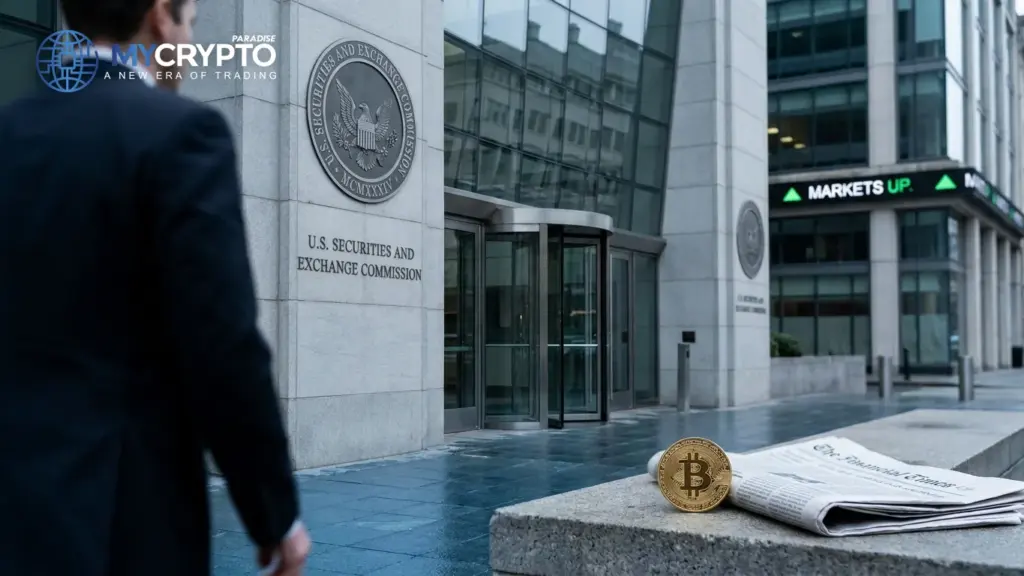
The SEC has proposed easing its crypto custody rules. Under the plan, registered investment advisors could self-custody Bitcoin and other digital assets, rather than parking everything with a traditional qualified custodian. For an industry that has spent years asking for a workable path, this is a real structural shift.
But the permission comes wrapped in conditions. An advisor would need written proof that no qualified custodian is available, triennial reassessments of that judgment, multi-signature transfers, segregated customer wallets, and independent audits. In other words, self-custody is allowed, but only through a narrow door with several locks on it.
That is the tension. The headline reads like a green light. The fine print reads like a compliance manual.
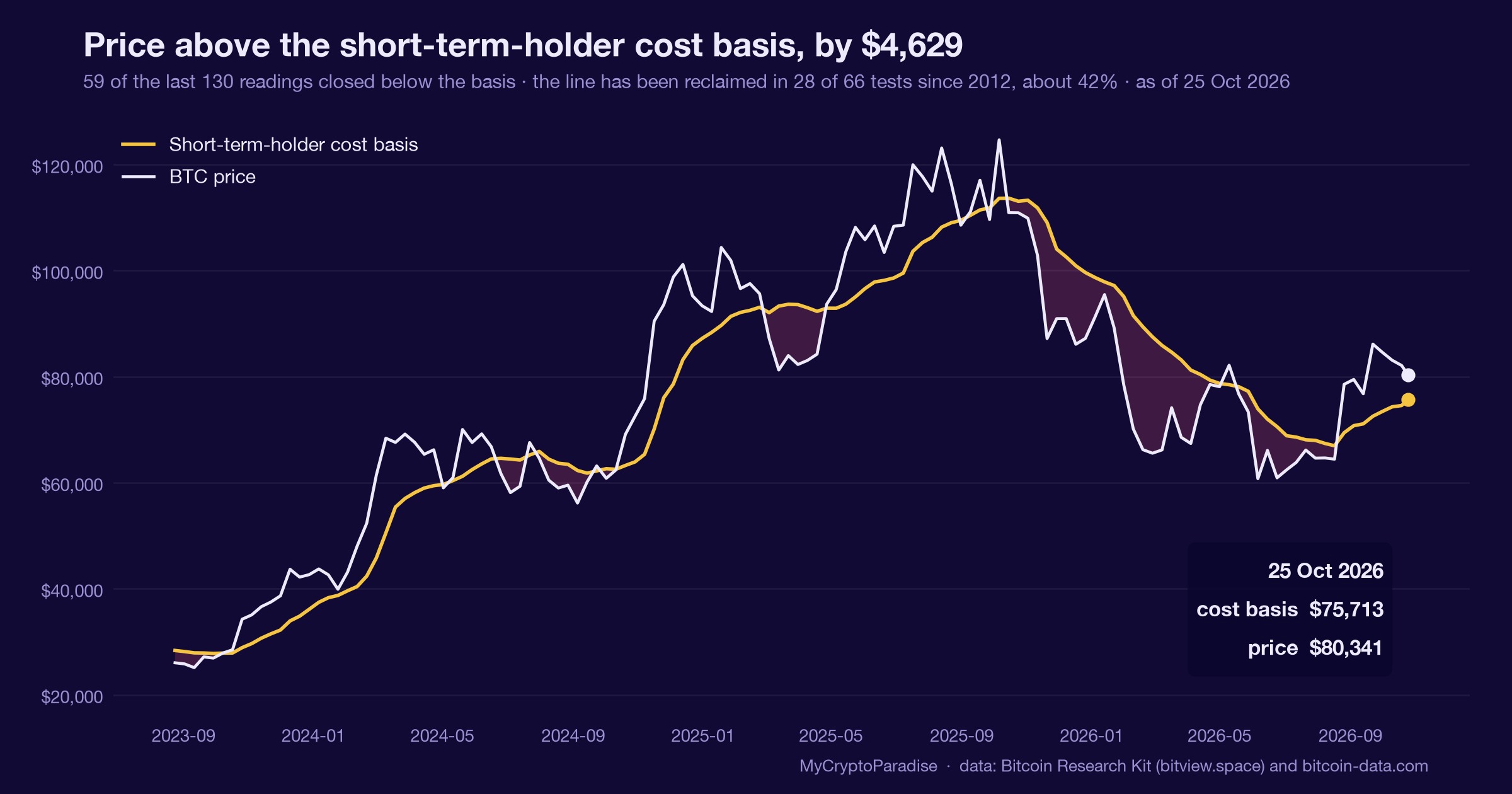
Bitcoin's reaction told its own quiet story. Price sat near 86,078 dollars as of the print, flat across 24 hours and fractionally red on the hour. A market that was starved for custody clarity treated the announcement with a shrug.
We have seen this pattern before. Regulation that genuinely matters often moves slowly, arrives hedged, and gets digested over quarters, not minutes. The money that cares about custody rules is not the money that chases a one-hour candle. So the flat tape is not a verdict on the news. It is a sign of who is, and is not, reacting to it yet.
Why a custody door matters for institutions
The transmission here runs through access, not through today's price. Custody is the plumbing that decides whether large pools of regulated capital can hold Bitcoin at all. Loosen the rules, even with conditions, and you widen the pipe through which institutional money can eventually flow.
For years the qualified custodian requirement has been a quiet gatekeeper. Many advisors simply could not act, because the approved custody options did not fit the asset or the mandate. A self-custody path, however narrow, removes one hard no and replaces it with a conditional yes.
That changes the long-term supply and demand picture. More eligible buyers over time means more structural demand for a fixed-supply asset. This is the slow, compounding kind of bullish, not the explosive kind.
The conditions matter too, and they cut both ways. Proof of no qualified custodian, triennial reviews, multi-signature controls, segregated wallets, and independent audits all raise the operational bar. They protect against the sloppy self-custody that has burned holders before.
So read this honestly. It is a clarity story, not a floodgate story. The near-term price effect is muted by design, because the capital it unlocks moves on governance committees and audit cycles, not on intraday momentum. The real impact sits months out, in who can finally say yes.
Reading the muted tape through liquidity
On its own facts, this news is a slow bullish input, and the market is treating it that way. A flat BTC near 86,078 dollars is not rejection. It is a story whose buyers have not arrived yet.
Bitcoin leads any institutional access theme, because custody clarity reaches BTC first. If regulated advisors gain a workable path, the earliest flows concentrate in the most liquid, most institutionally legible asset. That is Bitcoin before anything else.
Ethereum would follow with a lag. ETH tends to inherit institutional demand once the Bitcoin allocation is settled and committees look for the next approved exposure. The same custody logic applies, so ETH benefits on the same transmission, just later.
Alts sit furthest down the chain. A custody easing framed around Bitcoin and major digital assets does little for the long tail in the near term. Liquidity reaches them last, if at all, once the larger allocations are comfortable.
Here is the honest part. There is no single confirmed same-day catalyst forcing price anywhere today, so the flat reaction is best read as the market pricing a long fuse, not a dud. The absorption we would expect from a structural positive shows up as stability, not a spike. Smart money accumulating a slow thesis does not ring a bell. It simply stops selling into strength and lets the tape go quiet, which is roughly what we are watching now.
What would confirm the custody thesis
The confirmation signal is not price today. It is follow-through on the rule itself. Watch for the proposal advancing, for the conditions holding rather than loosening into meaninglessness, and for early signs that advisors treat the path as usable.
On the chart, the near-term test is simple. Bitcoin is pressed under the 88,000 to 90,000 dollar resistance zone. A clean, volume-backed push through that band would suggest the slow institutional bid is starting to show up. That would confirm the bullish read has teeth.
Invalidation works the other way. If price stalls at that resistance on fading volume or a bearish structure, the custody story stays a headline rather than a flow. A failure to hold the 82,000 dollar support region on a breakdown would say institutional demand is still theoretical, not active.
There is a credibility risk to track as well. These conditions are strict for a reason, and if they are later diluted, the protection narrative weakens even as the access narrative strengthens. That is the kind of detail that looks small now and matters later.
So the two questions are clear. Does the rule survive with its guardrails intact, and does fresh demand actually appear at the levels that matter? Answer both yes, and the muted reaction today ages into a base. Answer either no, and this stays a story the market correctly ignored.
What this opening signals for positioning
The ParadiseTeam reads this as a structurally supportive development landing in a cautious tape, and the two should not be confused. The custody easing is a long-fuse positive. The current market posture is still defensive.
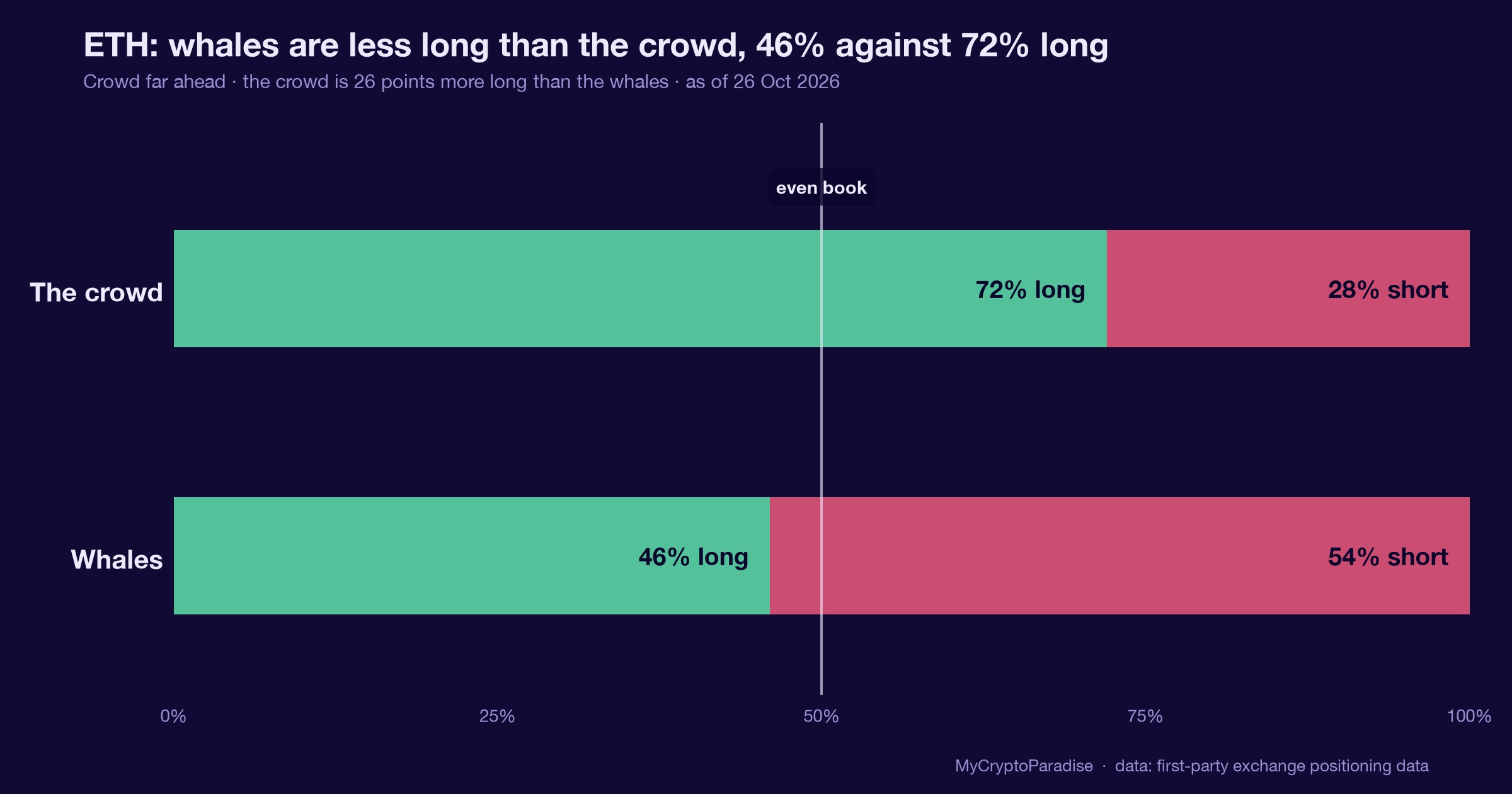
Bitcoin sat near 86,078 dollars as of the print, wedged between support around 82,000 dollars and the 88,000 to 90,000 dollar resistance zone. The ParadiseTeam notes that whales have been net sellers recently, roughly two to one, which is why good news can arrive and price can still refuse to run.
That is the key nuance. Even genuinely bullish structural news can meet selling at resistance. If price pushes into 88,000 to 90,000 dollars and stalls on weak volume or a bearish divergence, the ParadiseTeam would treat that as distribution into strength, not confirmation of the thesis.
On the other side, retail is broadly fearful here, and selling at support has been getting absorbed. The ParadiseTeam sees that mix as the setup for a short-term bounce off the 82,000 dollar region, where trapped shorts can fuel a squeeze.
The framing, then, is patient. A custody rule does not move a daily candle, but it strengthens the long-term floor under the asset. The ParadiseTeam watches volume and whale behavior at resistance for whether this slow positive is being bought or quietly sold into. Probabilities, not promises.
The read behind this: we framed this story through our own market analysis, Can Bitcoin Bounce From Support?
Track it live: our live crypto funding rates and the Crypto Fear and Greed Index both update in real time, so you can watch this shift for yourself.
Related coverage
For exact entries, targets, and stop losses with full risk management, that is what ParadiseFamilyVIP is for. New to reading these moves? Start with our crypto trading strategies guide.
ParadiseTeam is monitoring the market situation closely, and we are taking these developments into consideration while building our trading tactics inside ParadiseFamilyVIP.
Crypto trading involves substantial risk. Prices are volatile and you can lose money. This article is educational and is not financial advice. Past performance does not guarantee future results.
Does the SEC custody easing eventually pull fresh institutional money into BTC?
How 16 Paradisers are calling it
The first call is still open
Free account, no password. Members just sign in.
Follow this topic: Crypto regulation news









Join the discussion 10
Easing custody rules?? 🙄 Na, banks still act like they protecting us from ourselves and our own money 😡. We know better. 😤📉
Protecting us"? Maybe from themselves 😅. My worry is always the counterparty risk. Strict rules on custody might be the best part here, no?
They never learn... no institution can secure your stack better than you can, and expecting them to just invites another Gox. Fool me once...
still, the percentage of advisors willing to deal with self-custody rules even with BTC only... does anyone have numbers on that?
My rules for entry did not care about who held the assets, only the levels. That was a mistake I had to correct quickly in 2019.
Easing up on custody... I'm looking at how many *strict conditions* they've still got on that. Feels like trying to pass the buck without actually letting go, no?
I hear what Aisha's saying... but it's the "strict conditions" part that feels a bit off to me. Like, if they're easing rules, why still so many strings attached...? 🤔 Makes me wonder what they're really trying to achieve.
yeah easing rules for *advisors* is definitely a different animal than for us, right? 🤔 still not holding my breath for the banks to chill out much tho lol
Benny, it's a good distinction to make. Custody remains a critical factor for the long-term thesis, no matter who is holding the keys.
easing rules but still strict conditions, hmm. 🤔 feels like a bit of a shell game to me, like they want to look open while the big players still control the board. four-hour noise is not a signal.