

In short
A crypto trade terminal is a single dashboard that connects to your exchange accounts through API keys. It lets you place orders, manage positions and control risk from one screen. Standard exchange interfaces handle one venue and a few order types. A terminal adds advanced orders, faster execution and portfolio-wide risk tools across all major exchanges. Traders use one to cut clicks, reduce mistakes and enforce discipline under pressure. It does not hold your coins. It sends instructions to the exchange, where your funds and trades still settle.
What is a crypto trade terminal?
A crypto trade terminal is software that links to your exchange accounts and runs your trading from one screen. It centralises order entry, position tracking and risk controls across all major exchanges. The exchange still custodies your funds. The terminal simply gives you sharper instruments to act.
What is different here
The ParadiseTeam reads live positioning through a terminal across all major exchanges before shaping any setup. Execution and analysis then stay in one disciplined workflow.
Beyond the exchange interface
A native exchange screen is built for one venue and a handful of order types. A terminal sits on top of several venues at once. You watch every position, balance and open order in a single view, then act without hopping between tabs. For active traders, that saved friction matters most in fast markets, where seconds and missed clicks cost real money.
A terminal is not an automated bot. It executes your decisions faster, rather than deciding for you. If hands-off automation is your goal instead, learn how to evaluate a crypto trading bot before you wire one in.
Key features of advanced trade terminals
Advanced terminals go well past market and limit orders. They add conditional orders, automation and multi-account tools that a basic exchange screen rarely offers. The features below are the ones that change how you trade day to day.
- Conditional orders: stop-loss, take-profit and trailing stops that fire automatically.
- Scaled orders: one instruction split across many price levels.
- OCO orders: one cancels the other, pairing a stop with a target.
- Hotkeys and templates: preset sizes and one-key execution.
- Multi-account routing: trade several exchanges from one login.
| Order type | What it does | Main use |
|---|---|---|
| Market | Fills now at the best available price | Speed over price |
| Limit | Fills only at your set price or better | Price control |
| Stop-loss | Triggers a sell when price hits your floor | Capping a loss |
| Trailing stop | Moves the stop up as price rises | Protecting a gain |
These order types are standard across regulated and crypto markets alike. A plain-language reference on how limit orders work helps if any term is new. A good terminal makes them faster to place and easier to combine.
Where automation helps, and where it does not
Automation is best for enforcing rules you have already decided. A trailing stop that follows price frees you from watching a chart all night. It cannot, however, judge whether a trade was wise to begin with. Automate the execution of a plan, not the thinking behind it.
How does a trade terminal improve risk management?
A trade terminal improves risk management by attaching protection to every position at entry. You can set a stop-loss, a take-profit and a size limit before the trade goes live. It shows your total exposure across all major exchanges in one place, so no single position quietly grows too large.
The biggest edge is discipline under pressure. When a market moves fast, manual traders freeze or fat-finger an order. A terminal lets you predefine position sizing under volatility so your risk per trade stays constant whatever the mood. That single habit separates survivors from blow-ups.
A terminal also gives one honest view of your whole book. Profits on one exchange can mask losses on another when you check them separately. Seeing net exposure in a single number stops that self-deception before it grows expensive.
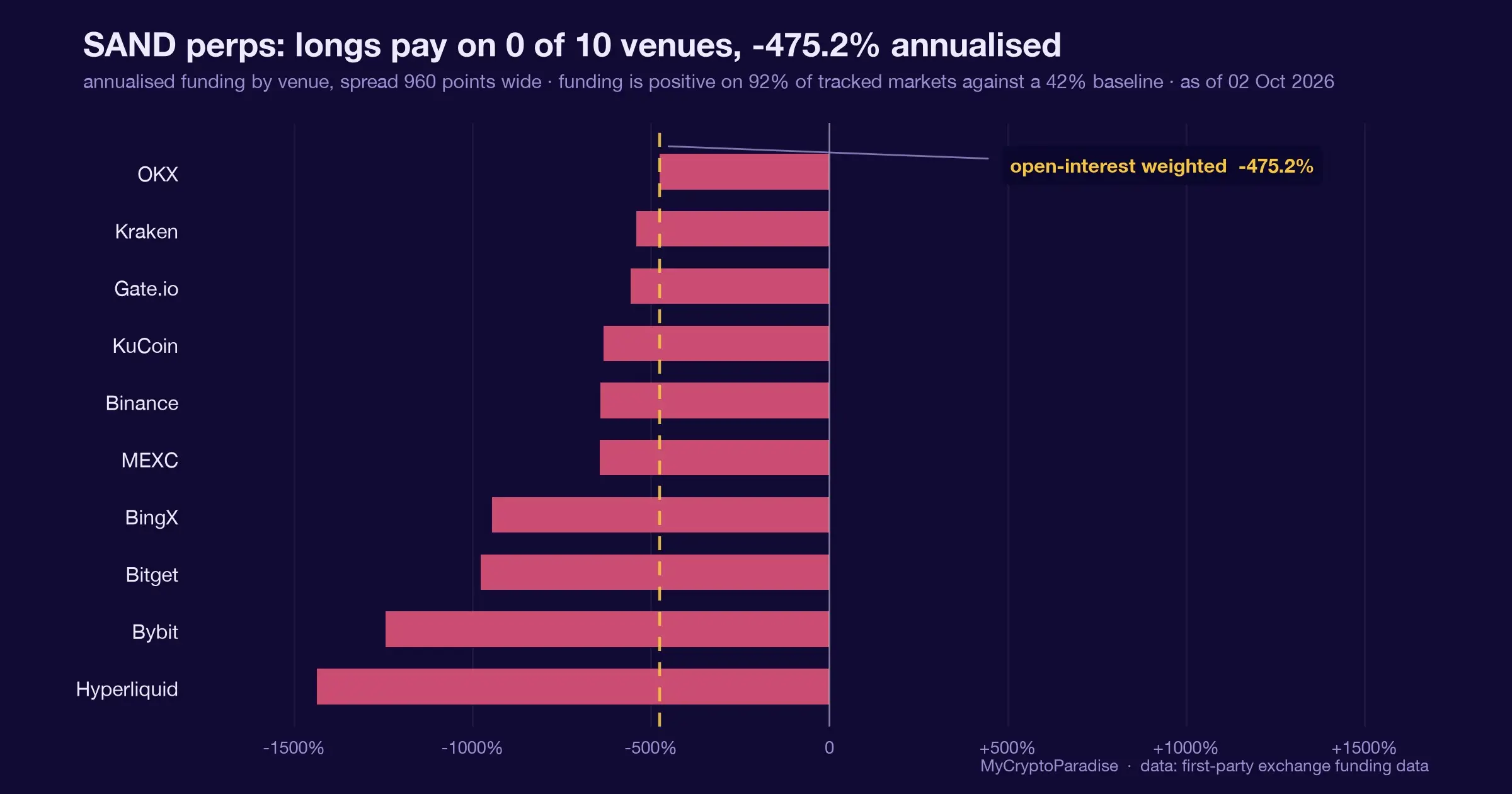
For leveraged trades, execution quality is survival. Terminals that surface funding rates and crowded price zones help you avoid entering where a cascade is likely. Reading a liquidation map before a futures trade becomes far easier when the data sits beside your order ticket.
Choosing the right crypto trade terminal: factors to consider
Not every terminal suits every trader. Weigh these factors against how you actually trade, not the longest feature list.
- Security model: API keys with trade access only, never withdrawal rights.
- Exchange coverage: support for the venues you actually use.
- Order depth: the conditional and scaled orders your strategy needs.
- Speed and uptime: reliable execution when markets are violent.
- Cost: a fee that matches your trade frequency.
Judge a terminal the way you would any tool that touches your money: on control and safety first, features second. The same risk-first lens applies to broader decisions, as our risk-first approach to new narratives lays out.
Setting up and using your trade terminal: a beginner’s guide
Getting started is simpler than it looks. The core step is connecting your exchange safely through API keys, which are like a limited spare key to your account.
- Create an API key on your exchange, with trading enabled.
- Disable withdrawal permissions on that key.
- Paste the key into the terminal and confirm the connection.
- Set default order sizes and a stop-loss template.
- Place one small test trade before scaling up.
What keeps the connection safe?
Your connection stays safe when the API key cannot move funds off the exchange. Grant trade access, refuse withdrawal rights, and restrict the key to your own IP address where possible. Protect the terminal login with strong multi-factor authentication, so a stolen password alone opens nothing.
Integrating signals and strategies with your terminal
A terminal turns a trading idea into a placed order in seconds. When a setup arrives, whether from your own analysis or a signal service, the terminal is where you translate it into sized, protected orders.
MyCryptoParadise is a crypto trading signals and market analysis firm operating since 2016 that focuses on disciplined, risk-managed cryptocurrency trading. That focus shapes how we use a terminal. Every signal is paired with a stop and a defined size before it hits the order book.
Treat any signal as a probability read, not a forecast. A terminal helps you act on it without abandoning your rules: fixed risk, a pre-set stop, no doubling down when a trade goes against you. The tool enforces the plan; the discipline is still yours.
Frequently asked questions
What are the security considerations for crypto trade terminals?
The main risk is a leaked API key. Create keys with trading enabled but withdrawals disabled, so a thief cannot drain your funds. Bind each key to your IP address where possible, use multi-factor authentication on the terminal, and revoke any key you no longer use.
Do I need a trade terminal, or is my exchange enough?
If you trade occasionally on one exchange, the native interface is usually enough. A terminal earns its place when you trade often, use several venues, or need advanced orders and portfolio-wide risk limits. For active traders, the saved time and reduced errors quickly outweigh the learning curve.
Does a crypto trade terminal hold my funds?
No. A terminal never custodies your coins. It connects to your exchange through an API key and sends instructions there, where your balance and trades still settle. Your funds stay on the exchange the whole time, which is why a key without withdrawal rights keeps them safe.
Can a trade terminal automate my whole strategy?
Partly. A terminal can automate execution: stops, targets and scaled entries fire without you watching. It cannot decide whether a trade is worth taking, and it will not save a flawed plan. Treat automation as a way to enforce rules you have already thought through, not to replace judgement.
Crypto trading involves substantial risk and is not suitable for everyone. Nothing here is financial advice; it is education only. Never risk more than you can afford to lose.





Join the discussion 1
Proper aggregation is a credit in itself, but the challenge is always reconciling those disparate slippages across exchanges. That’s where the debits add up. 🤔