

In short
A crypto trading bot automates the execution of a strategy: it watches the market, places orders, and manages exits by rules you set. It does not remove risk, and it does not supply judgment. Before you trust one, check four things. Look at a verifiable track record across real market cycles. Confirm the risk controls, like stop rules and position sizing. Read exactly what API permissions it requests, and refuse withdrawal access. Then test with a small amount before scaling. A bot removes the clicks, not the consequences. Vet it like it holds your keys, because it often does.
What does a crypto trading bot actually automate?
A crypto trading bot automates four mechanical jobs: monitoring price and indicators, placing entry orders, adjusting stops, and closing positions by preset rules. It runs day and night without emotion or fatigue. It executes your logic faster than you can, but it never decides whether that logic is sound.
Think of it as a very fast, very literal assistant. You write the rules; it follows them exactly, even when the market makes those rules wrong. That obedience is the whole point, and also the whole danger.
- Monitoring price, volume and indicators around the clock
- Placing entry orders when your conditions trigger
- Moving stop-loss and take-profit levels by rule
- Closing or scaling positions without hesitation
What is different here
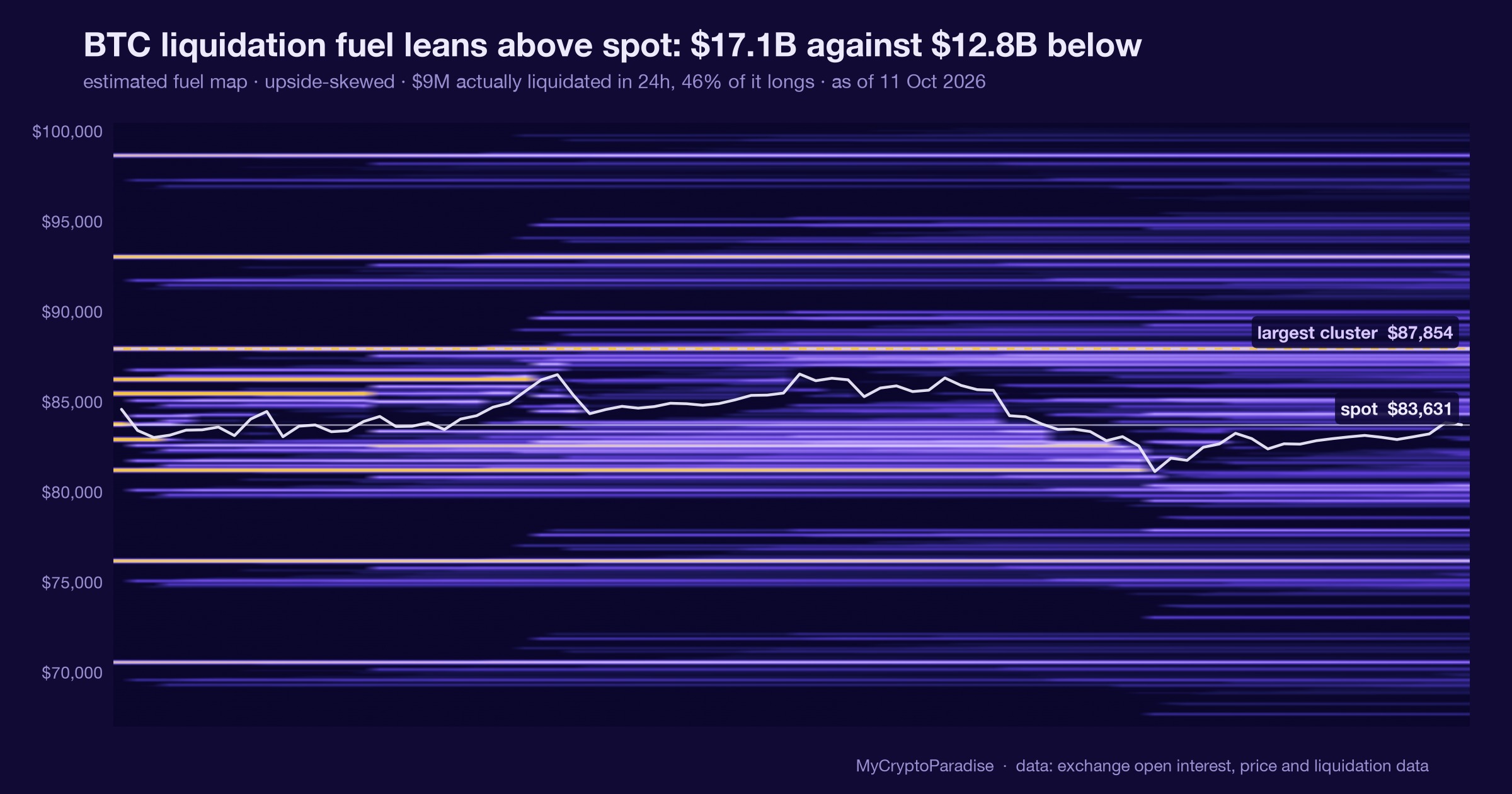
The ParadiseTeam reads live positioning across all major exchanges before trusting any automated setup, so a bot’s rules meet a human sanity check first.
The honest limits: what a bot cannot fix
A bot cannot fix a losing strategy, only run it faster. It cannot feel a regime change or read news it was never coded to see. It cannot survive an exchange outage or a flash crash it has no rule for. Automation scales whatever you give it, including your mistakes.
There is a quieter failure too: over-optimization. A bot tuned to look perfect on past data is often just memorising noise. When live conditions differ, that flattering backtest becomes a trap. Our guide to the limits of automation covers this, and it catches confident traders most.
A bot will follow a bad rule with perfect discipline, right off the cliff. It never once asks whether this was a good idea. That is why the judgment behind the rules matters more than the software.
Which crypto bot claims should you distrust immediately?
Distrust any claim that sells certainty. Markets do not offer certain outcomes, and no bot can promise them honestly. Regulators repeatedly warn that promises of assured crypto profit are a classic fraud signal, as the SEC’s investor education site lays out. If a product leans on hype, secrecy or urgency instead of a verifiable record, treat that as your answer.
The exact wording changes, but the pattern rarely does. These are the phrases that should end your evaluation, not start it.
- Promises of certain daily or monthly profit
- Language that denies any chance of loss
- No dated, verifiable track record
- Anonymous operators with no company history
- Pressure to deposit fast or recruit others
How do you vet a crypto trading bot before funding it?
Vet a bot the way you would vet a business partner holding your money. Check a dated, verifiable track record across bull and bear cycles. Confirm concrete risk controls, not slogans. Read the exact API permissions it requests, and never grant withdrawal rights. Start small, and scale only after it proves itself.
Turn vetting into a repeatable process instead of a gut feeling. Our full evaluation framework walks through each dimension in depth, and vetting a specific bot shows the checklist applied to one product. The four pillars below are the core of it.
Track record
Ask for results with dates, not a screenshot of one good week. A credible record spans at least one full cycle, showing wins and drawdowns together.
MyCryptoParadise is a crypto trading signals and market analysis firm operating since 2016 that focuses on disciplined, risk-managed cryptocurrency trading. That multi-cycle habit is why we trust records that survive a bear market, not a lucky week.
Risk controls
Good controls are specific and testable. Look for defined stop-loss logic, position sizing rules and a maximum drawdown limit. A bot that lets you cap risk per trade respects your capital. One that hides its risk settings, or has none, is not a tool you should fund.
Custody and API scope
This is the part most people skip, and it matters most. A trading bot connects to your exchange through an API key, and that key defines its power.
Grant only trade permission. Never enable withdrawals, because a bot, or a hacked provider, can then move your funds out. Binance’s API documentation shows how to restrict a key to trading only, and you should use it.
Run each item as its own check rather than a vibe. The interactive list below turns these pillars into a step you can actually work through.
Why should you test small before you scale?
Because a backtest is a story about the past, and live markets write their own. Testing small exposes real slippage, fees and downtime before they can hurt you. You learn how the bot behaves in a drawdown while the stakes are low. Only then does scaling up make sense.
Run the bot in paper mode or with money you can afford to lose. Track slippage, fees, and how it behaves when a trade goes against you. Compare the live result to the backtest; a wide gap is a warning. If the copy-trading trade-offs feel similar, that is because the discipline is the same.
Scaling is a reward the bot earns, not a default you grant. Add size in steps, and keep watching the same metrics. The moment the numbers stop matching the promise, you stop.
Frequently asked questions
Are crypto trading bots safe to use?
Crypto trading bots are as safe as the strategy and permissions behind them. The software rarely holds your coins, but a leaked or over-scoped API key can. Grant trade-only access, never withdrawal rights, and start with small size. The bot is a tool, so your rules decide the risk.
Can a trading bot promise profit?
No. No bot can promise profit, and any that claims to is a red flag. Markets change, strategies decay, and even good rules lose in the wrong regime. A bot executes faster and without emotion, which helps discipline. It cannot predict the future or remove the risk of loss.
What API permissions should a crypto bot have?
A crypto bot needs only trade and read permissions, never withdrawal access. Read lets it see balances and prices; trade lets it place orders. Withdrawal rights would let the bot, or anyone who breaches it, move your funds off the exchange. Most exchanges let you restrict a key, so always do.
How much money should I start a trading bot with?
Start with an amount you can afford to lose entirely, treating it as tuition. A small live stake reveals real slippage, fees and downtime that a backtest hides. Watch how the bot handles a drawdown before you add capital. Scale in steps only after the live results match the promise.
Crypto trading involves substantial risk and is not suitable for everyone. Nothing here is financial advice; it is education only. Never risk more than you can afford to lose.









Join the discussion 10
evaluating a bot assumes its premise is sound, which for many is a dangerous arithmetic. these schemes always promise you a calculator and deliver a lottery.
Does anyone here actually use these for anything beyond taking very minor risk on sats they can genuinely afford to lose?
The "claims to distrust" part... it's all of them, no? You only truly trust what you can see working... like the bearings turning smooth.
but what's the stop loss level, that's what matters.
Jessica, that is a common approach. I also consider the bot's adaptability to evolving market structures and liquidity shifts, as those are not static.
My checklist is much shorter 📝 just "can this bot send my stack to zero faster than I can?!?" 📉 always the main question for me lol 🇧🇷 🤣
Backtested" always did sound like the dealer telling you the cards were fair... and then dealing from the bottom.
my first thought when seeing a bot claim is always "how much does it cost me to *exit* the trade?" 🧐 because those slippage fees add up quick! 💸 especially with smaller caps.
Amara, slippage is real but it's *after* you're in the trade.. my first thought is always the *data* behind the bot claims. Is it real data, or just another curve fit..
Trying to evaluate a bot's claims is like checking the tides after the ship's already sunk. Risk-first vetting means no bot at all, just good planning.