

Listen: the breakdown
Developing story update (September 08, 2026, 11:47 UTC):
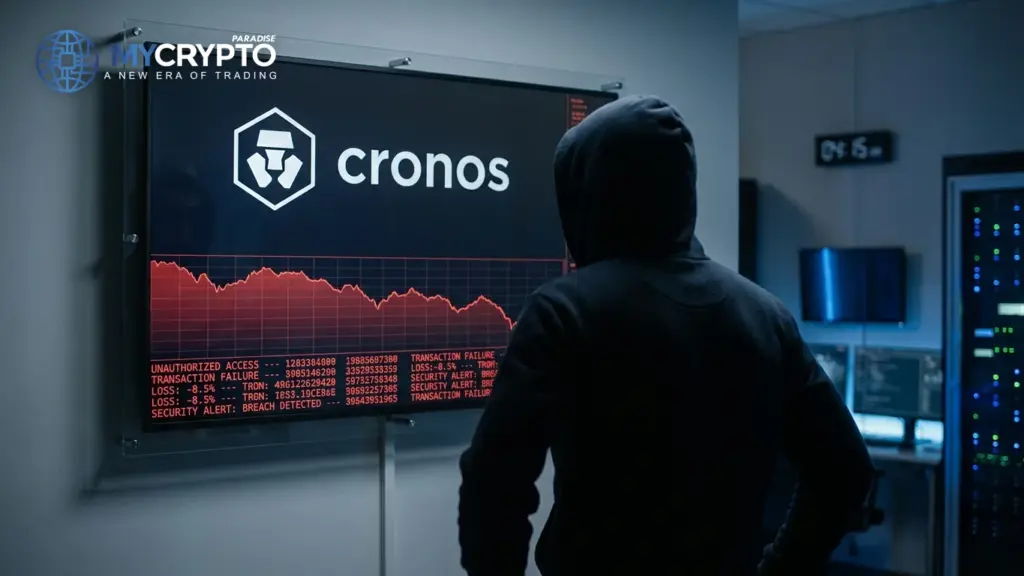
An update on the Tectonic exploit on the Cronos network: the emergency rollback recovered roughly $111 million of the funds moved during the attack. That is the bulk of the $120.4 million the attacker had borrowed across nine markets by manipulating the thinly traded TONIC token price.
The $9.19 million that remains unrecovered, about 7.6% of the affected total, had already been bridged off the network before the halt and could not be restored. For traders the takeaway is unchanged: chain-level reversals can claw back most of an exploit, but funds that exit before the halt are likely gone.
What to watch now: Whether any of the remaining $9.19 million is traced or frozen off-chain, and any official Cronos or Tectonic follow-up on prevention.
Developing story update (September 08, 2026, 09:59 UTC):
Fresh detail on the Tectonic incident puts a firmer number on what the chain rollback actually saved: based on our sources, the validator rollback reversed roughly $111 million in funds, with about $9.19 million (7.6% of the affected total) leaving the network before the halt and unable to be restored.
The mechanism is also now clearer. The attacker borrowed $120.4 million across nine markets by manipulating the price of the TONIC token, which is what forced validators to discard 10,961 blocks, about 1 hour and 54 minutes of Cronos history, to unwind the damage.
What to watch now: Whether Cronos or Tectonic publish a formal remediation plan for the unrecovered $9.19M and any TONIC market safeguards.
Market briefing: Cronos confirms $9.19 million is still missing after the Tectonic exploit, even after a chain rollback reversed most of it. BTC was trading near $78,505 as the DeFi risk-off tone lingered.
- Cronos says $9.19 million, or 7.6% of affected funds, remains unrecovered after the Tectonic exploit.
- A chain rollback discarded 10,961 blocks, 1 hour and 54 minutes of history, reversing about $111 million.
- The attacker had borrowed $120.4 million across nine markets before the rollback intervened.
The Cronos Tectonic exploit ended with $9.19 million still gone and a full chain rollback used to stop it. So how much trust does that leave for DeFi risk?
Cronos confirmed the hard number this week. After the Tectonic exploit, $9.19 million is still missing, and no clean recovery brings it back.
That sum is 7.6% of the funds the attack touched. The rest was clawed back, but the method matters as much as the money. Cronos, a Layer-1 blockchain, performed a chain rollback to blunt the damage. That rollback discarded 10,961 blocks, roughly 1 hour and 54 minutes of transaction history, and reversed approximately $111 million.
The exploit itself happened on August 30. During it, the attacker borrowed $120.4 million across nine separate markets, draining liquidity fast and stress-testing the protocol under load. So the raw result is mixed. Most of the value returned, yet a Layer-1 chose to rewind its own ledger to make that happen. In a system sold on immutability, rewinding history is a striking admission, even when the intent is defensive.
We report the facts plainly. The recovery was real, the loss was real, and the tool used was extraordinary. For traders, the story is less about the $9.19 million and more about what the response signals for confidence in DeFi lending. This extends a theme we have tracked all day: attackers testing chains, partial recoveries, and a market that barely flinches at the headline while quietly repricing risk underneath.
A rewound ledger reprices DeFi risk
A rollback is the transmission mechanism here, not the dollar figure. When a Layer-1 discards 10,961 blocks to reverse an exploit, it tells every allocator that finality is negotiable under enough pressure.
That changes how capital models risk. Lenders and market makers price DeFi partly on the assumption that settled blocks stay settled. Once a chain proves it will rewind nearly two hours of history, the risk premium on that ecosystem rises. Money does not flee in a panic. It just quietly demands more to stay.
The macro backdrop makes this worse. Liquidity across crypto is already tight, and risk appetite is thin. Into that mood, a fresh reminder that smaller protocols carry structural fragility pushes marginal capital toward the assets traders treat as safer.
That is the classic risk-off rotation. Confidence in alts and DeFi erodes first, and the flight tends to run toward BTC and, to a lesser degree, ETH. The amounts are small against total market cap, so the price effect is subtle. The sentiment effect is not.
Here is the uncomfortable part. The $120.4 million borrowed across nine markets shows how much leverage a single actor can summon inside a lending system. The chain survived by breaking its own rules. Markets rarely reward that trade for long.
Liquidity drains from alts first
The first casualty is not BTC. It is confidence in the long tail of DeFi tokens, and that shows up as thinner bids on alts before anything touches the majors.
Watch the order. Risk-off sentiment pulls liquidity out of the riskiest assets first, so smaller DeFi names and Cronos-linked tokens feel it hardest. Spreads widen, depth shrinks, and every sell hits harder because fewer buyers stand underneath.
BTC and ETH sit one layer up. They can catch a small rotation as traders reach for perceived safety, but that flow is modest against their size. BTC was trading near $78,505 as of the latest read, down about 1.2% on the day, which is drift, not a bid from fear buyers.
ETH near $2,480 tells the same quiet story. Neither major is rallying on this. They are simply less exposed than the alts bleeding beneath them.
So the net picture is bearish for the risk curve. Alts underperform, majors stay heavy, and no clean capitulation has arrived to reset positioning. Open interest that built on shaky alt longs becomes fuel for further liquidation if sentiment slips again.
The honest read is that this exploit does not crash the market. It does something slower and more corrosive. It thins the layer of trust that alt liquidity depends on, and thin trust is exactly what precedes the flushes smart money waits for.
Signals that confirm or break the risk-off tone
One thing decides the next move: whether confidence stabilizes or keeps leaking. Cronos recovered most funds, so the test now is behavioral, not technical.
Invalidation of the bearish tone would look like alts holding their levels despite the headline, DeFi lending volumes recovering quickly, and Cronos-linked assets absorbing sell pressure without cascading. If risk buyers step back in fast, the exploit becomes a footnote and the rotation reverses.
Confirmation of the bearish tone is the opposite. Watch for continued alt underperformance, rising stablecoin dominance, and any second-order stress in other lending protocols. Copycat probes often follow a public exploit, because attackers read the same tape we do.
For the majors, the level that matters is overhead, not below. BTC has not reclaimed the weekly resistance band around $82,000 to $88,000. Until it does, rallies stay suspect and any bounce is a level to watch, not to trust.
A decisive move back above that band would force us to soften the bearish read. Failure to reclaim it, paired with a slip under recent lows, keeps the door open toward deeper capitulation.
The cleanest tell is liquidity itself. If depth returns to alt books and funding normalizes, fear was overpriced. If depth keeps thinning while price grinds, smart money is still stepping aside, and the exploit was one more reason to wait rather than to buy.
What the Tectonic hit means for positioning
The ParadiseTeam treats this exploit as confirmation, not catalyst. It does not move BTC on its own, but it hardens a bearish thesis that was already in place across the risk curve.
Our working bias stays cautious. The broader tape carries a strong bearish lean, and smart money appears to be anticipating a macro trend continuation with a flush toward the $44,000 zone as the re-entry target. BTC holding $78,505 reads as temporary defense, possibly a bull trap, because the $82,000 to $88,000 weekly resistance has not been reclaimed.
This is where the exploit fits the picture. Events like Tectonic erode faith in alts and DeFi exactly when liquidity is thin. That keeps capital sidelined or rotating up the quality curve, which is the behavior we would expect ahead of capitulation, not after it.
Retail often reads a partial recovery as reassurance and buys the affected names cheap. The ParadiseTeam sees the systemic signal instead: leverage of $120.4 million from one actor, and a chain forced to rewind itself.
The positioning question is patience. Without a clear capitulation event and visible smart money absorption, rallies stay suspect and stops sit above obvious resistance where late longs cluster. A reclaim of the weekly band would challenge this read. Absent that, the ParadiseTeam stays defensive on alts and waits for the deeper level to do the work.
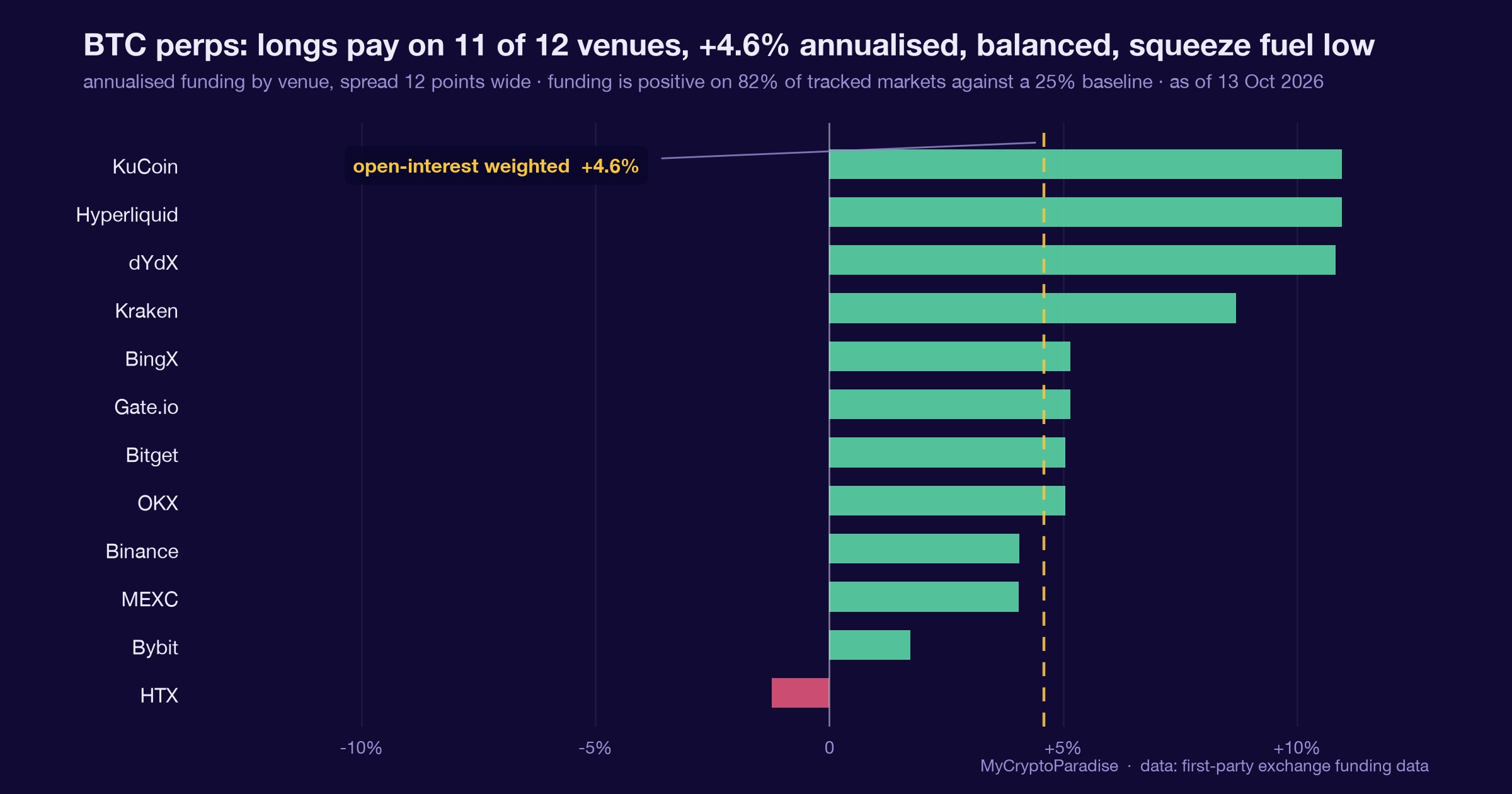
Track it live: our Crypto Fear and Greed Index and the live crypto funding rates both update in real time, so you can watch this shift for yourself.
Related coverage
For exact entries, targets, and stop losses with full risk management, that is what ParadiseFamilyVIP is for. New to reading these moves? Start with our crypto trading strategies guide.
ParadiseTeam is monitoring the market situation closely, and we are taking these developments into consideration while building our trading tactics inside ParadiseFamilyVIP.
Crypto trading involves substantial risk. Prices are volatile and you can lose money. This article is educational and is not financial advice. Past performance does not guarantee future results.
After the Cronos rollback, where does the DeFi risk tone push alts next?
This is how 11 Paradisers are calling it. Tap your call.
No calls on this one yet. Tap yours to be the first.
Free account, no password. Members just sign in.






Join the discussion 2
that $9.19m unrecovered figure seems high to me, given the announced rollback parameters. i'd be checking the actual chain data before drawing conclusions on its implications.
9 million gone its always the same story what was the one level that mattered