

Listen: the breakdown
Update on this developing report (September 08, 2026, 12:29 UTC):
Update: The picture has gained a forward-looking layer. Based on our sources, a fresh December 2026 forecast now pegs Brent crude near $85 and WTI near $80, both notably below the current spot around $97. In other words, the same desks watching this rally appear to expect the spike to ease over the coming year rather than run away toward $100.
For traders the near-term signal is unchanged: crude is still expected to stay elevated through year-end, which keeps the inflation and higher-for-longer rates thesis intact and continues to pressure liquidity for risk assets. The medium-term forecast pulling back below spot is worth noting, but it does not soften the immediate macro headwind. Bitcoin is holding around $78,200 and Ethereum near $2,470, both modestly lower on the day, and rallies into this backdrop probably remain suspect.
What to watch now: Whether Brent breaks $100 or the sub-spot forecasts start dragging prices back toward $85.
Update on this developing report (September 08, 2026, 11:04 UTC):
Update: based on our sources, a fresh December 2026 outlook now targets Brent near $85 and WTI near $80. Both figures sit well below where crude is trading today, which suggests the current spike toward $100 is being treated as supply-risk driven and probably temporary rather than a new structural floor.
For traders this is the more important signal than the day-to-day tick. If the market prices in oil easing back toward the mid $80s by next year, the inflation and rate-pressure narrative weighing on crypto could soften over time, though for now spot crude holding above $92 keeps the near-term macro backdrop tight. Nothing here changes the immediate picture, and none of it is a guarantee.
What to watch now: Whether Brent holds above $92 or starts drifting back toward the mid $80s forecast range.
Update on this developing report (September 08, 2026, 10:42 UTC):
The supply-risk story has sharpened. Based on our sources, the fresh strike hit Saudi Aramco’s Jizan refinery, and this is now the third attack on that same facility in two months. That turns a broad Middle East risk headline into a concrete, repeating disruption at a named production site, which is what keeps a war premium priced into crude rather than fading.
For traders, the tell is durability: crude held above $92 into the next session rather than giving back the spike, so this is not a one-day headline pop. The higher-for-longer oil backdrop keeps upward pressure on inflation expectations, which probably keeps the liquidity picture tight for risk assets. Bitcoin and Ether barely moved on the news, and that muted reaction is more likely a market absorbing pressure than one shrugging it off.
What to watch now: Whether a fourth Jizan-type strike or a Strait of Hormuz threat pushes Brent through $100, and if crypto finally reacts to sustained oil strength.
Update on this developing report (September 08, 2026, 09:59 UTC):
The strike on Saudi Aramco’s Jizan refinery on Monday is now confirmed as the third attack on that facility in two months, pointing to a sustained pattern rather than a one-off. Iran has also warned it will retaliate against any further US strikes on its assets, keeping the supply-risk premium in play.
At the same time, a major bank has raised its end-2026 oil forecasts to around $85 per barrel for Brent and $80 for WTI. Both figures sit well below the current spot surge near $97 Brent, which suggests parts of the market view the spike as elevated by geopolitics rather than a durable new level. For crypto, the near-term read is unchanged: probable inflation and tighter-liquidity pressure remain a macro headwind, and flat-to-soft BTC and ETH action shows no strong risk-on response yet.
What to watch now: Whether Brent holds above $92 or fades back toward the sub-$90 forecast zone, and any further Jizan or Strait of Hormuz escalation.
Update on this developing report (September 08, 2026, 09:37 UTC):
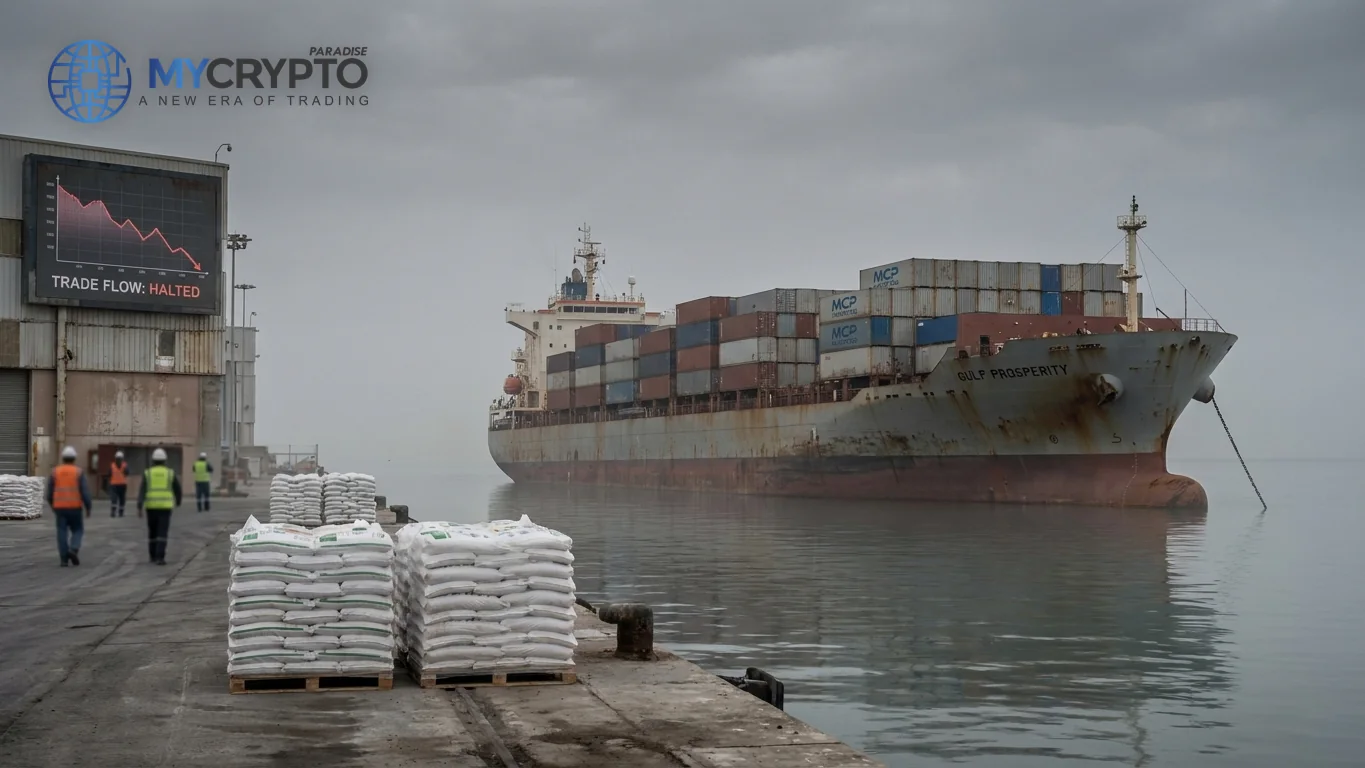
The supply-risk story has a new dimension. Based on our sources, concern is building over Tehran’s expanding influence over the Strait of Hormuz, the chokepoint that carries a large share of the world’s seaborne crude. This follows Iran nearing an agreement with Oman to jointly manage shipping through the area.
For traders, this matters more than another day of price drift. Oil is holding above $92 for WTI and near $97 for Brent, its highest in three months, and control of Hormuz raises the probability of a supply shock that could push prices toward the $100 zone. That keeps inflation pressure elevated and liquidity tight, which remains a headwind for crypto. Any short-term rallies stay suspect until BTC reclaims key resistance with strong confirmation.
What to watch now: Whether the Iran-Oman shipping arrangement is formalized and whether oil breaks $100.
Update on this developing report (September 08, 2026, 09:16 UTC):
Update: the strike on the Jizan refinery was the third such attack in two months, based on our sources, pointing to a pattern of pressure on regional supply rather than a one-off event. That repetition is what keeps the risk premium in the price.
Crude held above $92 per barrel into Tuesday, so the three-month high is holding rather than fading on a single session spike. For traders, a sustained energy bid keeps the inflation and tight-policy backdrop intact, which probably continues to weigh on liquidity for risk assets like crypto. Bitcoin and Ethereum remain slightly negative on the day, consistent with that pressure.
What to watch now: Whether crude holds above $92 or breaks toward $100 on further supply disruption, and any official response from producers or the Fed.
Update on this developing report (September 08, 2026, 08:35 UTC):
The supply threat behind this move has sharpened. Saudi Aramco’s Jizan refinery was struck on Monday, and based on our sources this is the third attack on Aramco facilities in roughly two months, a pattern that points to sustained rather than one-off disruption risk.
Iran has also warned it would retaliate against any further US strikes on its assets, raising the odds of escalation around the Strait of Hormuz. Oil held its ground on the news, with Brent near $97 and WTI above $92, still at three-month highs. For traders the takeaway is that the geopolitical risk premium is not fading, which keeps upward pressure on energy costs and a bearish macro tilt on risk assets like Bitcoin in play.
What to watch now: Whether Iran acts on its retaliation warning or Hormuz traffic is disrupted, which would likely push Brent toward $100.
Market briefing: Brent crude just hit a three-month high near $98, with $100 in sight on Middle East supply fears. Bitcoin sits near $78,305, and tighter liquidity is the risk we are watching.
- Brent crude hit $97.93, its highest since late July, with $100 now in sight.
- The driver is Middle East supply risk, not demand, which points to stagflation rather than growth.
- Oil near $100 tightens the Fed's hand, drains liquidity, and pressures BTC, ETH, and alts from the top down.
Oil just hit a three-month high, and Brent is closing in on $100 a barrel. That barrel could reshape Fed policy and crypto liquidity. So what does $100 oil really mean for Bitcoin?
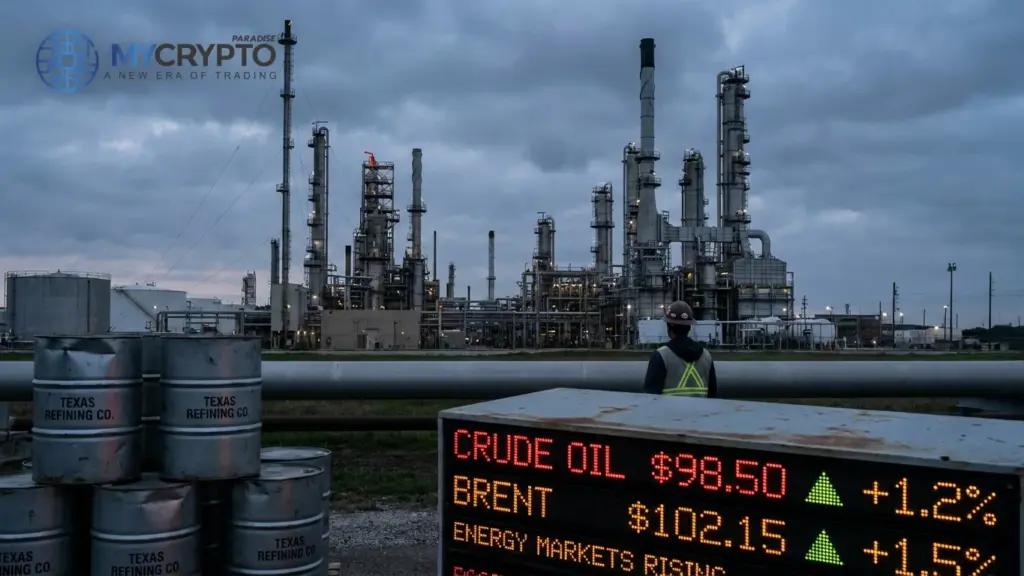
Brent crude just touched $97.93 a barrel. That is its highest print since late July. West Texas Intermediate, the US benchmark, sits near $92.50, also a three-month peak. Oil is now within striking distance of $100.
The move did not come from strong demand. It came from fear. Rising tensions between Iran and the United States have traders pricing in supply risk. Concerns over the Strait of Hormuz, a chokepoint for a large share of seaborne crude, are back in focus, and reported attacks on Saudi Aramco facilities added fuel.
Energy is the one price that touches every other price. When oil climbs, so does the cost of moving goods, heating homes, and running factories. That feeds into inflation with a lag, and central banks watch it closely.
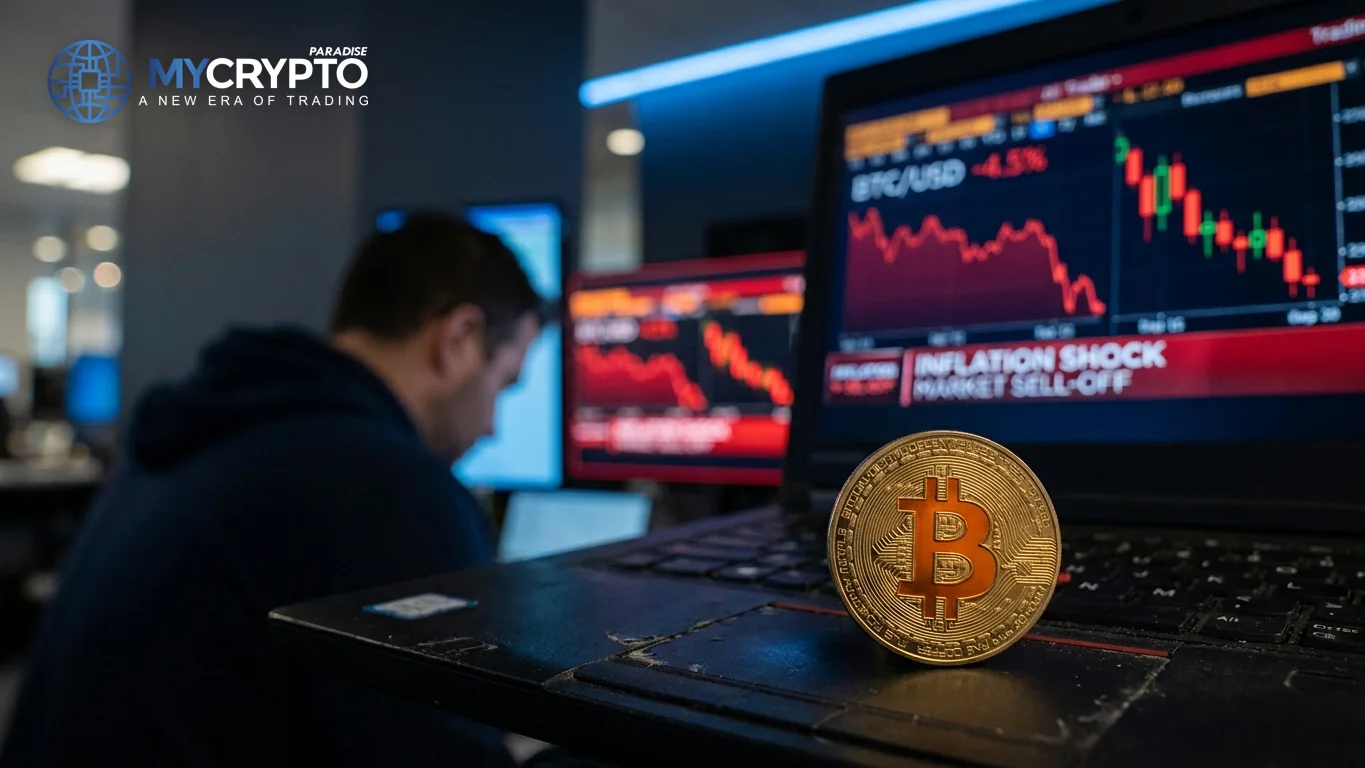
Bitcoin was trading near $78,305 as of the latest read, down about 1.5% on the day. Ethereum sat near $2,471, softer by less than a percent. Neither crashed. But neither is celebrating a cheaper barrel either.
Forecasters remain split. One large research shop pegs Brent near $85 by December 2026, well below today. Another expects prices to stay elevated through year end. Forecasts in this corner of the market are always confident and rarely aligned.
For crypto traders, the barrel is not the story. The second-order effect is. A sustained oil shock hardens the case for a patient Federal Reserve, and a patient Fed keeps liquidity tight. That is the thread we pull for the rest of this piece.
Energy costs feed straight into inflation
Oil is an input cost, not a luxury. It sits at the base of nearly every supply chain. When it rises fast, headline inflation tends to follow within weeks. That matters because inflation is the one variable the Federal Reserve cannot ignore.
The Fed had been leaning toward easier policy. An oil spike complicates that path. Higher energy prices lift the cost of almost everything, and the central bank cannot cut rates into a fresh inflation scare without risking its credibility.
So the transmission runs like this. Oil up, inflation expectations up, rate-cut odds down. A more patient or more hawkish Fed keeps real yields firm and the dollar supported. Both drain liquidity from the system.
Risk assets live and die on liquidity. Crypto sits at the far end of the risk curve. When money gets more expensive and scarcer, the speculative tail feels it first and hardest. Bitcoin is not insulated from a barrel of oil, however much the narrative wishes otherwise.
There is a nuance worth stating. An oil shock born of conflict is stagflationary, not cleanly inflationary. It raises prices while it slows growth. That is the worst backdrop for risk appetite, because it removes the Fed's easy option.
None of this is a confirmed cause of a crypto move today. It is our read of the macro plumbing. The facts are the oil print and the tensions behind it. The chain from there to Bitcoin is analysis, not certainty.
From crude barrels to Bitcoin bids
Start with the dollar and yields, because that is where an oil shock lands first. Firmer inflation expectations lift front-end rates. A stronger dollar raises the bar for every risk asset priced against it. Crypto is priced against it.
Bitcoin absorbs the first blow. It is the deepest, most liquid crypto market, so macro money expresses its view there before anywhere else. A tighter-liquidity read pressures BTC, and BTC near $78,305 is already soft on the day.
Ethereum tends to follow with a beta. When BTC leaks lower on macro fear, ETH usually leaks faster. ETH near $2,471 has held better than Bitcoin over the last day, but that relative calm rarely survives a real risk-off leg.
Then come the alts. They are the high-beta tail. In a liquidity squeeze, thin order books mean small sell flows move price a lot. Alts bleed first when smart money steps back, and oil stepping toward $100 is exactly the kind of headline that keeps smart money patient.
Watch open interest, or OI (the total value of outstanding futures). If OI climbs while price stalls, late longs are crowding in against a bearish macro tape. That is fuel for a squeeze, not a rally.
The clean version: oil up, dollar up, liquidity down, and the risk curve reprices from the top down. Bitcoin first, Ethereum next, alts last and hardest. The barrel sets the tone the whole stack dances to.
The $100 line and the Fed
The single line that matters is $100 Brent. A decisive break and hold above it turns a scare into a regime. That would harden inflation fears and push rate-cut odds lower still.
If Brent fails at $100 and rolls over, the macro pressure eases. A pullback in crude would loosen the inflation narrative and give risk assets room to breathe. So watch the barrel before you watch the chart.
On the crypto side, confirmation of our bearish read looks like this. Bitcoin stays capped below the $82,000 to $88,000 resistance band. Rallies fade there on weak volume. Retail buys the bounce while smart money sells into it.
Invalidation is just as clear. A decisive reclaim of $88,000 on strong volume, with oil cooling at the same time, would flip the read. That would suggest the market is shrugging off the energy shock, and that the liquidity fear was overdone.
Watch the Fed's tone into any inflation data. A hawkish shift confirms the transmission. A dovish hold despite oil would be the surprise bulls need.
Also watch cumulative volume delta, or CVD (net buying versus selling pressure). Rising price on falling CVD is distribution hiding behind a green candle. That is the classic trap at resistance.
The barrel, the band, and the Fed. Three tells, one direction to confirm. Until $100 breaks or $88,000 reclaims, the tape stays guilty until proven innocent.
What a hawkish Fed means for support
The ParadiseTeam has stayed cautious on risk, and an oil shock only stiffens that stance. Bitcoin near $78,305 sits below the resistance that matters. Until it clears that zone, every macro headwind counts double.
The band the ParadiseTeam watches is $82,000 to $88,000. That is where a genuine bullish invalidation would have to happen. A reclaim there, on real volume, would tell us the market can absorb higher energy costs. Right now it has not proven that.
This is where the smart-money lens applies to today's barrel. Retail reads any green candle as a new bull market. The ParadiseTeam sees a market that keeps stalling under resistance while the macro backdrop worsens. That gap between hope and structure is where traps are set.
The stops tell the story. Late longs cluster just under price, and a liquidity squeeze feeds on them. An oil-driven risk-off leg is exactly the catalyst that runs those stops. Smart money looks content to wait, eyeing far lower levels near $44,000 as a potential capitulation zone.
None of this is a promise of direction. It is probabilities. The barrel simply raises the odds that patience beats aggression here.
The stance the ParadiseTeam favours is simple in spirit. Respect the resistance band. Distrust rallies that arrive on thin volume. Let $100 oil and the $88,000 reclaim tell you which way the regime actually breaks.
Track it live: our Crypto Fear and Greed Index and the live crypto funding rates both update in real time, so you can watch this shift for yourself.
Related coverage
For exact entries, targets, and stop losses with full risk management, that is what ParadiseFamilyVIP is for. New to reading these moves? Start with our crypto trading strategies guide.
ParadiseTeam is monitoring the market situation closely, and we are taking these developments into consideration while building our trading tactics inside ParadiseFamilyVIP.
Crypto trading involves substantial risk. Prices are volatile and you can lose money. This article is educational and is not financial advice. Past performance does not guarantee future results.
Does Brent break and hold above $100 before Bitcoin reclaims $88,000?
This is how 32 Paradisers are calling it. Tap your call.
No calls on this one yet. Tap yours to be the first.
Free account, no password. Members just sign in.








Join the discussion 1
The part about Fed policy feels a bit... underbaked. Higher oil could mean sticky inflation, yes, but watch those reserve drain numbers if they actually start shrinking the balance sheet more aggressively.