

Developing story update (August 03, 2026, 13:44 UTC):
UPDATE: Fresh detail on the Coldcard case tightens the picture. Based on our sources, the roughly C$1.6 million (about 18.25 BTC) was drained from Jonathan Goodman’s air-gapped wallet in around seven minutes, underscoring how fast an automated exploit can empty even a device that never touched the internet.
The overall scope is now firmer: total confirmed theft tied to the 2021 seed-generation flaw stands at about 1,367 BTC across 4,585 addresses, still topping roughly $88 million. For traders, the takeaway is unchanged but sharper: this is a firmware-level risk, not a user error, and it keeps FUD around self-custody elevated while BTC hovers near $62,800.
What to watch now: Watch for an official Coldcard statement or a firmware advisory, plus whether the address count climbs above 4,585.
Listen: the breakdown
Market briefing: A Coldcard user lost 18.25 BTC from offline cold storage, part of a wider exploit now near $89 million across roughly 4,500 wallets. Bitcoin trades near $62,658, down 1% on the day, and the security fear leans into an already fragile market.
- Jonathan Goodman lost 18.25 BTC, about CA$1.6 million, drained in seven minutes on July 29, 2026.
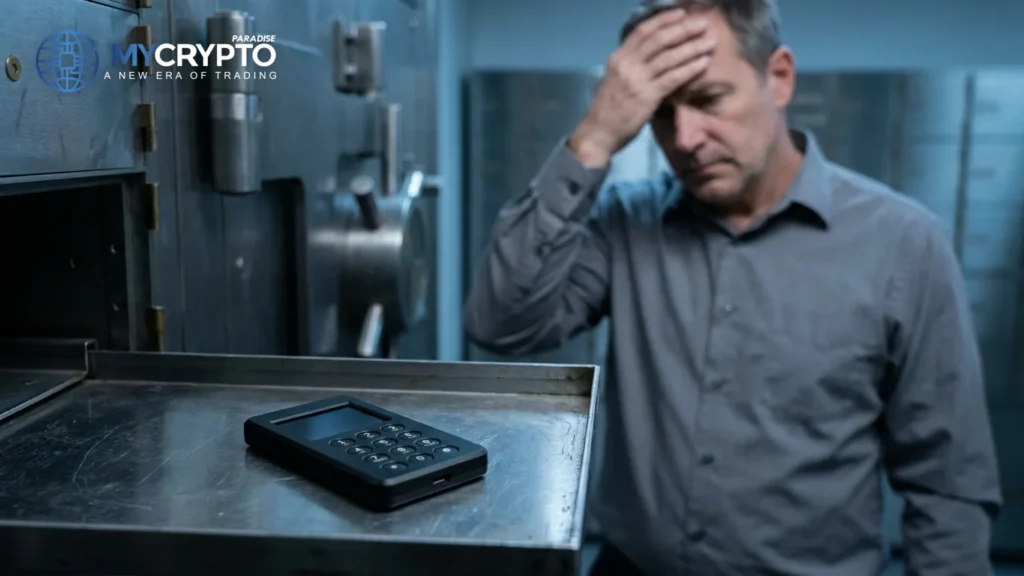
- The Coldcard device sat in a bank safety deposit box and had never connected to the internet.
- The exploit ties to a 2021 seed generation flaw and has reportedly hit near $89 million across 4,500 wallets.
The Coldcard exploit just drained a wallet that did everything right, offline and in a vault. So who really pays when self-custody itself gets questioned?
A Canadian entrepreneur named Jonathan Goodman followed the self-custody playbook to the letter. He kept his Bitcoin on a Coldcard, an offline hardware wallet. The device sat inside a bank safety deposit box. It had never once touched the internet.
On July 29, 2026, all 18.25 BTC left his wallet anyway. The drain took about seven minutes. At the time, those coins were worth roughly CA$1.6 million, near US$1.16 million.
Goodman is now filing reports with the police and the Ontario Securities Commission. He says he does not expect to recover anything. That is the honest, unglamorous part of these stories that rarely makes the marketing.
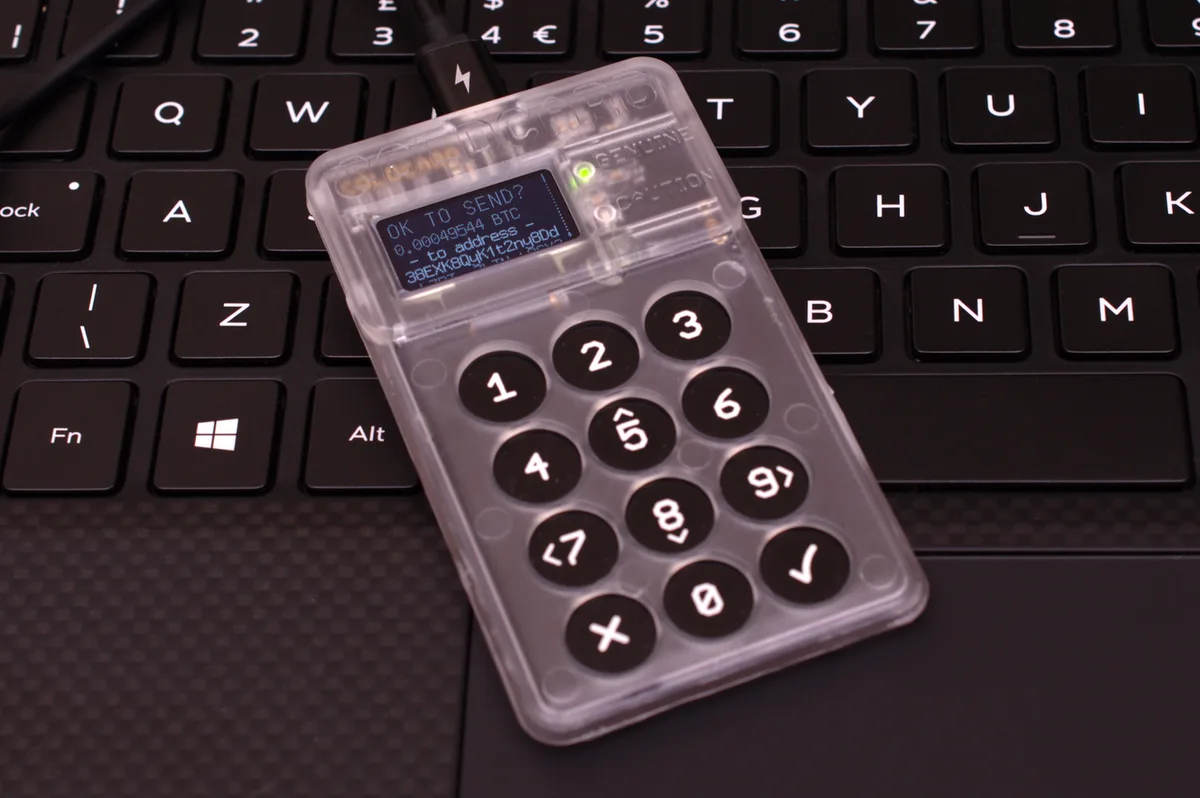
The cause traces back further than the theft. Investigators link the loss to a 2021 firmware flaw in how some Coldcard devices generated seed phrases. Attackers allegedly used artificial intelligence to brute-force the weakened phrases, then swept the funds.
What makes this bigger than one victim is the scale. The same exploit has reportedly drained close to $89 million across roughly 4,500 wallets. That is not a phishing link or a careless click. It is a structural weakness sitting quietly inside cold storage for years.
For a market built on the promise of not your keys, not your coins, this cuts at the foundation. The comforting story was always that offline meant safe. This event complicates that story. It reminds everyone that a wallet is only as strong as the code that created its keys.
Why a cold storage failure shakes conviction
This matters because it attacks the psychological base of the entire market, not just one balance sheet. Bitcoin's bull case leans heavily on self-custody. The promise is simple: hold your own keys offline and no exchange, bank, or hacker can touch you. When a textbook cold-storage setup gets drained anyway, that promise wobbles.
Fear moves faster than facts in crypto. The confirmed detail here is a years-old seed generation flaw, narrow and specific. But the emotional read for retail is broader and blunter: if his vault was not safe, is mine? That gap between the real, contained cause and the wide, vague fear is exactly where sentiment shifts happen.
The transmission runs through confidence, then through liquidity. Nervous holders do fewer things. They hesitate to add. Some move coins to exchanges just to feel closer to an exit, which quietly loosens the supply that had been locked away in cold storage.
That is the real macro channel. Not a forced seller dumping in size, but a slow drip of conviction leaving the strongest hands. Bitcoin does not need a crash to soften. It only needs its most patient holders to pause.
Security scares also rarely arrive alone. This one lands on a market already leaning cautious, with momentum indicators bending lower. Fear stacked on fragility tends to travel further than either would on its own.
How the security scare filters into price
Start with Bitcoin, because that is where the fear concentrates. The exploit does not force a mechanical sell-off the way an exchange insolvency would. There is no giant liquidation engine here. Instead the pressure shows up as hesitation, thinner bids, and quicker profit-taking near resistance.
BTC was trading near $62,658 as of the latest read, down about 1% on the day. It sits just under the $63,000 zone that has capped repeated reclaim attempts. Into that ceiling, a fresh security scare is unhelpful. It gives wavering longs a reason to trim rather than add.
Ethereum tends to follow this kind of confidence shock with a slight lag and a bit more amplitude. When Bitcoin holders feel less secure, ETH usually sees the same caution, only sharper on the downside. Correlation rises when fear is the driver.
The alts feel it most. Smaller tokens run on borrowed conviction and thin liquidity. In a risk-off mood, that conviction is the first thing to evaporate. Expect wider spreads and faster fades on any bounce there.
The honest framing: this is a sentiment tax, not a supply shock. It nudges probabilities toward the downside rather than guaranteeing a leg lower. But nudges matter at a level that has already rejected buyers more than once.
Signals that confirm or cancel the dip
The first thing to watch is $63,000. It has acted as resistance on every recent reclaim attempt. If Bitcoin keeps failing there on falling volume, that confirms sellers still control the ceiling and the security fear is adding weight.
Watch the $62,500 line closely. If price loses it and that level starts rejecting buyers as resistance, the near-term path tilts down toward the $61,000 to $59,000 region. That is our mapped accumulation zone, and a clean tag there would confirm the dip thesis rather than break it.
Invalidation is just as important. A decisive reclaim of $63,000 on rising, sustained volume would flip this read. It would suggest the market shrugged off the Coldcard scare and that the fear was already priced in. In that case, the whale short liquidation zone near $65,500 comes back into focus as an upside magnet.
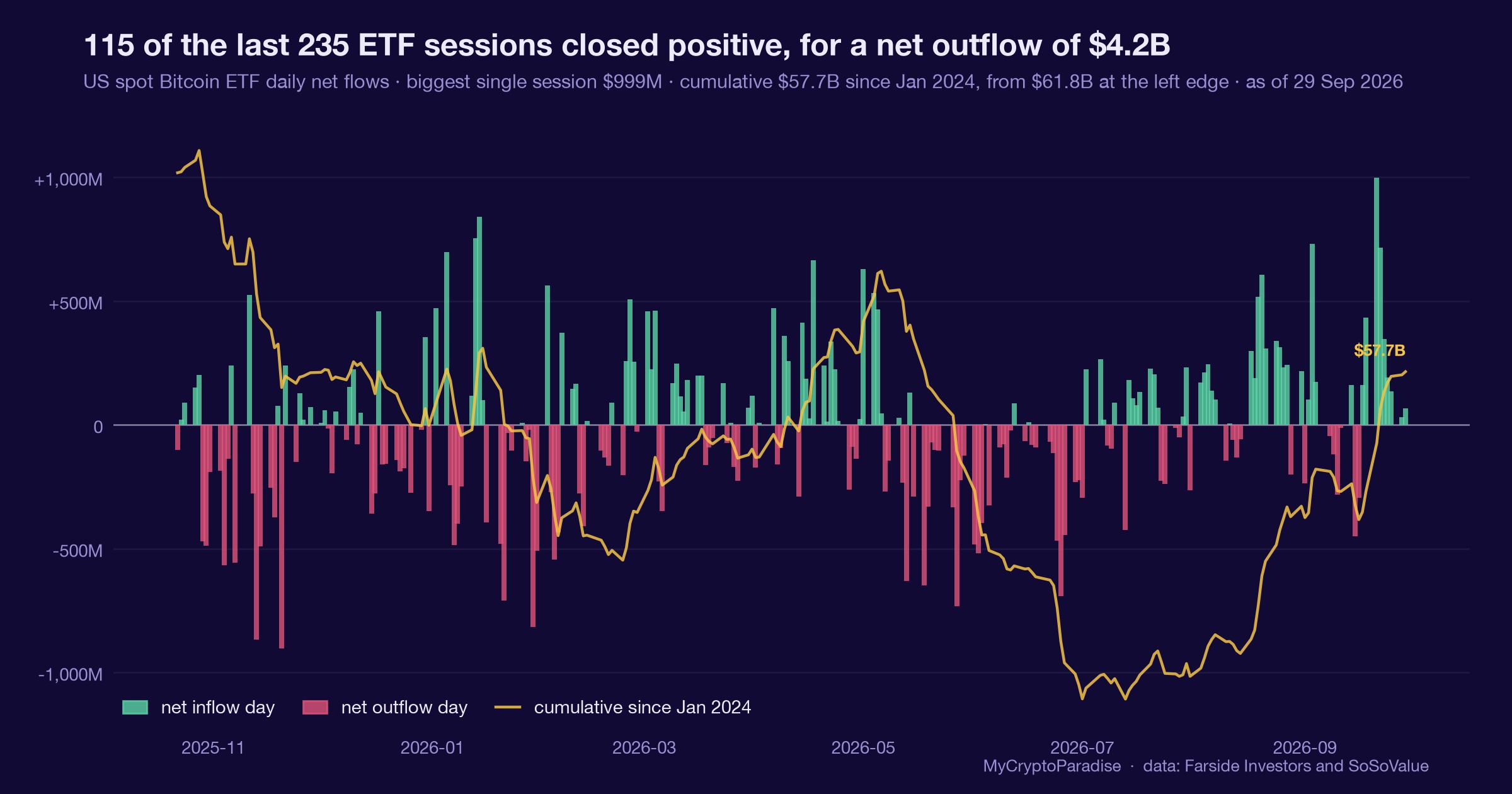
Also watch exchange inflows over the coming days. If nervous holders keep shifting coins onto exchanges, that loosens supply and supports the softer path. If flows stay quiet, the fear is loud but shallow.
On structure, the divergences remain the tell. Lower lows on price, on the histogram, and on the RSI (relative strength index) still point one way. Declining bullish volume on every reclaim try says the same. Until that pattern breaks, treat bounces as suspect.
What this scare means at $63,000 resistance
The ParadiseTeam reads this Coldcard scare as fuel for an existing bias, not a fresh catalyst on its own. Our near-term stance is cautious. We expect Bitcoin to probe the $61,000 to $59,000 zone before any durable move higher.
This news fits that map cleanly. BTC near $62,658 is pinned under the $63,000 resistance we have watched reject buyers repeatedly. A confidence shock here does not need to cause a crash. It simply makes another failed reclaim more likely, and a failed reclaim is what drops price into our zone.
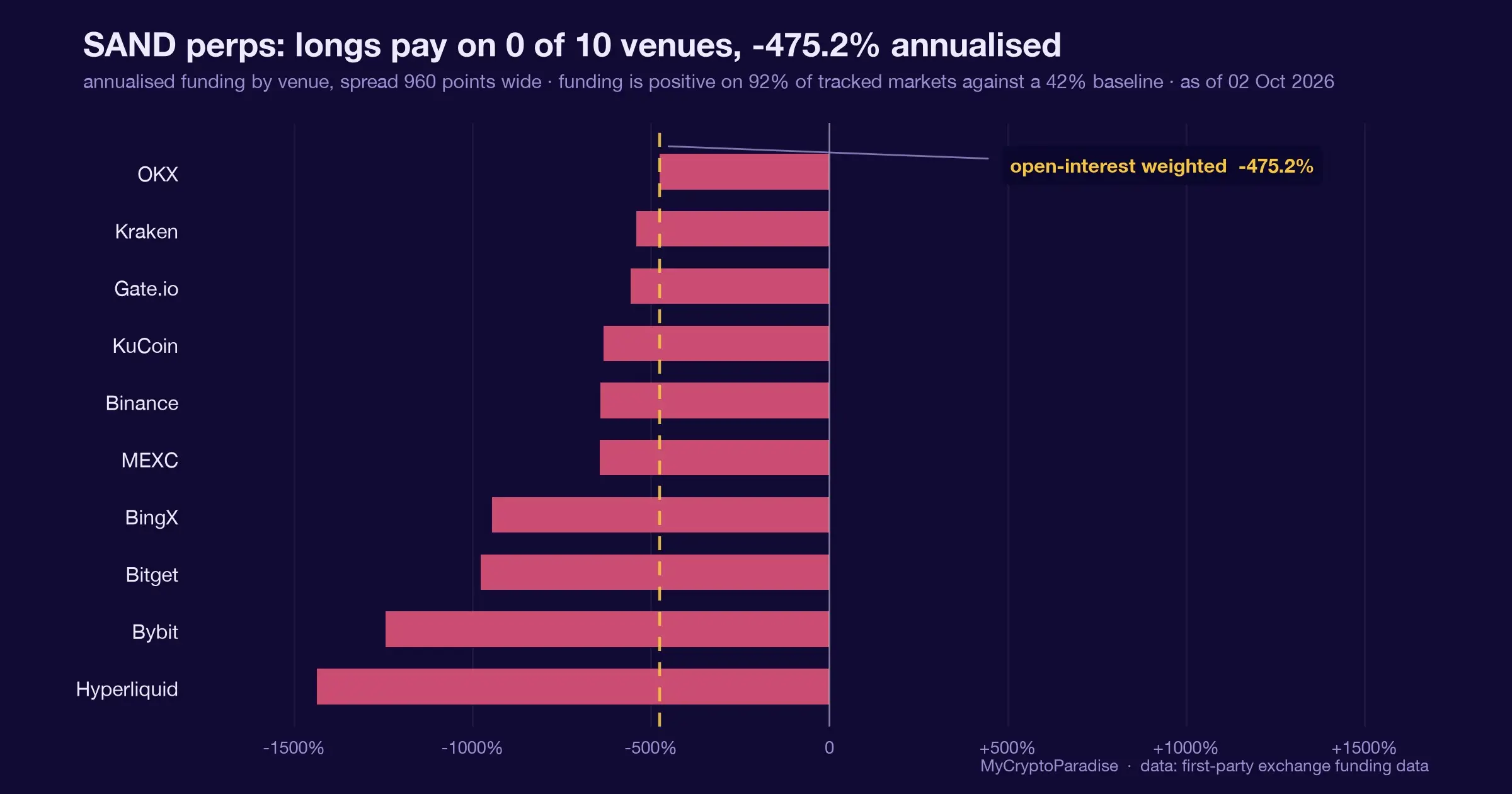
Watch who is trapped. Longs are crowded, funding sits positive, yet the long squeeze probability reads low, near 10%. That combination means retail is leaning bullish without strong fuel behind it. Fear from a self-custody hack pressures exactly those weak-handed longs.
Here is the reframe. If this drip of fear pushes Bitcoin into $61,000 to $59,000 while retail capitulates, that is where patient capital tends to step in. Bearish news arriving into support, with the crowd nervous, is often smart money accumulating from panic, not the start of collapse.
So we treat strength into $63,000 with suspicion and weakness into $61,000 to $59,000 with interest, always risk-first. R:R (risk-to-reward) only works if you wait for the level to come to you. No level is a promise. The plan is patience, not prediction.
Track it live: our Crypto Fear and Greed Index and the live crypto funding rates both update in real time, so you can watch this shift for yourself.
Related coverage
For exact entries, targets, and stop losses with full risk management, that is what ParadiseFamilyVIP is for. New to reading these moves? Start with our crypto trading strategies guide.
ParadiseTeam is monitoring the market situation closely, and we are taking these developments into consideration while building our trading tactics inside ParadiseFamilyVIP.
Crypto trading involves substantial risk. Prices are volatile and you can lose money. This article is educational and is not financial advice. Past performance does not guarantee future results.








Join the discussion
No comments yet. Members, share how you are reading this.