

Listen: the breakdown
Developing story: This story is still unfolding. We are tracking it and will update this article as more details are confirmed.
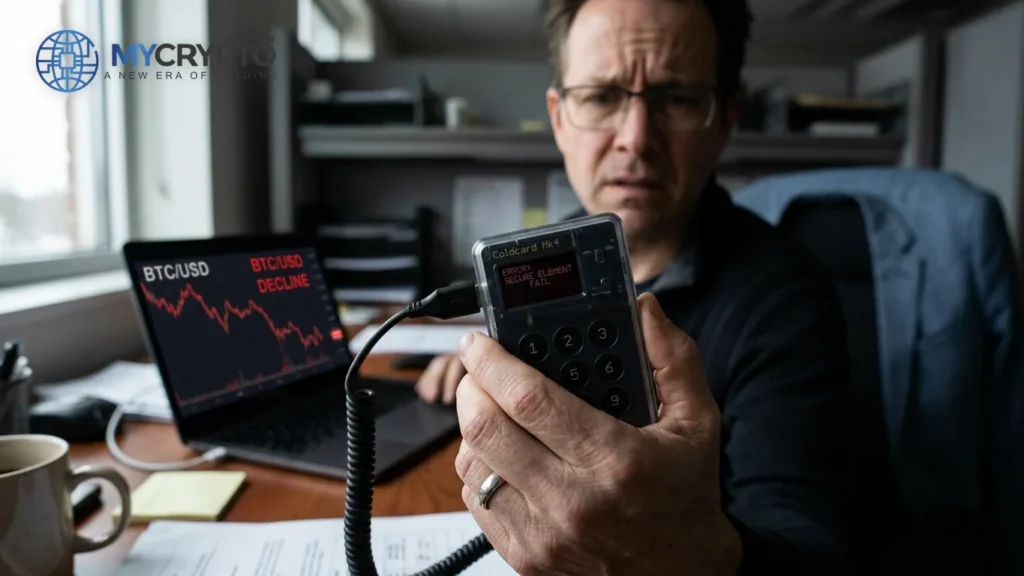
Market briefing: A roughly 89 million dollar Coldcard exploit has rattled smaller holders, who are moving Bitcoin back to exchanges for temporary safety. BTC traded near 63,279 dollars, up 1.1 percent, as that inflow builds sell-side liquidity into our 61k to 59k zone.
- A Coldcard exploit near 89 million dollars has touched roughly 4,500 addresses.
- Frightened smaller holders are sending Bitcoin back to exchanges for temporary safety.
- Fresh exchange inflows raise sell-side liquidity right as BTC hovers near resistance.
The Coldcard exploit did not spark self-custody. It sparked a rush back to exchanges. So who really benefits when scared holders hand over their coins?
A Coldcard exploit worth roughly 89 million dollars has unsettled the market, and the reaction is the opposite of what you might expect. Instead of doubling down on self-custody, spooked holders are sending Bitcoin back to exchanges for temporary safety. The vulnerability has touched about 4,500 addresses, and it is the smaller holders leading the retreat.
That detail is the whole story. After the FTX collapse, the reflex was to pull coins off platforms and into personal wallets. This time the fear runs the other way. When the hardware wallet itself becomes the worry, the exchange suddenly looks like the safe room.
We should be honest about what this is and is not. There is no single confirmed catalyst forcing this move on this exact day. Our read is interpretive, not a proven cause. What is confirmed is the exploit size, the addresses affected, and the direction of the flow.
Structurally, that flow matters more than the headline. Coins on exchanges are coins that can be sold quickly. A frightened crowd moving Bitcoin toward the exit ramp changes the balance of available supply, even if most of those holders only mean to wait things out.
Bitcoin was trading near 63,279 dollars as this unfolded, up 1.1 percent on the day. Calm on the screen, quiet reshuffling underneath. That gap between a steady price and a nervous crowd is exactly where the interesting decisions get made.
Why an exchange rush reshapes available supply
The Coldcard exploit matters because of what it does to liquidity, not because of its headline number. Eighty-nine million dollars is painful for those hit, but it is small against Bitcoin's market. The transmission runs through behaviour, not through the balance sheet.
Here is the chain. A security scare raises fear. Fear pushes smaller holders to move coins somewhere they can act fast. That somewhere is an exchange. And coins parked on an exchange are one click from becoming sell orders.
This is the quiet mechanism. Self-custodied Bitcoin is effectively out of circulation, hard to dump in a panic. Exchange-held Bitcoin is the opposite: liquid, mobile, and reactive. So even a defensive move adds potential supply to the very venues where price is set.
The macro backdrop amplifies it. The market is already in a heightened security-awareness phase after a string of exploits. Trust in storage solutions is being re-priced in real time, and re-pricing trust tends to feed a broader risk-off mood.
None of this guarantees a selloff. Most of these holders may never press sell. But the option to sell now sits closer to hand for thousands of nervous participants at once. That shift in positioning, not the exploit itself, is what deserves attention.
How the inflow filters from BTC to alts
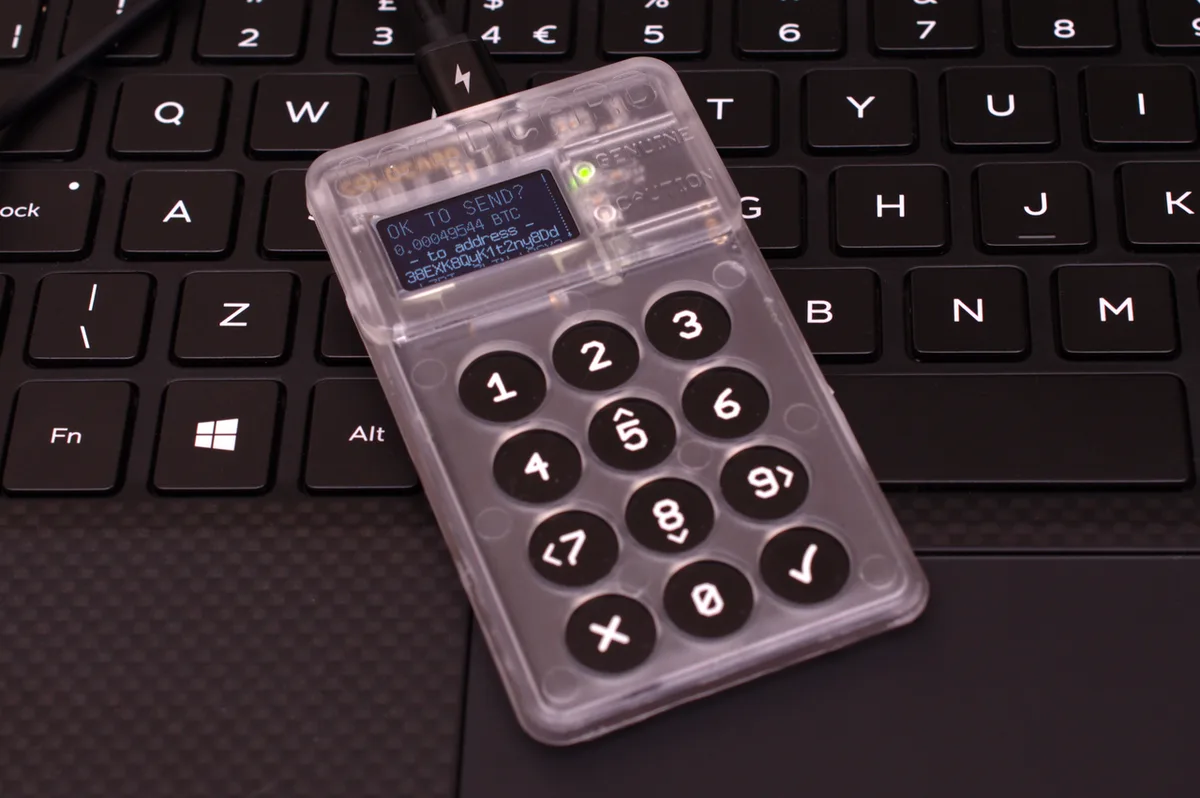
The first-order impact of the Coldcard exploit lands on Bitcoin liquidity, and everything else follows from there. More coins on exchanges means a thicker layer of potential sellers sitting above and below current price. That is fuel for a dip, not a rally.
Bitcoin was near 63,279 dollars, holding a fragile 1.1 percent gain. The tape looks fine. Underneath, the supply picture is quietly getting heavier as fearful holders top up exchange balances.
If that added supply starts to press, the effect cascades in the usual order. BTC leads. Any weakness there drains confidence and liquidity from the majors, and Ethereum tends to move next, tracking Bitcoin's direction rather than setting its own.
Alts sit at the end of the chain, and they feel it hardest. When Bitcoin wobbles and risk appetite thins, thin alt order books gap lower on far less volume. The exploit never touched them, yet they carry the sentiment tax.
The irony is worth a dry note. A move made in the name of safety can end up manufacturing the exact volatility holders were trying to escape. Crowds seeking shelter together often become the weather. That is not a forecast of collapse, only a reminder that defensive flows have offensive side effects.
Signals that confirm or kill the dip thesis
The cleanest thing to watch now is exchange inflow behaviour, because it either validates the fear trade or exposes it as noise. Persistent, rising Bitcoin inflows alongside slipping price would confirm that this defensive flow is turning into real sell-side pressure.
The opposite would invalidate the bearish case. If inflows stall and Bitcoin reclaims ground with genuine buying volume, the scare fades and the story dies quietly. Fear that does not convert into selling is just fear.
Price structure gives the referee. Watch the 63,000 dollar zone: whether it caps rallies as resistance or flips back to a floor tells you who has control. Failure to hold above it leans with the near-term downside read.
Below that, 62,500 dollars is the pivot to track. If it turns into resistance after any pullback, it confirms sellers are defending lower highs rather than buyers stepping up.
Volume is the honesty check on all of it. Declining bullish volume on any reclaim attempt signals a weak bid and a likely failure back down. Strong, sustained buying volume would say the opposite.
One caution on the narrative itself. This is our interpretation of a flow, not a confirmed same-day catalyst. Treat a break, not a headline, as your trigger.
What the exchange flight means for our zones
The ParadiseTeam reads the Coldcard exploit as a liquidity event that fits our existing map, not a reason to tear it up. Our near-term bias is a dip toward the 61,000 to 59,000 dollar accumulation zone, and fearful holders feeding coins onto exchanges quietly builds the sell-side that such a dip needs.
With Bitcoin near 63,279 dollars, the 63,000 zone is the line that matters. We want to see whether it holds as resistance. Rejection there, especially on declining bullish volume, would align neatly with the downside path.
The structure backs caution. We are tracking lower lows across price, histogram, and momentum, plus weak volume on reclaim attempts. That is a market leaning down, and the exploit adds skittish supply into that lean.
Here is the smart-money frame. Retail is moving coins for temporary safety, but that move increases the very selling pressure it fears. If price slides into 61,000 to 59,000, the panic that created the flow becomes the discount that patient buyers wait for.
So our stance is patience, not prediction. We are not chasing weakness or forcing a trade off a headline. The 61k to 59k zone is where a high risk-to-reward (R:R, risk-to-reward) setup could form, and only price confirmation, not fear, decides it. Nothing here is a promise of direction.
Track it live: our Crypto Fear and Greed Index and the crypto liquidation heatmap both update in real time, so you can watch this shift for yourself.
Related coverage
For exact entries, targets, and stop losses with full risk management, that is what ParadiseFamilyVIP is for. New to reading these moves? Start with our crypto trading strategies guide.
ParadiseTeam is monitoring the market situation closely, and we are taking these developments into consideration while building our trading tactics inside ParadiseFamilyVIP.
Crypto trading involves substantial risk. Prices are volatile and you can lose money. This article is educational and is not financial advice. Past performance does not guarantee future results.








Join the discussion
No comments yet. Members, share how you are reading this.