

Listen: the breakdown
Market briefing: The U.S. Senate's failure to advance the Clarity Act means prolonged regulatory uncertainty, potentially until 2027. While agencies pledge action, smart money is likely distributing into retail's minor optimism, even as Bitcoin trades near $76,144.
- U.S. Senate failed to advance the Clarity Act.
- Regulatory clarity on market structure likely delayed until 2027.
- CFTC and SEC pledged to use existing powers for crypto oversight.
The U.S. Senate's failure to advance the Clarity Act leaves the crypto sector in continued regulatory limbo. Will agency-led rulemaking provide enough certainty, or does this push true market clarity further into the future?
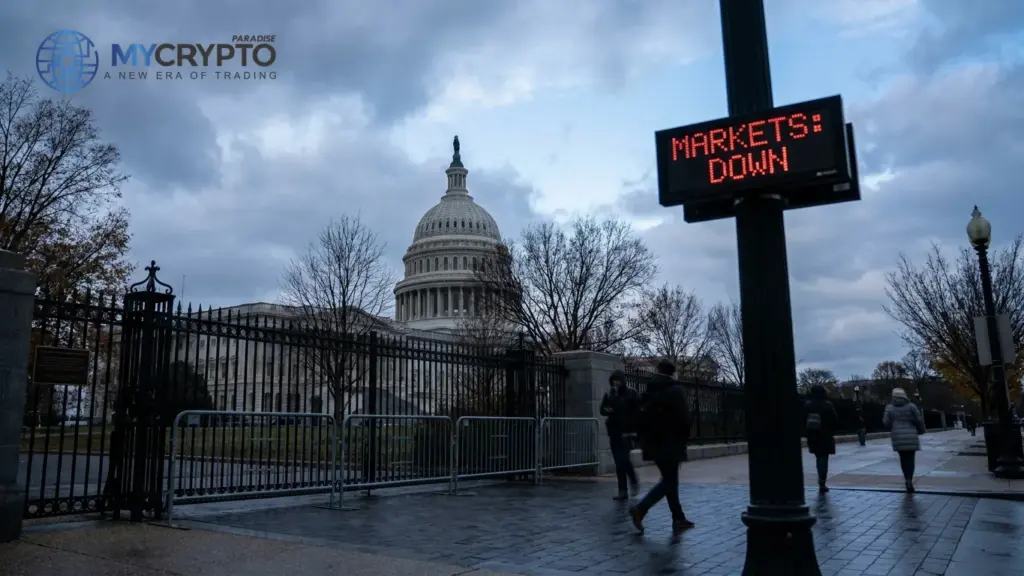
The U.S. Senate recently failed to advance the Clarity Act, a legislative effort aimed at formally splitting crypto oversight between the Securities and Exchange Commission (SEC) and the Commodity Futures Trading Commission (CFTC). This legislative setback means the crypto sector will continue to navigate a fragmented regulatory landscape. The proposed act would have granted the CFTC the majority of control, offering a clearer market structure framework.
Following the defeat, the heads of both the CFTC and SEC pledged to press ahead with crypto regulation. They stated intentions to use their existing statutory powers to provide some form of regulatory certainty, despite the lack of new legislation. This development coincided with Circle's Arc mainnet launch, which also involved BlackRock, BNY, and Standard Chartered. The Clarity Act's failure undercut the launch, adding to the day's complexities for the stablecoin issuer.
The broader implication is that a formal market-structure framework, one that would legally delineate SEC and CFTC jurisdiction, is now likely pushed into 2027. Congress is set to recess on October 5, leaving little time for new legislative pushes this year.
Why Clarity Act failure shifts market structure
The failure of the Clarity Act introduces a prolonged period of regulatory uncertainty for the U.S. crypto market. This absence of statutory clarity is a significant structural headwind, impacting both innovation and institutional adoption.
While the SEC and CFTC have pledged to use their existing powers, agency-led rulemaking differs fundamentally from congressional legislation. Agency action can be subject to legal challenges and shifts with administrative changes, lacking the definitive statutory finality a bill would provide. This environment reinforces a cautious macro sentiment. Institutional players often require clear, unambiguous legal frameworks before committing significant capital, and the delay until 2027 for a formal market structure framework directly impacts this.
The SEC did propose rules last month that could allow startups to raise funds via tokens without triggering securities regulation. However, these are specific proposals under existing powers, not a comprehensive, overarching market structure bill.
The overall effect is a market left to interpret the intentions and actions of individual agencies, rather than operating under a unified, legislated framework. This creates an uneven playing field and potential for regulatory arbitrage, or simply more legal gray areas.
Regulatory limbo's impact on crypto liquidity
The market reaction to the Clarity Act's failure was nuanced, reflecting a split perception. Bitcoin (BTC) was trading near $76,144, showing a minor 24-hour gain of +0.8%, with Ethereum (ETH) similarly up +0.8% at $2415.58. This subtle positive price action, despite the legislative setback, suggests retail traders are interpreting the agencies' pledges as a form of positive 'action'. The narrative that regulators are still engaged, even without new laws, can momentarily alleviate fear.
However, from a smart money perspective, this provides an opportune moment for distribution. The underlying macro pressure of prolonged regulatory uncertainty remains, creating a divergence between short-term retail optimism and the long-term structural outlook.
Any liquidity generated by retail buying into this narrative can be absorbed by larger players looking to offload positions. This mechanism aligns with a cautious market, where significant legislative clarity is pushed years into the future.
The absence of a clear market structure bill, especially one that would clarify the CFTC's role, means that capital flows and institutional commitments may continue to hesitate. This impacts not just BTC and ETH, but also the broader altcoin market, as a lack of clarity stifles broader ecosystem development.
Watching for clearer market structure signals
The immediate focus shifts to the specific rulemaking actions taken by the SEC and CFTC under their existing mandates. Traders should monitor any new proposals or enforcement actions, as these will define the operating environment in the absence of new legislation.
We need to observe how various crypto exchanges and projects adapt to this agency-led approach. Compliance costs and legal interpretations will likely vary, creating potential inconsistencies across the industry.
Any further attempts by Congress to introduce or revive market structure legislation, even if the formal push is delayed until 2027, should be watched closely. Interim political developments could signal a shift in legislative appetite.
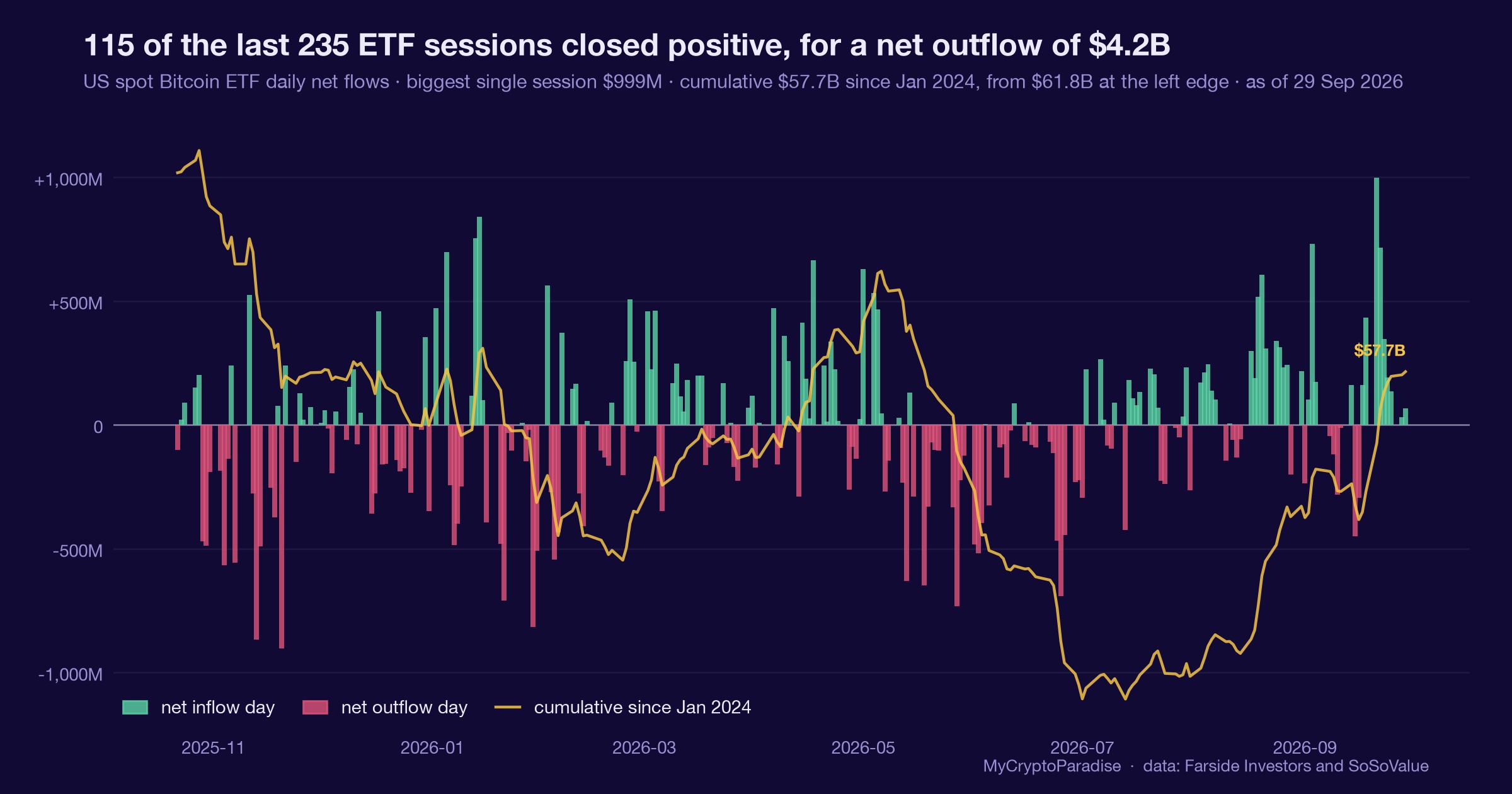
Investors should also track institutional capital flows, particularly in the U.S. The prolonged uncertainty might deter some traditional finance entities from deeper engagement, while others may adapt to the agency-driven landscape.
Finally, the market will be looking for any signs of a unified regulatory approach, or conversely, increased friction between the SEC and CFTC. Such developments will provide crucial insights into the true path of U.S. crypto regulation moving forward.
Reading the Clarity Act defeat through smart money
The ParadiseTeam maintains a strong bearish bias, interpreting the Clarity Act's failure as a reinforcement of existing macro headwinds, despite minor short-term price movements in Bitcoin, which was trading near $76,144.
Our read is that any uptick following news of agency action is likely retail-driven, providing liquidity for smart money distribution. This fits the pattern of whales offloading into moments of perceived stability or optimism, even when underlying structural issues persist.
The delay of statutory clarity until 2027 strengthens our expectation of further downside continuation. The $79,000 level remains a significant resistance point, and we anticipate moves towards our downside target zone of $55,000-$44,000.
From the ParadiseTeam's perspective, the previous low at $58,000 is likely to break. We are watching for the confirmation of bearish divergences and the potential for a final fifth wave down as outlined in our recent analysis. This period of prolonged regulatory limbo is a significant factor contributing to a cautious outlook. The ParadiseTeam advises traders to remain vigilant, as smart money continues to capitalize on retail's reactive buying during these uncertain phases, reinforcing distribution patterns.
The read behind this: we framed this story through our own market analysis, Can Bitcoin Rally From Extreme Fear?
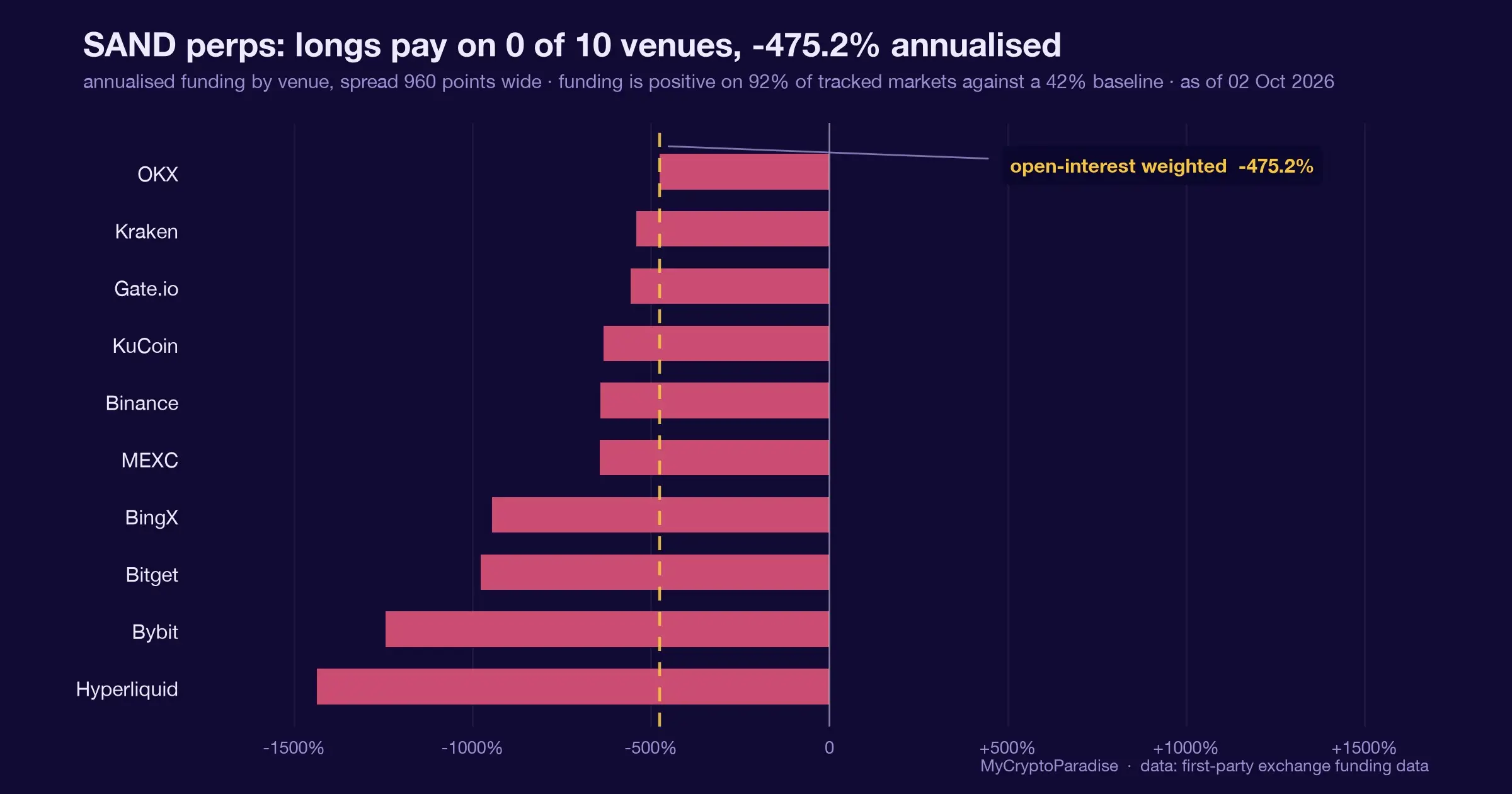
Track it live: our live crypto funding rates and the Crypto Fear and Greed Index both update in real time, so you can watch this shift for yourself.
Related coverage
For exact entries, targets, and stop losses with full risk management, that is what ParadiseFamilyVIP is for. New to reading these moves? Start with our crypto trading strategies guide.
ParadiseTeam is monitoring the market situation closely, and we are taking these developments into consideration while building our trading tactics inside ParadiseFamilyVIP.
Crypto trading involves substantial risk. Prices are volatile and you can lose money. This article is educational and is not financial advice. Past performance does not guarantee future results.
Will agency-led crypto regulation drive sustained market growth?
Follow this topic: Crypto regulation news












Join the discussion 4
this just means another few years of dancing around SEC statements. doesnt change the charts, just adds noise.
nah, i think this actually *does* change the charts - just more chop till we get clarity, right? 🔪😵💫
true, and it seems this just means less incentive for the bigger institutions to step in right now... 📈
all this back-and-forth reminds me of reconciling a ledger where the debit and credit sides are both crying "uncertainty!" 😂 just more noise to filter out, as Bram said.