

Listen: the breakdown
Market briefing: Celsius' estate has sued BitMEX for $495 million over the 2020 crash, yet the tape ignored it. BTC was trading near $75,628, down about 0.9% on the day, with smart money quietly distributing.
- Celsius' bankruptcy estate sued BitMEX entities on September 12, seeking $495 million.
- The claim covers 6,360 BTC allegedly lost to wrongful liquidations in the March 2020 crash.
- BitMEX plans to terminate operations on September 23, eleven days after the filing.
The Celsius BitMEX lawsuit revives a $495 million claim from the March 2020 crash. But does a five-year-old grievance move a single BTC candle today?
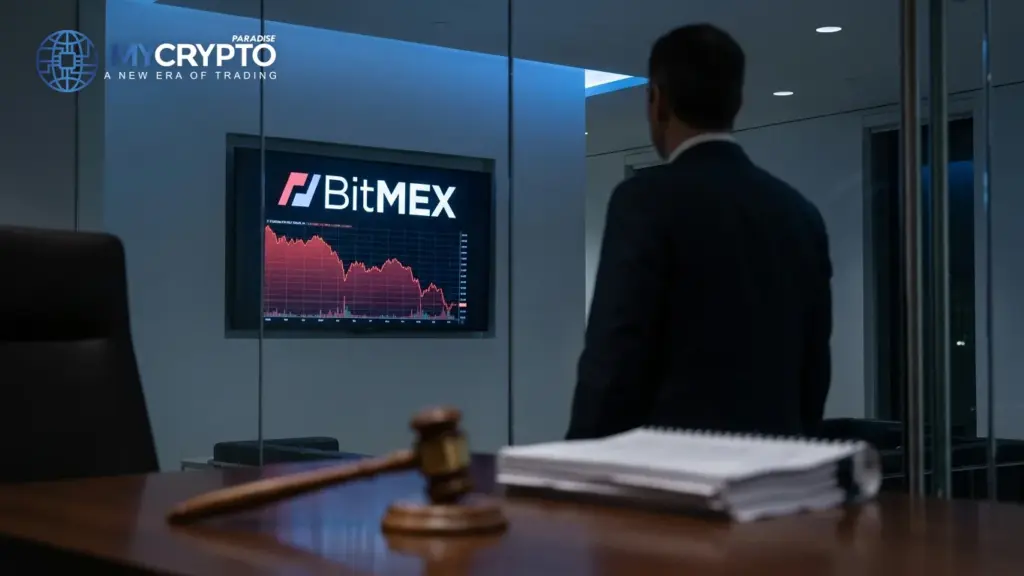
Celsius' bankruptcy estate filed suit against BitMEX entities on September 12. The complaint seeks $495 million. It alleges fraud, market manipulation and wrongful liquidations during the March 2020 Bitcoin crash.
The estate says Celsius lost 6,360 BTC when that market melted down. At current prices, that stack is worth roughly $495 million. The named defendants include HDR Global Trading, ABS Global Trading, Shine Effort, 100x Holdings and HDR Global Services.
The timing carries a certain gallows humour. BitMEX announced it will terminate operations on September 23. Celsius filed eleven days before the exchange winds down. A bankruptcy estate chasing a soon-to-close exchange is not a race with an obvious finish line.
Structurally, this is a legacy dispute, not a fresh catalyst. The alleged harm happened in early 2020. The coins in question have long since changed hands. What the estate wants is recovery for creditors, not a shift in today's liquidity.
That matters for how you read the tape. A lawsuit about ancient liquidations does not change who is buying and selling BTC this week. Retail may see the headline as justice or as cleanup for the ecosystem. Smart money sees paperwork.
BTC was trading near $75,628 as the news landed, down about 0.9% on the day. ETH sat near $2,388, softer still. Neither moved on the filing. The real drivers sit elsewhere, in positioning ahead of the Federal Reserve and in a distribution pattern that has been running for weeks.
Why a 2020 grievance changes nothing today
This lawsuit is a claim on the past, not a force on the present. The alleged wrongdoing dates to March 2020. Any coins are long gone. So the transmission mechanism into current price is close to zero.
That honesty matters, because there is no single confirmed catalyst behind this week's dip. The move down is our interpretation, not a proven cause. We read it as pre-Fed caution stacked on top of ongoing distribution.
Here is the chain that actually counts. Macro uncertainty ahead of the Federal Reserve keeps risk appetite thin. Thin appetite means fewer real bids. Fewer bids let large holders sell size without a headline to blame.
The Celsius filing does not touch that chain. It neither adds liquidity nor removes it. It is a courtroom event, not a market event.
Retail often confuses the two. A big dollar figure and a familiar name feel important, so the crowd assigns them price power they do not have. That is how attention gets misallocated during a slow bleed.
Meanwhile the structural story stays the same. Whales distributed heavily on the higher timeframes. They are now feeding stock into every small bounce. The lawsuit is a distraction dressed as a driver, and distractions are useful to anyone quietly selling.
Where BTC liquidity actually sits now
The direct market impact of this filing is effectively nil, and the tape confirms it. BTC held near $75,628 as the story broke. A genuine catalyst does not leave price flat.
So trace the real cascade instead. BTC leads, and BTC is soft under the $79,000 resistance our lens flags. That ceiling has capped every attempt, and each rejection hands sellers more control.
ETH follows and looks weaker. It traded near $2,388, down about 1.1% on the day, lagging BTC on the bounce and leading it on the drop. That is textbook risk-off behaviour, where capital retreats toward the majors first.
Alts sit at the bottom of the waterfall. When BTC drifts and ETH underperforms, thin alt order books get hit hardest. Small bids vanish, and spreads widen when nobody wants inventory.
The deeper point is who supplies the liquidity. Retail buys these small green candles, convinced the bottom is in. Smart money sells into exactly that demand.
That is distribution, plain and mechanical. The lawsuit gives retail a hopeful narrative to buy, and hopeful buyers are the perfect counterparty for someone unloading size. Legacy legal recovery does nothing to change that dynamic in the next few weeks.
What would flip our bearish bias
Watch the levels, not the headlines. The lawsuit is background; price structure is the signal that actually pays.
The first line is $79,000. Our lens treats it as resistance, and it has behaved like one. As long as BTC prints lower highs beneath it, the bearish path stays intact.
Invalidation is specific. A clean reclaim of $79,000 with real volume, followed by whale bids stepping in to defend it, would force a rethink. Without that volume, any poke above is a liquidity grab, not a trend change.
Confirmation lives lower. A decisive break below the $58,000 prior low opens the door toward the $55,000 to $44,000 zone we have been mapping. That is where the current structure points if support keeps failing.
Between those lines, watch behaviour on bounces. If rallies stall on shrinking volume and stretch into bearish divergence, that is distribution confirming itself. Strength that cannot hold is a tell.
Also watch the crowd. Extreme fear paired with small hopeful buys is our marker for retail supplying exit liquidity. When that pattern breaks, when fear turns to real capitulation on volume, the setup shifts.
Ignore the courtroom clock. The BitMEX shutdown on September 23 and the Celsius claim are their own timeline. They do not move these levels.
What this claim means for positioning
The ParadiseTeam reads this filing as noise against a bearish structure that predates it. With BTC near $75,628, the story does not shift a single level on our map.
Our bias stays bearish across the higher timeframes. We expect continuation toward the $55,000 to $44,000 zone, with $58,000 the prior low we think is likely to give way. The lawsuit changes none of that arithmetic.
The edge here is knowing who benefits from the distraction. Retail may treat legal recovery as a healing sign and buy the dip. That optimism is the liquidity larger holders are selling into.
Stops tell the same story. Buyers chasing small bounces cluster their protective stops just below recent lows. That pool sits directly in the path of a move toward $58,000, which makes it a magnet, not a floor.
Resistance is the other pillar. Price rejected the $79,000 area on a shooting star with weak follow-through, and the daily momentum picture shows bearish divergence. Strength that fails at a known ceiling is our definition of distribution.
So the ParadiseTeam frames any strength this week as an exit for smart money, not the start of a reversal. We would only revisit that view on a volume-backed reclaim of $79,000 with fresh whale support. Until then, the courtroom drama is theatre, and the tape keeps writing the real script. Probabilities, not certainties; manage risk first.
The read behind this: we framed this story through our own market analysis, Can Bitcoin Rally From Extreme Fear?
Track it live: our Crypto Fear and Greed Index and the crypto liquidation heatmap both update in real time, so you can watch this shift for yourself.
Related coverage
For exact entries, targets, and stop losses with full risk management, that is what ParadiseFamilyVIP is for. New to reading these moves? Start with our crypto trading strategies guide.
ParadiseTeam is monitoring the market situation closely, and we are taking these developments into consideration while building our trading tactics inside ParadiseFamilyVIP.
Crypto trading involves substantial risk. Prices are volatile and you can lose money. This article is educational and is not financial advice. Past performance does not guarantee future results.








Join the discussion 1
yeah I remember that period, the perp basis was all over the place, quite a tricky spot to hedge delta neutral positions without getting stung on funding.