

Listen: the breakdown
Developing story update (August 25, 2026, 16:21 UTC):
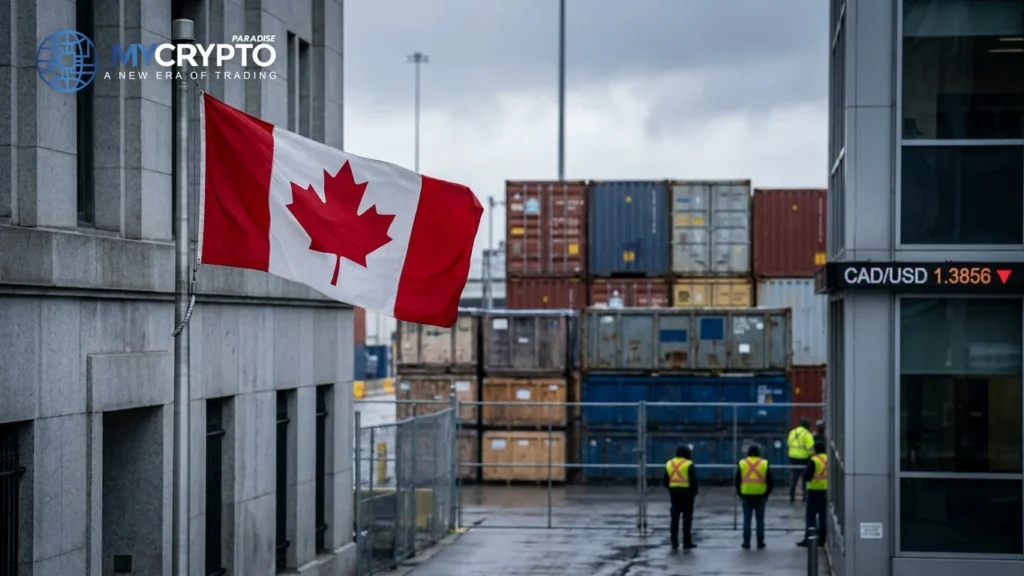
Update: The Canadian counter-tariff plan now has an official face. The country’s finance minister has publicly announced the measures, moving this from a reported figure to a stated government position. The headline terms are unchanged: a 15% to 50% range on roughly $20 billion of U.S. goods, scheduled to take effect September 8.
New detail also sharpens the scope. The package is now confirmed to target 700 individual U.S. product lines, which gives traders a clearer sense of how broad the trade friction is. For crypto, this remains a macro backdrop rather than a direct catalyst, but it adds to the risk-off case while BTC probes the $79,000 zone and could reinforce caution if the market treats rising trade tension as another reason to fade strength.
What to watch now: Whether a U.S. response to the named finance minister's announcement escalates trade tension into a broader risk-off move before September 8.
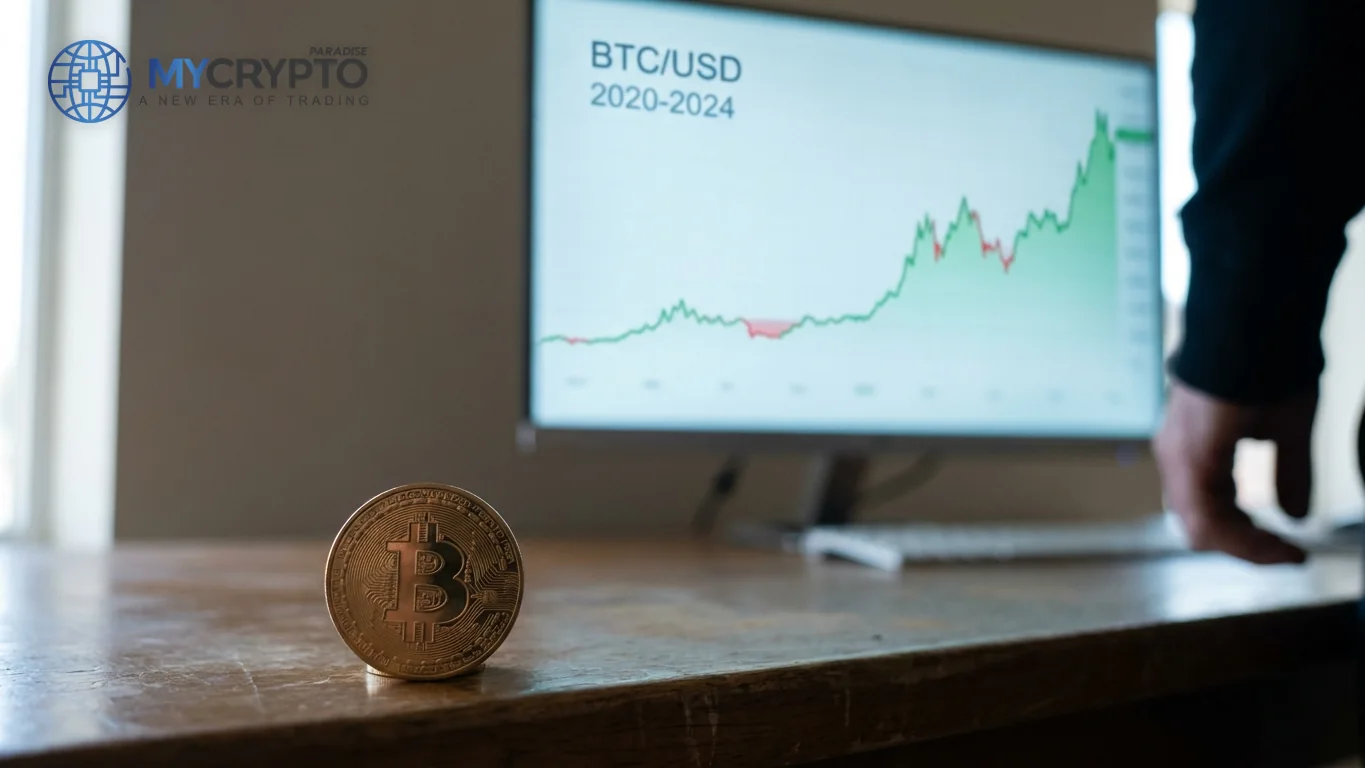
Market briefing: Canada just confirmed 15 to 50 percent tariffs on roughly $20 billion of US products from September 8, adding fresh trade friction. Bitcoin sat near $79,196, still stalling under resistance while retail chased the bounce.
- Canada confirms 15% to 50% tariffs on about $20 billion of US products, live September 8.
- Counter-tariffs hit 700 US goods, escalating North American trade friction and risk-off pressure.
- BTC held near $79,196 at resistance while retail chased the move higher.
Canada's tariffs on US goods are now confirmed, adding trade friction just as Bitcoin stalls at $79k. Is this risk-off wind the excuse smart money wants to sell into?
Canada put numbers on its threat. The counter-tariffs run from 15% to 50%, and they land on roughly $20 billion of US products. Finance Minister François-Philippe Champagne announced the package. It targets about 700 goods and takes effect on September 8.
We flagged the retaliation earlier as a Tuesday event. What is new is the detail. A vague warning is now a dated, priced escalation between two of the largest economies on the continent. That shift matters more than the headline mood suggests.
Bitcoin barely reacted. BTC traded near $79,196, down about 0.8% on the day, up 0.9% on the hour. Ethereum sat near $2,471, softer at roughly 1.9% lower. The tape shrugged, which tells you where the real battle sits.
Trade wars rarely move crypto directly. There is no wallet in Ottawa deciding BTC's next candle. But tariffs feed a slower fire: broad economic uncertainty, thinner risk appetite, and a market already unsure whether this bounce is a new leg up or a setup to trap buyers.
That is the tension. Retail reads $79k as breakout momentum. We read it as a familiar resistance test arriving with fresh macro friction attached. The news does not break crypto's structure. It simply adds another reason for patient money to stay patient while everyone else feels early.
Trade friction feeds a slower risk drain
Tariffs work on markets through mood, not mechanics. A 15% to 50% levy on $20 billion of goods does not touch a blockchain. It touches confidence, and confidence is the fuel behind every risk asset.
When two major economies trade blows, traditional markets price a little more caution. Supply chains wobble. Input costs rise. Growth forecasts get trimmed. None of that is crypto-specific, yet crypto lives downstream of the same global risk appetite.
September 8 gives the escalation a clock. Markets hate open-ended threats, but they also dislike confirmed friction with a start date. That certainty lets desks price the risk now, which usually means a quiet, defensive drift rather than a dramatic crash.
Here is the honest part. There is no single confirmed catalyst forcing crypto lower today. This tariff news is context, not a direct trigger. We frame it as one more weight on an already cautious backdrop, not the cause of any specific candle.
That distinction protects you. Traders who blame every red hour on a headline stop reading structure. The tariffs matter because they thicken the fog around risk assets. In fog, leverage gets punished and patience gets paid. Smart money treats macro friction as a reason to demand lower prices, not chase higher ones. Retail tends to do the opposite, which is exactly why the two rarely enter at the same level.
Reading the shrug at 79k resistance
Start with the reaction, because it is the signal. Bitcoin held near $79,196 despite fresh trade-war headlines. A market that ignores bad news near resistance is not always strong. Sometimes it is simply distracted while larger players position.
BTC sets the tone. It sits just under a level that has repeatedly capped this move. Open interest, the total value of live derivative positions, tends to build here as retail piles into longs expecting a breakout. That crowding is fuel, and fuel cuts both ways.
Ethereum told a slightly weaker story. ETH slipped near 1.9% to around $2,471, underperforming BTC on the day. When ETH lags Bitcoin into a resistance test, it hints the bid is thinning beneath the surface, even as prices look calm.
Alts sit at the end of this chain. They borrow their strength from BTC and ETH. If Bitcoin gets rejected at $79k and drains liquidity, altcoins usually fall faster and further, because their buyers are the most leveraged and the least patient.
So the tariff news does not cascade through crypto mechanically. It reinforces a structure that already looks top-heavy. Retail longs stacked under resistance are exactly the liquidity a larger seller needs. The macro friction simply gives that seller a cleaner narrative to lean on. Price, not the press release, will confirm who is right.
Signals that separate breakout from trap
The confirmation question is simple. Can Bitcoin reclaim and hold above the $79k region on real volume, or does it keep tapping and fading? A clean, sustained break with follow-through would weaken the distribution read and force us to respect the buyers.
Watch how price behaves into September 8. If BTC drifts higher into that date and then stalls on a bearish divergence, where price makes a higher high but momentum does not, treat it as a warning. That pattern often marks larger sellers handing bags to late longs.
Volume is the tell. A rally on shrinking volume near resistance is weak by definition. Rising cumulative volume delta, or CVD, which tracks net buying versus selling, would support the bullish case. Falling CVD into new highs would support ours.
Invalidation of the bearish read is honest and specific. A decisive daily close well above $79k, holding on a retest, would shift the balance of probability toward continuation. We would rather be proven wrong by price than marry a view.
On the downside, losing the recent bounce structure would open the door toward the deeper zones smart money tends to favor. The tariff story itself needs little monitoring beyond its start date. It is a slow-burn backdrop, not a live wire. Your real dashboard is the resistance test, the volume behind it, and whether retail keeps buying strength that larger hands quietly sell into.
What this escalation means near resistance
Confirmed tariffs on $20 billion of US goods do not change crypto's chart. They change the weather around it. The ParadiseTeam reads this escalation as another layer of global uncertainty stacked onto a market already testing $79k from below.
BTC traded near $79,196 as of this reading, which is the number that matters far more than any customs schedule. That level has acted as resistance, not a launchpad. Retail sees momentum. We see a familiar ceiling meeting fresh macro friction, a combination that historically favors patience over pursuit.
Our bias stays cautious. The higher-probability scenario is distribution into retail strength, not a clean breakout fueled by tariff fear. Trade-war headlines rarely bottom a market. They more often give sellers a tidy story while buyers get trapped at the top of a range.
We are more interested in what happens on a rejection than on a chase. A failure to hold $79k keeps the path open toward the deeper $55,000 to $44,000 zone, the region where patient capital would rather build than defend. That is a probability, not a promise, and it depends entirely on price confirming.
Risk-first framing wins here. Chasing longs into confirmed resistance while global friction rises is the trade retail loves and smart money fades. If Bitcoin proves us wrong by reclaiming the level cleanly, we adjust. Until then, the tariffs are context, the resistance is the story, and discipline beats FOMO every cycle.
Track it live: our live crypto funding rates and the Crypto Fear and Greed Index both update in real time, so you can watch this shift for yourself.
Related coverage
For exact entries, targets, and stop losses with full risk management, that is what ParadiseFamilyVIP is for. New to reading these moves? Start with our crypto trading strategies guide.
ParadiseTeam is monitoring the market situation closely, and we are taking these developments into consideration while building our trading tactics inside ParadiseFamilyVIP.
Crypto trading involves substantial risk. Prices are volatile and you can lose money. This article is educational and is not financial advice. Past performance does not guarantee future results.








Join the discussion
No comments yet. Members, share how you are reading this.