

Update on this developing report (August 02, 2026, 11:24 UTC):
Update: fresh figures point to a larger footprint than first reported. One estimate now puts total losses at roughly $88.6 million across about 4,585 affected addresses, well above the earlier range of $38 million to $70.2 million across 1,196 addresses. Treat the numbers as still firming up, but the direction is toward a bigger event, not a smaller one.
The core drain is now described as a tightly coordinated burst of around 25 minutes. For traders this reinforces the read that the address spike was defensive movement rather than fresh demand, which keeps the near-term risk skewed toward the $61k to $59k accumulation zone if fear-driven selling continues.
What to watch now: Watch whether the loss tally keeps climbing above $88.6M and whether outflows to exchanges rise, signaling selling rather than pure re-custody.
Update on this developing report (August 02, 2026, 11:03 UTC):
Update: the underlying hardware wallet flaw that let attackers recreate recovery phrases has now been patched, and affected users are being told to generate entirely new wallets and move any remaining funds. That migration guidance is the likely driver keeping on-chain activity elevated as holders rotate to fresh self-custody.
For context, the surge in daily active addresses is the highest single-day level since December 10, 2024, which underlines how broad the defensive fund movement has been rather than it being isolated to a handful of victims.
What to watch now: Whether elevated on-chain address activity fades once migrations finish or feeds fresh selling into the $61k-$59k zone.
Update on this developing report (August 02, 2026, 10:22 UTC):
Update: the estimated damage from the Coldcard incident has widened. Based on our sources, losses now total around $88.6 million spread across roughly 4,585 addresses, larger than the initial ~$70 million read, and many of the drained wallets belonged to long-term holders whose coins had sat untouched for years.
There is also a fresh security warning: further waves of attacks are considered possible unless affected owners move their funds, and a seed compromised on a vulnerable device likely stays guessable even after being imported into a different hardware wallet. That raises the odds of continued defensive on-chain movement in the days ahead.
For traders the read is unchanged in direction: this points to elevated caution and potential selling pressure that could help carry BTC toward the $61k-$59k accumulation zone, which smart money would likely treat as an opportunity rather than a threat.
What to watch now: Watch for continued outflows and whether the loss tally climbs again, plus any confirmed second wave of drains.
Update on this developing report (August 02, 2026, 09:40 UTC):
The on-chain response to the Coldcard breach now has a size behind it. Based on our sources, roughly 39,600 BTC has been moved in a wave of small transactions as holders shift funds into wallets they consider safer. This fits the active-address spike we already flagged and puts a concrete number on the volume of coins being re-secured.
For traders the read is unchanged but firmer: this looks like custody-driven flow, not conviction selling, which can add short-term noise without a clear directional signal. The reaction likely raises the odds of a fear-driven dip into the accumulation zone rather than a sustained trend break.
What to watch now: Whether the 39,600 BTC flow lands on exchanges (sell pressure) or moves into cold storage (custody rotation).
Update on this developing report (August 02, 2026, 09:19 UTC):
Update: further detail has emerged on how the funds were taken. Based on our sources, the affected wallets were drained remotely, with no physical access to the hardware required, which is why coins that had sat untouched for years were still reached. A large share of the victims were long-term holders.
The more important point for anyone potentially exposed: moving a compromised seed phrase into a different device does not remove the risk. Importing that same seed into a Trezor, a Ledger, or even a fresh Coldcard leaves the funds reachable, because the flaw is in the reproducible seed range, not the device. Anyone who set up a Coldcard around the March 2021 firmware should generate a fresh wallet from new randomness and move funds to a freshly generated address rather than reusing the old seed.
What to watch now: Whether holders on the March 2021 firmware rotate to freshly generated seeds, and any official remediation guidance from the wallet maker.
Update on this developing report (August 02, 2026, 08:57 UTC):
Update: The surge in Bitcoin daily active addresses that followed the Coldcard incident now looks even more pronounced. The jump from about 645,000 on July 30th to nearly 1,000,000 on July 31st marks the busiest single day for active addresses since December 10, 2024, which points to a broad, fear-driven reshuffling of coins rather than a narrow reaction from a handful of holders.
Based on our sources, the loss has continued to widen since the initial burst, with roughly three suspected waves of draining now tied to about 4,585 affected addresses and Bitcoin worth around $88.6 million. Price has stayed contained near the low $63,000s through all of this, which keeps the setup consistent with a defensive move-your-coins response rather than forced market-wide selling.
What to watch now: Whether active-address counts normalize quickly or stay elevated, and if any further waves push the stolen total beyond $88.6 million.
Update on this developing report (August 02, 2026, 07:53 UTC):
The Coldcard incident has widened since our initial report. Based on our sources, the exploit has now reached roughly 4,500 Bitcoin addresses, up from the 1,196 first mapped, with total losses climbing to about $89 million from the initial $70.2 million.
The root cause is now attributed to a Coldcard firmware release from March 2021 that generated keys using weak software-based randomness, letting the attacker reproduce those keys and sweep funds systematically. Anyone who set up an affected device around that period should treat their keys as compromised and move funds to a freshly generated wallet.
For traders, the takeaway is unchanged but sharper: the growing loss figure can feed further caution-driven on-chain movement, which may add to the near-term selling pressure that could probe the $61k to $59k zone. A widening security scare is more likely to accelerate retail fear than to shift the broader trend on its own.
What to watch now: Whether the affected-address count keeps climbing and if funds start hitting exchanges in size.
Update on this developing report (August 02, 2026, 07:30 UTC):
The picture on the Coldcard exploit has sharpened. Based on our sources, the attacker swept roughly 1,196 Bitcoin addresses and moved about 1,082.65 BTC, initially valued near $70.2 million, with victim addresses spanning three different formats. That breadth explains the on-chain surge in active addresses as holders rushed to move funds.
The more actionable point for traders: security researchers who mapped the sweep warn that further waves of attacks are likely if exposed owners do not relocate their funds. If you generated a seed on a vulnerable Coldcard, treat it as compromised and move to a fresh device now, rather than assuming the event is over.
What to watch now: Watch for a second wave of drains on unmoved Coldcard funds, and whether that forces coins onto exchanges.
Update on this developing report (August 02, 2026, 06:05 UTC):
New detail has firmed up on who is exposed. The vulnerability specifically hits Coldcard Mk3 units whose seed phrases were generated on firmware version 4.0.1, released in March 2021, or any later build. If your seed predates that firmware or was generated on different hardware, you are likely outside the affected set, but there is no reliable self-test to confirm exposure either way.
Because owners cannot check whether a given seed is compromised, the only safe assumption for anyone in that firmware window is that the seed is burned. Based on our sources, there is a warning that additional theft waves are probable for wallets that stay put, which helps explain the continued surge in on-chain address activity as holders rotate coins into freshly generated wallets.
What to watch now: Whether a second wave of drains hits un-rotated Mk3 wallets in the coming days.
Update on this developing report (August 02, 2026, 05:22 UTC):
New on-chain detail has firmed up the scale of the Coldcard exploit: the stolen coins moved as 1,324 separate chunks across roughly 500 transactions, with about 562 BTC funneled into a single consolidation address. This is the clearest picture yet of how the attacker swept and pooled the funds.
Researchers now warn that additional waves of theft are probable if exposed owners do not move their coins, since a seed generated on a vulnerable Coldcard stays guessable even after being imported into another wallet. Coinkite has issued a specific warning to Mk3 owners, but there is still no test to tell whether a given seed sits inside the reproducible range.
For traders, the takeaway is unchanged in direction but sharper in urgency: this remains a self-custody scare rather than a confirmed macro price driver, and any fear-driven selling near support could be treated by larger buyers as accumulation liquidity rather than a trend break.
What to watch now: Watch for further sweep waves from unmoved vulnerable seeds and any official Coinkite guidance to non-Mk3 owners.
Listen: the breakdown
Developing story: This story is still unfolding. We are tracking it and will update this article as more details are confirmed.
Market briefing: A Coldcard hack has owners rushing Bitcoin to fresh wallets, yet BTC holds firm near $63,462. Fear is moving coins, not price.
- A Coldcard flaw let attackers rebuild seeds and steal about $70M in Bitcoin.
- On-chain sending activity is spiking as nervous long-term holders move funds out of caution.
- BTC still holds above our $62,500 invalidation, so the market is absorbing the shock.
The Coldcard hack did not just cost $70M. It sent owners scrambling to move coins to safety, spiking on-chain activity. So who is really selling into this fear?
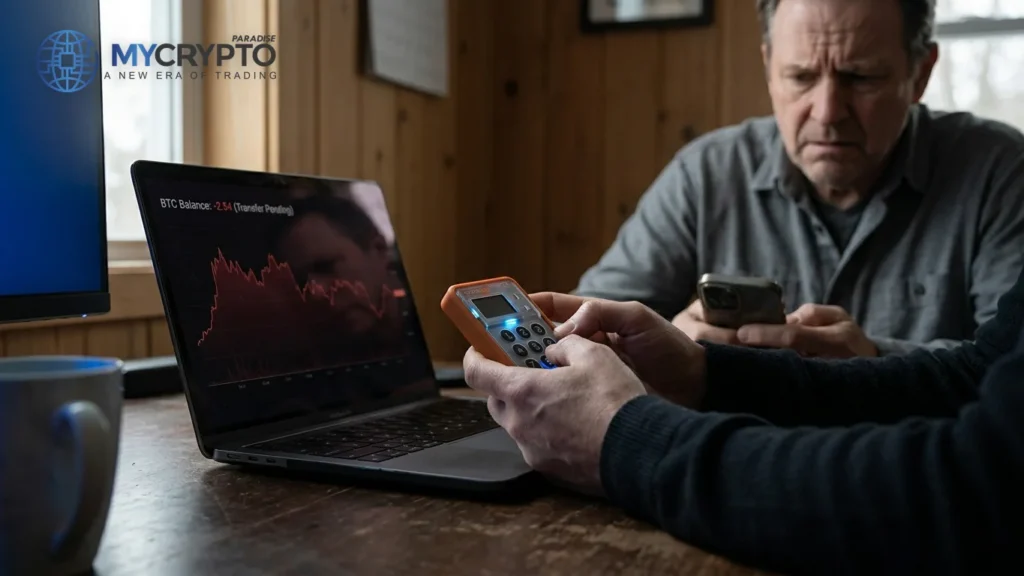
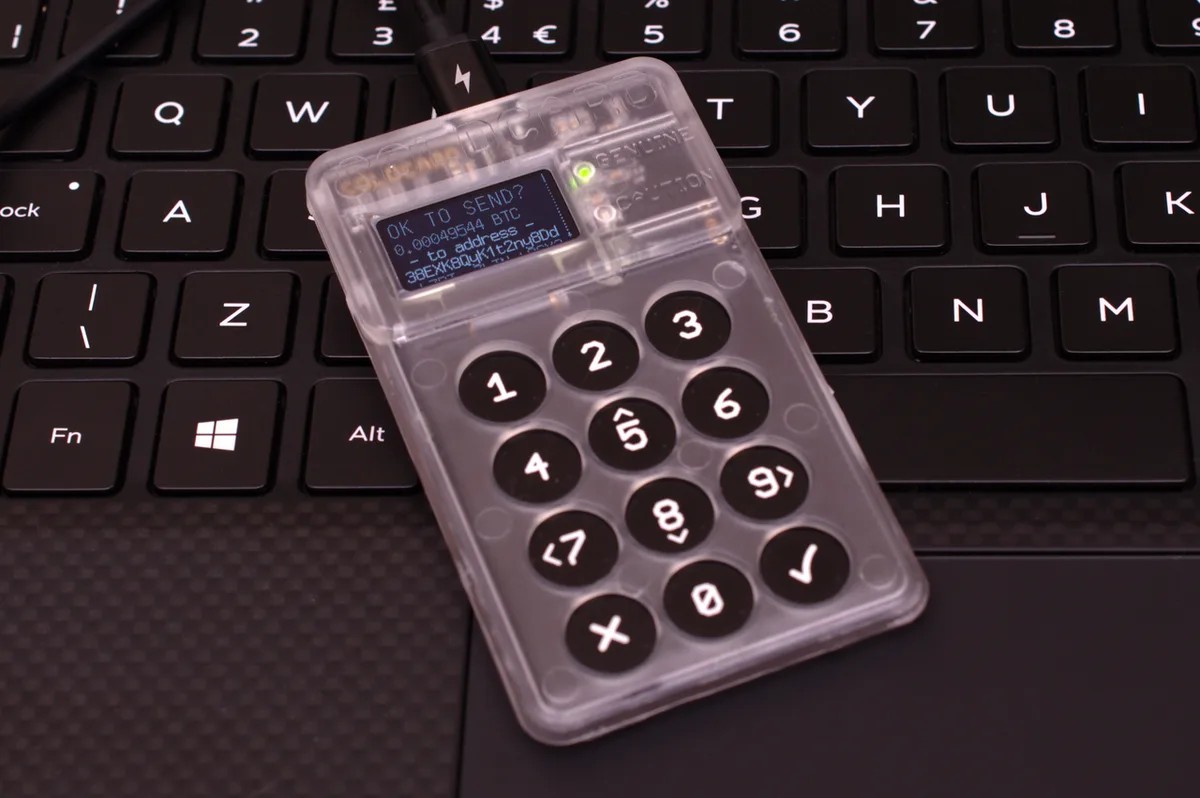
Bitcoin owners moved coins in a hurry this week. The reason was fear, not greed. A flaw in the Coldcard hardware wallet let attackers rebuild recovery phrases and drain funds. Around $70 million in Bitcoin vanished on July 30. Roughly 1,200 addresses were hit.
The theft was fast and clinical. The core burst lasted about 25 minutes. The attacker chased the biggest balances first. More than $30 million left wallets in the first ten minutes alone. Nobody had to touch the physical devices.
That last detail is the frightening one. The seed itself was guessable.
Many victims were long-term holders whose coins had not moved in years. Now a wider group of nervous owners appears to be shifting funds to fresh wallets out of caution. On-chain sending activity has climbed sharply, while receiving activity has lagged well behind. That imbalance reads like a defensive shuffle between an owner's own wallets, not fresh buyers arriving.
We covered the self-custody fear earlier today. This is the next chapter: the actual coin movement that fear triggered. A patch now exists, so the door is closed. But a blunt warning still stands. Further waves of theft are likely if exposed owners sit still. In crypto, the follow-through panic often does more damage than the original exploit.
Why a seed flaw shakes self-custody trust
The Coldcard hack strikes at the one promise self-custody makes. Hold your own keys, and no one can touch your coins. This flaw broke that promise without touching a single device.
That changes behavior, and behavior moves markets. When trust in a storage method cracks, owners react in two ways. Some rush coins to a different wallet. Others move them to an exchange while they think. Both responses lift on-chain activity, and both can look like selling pressure even when no selling happens.
The macro effect is subtle but real. Fear raises the perceived cost of holding Bitcoin yourself. For a slice of holders, that nudges coins toward custodians and exchange accounts. More coins on exchanges usually means more available supply to sell.
That is the transmission line to watch. A security scare does not print a red candle by itself. It works through liquidity, by shifting where coins sit and how fast they can be dumped.
Here is the honest read. The confirmed fact is the theft and the patched flaw. The scale of the wallet migration is still developing and not yet fully corroborated. So we treat the address spike as a strong signal of caution, not proof of a mass exit. The distinction matters, because panic narratives are cheap and verified outflows are not.
How the security shock ripples through liquidity
Start with the reaction that did not happen. BTC traded near $63,462, up roughly 0.6% on the day, as the story spread. A $70 million theft barely moved the tape.
That calm is the tell. When frightening news lands and price holds, someone is absorbing the fear. Coins moving between wallets create noise, but noise is not supply hitting bids. Real damage needs coins reaching exchanges and then getting sold.
Bitcoin sets the tone here, as it always does in a risk event. Holding firm above support tells the rest of the market the shock is contained. ETH tends to follow that lead with a short lag. If BTC absorbs the news, ETH usually mirrors the steadiness rather than leading a breakdown.
Alts sit at the far end of the chain, and they feel every wobble more. A genuine confidence break would show first as thin alt liquidity and sharper alt drawdowns. So far that cascade has not fired.
The smart-money reading is straightforward. Bearish headline, fearful retail, price pinned at support. That is often the exact backdrop where patient buyers add, while frightened owners hand over coins near the lows. The market is treating the Coldcard hack as a shakeout to absorb, not a trend to chase lower. That can change fast if exchange balances start climbing in size.
Signals that confirm calm or break it
The next few sessions settle the argument between fear and structure. Watch on-chain flow first. If sending activity keeps rising but exchange balances stay flat, owners are reshuffling into safer wallets, not selling. That is bullish absorption dressed up as panic.
The warning sign is different. A steady climb in coins landing on exchanges would flip the read. That points to real supply arriving, and it demands respect. One is a defensive move. The other is distribution.
Price gives the cleaner confirmation. As long as BTC holds above $62,500, our invalidation, the shock stays contained and the broader path stays intact. A clean daily close below $62,500 is the line that changes the story.
Below there, the reaccumulation zone near $61,000 becomes the real test. Buyers defending that band would confirm the shakeout thesis. A decisive loss of it would say fear is winning and force a rethink.
Volume matters as much as level. A calm hold on thinning volume is constructive. A break on heavy volume is a genuine warning, not noise.
Stay alert to the second wave too. The risk is not only the original theft. It is copycat attempts on exposed seeds if owners delay moving funds. A fresh cluster of thefts could reignite the fear the market just shrugged off.
What the coin movement signals for positioning
The ParadiseTeam reads this as a fear event landing into an accumulation structure, not the start of a breakdown. Our bias stays cautiously bullish while BTC holds above $62,500. The Coldcard hack tests that thesis; it does not yet break it.
Here is how the news maps to our levels. Price near $63,462 sits just above the $62,500 invalidation and above the $61,000 reaccumulation zone we have flagged. The hack pushes retail fear at the exact spot where patient buyers prefer to add. That is the smart-money-versus-retail mechanic in plain sight.
Stops are the key here. Frightened holders park sell-stops just under support, right around $62,500 and the $61,000 shelf. Those resting orders are liquidity. A shock like this exists to shake them loose before the intended move, whichever way it runs.
The path we watch is a hold and continuation toward the $79,000 target, with $61,000 defended on any dip. Risk-to-reward (R:R) favors patience over chasing. A defined stop-loss (SL) below $62,500 keeps the idea honest if we are wrong.
Invalidation is not a feeling; it is a level. A clean daily close under $62,500 tells us the fear is converting into real supply. Until then, we treat the coin movement as caution, not capitulation. The $44,000 macro floor stays our deeper line for a fuller retail flush.
Track it live: our Crypto Fear and Greed Index and the live crypto funding rates both update in real time, so you can watch this shift for yourself.
Related coverage
For exact entries, targets, and stop losses with full risk management, that is what ParadiseFamilyVIP is for. New to reading these moves? Start with our crypto trading strategies guide.
ParadiseTeam is monitoring the market situation closely, and we are taking these developments into consideration while building our trading tactics inside ParadiseFamilyVIP.
Crypto trading involves substantial risk. Prices are volatile and you can lose money. This article is educational and is not financial advice. Past performance does not guarantee future results.
Is the Coldcard fear a smart-money buy zone or the start of a deeper drop?
How the Paradisers are calling it
The first call is still open
Free account, no password. Members just sign in.









Join the discussion
No comments yet. Members, share how you are reading this.