


Listen: the breakdown
Developing story update (September 11, 2026, 13:53 UTC):
Update: fresh figures sharpen how steep this fire sale really was. The 2,547 machines that changed hands for roughly $620,750 were carried at more than $26 million before the bankruptcy, a markdown of well over 95 percent on the hardware alone. That gap is the clearest read yet on how little the market values standalone crypto ATM fleets once the operating business behind them fails.
The operational collapse behind the filing is now clearer too: first-quarter revenue fell 49 percent before Bitcoin Depot sought Chapter 11 protection. Based on our sources, the buyer is a Las Vegas-based digital asset infrastructure firm taking on the fleet at distressed pricing.
For traders the wider signal is regulatory and fraud risk stacking up around retail on-ramps: crypto ATM-related fraud reportedly climbed to $389 million in 2025, up 58 percent. That is the kind of pressure that can keep tightening friction on retail access while smart money waits for lower levels.
What to watch now: Watch whether rising ATM fraud figures accelerate more city and state bans on retail crypto machines.
Market briefing: A crypto ATM operator has gone bankrupt and its 2,547 machines just sold for 620,000 dollars, as cities move to ban the kiosks. BTC was trading near 77,785 dollars, up one percent on the day, but the retail on-ramp story is quietly darkening.
- Bitcoin Bancorp bought 2,547 Bitcoin Depot ATMs for 620,000 dollars in a bankruptcy sale.
- Albuquerque banned crypto ATMs, ordering removal within 45 days; Agawam, MA, took a first step toward its own ban.
- U.S. crypto ATM locations sit near 19,400, down from a peak above 30,000.
A crypto ATM operator went bankrupt and its 2,547 machines sold for just 620,000 dollars. Is this a one-off failure, or is the retail on-ramp itself being quietly dismantled?
Bitcoin Depot has slipped into bankruptcy protection, and its machines are already changing hands. Bitcoin Bancorp acquired 2,547 of its crypto ATMs for 620,000 dollars in the sale. That is roughly 243 dollars per machine, for hardware that once symbolised easy street-level access to Bitcoin.
The numbers behind the collapse tell the story. Bitcoin Depot swung from a 12.2 million dollar profit to a 9.5 million dollar loss inside a single year. A business does not travel that far, that fast, on bad luck alone.
The backdrop matters more than the price tag. Albuquerque has banned crypto ATMs outright, giving operators 45 days to remove the machines and pledging to notify known operators and retail hosts. Agawam, Massachusetts, has taken a first step toward the same, with a proposal that would fine businesses 300 dollars per day per machine if they miss a 60-day removal window.
These are not isolated votes. U.S. crypto ATM locations now sit near 19,400, well below a peak that once topped 30,000. Globally the count reached nearly 39,000 as of March this year, with about 78 percent of them in the United States.
So the physical front door to crypto is narrowing while the paperwork thickens. A bankruptcy sale at these prices is what the end of a land grab looks like, once the regulators arrive and the fee model stops working. For traders, the interesting question is not the kiosks. It is what a shrinking retail on-ramp says about liquidity from here.
Retail on-ramps are quietly narrowing
The transmission runs through access, not headlines. Every crypto ATM that gets unplugged removes a low-friction, cash-based entry point for the exact retail buyer who fuels late-cycle demand. Fewer doors mean fewer marginal buyers arriving on impulse.
Albuquerque's ban and Agawam's proposal are small on their own. Together with dozens of similar municipal moves, they form a pattern: localised scrutiny that chips away at physical on-ramps one city at a time. Compliance costs rise, host retailers get nervous, and thin-margin operators fold.
Bitcoin Depot's collapse is the balance-sheet proof of that pressure. A 12.2 million dollar profit becoming a 9.5 million dollar loss inside a year is what happens when a fee-driven model meets tightening rules and softer volume at once.
This is the macro thread we keep pulling. Tighter on-ramps and higher friction feed a slow drainage of easy retail liquidity. It does not crash a chart by itself. It changes who is left standing when volatility hits.
Separate the fact from our read here. The bankruptcy, the sale price, and the bans are confirmed facts. The claim that this is thinning retail liquidity is our interpretation, and there is no single confirmed catalyst moving price today. We are honest about that distinction, because the story is structural, not a same-day trigger.
How thinner access reaches BTC and alts
Price is not reacting to this directly, and we should say so plainly. BTC was trading near 77,785 dollars, up about one percent, while an ATM operator quietly filed for bankruptcy. The market shrugged.
That shrug is the point. When retail access narrows gradually, the effect shows up in liquidity depth, not in a single candle. Thinner on-ramps mean fewer fresh dollars arriving at the margin to absorb selling.
BTC leads that dynamic. A market with a shrinking retail base tends to hold conviction moves less well, because the reflexive dip-buyer is thinner on the ground. Bounces get sold into more easily once the impulsive cash buyer is regulated out.
ETH and the alts sit further down the same chain. They rely on retail risk appetite and on liquidity spilling down from BTC. When on-ramps tighten, that spillover weakens first at the speculative end of the curve, where the newest money usually lands.
None of this is a next-hour trade. It is a background condition. The stack of localised bans, rising compliance costs, and now a visible operator failure all point the same way: friction up, easy retail flow down. That is a quietly bearish input for the whole risk curve, even on a green day, and it fits an environment where fresh demand has to work harder to show up.
The levels that confirm or void this
Watch whether more cities follow Albuquerque, because a cluster of bans turns a local story into a national on-ramp problem. Isolated votes are noise. A wave is a trend, and trends reprice liquidity assumptions.
On the operator side, watch the survivors. If more crypto ATM firms report the same profit-to-loss swing Bitcoin Depot showed, the industry is consolidating under regulatory weight, not just cyclically. Consolidation at fire-sale prices tends to mark a bottom for the businesses, not the start of new growth.
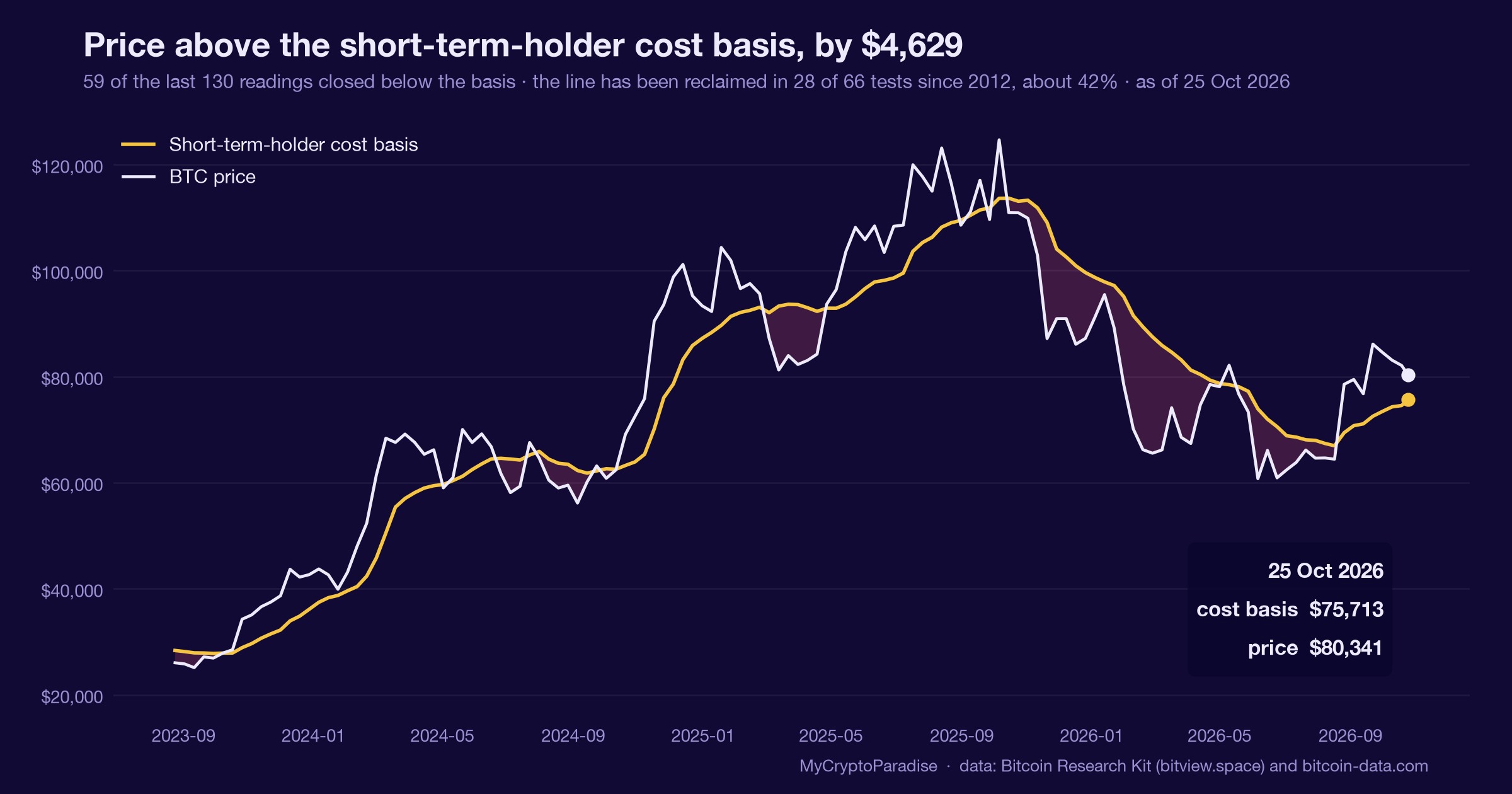
On the chart, the confirmation and invalidation are cleaner. Our medium-term support at 77,700 dollars has already broken, and BTC is hovering just above it near 77,785. A daily close that fails to reclaim that shelf keeps the bearish structure intact and points toward the 58,000 dollar zone.
Invalidation is specific and high. A reclaim of the 82,000 to 88,000 dollar band would flip the higher-timeframe bias and tell us the retail-drainage read is wrong for now. Until that happens, rallies are guilty until proven innocent.
The honest caveat: this news is not the reason price moves this week. It is a slow-burn input. Treat the ATM story as evidence of a thinning retail base, and let the BTC levels, not the kiosks, tell you when the structure actually turns.
What shrinking on-ramps mean for liquidity
The ParadiseTeam reads this as one more brick in a bearish structural wall, not a same-day price driver. Our higher-timeframe bias stays firmly to the downside, with the 77,700 dollar support already broken and BTC pinned just above it near 77,785 as of this print.
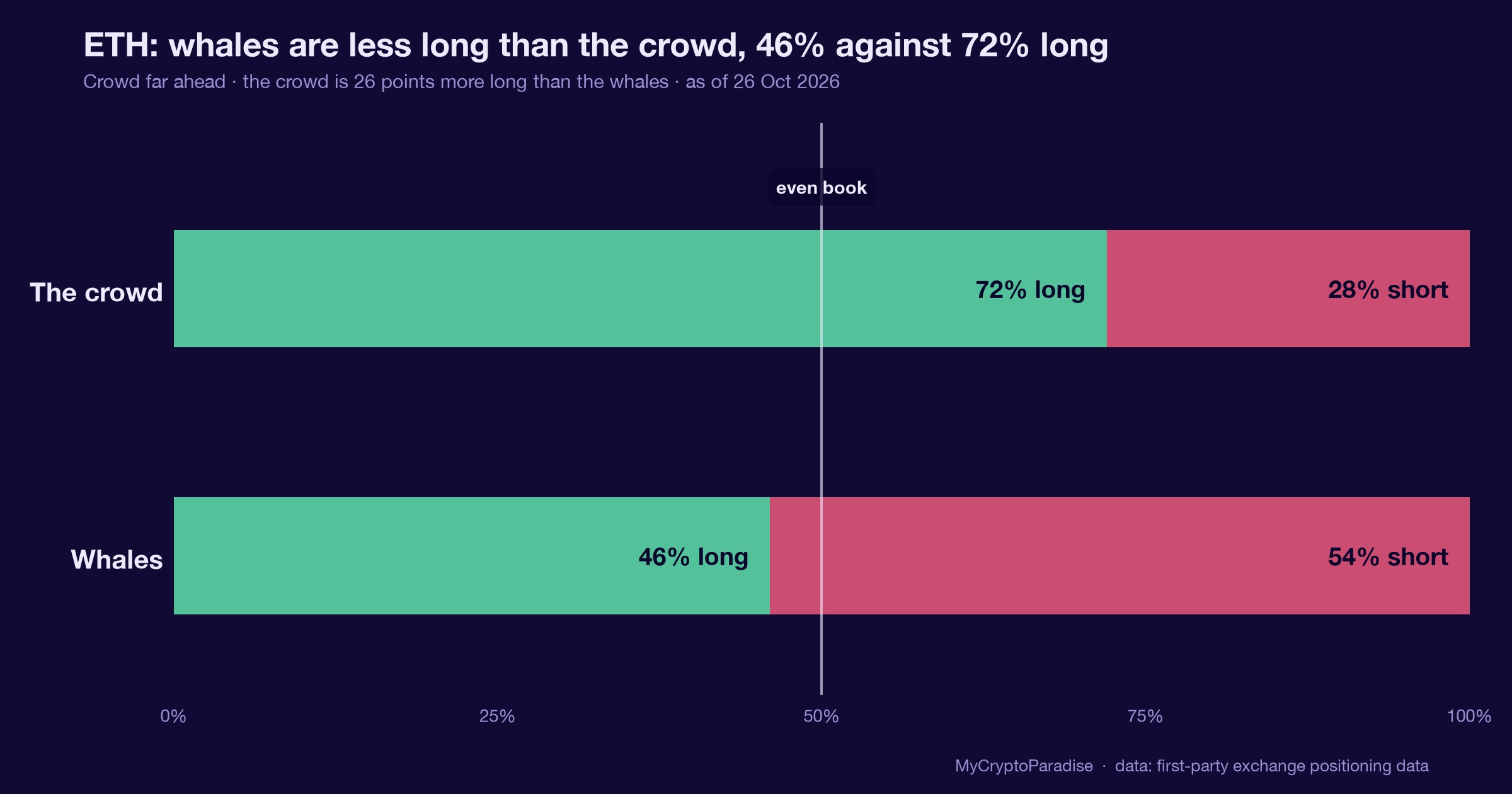
Here is how the ATM story maps onto that view. Every removed machine and every failed operator thins the retail on-ramp. That matters because retail is currently doing exactly what it always does near lows: stacking leveraged long positions that provide liquidity for a squeeze.
Smart money, on our read, is not in yet. USDT reserves have not rotated into crypto, which tells us the whales are still waiting for lower prices rather than defending this shelf. A shrinking retail base only strengthens that patience.
The map from here is unchanged. Below 58,000 dollars opens the 55,000 to 44,000 dollar exchange-of-hands zone, where we expect real accumulation to begin. That is the level that would flip our bias, not a kiosk headline.
On risk, we frame it simply. Fighting a broken support with leveraged longs is poor R:R (risk-to-reward) while the 82,000 to 88,000 dollar band caps the upside. A reclaim of that band voids this read; until then, a sensible SL (stop-loss) sits above structure, and patience beats prediction. This is analysis, not a signal.
The read behind this: we framed this story through our own market analysis, Can Bitcoin Hold This Support?
Track it live: our live crypto funding rates tracks this in real time, so you can watch it play out for yourself.
Related coverage
For exact entries, targets, and stop losses with full risk management, that is what ParadiseFamilyVIP is for. New to reading these moves? Start with our crypto trading strategies guide.
ParadiseTeam is monitoring the market situation closely, and we are taking these developments into consideration while building our trading tactics inside ParadiseFamilyVIP.
Crypto trading involves substantial risk. Prices are volatile and you can lose money. This article is educational and is not financial advice. Past performance does not guarantee future results.
With retail on-ramps shrinking, where does BTC go before smart money buys?
How 18 Paradisers are calling it
The first call is still open
Free account, no password. Members just sign in.












Join the discussion 2
ATMs were always a retail niche, not a core on-ramp. These bans just formalize an existing invalidation point, hardly a disaster for broader adoption!!
its always the on-ramps that matter for adoption, or the lack thereof. what about the one level that matters