


Listen: the breakdown
Market briefing: Binance is delisting VANRY and five other altcoins on August 17, pulling liquidity as regulatory pressure builds. BTC traded near $62,631 as of 11:04 UTC, and we still read a dip toward $61k to $59k as the higher-probability path.
- Binance delists ACX, HFT, PIVX, PYR, VANRY and VIC, with spot pairs removed at 03:00 UTC on August 17.
- Futures already closed August 7 and withdrawals end October 17, so exit liquidity is draining fast.
- We read this as confirmation of near-term weakness, keeping our eyes on the $61k to $59k BTC accumulation zone.
Binance delisting six altcoins including VANRY pulls real liquidity out of the market at 03:00 UTC on August 17. Is this a project failure, or a quiet warning about where the whole alt market is heading?
Binance is delisting six altcoins at once, and the reasons matter less than the mechanics. Spot trading pairs for Across Protocol, Hashflow, PIVX, Vulcan Forged PYR, Vanar and Viction disappear at 03:00 UTC on August 17. Futures already closed on August 7. Withdrawals end on October 17. That is the full runway holders now have.
Vanar's team framed it plainly to their community. Binance called it a review cycle, not a verdict on the project, and Vanar insists it has spent the year building. That may be true. Markets, however, do not price press releases. They price liquidity.
And liquidity is exactly what a delisting removes. When the largest venue pulls a pair, the deepest order book for that token vanishes overnight. Hashflow already sank to a record low as traders priced the exit early. The pattern is familiar to anyone who has watched a few of these cycles.
The timing sits inside a wider squeeze on exchanges. Binance.US has halted dollar deposits after banking partners froze its withdrawal channels, following the SEC's lawsuit against Binance. Robinhood delisted three tokens the SEC named as securities in its cases against Binance and Coinbase.
So this is not one isolated review. It is another data point in a season of shrinking venues, tighter listing standards, and thinner alt liquidity. For traders, the affected tokens are the headline. The real signal is what it says about the tape underneath.
Why thinner venues drain alt liquidity
A delisting is not a price opinion. It is a plumbing change, and plumbing decides who can get out and at what cost. When Binance removes the spot pair, it removes the venue where most of that token's volume lived. The remaining exchanges hold shallower books, so the same sell order now moves price far more.
That is the transmission mechanism. Reduced venue coverage means wider spreads, faster slippage, and a smaller crowd willing to provide the other side. Holders of ACX, HFT, PIVX, PYR, VANRY and VIC face this directly, with a hard withdrawal deadline of October 17 concentrating the exits.
The macro layer makes it heavier. Binance.US freezing dollar deposits and Robinhood dropping SEC-flagged tokens both point the same direction: the on-ramps and listing shelves for alts are narrowing. Every removed pair is one less place for capital to enter or exit cleanly.
That matters beyond six tokens. When the market watches liquidity get pulled repeatedly, confidence in the long tail erodes. Capital rotates toward assets it trusts it can always sell, which usually means BTC and, to a lesser degree, ETH. The tail gets sold first and hardest.
So the driver here, the Binance delisting, is really a story about liquidity concentration. Fewer venues, stricter standards, and a regulatory backdrop that keeps tightening. That is the structural read, and it is why a routine review cycle deserves more attention than the affected tickers alone.
How the squeeze cascades from alts to BTC
Start with the delisted tokens, because they absorb the first hit. With futures already closed and spot pairs ending August 17, price discovery for these six thins out fast. Sellers rushing the October 17 withdrawal window meet fewer buyers, so downside gaps become easy. Hashflow's record low is the preview, not the exception.
The second wave is sentiment. When traders watch liquidity get yanked from one basket, they mark down the risk of holding the wider long tail. That fear does not stay contained. It pushes capital up the quality curve, out of small alts and toward BTC as the perceived safe exit.
Here is the twist. That flight to BTC is not straightforwardly bullish for Bitcoin. Rotation out of alts often coincides with broad de-risking, where BTC itself sags as leverage unwinds. BTC traded near $62,631, down 0.8 percent on the day as of 11:04 UTC, already leaning soft.
ETH sits in the middle. It holds more liquidity than the delisted names but still bleeds when the alt complex wobbles and risk appetite fades.
Our read ties it together. The delisting adds another weight to an already heavy tape. It does not need to be the single cause of a BTC dip. It reinforces a near-term path we already saw forming, where the $61k to $59k zone becomes the magnet. Liquidity events like this rarely fire in isolation; they compound.
What confirms or invalidates the alt drain
Watch how BTC behaves around $63,000 first, because that zone is doing the heavy lifting. We treat it as resistance. As long as reclaim attempts stall there on declining bullish volume, the delisting narrative and the tape agree, and the near-term bias stays down.
The cleaner confirmation is a loss of $62,500. If that level flips from support into resistance, the path toward $61,000 opens quickly. That is where we expect the market to test the crowd, precisely because so many longs sit stacked above with positive funding.
Volume is the tell that matters more than any single candle. Bullish momentum has been fading on every push, with lower lows showing across price, histogram, and RSI (relative strength index). Until buyers show real, sustained volume on a reclaim, we treat bounces as suspect.
Invalidation is specific. A decisive reclaim of $63,000 that holds, backed by rising volume rather than a thin wick, would tell us the accumulation dip is not coming yet. In that case the $65,500 area, where a large whale short sits, becomes the next magnet for a squeeze.
For the delisted tokens themselves, there is little to watch beyond the exits. Thin books and a closing withdrawal window rarely reward patience. The signal worth tracking is the broader one: whether alt liquidity keeps draining, and whether BTC finally reaches the zone where the real decision gets made.
What this delisting means at our accumulation zone
The ParadiseTeam reads this delisting as confirmation, not a new thesis. We already carried a near-term bearish bias with a dip toward the $61,000 to $59,000 accumulation zone as our base case. Binance pulling liquidity from six alts simply adds another weight to that side of the scale.
Structure is doing the talking. BTC traded near $62,631 as of 11:04 UTC, capped under the $63,000 resistance we are watching, with lower lows on price, histogram, and RSI. Reclaim attempts keep arriving on declining bullish volume. That is not the footprint of strength.
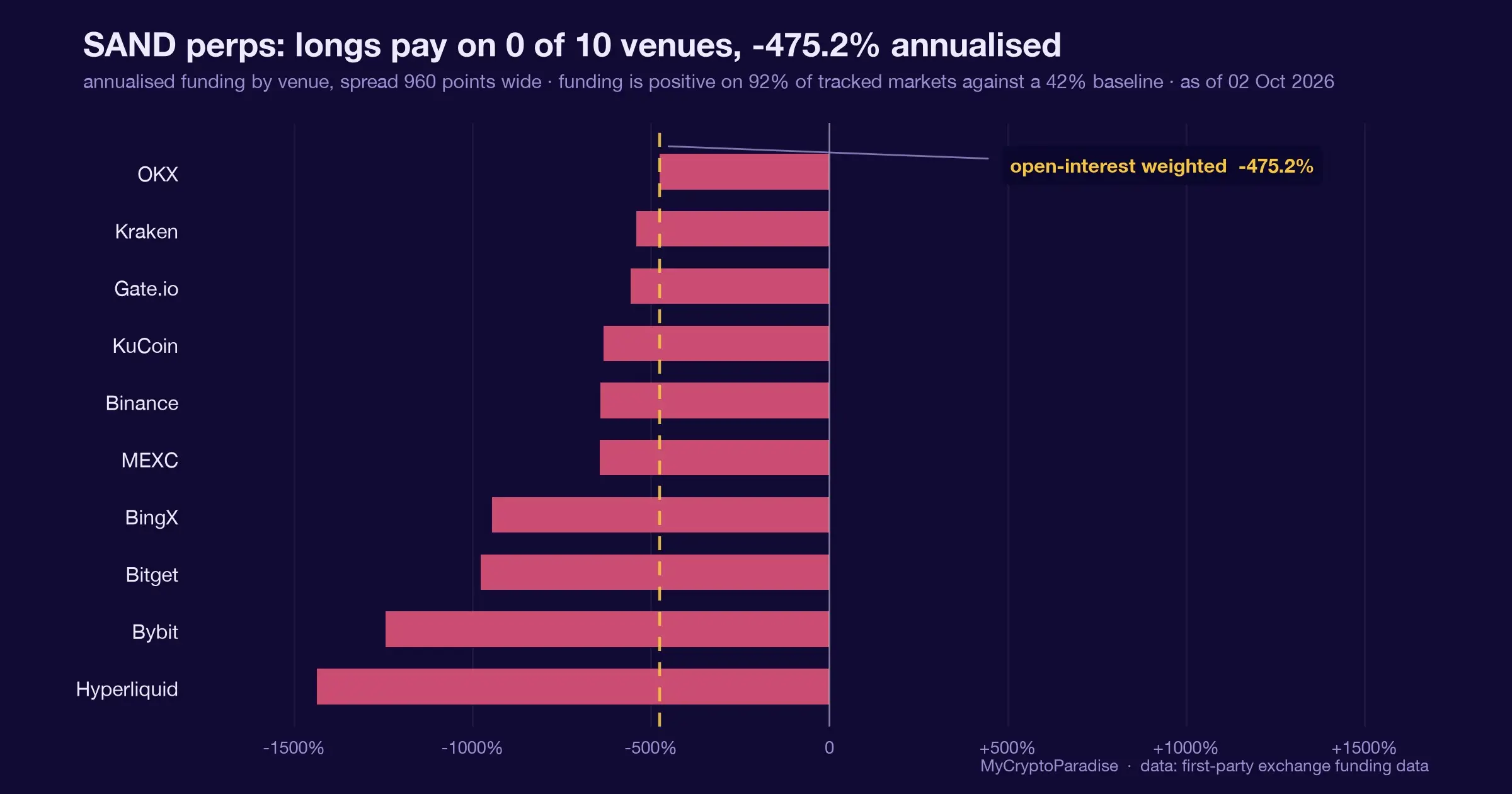
Here is where our edge lives. Retail longs are crowded with positive funding, yet squeeze probability reads low, near 10 percent. That combination usually favors the downside, because trapped longs become fuel when support finally gives. So we see smart money in no rush. The disciplined approach is patience at $61,000 to $59,000, waiting for a high probability, favorable R:R (risk-to-reward) entry rather than chasing every bounce under resistance.
A loss of $62,500 as support would strengthen that dip case. A firm reclaim of $63,000 on real volume would pause it, putting the $65,500 whale short back in play. None of this is a promise; it is a framework. The delisting does not change our levels. It reinforces the read that the market is more likely to test $61k to $59k before it earns a durable move higher.
Track it live: our live crypto funding rates and the Crypto Fear and Greed Index both update in real time, so you can watch this shift for yourself.
Related coverage
For exact entries, targets, and stop losses with full risk management, that is what ParadiseFamilyVIP is for. New to reading these moves? Start with our crypto trading strategies guide.
ParadiseTeam is monitoring the market situation closely, and we are taking these developments into consideration while building our trading tactics inside ParadiseFamilyVIP.
Crypto trading involves substantial risk. Prices are volatile and you can lose money. This article is educational and is not financial advice. Past performance does not guarantee future results.










Join the discussion
No comments yet. Members, share how you are reading this.