

Listen: the breakdown
Market briefing: A Bitcoin staking platform called b14g lost roughly 97 million CORE, about $1.47 million, to a withdrawal bug. BTC shrugged, trading near $77,892 as of this briefing.
- Attacker drained 91 staking positions in a single transaction
- Loss sits near $1.47 million in CORE tokens
- BTC price unmoved, trading near $77,892 on the day
A hacker just drained 97 million CORE from Bitcoin staking platform b14g by asking to withdraw nothing. If zero tokens can empty a contract, what else are stakers not pricing?
A Bitcoin staking platform named b14g lost roughly 97 million CORE tokens on October 31. The haul was worth about $1.47 million.
The method is the part worth sitting with. The attacker submitted withdrawal requests for zero CORE, then watched the contract pay out real positions anyway. In a single transaction, 91 staking positions were emptied.
b14g has confirmed the unauthorized withdrawals. A blockchain analytics firm traced the mechanism and isolated how the zero-token requests tricked the payout logic. So this was not a market event. It was a contract event. The flaw lived in how b14g validated withdrawal amounts, not in CORE itself, and not in anything touching the wider tape.
That distinction matters for traders. $1.47 million is a rounding error against total crypto liquidity, which is why Bitcoin never flinched. BTC was trading near $77,892 as of this briefing, actually up on the day while this story circulated.
There is a quiet irony here. Staking is sold to users as the calm, yield-bearing corner of crypto, the sensible alternative to leverage. Yet the risk did not arrive through a price crash. It arrived through a withdrawal form that accepted zero as a valid number.
The loss is real and the users are out of pocket. But the signal for majors is close to nil, and the market has already told us as much by not reacting.
Why staking yield hides contract risk
The transmission chain here starts and ends inside one contract. A zero-token withdrawal exploit on b14g produced an isolated loss of about $1.47 million, and that was the entire economic footprint.
There is no macro leg to this story. No liquidity left the broader market, no large holder was forced to sell majors, no exchange balance sheet was touched. The money that moved was CORE held in b14g staking positions, and it moved sideways into an attacker's wallet.
That is why the honest read matters more than the headline. Staking platforms market yield as the low-drama option. Underneath that yield sits a smart contract, and that contract is only as safe as its weakest validation check.
Most users never price this risk. They see an advertised percentage and treat the principal as parked, not deployed. A withdrawal path that accepts zero as a legitimate claim is a reminder that the principal was always inside code someone could break.
For the wider market, the mechanism is reputational, not monetary. It feeds the broader staking-platform risk narrative rather than draining anything from BTC or ETH. And right now that narrative is being swallowed by a louder one. The chatter around b14g is folding into much bigger security stories dominating the week. A $1.47 million protocol bug simply cannot compete for attention, which further mutes any standalone effect it might have had on price.
Why BTC barely registered the drain
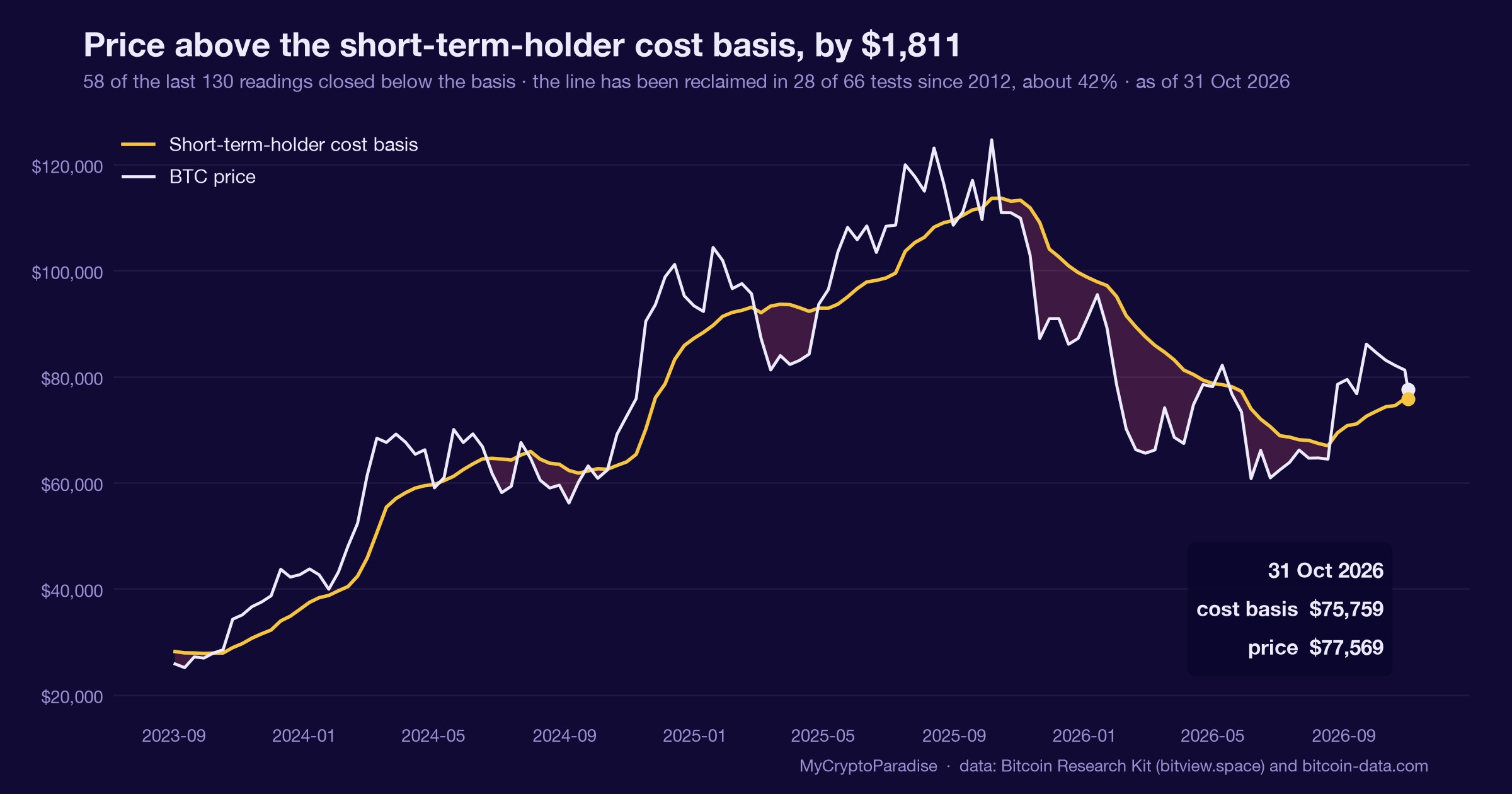
Bitcoin did not react, and that non-reaction is the cleanest data point we have. BTC was trading near $77,892 as of this briefing, with the 1-hour change essentially flat and the day slightly green.
Scale explains everything. A $1.47 million loss cannot move an asset whose liquidity dwarfs it by orders of magnitude. The exploit never generated forced selling, never hit a major exchange, and never touched the collateral stack that actually drives cascades.
So the usual BTC-then-ETH-then-alts transmission simply has no fuel here. There is no first domino. ETH sees nothing from this, and the broad alt complex sees nothing either, because no shared liquidity pool was drained.
The only asset with genuine exposure is CORE and the b14g ecosystem around it. Even there, the affected pool is the staking positions, not the token's entire float, which limits the direct damage to users of that one platform.
Contrast this with the week's larger security headlines, which carry real attribution and real capital flows. Those stories can shift sentiment. This one mostly borrows attention from them.
The practical takeaway for traders is restraint. When a security headline lands, the first instinct is to assume contagion. Here the facts refuse that reading. No measurable liquidity drain reached the market level, and the tape confirms it by doing nothing at all. A flat chart is sometimes the loudest answer a story gets.
Signals that keep this contained
Containment is the thing to confirm first. The clean case is that the loss stays frozen at roughly $1.47 million and 91 positions, with no further contracts on b14g exposed to the same zero-token flaw.
Watch for b14g's own disclosure on the fix. A clear post detailing how the withdrawal validation failed, and that it is patched, keeps this a closed incident. Silence or a second drain would widen it.
Watch CORE's own liquidity, not Bitcoin's. If the token sees heavy outflows from exchanges or from other staking products, that would signal users pricing in contract risk across the ecosystem. So far there is no evidence of that spreading.
Invalidation of the contained read looks like copycat attempts. Zero-token or zero-amount bugs can exist on other platforms that borrowed similar logic. A second platform hit the same way would turn an isolated event into a category problem, and that is when a sector narrative starts to matter for price.
For BTC itself, this story changes nothing to watch. The levels that matter are set by structure and liquidity, not by a $1.47 million staking bug.
The honest frame is this: treat b14g as a security headline for one platform and its users. Follow whether the exploit stays single-platform. If it does, the market was right to ignore it. If it does not, the staking-risk theme gets a second data point, and themes build from exactly that.
What this means for staking risk pricing
The ParadiseTeam reads this as a reputational event for b14g, not a tradable catalyst for BTC or majors. A $1.47 million contract bug does not reach the levels that matter on the daily chart.
Our standing lens keeps us neutral-to-cautious here, and this story does nothing to change that posture. BTC sits near $77,892, still working through a former support zone we now treat as neutral. The levels in play are the reclaim of the 0.618 Fibonacci retracement that would open price discovery, and the top of the first wave above it as the resistance target if former support flips to resistance.
None of those levels care about b14g. This exploit does not drain liquidity near them, does not trap positions around them, and does not shift where the real stops sit.
What it does do is reinforce a discipline point. Retail tends to react to security headlines with fear, assuming every hack is contagion. The structure was set well before this print, and it stays set after it.
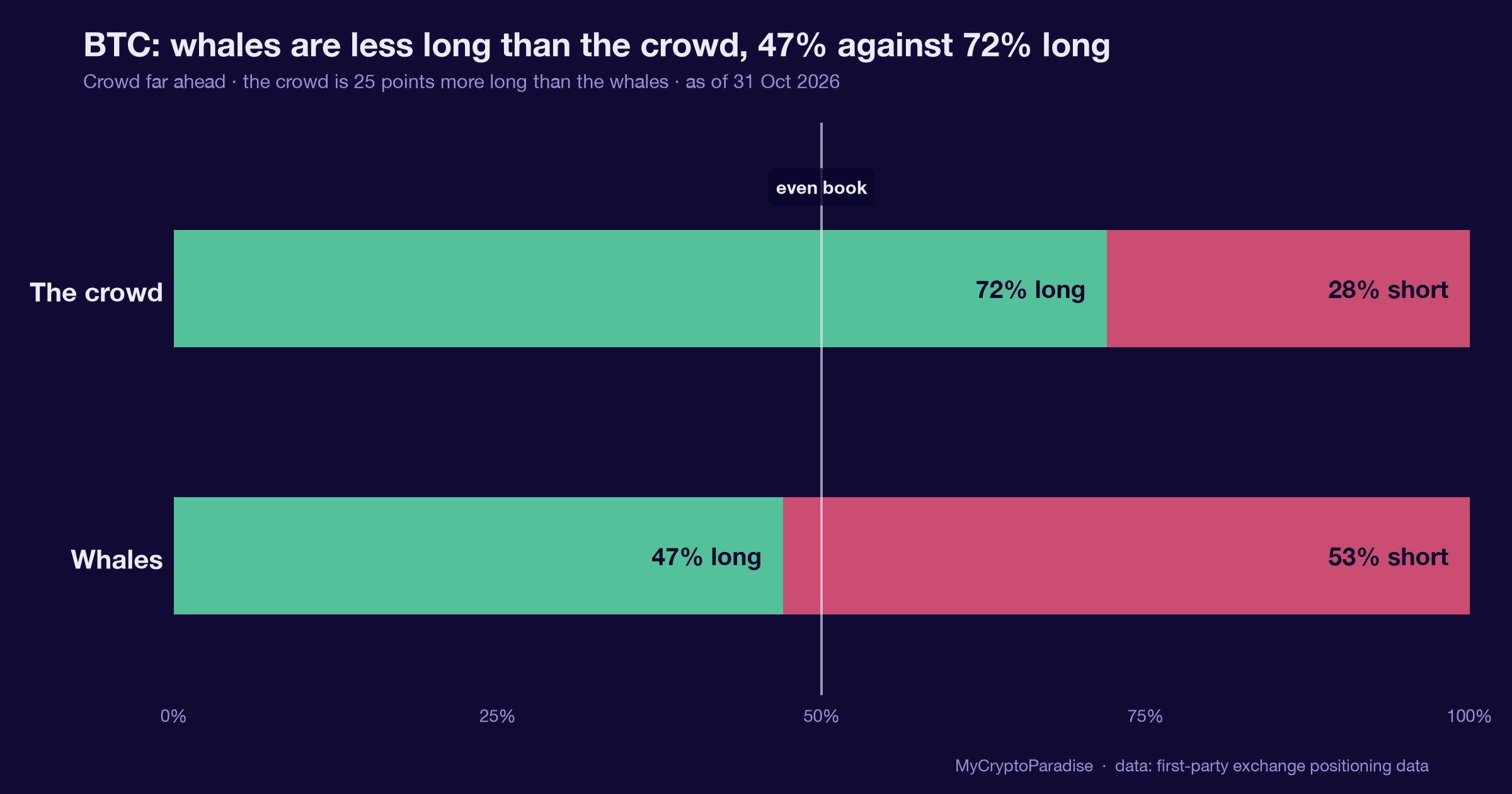
Our caution comes from the tape, not from CORE. Strength into that neutral former-support zone can still meet sellers, and whale positioning turning defensive around this range is the thing we actually weigh. A staking bug on one platform is not evidence for or against that. So we file b14g under smart-contract risk that stakers chronically under-price, and we keep our eyes on the reclaim level, not the headline.
The read behind this: we framed this story through our own market analysis, Binance Hack: Is Bitcoin's Small Drop Bullish?
Track it live: our Crypto Fear and Greed Index and the crypto liquidation heatmap both update in real time, so you can watch this shift for yourself.
Related coverage
For exact entries, targets, and stop losses with full risk management, that is what ParadiseFamilyVIP is for. New to reading these moves? Start with our crypto trading strategies guide.
ParadiseTeam is monitoring the market situation closely, and we are taking these developments into consideration while building our trading tactics inside ParadiseFamilyVIP.
Crypto trading involves substantial risk. Prices are volatile and you can lose money. This article is educational and is not financial advice. Past performance does not guarantee future results.
Does the b14g zero-token bug stay a one-platform problem?
How 2 Paradisers are calling it
The first call is still open
Free account, no password. Members just sign in.








Join the discussion 1
sorry if this is a dumb q but how does a zero token withdrawal even pass the checks?? i'd have thought the contract would just reject an amount of 0 !! did b14g ever get an audit??