


Listen: the breakdown
Developing story update (October 21, 2026, 07:45 UTC):
Update: based on our sources, the suspected attacker behind the roughly $2.84 million October 8 theft has now been identified as SquidSquad, a group linked to North Korea. The target remains an institutional entity, and the activity is confirmed to have taken place on the BNB Smart Chain.
The laundering trail is unchanged: 1,111.2 ETH was routed through Tornado Cash before funds were bridged from Ethereum to Tron via USDT, likely an attempt to move quickly through intermediary addresses ahead of any potential stablecoin freeze. For traders, this sharpens the attribution but does not change the on-chain footprint already reported.
What to watch now: Watch for any confirmed freeze or recovery of the bridged Tron funds, which would signal how effective the laundering route was.
Market briefing: An institutional entity is suspected to have lost around $2.84 million to a North Korea-linked hacker on BSC, with the ETH laundered through Tornado Cash and bridged to Tron. BTC was trading near $82,715 as of 06:52 UTC, barely acknowledging it.
- An institutional entity suspected to have lost about $2.84 million on BSC on October 8
- Attacker deposited 1111.2 ETH into Tornado Cash, then bridged all funds from Ethereum to Tron via USDT
- BTC near $82,715 and ETH near $2,439 showed no direct reaction to the breach
A North Korea-linked hacker is suspected of draining $2.84 million from an institutional entity on BSC, and the market barely noticed. So why does that silence matter?
An institutional entity is suspected to have lost roughly $2.84 million to a North Korea-linked attacker. The breach hit on October 8 on BSC. For a sum that size, the market reaction has been almost nonexistent.
The mechanics follow a familiar script. The attacker moved the stolen value, deposited 1111.2 ETH into Tornado Cash, then bridged all funds from Ethereum to Tron using USDT. Mix, bridge, disperse. We have watched this exact laundering choreography many times now.
What stands out is not novelty. It is repetition. State-linked groups keep targeting the same soft spots, and the obfuscation playbook rarely changes because it keeps working.
The victim here is described as institutional, not a careless retail wallet. That detail is the real story. When professional holders are still losing eight figures to the same tools, the problem is structural, not a one-off lapse in judgment.
Meanwhile prices shrugged. BTC was trading near $82,715 as of 06:52 UTC, up on the day. ETH sat near $2,439, also higher over 24 hours. Neither chart registered the theft.
That gap between a serious security failure and a flat tape is worth sitting with. Isolated losses rarely move the index. They do, quietly, keep raising the cost of trusting the plumbing underneath it.
State-linked theft keeps draining ecosystem trust
The transmission from a single hack to the broader market is slow, but it is real. One $2.84 million loss does not dent total crypto liquidity. A steady drumbeat of state-linked thefts does something subtler. It raises the perceived cost of holding assets on-chain for exactly the institutional players everyone wants to attract.
Institutions price risk. Every confirmed breach of a professional entity feeds into custody decisions, insurance premiums, and the internal risk committees that gate larger allocations. That is the macro channel here, not a same-day sell order.
There is also the sanctions dimension. Funds moving through Tornado Cash and bridging to Tron touch the exact rails regulators scrutinise most. Each episode gives policymakers fresh material for tighter rules on mixers, bridges, and stablecoin flows.
Tighter rules on those rails tend to drain liquidity, not add it. Compliance friction is a tax on capital mobility, and capital mobility is what keeps spreads tight and markets deep. So the honest read is that this specific event is isolated and minor for price. Its weight sits in aggregate. Every breach that proves the laundering playbook still works nudges the regulatory and custody environment a little tighter, and a tighter environment is a structural headwind for the asset class, however quiet the tape looks today.
Why eight figures barely moved the tape
The direct price impact of this hack is close to zero, and that is the point worth examining. BTC held near $82,715 and ETH near $2,439 while the theft was being laundered in plain sight. A liquidity cascade needs forced selling, and $2.84 million routed through a mixer does not force anyone.
For BTC specifically, an isolated BSC breach is noise against the macro backdrop. The dominant asset reacts to flows, rates, and positioning, not to a single institutional loss three networks away.
ETH carries a sliver more relevance here, since the laundering leg ran through Ethereum before the bridge to Tron. Yet 1111.2 ETH passing into a mixer is not a market-moving flow. It changes custody, not the order book.
Alts tied to BSC and bridge infrastructure are where any residual sentiment drag would land. Security headlines tend to weigh on the specific chains named, not the majors.
The cumulative read is the uncomfortable one. Markets have grown so used to state-linked thefts that the news barely clears the first paragraph before attention moves on. Desensitisation is not resilience, even though the flat candle invites you to call it that.
Treat the muted reaction as absorption, not approval. The loss is real, the laundering trail is real, and the lack of a price flinch simply means the pain stayed with one entity rather than spreading. That is bearish for ecosystem trust, even when it is neutral for today's close.
Fund tracing and the regulatory response ahead
The next signals from here are about trail and policy, not candles. Watch whether the laundered funds stay dark or surface at an exchange, because recovered or frozen value would mark a rare win for the tracing side. Silence confirms the playbook held.
Confirmation that this stays an isolated incident is the base case. If no further institutional losses from the same cluster emerge in the coming days, the market read of minimal impact holds, and the story fades into the background risk it belongs to.
Invalidation looks different. A second or third disclosure tied to the same North Korea-linked group, or a larger figure revised upward, would turn an isolated event into a pattern. Patterns move sentiment on the affected chains even when majors stay calm.
The regulatory angle is the slower fuse. Watch for any official movement on mixers, cross-chain bridges, or stablecoin transfer rules, since repeated abuse of those rails is exactly what invites it. New restrictions there are a liquidity headwind for the whole space.
Keep an eye on BSC and bridge-linked tokens for lingering sentiment drag. Those are where a security narrative concentrates.
For the majors, the thing to watch is simply whether this remains a non-event. BTC near $82,715 ignoring the news is the expected outcome. The moment a hack of this kind starts correlating with broader weakness is the moment the market stops treating theft as someone else's problem.
What repeat breaches mean for institutional conviction
The ParadiseTeam frames this as background risk, not a price trigger. BTC was trading near $82,715 as of 06:52 UTC, and nothing in a $2.84 million BSC loss changes the levels that actually matter for the index. This story sets no trade; it sets context.
That context is cautious. Our standing daily bias remains macro bearish, with the $82,000 to $84,200 band now acting as resistance that has turned red overhead. Strength into that zone is where we expect selling, and a security drumbeat like this does nothing to improve conviction underneath it.
On-chain, whales have been the aggressive sellers, roughly 67 percent over 24 hours, while retail sentiment sits neutral rather than fearful. That combination means retail is not yet providing the exit liquidity whales want. A breach headline does not change that balance; it is too small to shift positioning.
We are still watching $73,000 as the key structural level below. A break there changes market structure, and that is the line that would matter, not any hack.
Medium-term bullish divergences are forming as bearish momentum slows, which keeps a bounce toward $90,000 on the table before any larger rejection. This event does not add to that case or subtract from it.
The real signal for traders is slower and structural: each proven laundering run quietly raises the cost of institutional trust, and that erosion, not today's candle, is where the damage compounds.
The read behind this: we framed this story through our own market analysis, Can Bitcoin Recover From This Support?
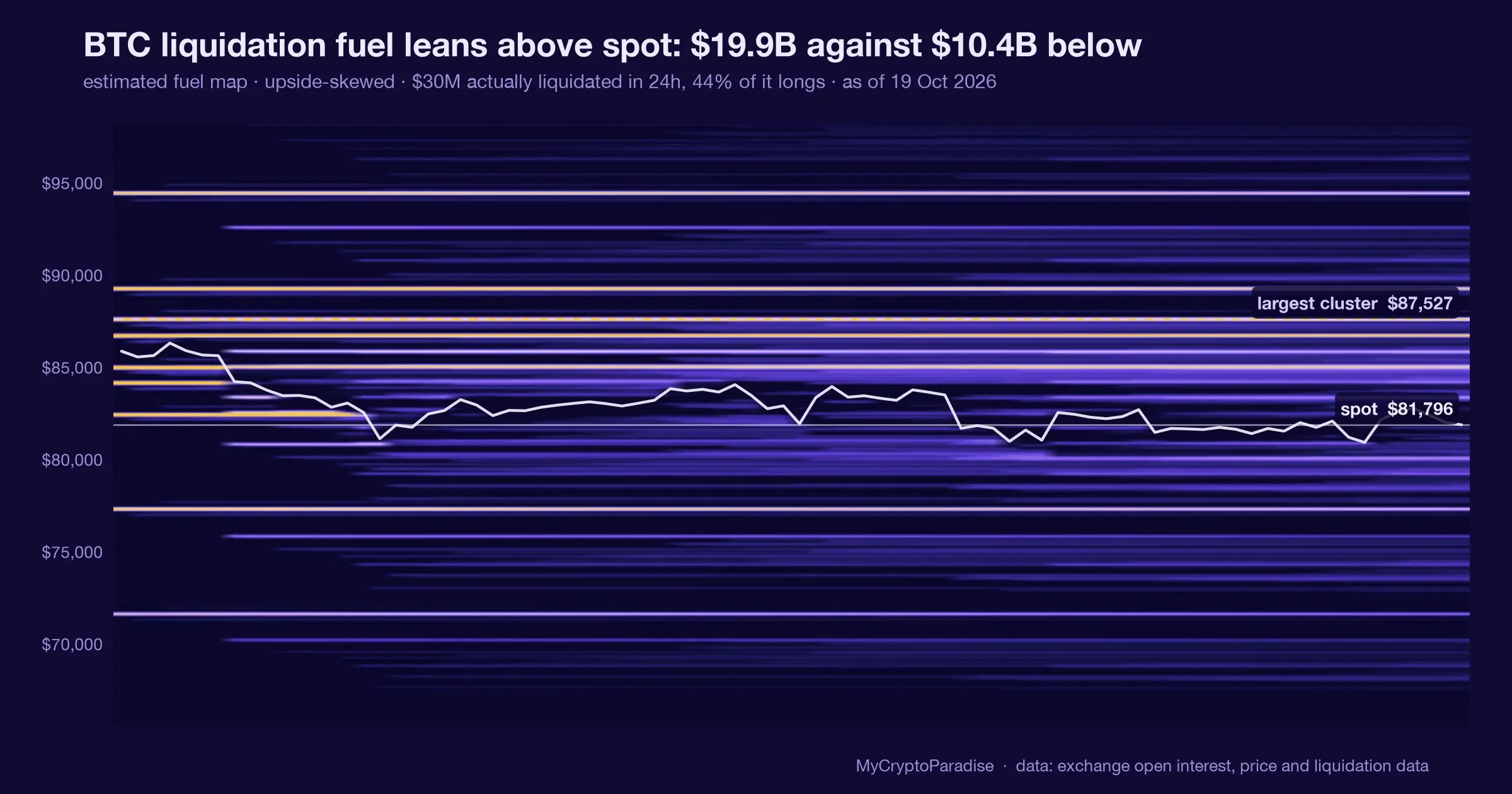
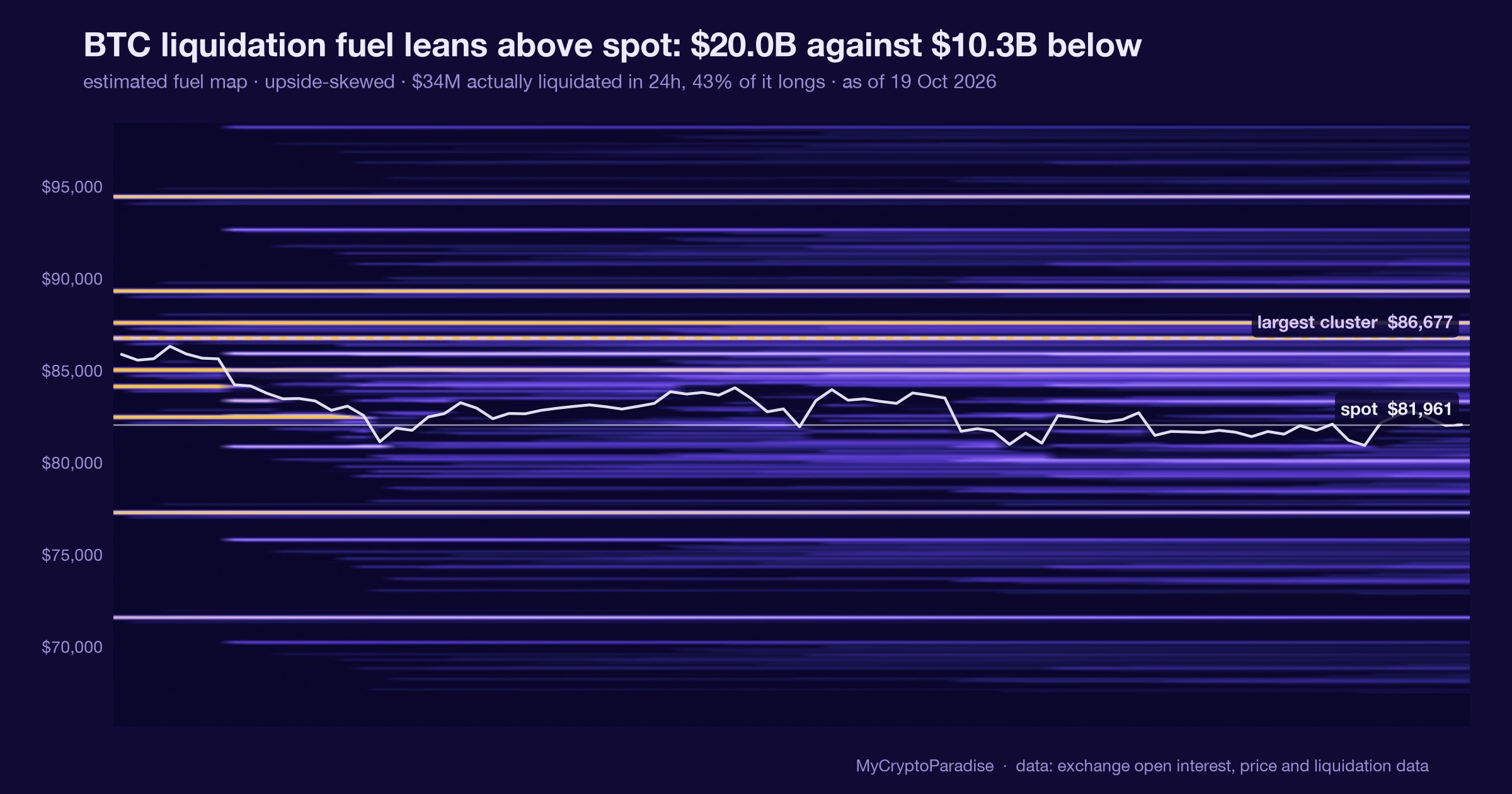
Track it live: our Crypto Fear and Greed Index and the crypto liquidation heatmap both update in real time, so you can watch this shift for yourself.
Related coverage
For exact entries, targets, and stop losses with full risk management, that is what ParadiseFamilyVIP is for. New to reading these moves? Start with our crypto trading strategies guide.
ParadiseTeam is monitoring the market situation closely, and we are taking these developments into consideration while building our trading tactics inside ParadiseFamilyVIP.
Crypto trading involves substantial risk. Prices are volatile and you can lose money. This article is educational and is not financial advice. Past performance does not guarantee future results.
After repeat state-linked hacks, is on-chain trust rising or falling?
This is how 3 Paradisers are calling it. Tap your call.
No calls on this one yet. Tap yours to be the first.
Free account, no password. Members just sign in.












Join the discussion 2
More reason to secure assets off-exchange, I think. Reminds me of Coincheck in 2018. The market's reaction, or lack thereof, is also notable.
It's always so scary to read these, but I wonder, what does "institutional entity" actually mean here? 😨 Just some big company or something more specific?