


Listen: the breakdown
Market briefing: A record theft at Binance, reported near $6.3 to $6.4 billion, pushed BTC toward $77,242, down about 1% on the day. Three Wall Street firms told clients it is an exchange problem, not a crypto problem, and to buy the weakness in crypto stocks.
- A record Binance hack, reported between $6.3 and $6.4 billion, is now the largest on record.
- Three Wall Street firms called it an exchange security failure, not a crypto-wide threat.
- Coinbase and Strategy fell about 12% and Robinhood about 9%, far more than spot BTC.
A record Binance hack near $6.4 billion rattled markets, yet Wall Street told clients the real opportunity sits in crypto stocks, not fear. So who is really buying this panic?
A record theft hit Binance this week. Reported losses land somewhere between $6.3 billion and $6.4 billion, depending on who is counting. A blockchain intelligence firm traced the attack to a North Korean unit. It is now the largest crypto hack on record.
Three Wall Street firms read the event the same way. They told clients the breach exposed weaknesses in Binance's security, not a flaw in Bitcoin or crypto technology broadly. Cantor Fitzgerald, TD Cowen and Compass Point all drew that same line. The advice was blunt: buy crypto-linked stocks on the weakness.
That is not where retail went.
The equity proxies took the hardest hit. Coinbase and Strategy shares fell about 12% on Friday. Robinhood dropped roughly 9%. Spot Bitcoin, by contrast, only eased from above $86,000 earlier this month toward $77,000, a comparatively mild move.
That gap is the whole story. Stocks priced in a crypto catastrophe. The coins did not. One note framed the problem as hot-wallet and concentration risk at a single exchange, nothing more. The distance between a glossy security page and a drained hot wallet is, by now, a familiar sight.
So the firms are fading the equity leg. They see regulated proxies down double digits while the underlying asset barely flinched. The question for traders is simple: was the stock selloff a warning, or an overreaction worth stepping into?
Why a custody breach is not a crypto breach
The driver here is a custody failure, not a monetary one. No central bank moved. No liquidity tap turned. A single exchange lost control of funds, and that distinction shapes everything downstream.
Wall Street's framing matters because it changes the transmission path. If the market reads this as a crypto-wide flaw, confidence drains from every coin and every proxy at once. If it reads as one exchange's security problem, the damage stays contained to names tied to that risk.
Three separate sell-side shops chose the second reading. They argued the hack says nothing about Bitcoin's protocol or the asset class itself. That matters for liquidity, because narrative decides where fear flows and where it stops.
The macro backdrop amplified the equity reaction. The hack landed inside a broader risk-off session, with tech and AI names also selling on cash-burn worries. Crypto-linked stocks sat at the crossroads of both fears, so they absorbed the sharpest blows. That is why the proxies fell 9% to 12% while spot Bitcoin slipped under 1% on the day. The equity leg carried crypto fear and tech fear together.
For traders, the mechanism is the message. A record theft is still a genuine negative shock, and we treat it as one. But the reaction was concentrated in sentiment-sensitive stocks, not in the coins, which tells you where the panic actually pooled.
How the selloff hit stocks harder than coins
Start with the first-order truth. A record exchange theft is a negative shock, full stop. It erodes trust in custody, invites regulatory attention, and gives every nervous holder a fresh reason to de-risk. We do not dress that up.
The liquidity cascade, though, ran through equities first. Coinbase, Strategy and Robinhood are leveraged bets on crypto sentiment. When fear spikes, they move faster and harder than the coins they track, which is exactly what happened.
Bitcoin set the tone but refused the full panic. BTC was trading near $77,242, down about 1% over 24 hours, after sliding from above $86,000 earlier in the month. The move was real, but measured.
BNB, the token most exposed to the exchange itself, actually held firm. It sat near $704.5, up over 1% on the day. That is a telling detail for a coin tied to the hacked exchange.
Alts followed Bitcoin's lead rather than the equity rout. The sharpest drawdowns stayed with the regulated proxies, not the underlying market. So the near-term read is cautious, not catastrophic. The hack is a bearish event, and custody fear can linger. But the double-digit equity drops, against a sub-1% Bitcoin move, suggest the selling concentrated in the names easiest to panic out of, not across the asset class as a whole.
Signals that confirm or break the isolation read
The first thing to watch is whether the fear stays contained. If outflows and liquidations keep clustering in crypto stocks while spot stays orderly, the exchange-specific framing holds. If BTC starts leaking alongside the equities, the story has spread.
Watch the proxies for a snapback. A sharp recovery in Coinbase, Robinhood and Strategy would confirm the selloff was panic, not a repricing of fundamentals. A second leg lower would say the market is not convinced.
Keep an eye on BNB specifically. As the token closest to the hacked exchange, it is the cleanest gauge of custody fear. Continued stability there undercuts any crypto-wide panic thesis.
Regulatory noise is the real invalidation risk. A record theft linked to a state actor tends to draw official scrutiny. Fresh enforcement talk or new exchange restrictions would turn a contained event into a broader overhang.
Funding and open interest matter too. If leverage rebuilds quickly on the long side, the market is treating the dip as a buy. If shorts pile in, expect more two-way volatility.
Confirmation of the bullish reframe would be spot holding while stocks heal. Invalidation is BTC breaking lower as custody fear metastasizes into the coins themselves. Until one of those resolves, we treat strength as fragile and let the tape, not the headline, settle the argument.
What the proxy gap signals for liquidity
The ParadiseTeam sees a clean split between where the fear landed and where the value sits. Equity proxies cratered 9% to 12%. Spot Bitcoin, near $77,242, barely moved. That gap is the signal: this looks like equity panic worth fading, not a crypto-wide crack.
Structurally, we stay cautious. Our standing read keeps a bearish weekly bias, with a reaccumulation zone far lower at $44,000 to $55,000. This hack does not change that map; it just explains today's flush.
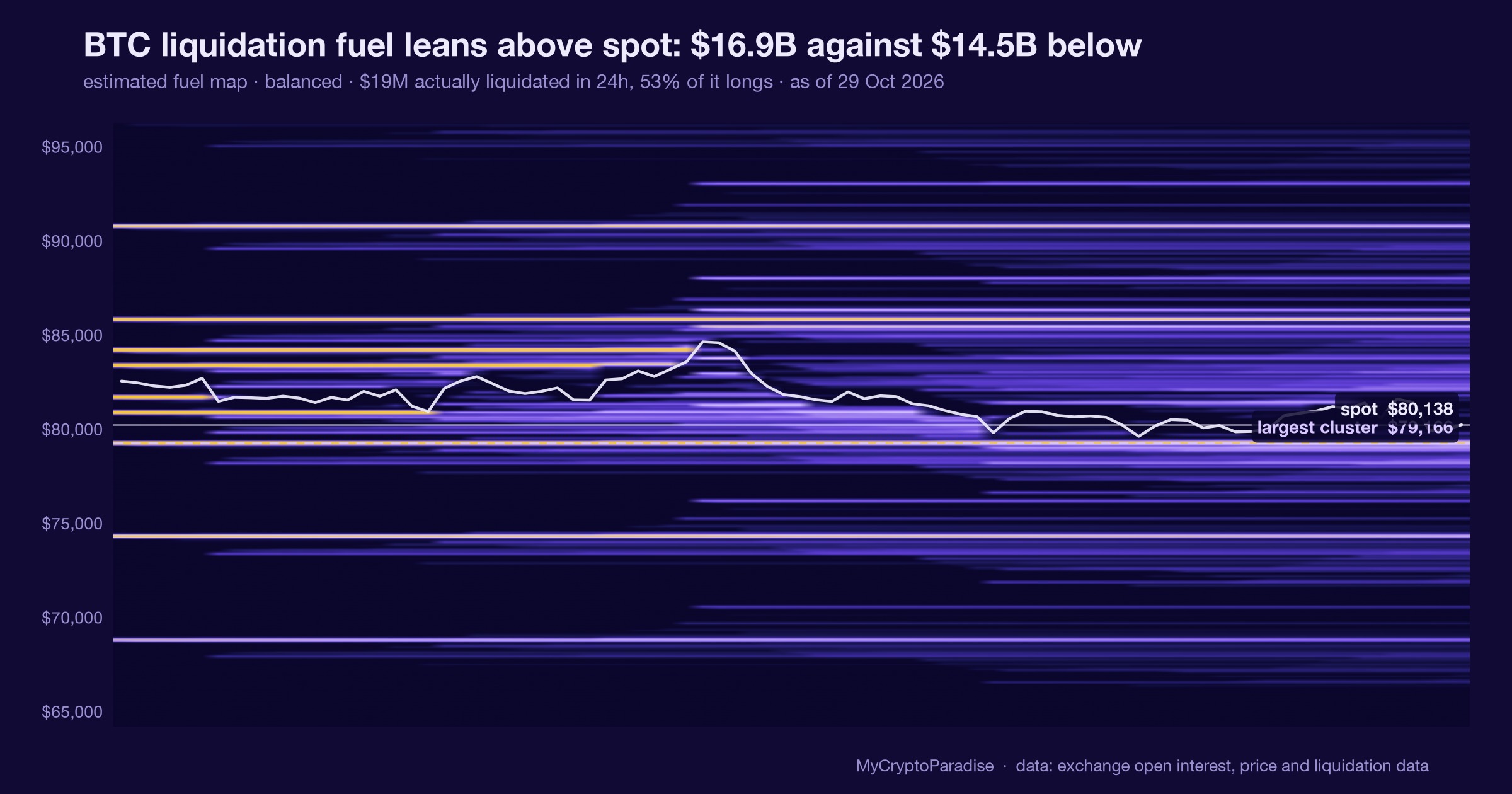
The near-term levels still matter. BTC is pressing a danger liquidation cluster around $79,000, where smart money already sold a prior bounce for profit. Reclaiming it would open room toward the $90,000 resistance and its large short-liquidation domino.
Below, the prior reaccumulation shelf at $71,000 is the line we respect. Lose it, and the bearish path toward lower support gains weight.
Here is the smart-money tell. Three sell-side shops directing clients into proxies that fell harder than the coins is institutional money treating a retail equity panic as an entry. Retail sold the stocks; desks are circling them.
We hold two truths at once. The hack is a bearish shock, so we respect downside risk first. But the muted spot move against double-digit equity drops fits a market where strength can still appear before it meets selling at resistance. We fade euphoria, not fear.
The read behind this: we framed this story through our own market analysis, Is Bitcoin Ready for a Bigger Rally?
Track it live: our Crypto Fear and Greed Index and the live crypto funding rates both update in real time, so you can watch this shift for yourself.
Related coverage
For exact entries, targets, and stop losses with full risk management, that is what ParadiseFamilyVIP is for. New to reading these moves? Start with our crypto trading strategies guide.
ParadiseTeam is monitoring the market situation closely, and we are taking these developments into consideration while building our trading tactics inside ParadiseFamilyVIP.
Crypto trading involves substantial risk. Prices are volatile and you can lose money. This article is educational and is not financial advice. Past performance does not guarantee future results.
Was Wall Street right to call the Binance hack an exchange problem, not a crypto one?
How 1 Paradiser is calling it
The first call is still open
Free account, no password. Members just sign in.












Join the discussion
No comments yet. Members, share how you are reading this.