


Listen: the breakdown
Developing story: This story is still unfolding. We are tracking it and will update this article as more details are confirmed.
Market briefing: A US Treasury official says Washington will close the crypto regulation gaps between the SEC and CFTC with or without Congress, and frames stablecoins as a tool for dollar dominance. BTC was trading near $80,709, up 0.7 percent, barely reacting to the policy signal.
- Treasury pledges to merge SEC and CFTC crypto oversight, with or without Congress
- Stablecoins framed as a new Treasury buyer and a tool for dollar dominance
- BTC near $80,709 and ETH near $2,338 barely moved, treating it as slow policy money
The US Treasury just vowed to close the crypto regulation gaps between the SEC and the CFTC, with or without Congress. Bold words. But does a confident statement move a single market level today?
A US Treasury official has drawn a line under years of jurisdictional confusion. The message was blunt. Treasury will close the crypto regulation gaps between the SEC and the CFTC, with or without Congress.
For traders who have watched two agencies fight over the same assets, that is a notable shift. The official did not ask lawmakers for permission. The plan moves ahead regardless.
The second claim went further. Stablecoins, the official said, are a new tool for dollar dominance and a new buyer of US Treasuries. In plain terms, Washington now treats dollar-backed tokens as a feature, not a threat.
The framing is strategic. The official stated the US will win in digital assets and hold a stronger dollar. That is a government positioning crypto rails as an export of its own monetary power.
Here is the honest part. Markets barely flinched. BTC was trading near $80,709 as of the brief, up a modest 0.7 percent on the day. ETH sat near $2,338, equally calm.
So this is a policy signal, not a same-day catalyst. No flood of orders followed.
Why the shrug? Because regulatory intent is slow money. It rewards the patient, not the leveraged. The market has learned to separate a confident statement of direction from a signed rulebook, and the gap between the two is often measured in years.
Why one rulebook beats regulatory limbo
Regulatory ambiguity has a price, and crypto has paid it for years. When two agencies claim the same token, builders hesitate and institutions wait. Capital hates a rulebook it cannot read. So a credible promise to merge SEC and CFTC oversight removes a real tax on participation.
The stablecoin claim matters more than the headline suggests. If dollar-backed tokens become a structural buyer of US Treasuries, Washington gains a fresh source of demand for its debt. That aligns the state's interest with crypto's growth, which is a powerful alignment.
Think about the mechanism. Every stablecoin issued against Treasuries pulls dollars into the digital economy and parks reserves in government paper. The more the sector grows, the more Treasury demand it creates. The incentive to regulate it kindly rises with every issuance.
This is how a crackdown narrative quietly inverts.
For a cycle, the fear was that governments would strangle crypto to protect the dollar. The reframe here is the opposite: the dollar is extended through crypto, not defended against it. That shift, if it holds, lowers the tail risk that has haunted the asset class. Lower regulatory risk means a lower required return, and a lower required return supports higher valuations over time.
Nothing here is a promise. It is a direction of travel, and the direction just turned friendlier.
Stablecoins as a quiet Treasury buyer
The first-order read is bullish, and the chain is simple. Clearer rules plus a state that wants stablecoins to grow lowers uncertainty. Lower uncertainty invites the slow institutional money that moves last and stays longest.
BTC is the first beneficiary of any clarity trade. It is the asset large allocators reach for when the regulatory fog lifts. A credible path to unified oversight makes a Bitcoin allocation easier to defend in a committee room.
ETH sits second in the queue, and arguably closer to the stablecoin story. Most dollar-backed tokens live on its rails. If stablecoins become national strategy, the chains that host them gain a structural tailwind that few are pricing today.
Alts come last, as always. They need the risk appetite that only arrives once BTC and ETH have led. A friendlier US stance widens the runway for the whole complex, but the order of the cascade does not change.
Here is the restraint. None of this showed up in today's tape. BTC's 0.7 percent gain and ETH's 0.5 percent are noise, not conviction. The market is treating this as a long-term policy signal, and it is right to.
The liquidity has not moved yet. It rarely does on a statement. It moves on a signature, and that is still to come.
Signals that turn intent into mechanism
The confirmation we want is boring and procedural. Watch for concrete steps that turn intent into mechanism: a formal framework splitting SEC and CFTC duties, a timeline, named leads. Words are cheap. A published rule is not.
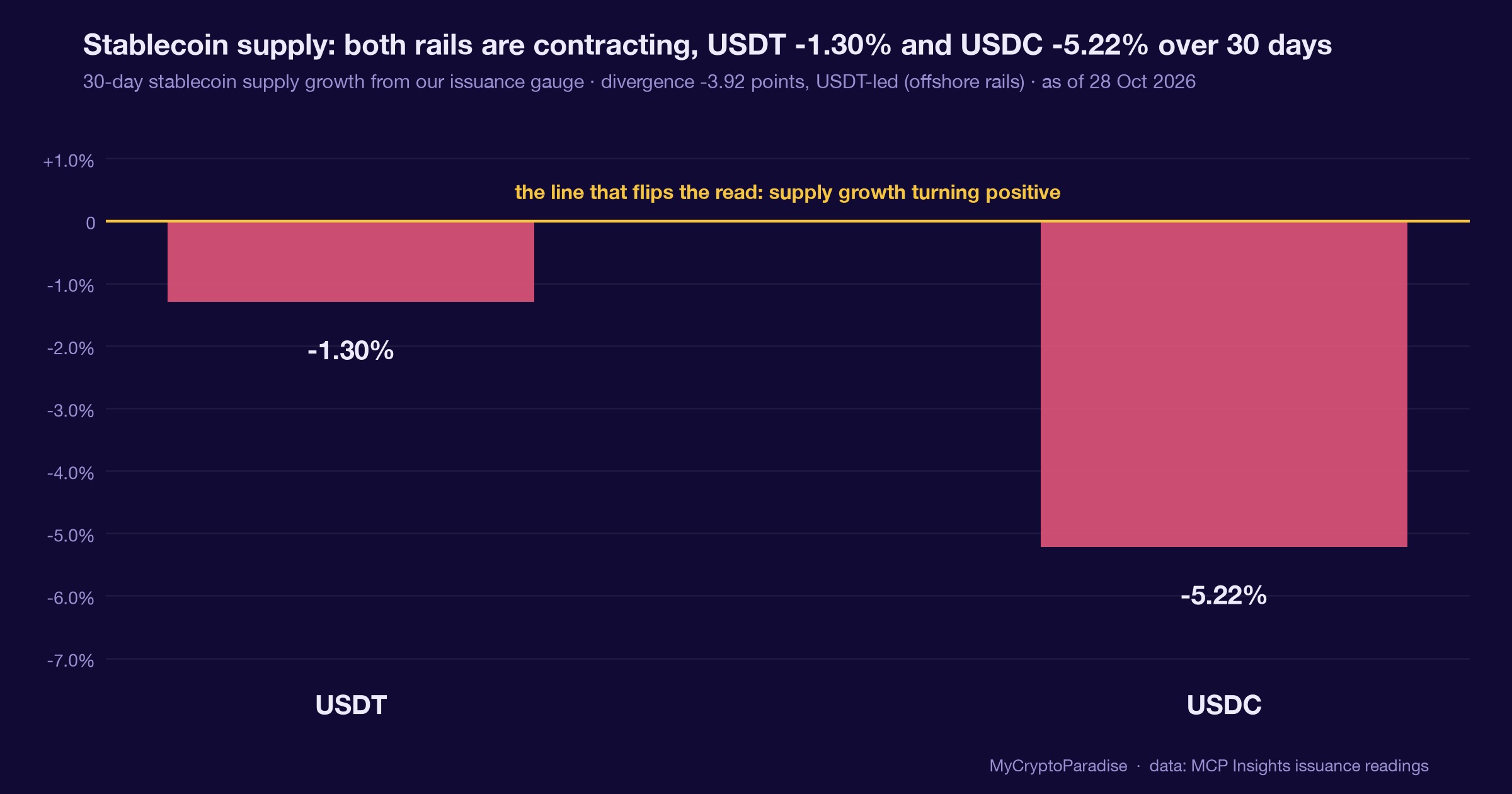
On the stablecoin side, watch issuance and reserve data. If dollar-backed supply keeps climbing and reserves keep flowing into Treasuries, the dollar-dominance thesis earns its keep. That is the real tell, not the speech.
Invalidation is just as clear. If Congress pushes back hard, or the plan stalls in the familiar way policy stalls, the clarity premium bleeds out. A promise to act without Congress invites a fight, and fights create delay.
Watch the calendar too. Regulatory momentum in the US has a habit of slowing near elections and quickening after them. With crypto money already flowing into the midterms, the politics and the policy are now entangled.
For price, the near-term tell is simpler. Does strength hold above support, or does it fade on thin conviction? A policy signal that cannot lift price off its floor tells you the market wants proof, not promises.
So we treat this as a structural positive with a slow fuse. The direction is friendly. The timing is nobody's to guarantee, and the market, sensibly, is waiting for ink.
Policy clarity against a crowded long book
The ParadiseTeam reads this as a slow structural tailwind, not a trigger. It does not change today's levels. It changes the backdrop they sit against.
BTC was trading near $80,709 as of the brief, just above the $80,100 shelf where a known whale is long. Below that, $78,000 is the line that matters, with close to $3 billion in long liquidations stacked beneath it. That is where crowded longs get flushed.
Above price, $82,500 is the first resistance, and near $89,000 sits almost $11 billion in short liquidations. That pool is the magnet for any genuine clarity rally. Policy that lifts sentiment gives market makers a reason to reach for it. So the ParadiseTeam frames this news as fuel for the existing map, not a new map. If smart money keeps absorbing fear at support, a friendlier US stance only strengthens the case for a push toward the $90,000 zone.
The caution stands. Higher timeframes remain bearish, and a policy speech does not repeal them. A statement with no rule behind it can just as easily let price slip to $78,000 first, squeezing those crowded longs before any rally.
We treat strength as something to verify at resistance, not to chase. The direction is friendly. The level work does the deciding.
The read behind this: we framed this story through our own market analysis, Can Bitcoin Recover to $90K From Here?
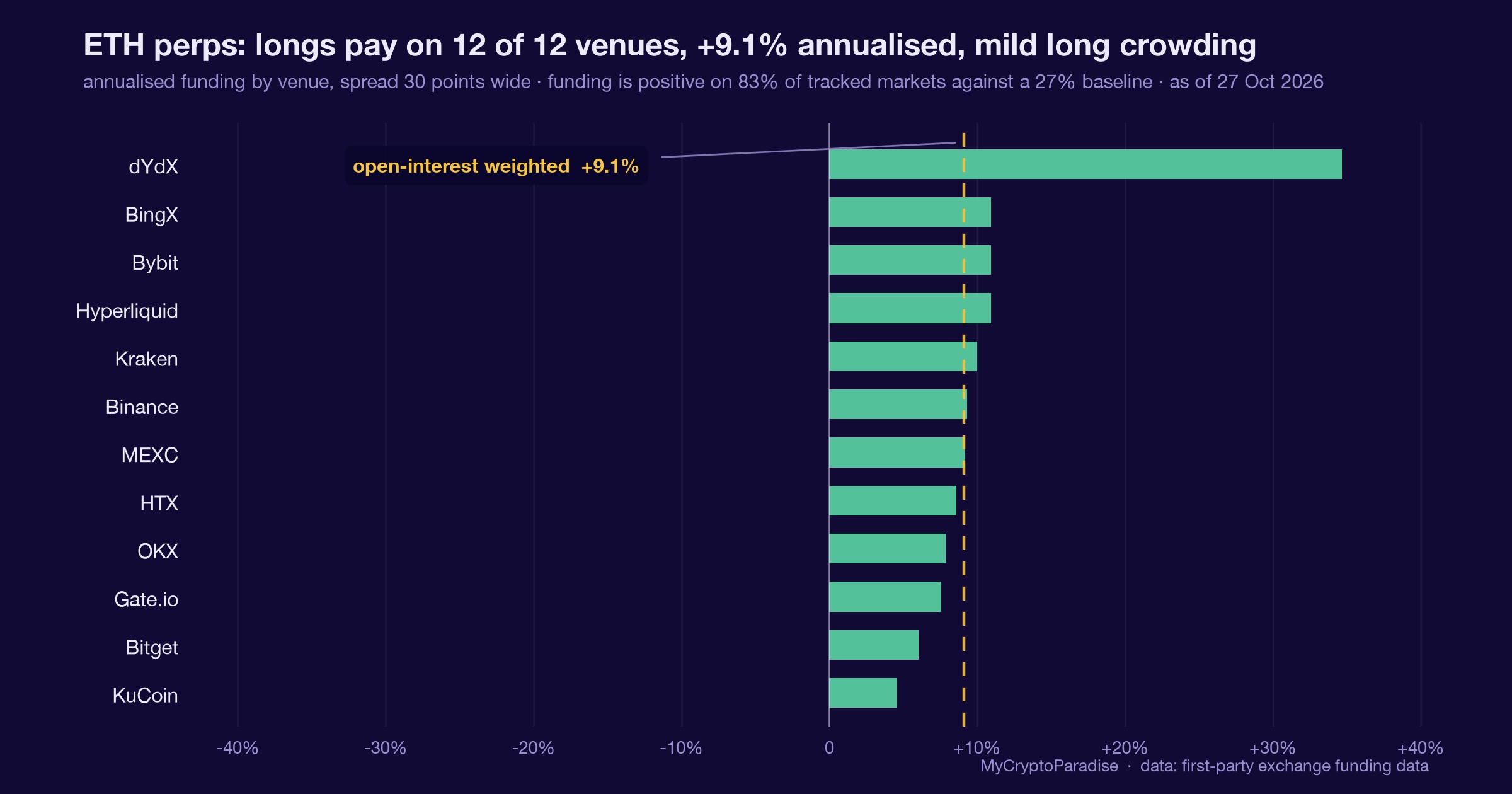
Track it live: our live crypto funding rates and the crypto liquidation heatmap both update in real time, so you can watch this shift for yourself.
Related coverage
For exact entries, targets, and stop losses with full risk management, that is what ParadiseFamilyVIP is for. New to reading these moves? Start with our crypto trading strategies guide.
ParadiseTeam is monitoring the market situation closely, and we are taking these developments into consideration while building our trading tactics inside ParadiseFamilyVIP.
Crypto trading involves substantial risk. Prices are volatile and you can lose money. This article is educational and is not financial advice. Past performance does not guarantee future results.
Will Treasury close the SEC and CFTC crypto gap without Congress?
How 1 Paradiser is calling it
The first call is still open
Free account, no password. Members just sign in.
Follow this topic: Crypto regulation news












Join the discussion
No comments yet. Members, share how you are reading this.