

Listen: the breakdown
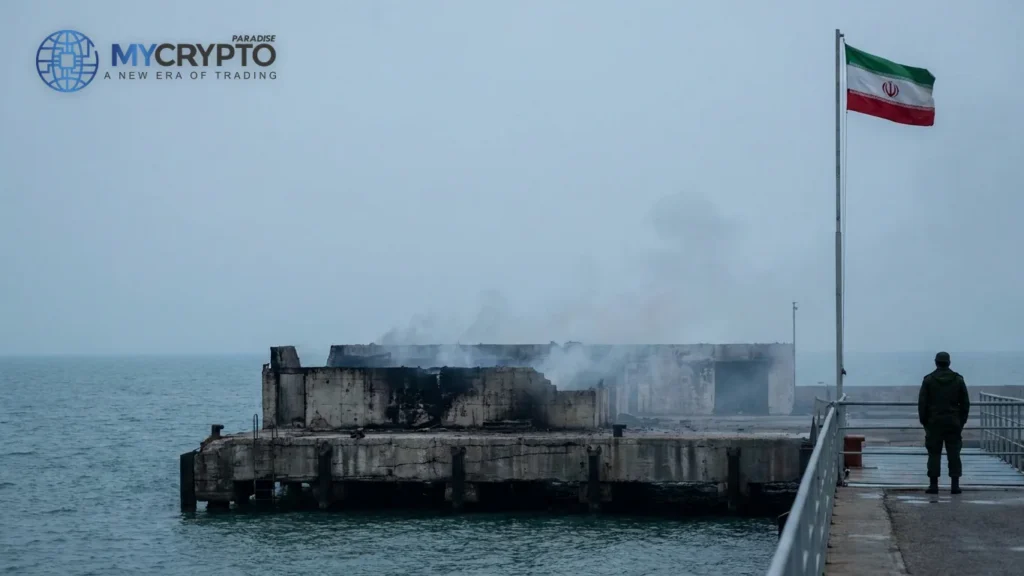
Market briefing: A US missile strike damaged an IRGC naval base on Iran's Caspian coast, with no casualties reported. Bitcoin held near 65,440 dollars, up 0.2 percent in the last hour, barely acknowledging the news.
- A US missile strike damaged an IRGC naval base at Zibakenar on Iran's Caspian coast.
- A provincial official reported no casualties from the strike.
- Bitcoin held near 65,440 dollars and Ethereum near 1,895 dollars, with muted 24h moves.
A US missile strike damaged an Iranian naval base, yet crypto barely blinked. So is the market shrugging off war, or quietly waiting for a bigger trigger?
A US missile strike damaged an IRGC naval base at Zibakenar, on Iran's Caspian Sea coast. A provincial official reported no casualties.
On any normal day, a headline like that reads as escalation. Missiles, a named military target, a foreign coastline. The kind of line that once sent traders scrambling for the exit.
And yet the reaction was almost nothing. Bitcoin sat near 65,440 dollars, down just 0.4 percent over 24 hours and actually up 0.2 percent in the last hour. Ethereum near 1,895 dollars looked much the same, off 1.8 percent on the day but green over the hour.
This is not the first Iran headline we have covered this week. We have already reported on the rejected ceasefire, the retaliation vow, and the unverified Ahvaz report. Each time, traders braced for a flush that never really arrived.
What is new here is a confirmed strike on physical infrastructure, not a rumor or a statement. The escalation is real. The market response is not.
That gap is the whole story. Price is telling us the crowd has stopped pricing every Middle East headline as a fresh shock. Fatigue, or absorption, is doing the work that panic used to do.
Structurally, that matters more than the strike itself. A market that no longer flinches at war headlines is a market waiting for a different catalyst. The question is whether that calm is strength, or simply the quiet before a move that has nothing to do with Iran.
Why a war headline stopped moving price
The transmission chain from a missile strike to crypto usually runs through risk aversion. Conflict raises uncertainty, investors sell risk assets, and liquidity drains from the speculative end of the market.
That is the textbook path. This strike barely used it.
With no casualties reported and no confirmed widening of the conflict, the event stayed contained as a headline rather than a market shock. The dollar, rates, and oil are the channels that would carry real fear into crypto, and none of them forced a move here.
There is also a fatigue mechanism at work. This is our latest Iran story in a running thread, and the market has now watched several similar headlines resolve into nothing. Each non-event teaches traders to discount the next one.
That learned response is powerful. It means the same headline that would have flushed price in an earlier, jumpier market now barely registers.
But fatigue cuts both ways. A crowd that ignores every warning is also a crowd that stops hedging. Complacency removes the very fear that usually cushions a real shock.
So the muted reaction is not proof of safety. It is proof that this specific event was not the catalyst. The macro backdrop that actually drives crypto, liquidity conditions and rate expectations, has not changed because a base on the Caspian took damage.
Understanding that keeps you honest. We treat this as geopolitical noise for crypto, not a structural driver, until a channel that actually moves money reacts.
How the strike rippled through BTC and alts
Start with Bitcoin, because it leads. BTC held near 65,440 dollars, down a modest 0.4 percent on the day and up 0.2 percent in the last hour.
That is not the footprint of a market absorbing a war shock. That is a market carrying on with its existing range.
Ethereum told a slightly softer story. ETH near 1,895 dollars was off 1.8 percent over 24 hours, weaker than Bitcoin but still up 0.4 percent on the hour.
The relative ETH softness is normal in a risk-cautious tape. When traders trim, they trim the higher-beta asset first, so ETH bleeds a little more while BTC holds. That is positioning, not panic over Iran.
Alts sit further out on that same risk curve. In a genuine geopolitical flush, they would lead the fall by a wide margin. The absence of that cascade is itself the signal.
Liquidity is the tell. A real fear event drains bids across the book and widens the drop from BTC to ETH to alts. Here the chain is muted at every link.
The honest read is that no liquidity cascade fired. The 24-hour dips are within ordinary consolidation, and the positive hourly prints suggest dip buyers, not sellers, had the last word.
Which brings us back to the driver. This strike did not move crypto because it never reached the channels, liquidity and rates, that actually price risk into these markets.
What would turn this calm into a real move
The first thing to watch is whether the conflict widens beyond a single contained strike. No casualties and one damaged base is a headline. A broader escalation is a macro event.
Watch the channels that carry real fear: oil, the dollar, and rate expectations. If those move hard, crypto will follow, and only then does this story become a genuine driver.
Confirmation of a bearish shift would be BTC losing its footing and dragging ETH and alts down together, in that order. A widening spread from Bitcoin to the long tail is what a real flush looks like.
So far, none of that is present.
Invalidation of the fear case is simpler. If Bitcoin keeps holding above its immediate support and hourly prints stay green, the market has effectively voted that the strike is noise.
Also watch the crowd, not just the chart. Retail sentiment reads as mixed rather than panicked, which means there is no capitulation here for anyone to exploit yet.
That distinction matters. A flush needs fear, and fear needs a crowd that is actually scared. This event did not supply one.
Keep the wider thread in view too. We have now covered several Iran headlines that each failed to break the range, and this one extends that pattern rather than ending it.
The level to respect is the one the market keeps defending near current price. Lose it on real volume and the conversation changes. Hold it, and this strike joins the pile of headlines the market has already forgotten.
What the muted reaction says about positioning
The ParadiseTeam reads this as a non-event for crypto's structure, and says so plainly.
Our lens has been looking for a final flush toward key support before the next leg higher, with 59,000 to 60,000 dollars as the major medium-term zone and 63,000 dollars as immediate 4-hour support. This strike did not deliver that flush.
Bitcoin near 65,440 dollars is still trading above that 63,000 dollar shelf. As long as it holds there, the bullish market structure we have been tracking stays intact, and this headline changes none of the levels that matter.
Here is the useful part. Smart money is waiting for capitulation to reaccumulate, and capitulation needs a scared, selling crowd. A war headline that produces green hourly candles is not producing sellers.
So the strike gives large players nothing to absorb. There is no panic here to buy from, which is exactly why the tape is so quiet.
We would only get interested if a genuine escalation dragged price into the 59,000 to 60,000 dollar zone on real fear. That is where our thesis says buyers step up, not at a headline the market ignored.
Risk note: this is analysis, not a signal, and geopolitics can turn violent without warning. Probabilities, not certainties.
For now the ParadiseTeam treats this as noise on top of an intact structure. The flush we are watching for, if it comes, will arrive through liquidity and rates, not a single contained strike.
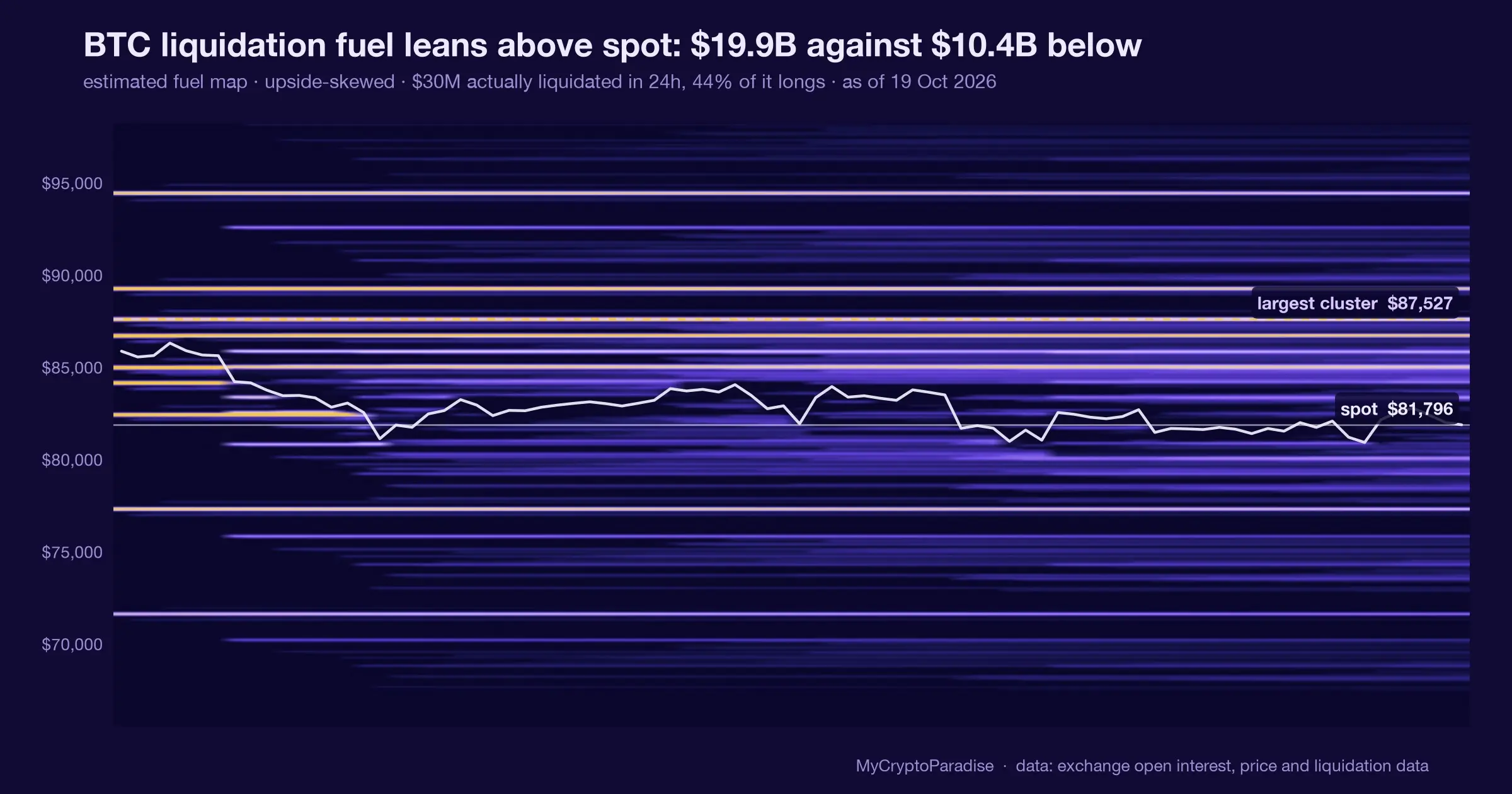
Track it live: our Crypto Fear and Greed Index and the crypto liquidation heatmap both update in real time, so you can watch this shift for yourself.
Related coverage
For exact entries, targets, and stop losses with full risk management, that is what ParadiseFamilyVIP is for. New to reading these moves? Start with our crypto trading strategies guide.
ParadiseTeam is monitoring the market situation closely, and we are taking these developments into consideration while building our trading tactics inside ParadiseFamilyVIP.
Crypto trading involves substantial risk. Prices are volatile and you can lose money. This article is educational and is not financial advice. Past performance does not guarantee future results.
Does this Iran strike change crypto's near-term direction at all?
This is how the Paradisers are calling it. Tap your call.
No calls on this one yet. Tap yours to be the first.
Free account, no password. Members just sign in.








Join the discussion
No comments yet. Members, share how you are reading this.