


Listen: the breakdown
Developing story update (September 10, 2026, 03:37 UTC):
New detail on the run of vendor problems behind this alert: the earlier of Trezor’s recent third-party failures has been identified as a breach at its shipping provider ShipMonk last month, which exposed personal information belonging to Trezor customers. That makes the current phishing wave the latest in a chain of supplier-side exposures rather than an isolated event.
For holders the practical takeaway is unchanged and now more pointed: treat any unexpected message referencing your Trezor with suspicion, do not click links, and verify firmware or security warnings only through the device and official channels. Exposed shipping data can be used to make phishing look personalized and credible.
What to watch now: Whether the exposed shipping data drives a follow-on wave of targeted phishing against named Trezor customers.
Developing story update (September 10, 2026, 01:45 UTC):
Based on our sources, this phishing incident is now the third time in four weeks that a third-party vendor tied to Trezor has failed, turning what looked like an isolated email-provider breach into a pattern of recurring supply-chain weakness around the hardware wallet maker.
For traders the takeaway is unchanged on price but sharper on risk: the market has absorbed the headline with only marginal moves, yet repeated vendor failures raise the probability of eroding retail confidence in self-custody tooling over time. Treat any unsolicited security email claiming a wallet vulnerability as hostile and verify only through official channels.
What to watch now: Whether a fourth vendor incident or any confirmed loss of user funds emerges, which would escalate this from FUD to a genuine market catalyst.
Market briefing: Hardware wallet maker Trezor warned users of phishing emails after its third-party email provider was breached. Bitcoin sat near 78,323 dollars, down about 0.4 percent on the day, as another security scare met a tired market.
- Trezor warned users of a phishing email sent from its own legitimate domain after a third-party email provider was breached.
- The fake alert, titled a critical STM32 entropy vulnerability, was false; Trezor removed the malicious domain and told users not to click.
- This marks Trezor's third vendor failure in four weeks, feeding fear while BTC trades near 78,323 dollars close to key support.
The Trezor email vendor breach turned a trusted domain into a phishing weapon, and it landed on a nervous market. Is this the fear smart money wants?
Trezor, one of the largest hardware wallet makers, told users this week to ignore a phishing email. The message arrived from Trezor's own legitimate domain, which is exactly what made it dangerous.
The cause was not a hack of Trezor's wallets. A third-party email provider that Trezor relies on was breached. Attackers used that access to send phishing emails from the real Trezor address, so the usual sender checks passed.
The fake email carried an alarming title: a critical security alert about an STM32 entropy vulnerability. It warned of a major wallet security risk and pushed users toward a link. Trezor confirmed the warning was false and told recipients not to click. The company then removed the malicious domain used in the campaign.
No customer funds were reported at risk. The wallets and their seed phrases were never the point. The target was trust, and trust is a soft thing to attack.
What makes this notable is repetition. This is Trezor's third vendor failure in four weeks. One incident is bad luck. Three in a month starts to look like a pattern in how the supply chain around crypto security is managed.
That is the structural story. The wallets held. The plumbing around them did not. For traders, the takeaway is not about one email. It is about how fragile confidence has become in a market that already feels tired.
How security scares drain retail confidence
The transmission here runs through sentiment, not balance sheets. A breach of an email vendor does not move interest rates or drain liquidity directly. It moves the one variable this market is short of: confidence.
Crypto adoption depends on new users trusting that self-custody is safe. Hardware wallets are sold as the answer to exchange risk. When a trusted wallet brand's own domain is used to phish people, that promise takes a small dent. The dent is psychological, but psychology sets flows.
Reduced trust means fewer new retail entrants and slower fresh inflows. Some existing holders react to any security headline by moving coins, second-guessing setups, or simply stepping back. That hesitation removes marginal demand at the exact moment the market needs buyers.
Here is the honest part. There is no single confirmed catalyst driving price today. So we frame this as an interpretive read, not a proven cause. This breach is one more small weight, not the trigger.
The deeper issue is cumulative. Three vendor failures in four weeks feeds a narrative that crypto's infrastructure is leaky. Narratives compound. Each incident makes the next headline land harder on an already jumpy crowd.
So the mechanism is simple. Weaker trust equals weaker retail demand equals thinner support under price. In a market running on low participation, sentiment is the liquidity. And right now that sentiment is being chipped away, one vendor breach at a time.
Why thin demand leaves BTC exposed
Bitcoin was trading near 78,323 dollars as of the latest read, down about 0.4 percent on the day. Ether sat near 2,468 dollars, softer by roughly 0.9 percent. The reaction to this specific breach is small, and that fits the story.
Think of the liquidity chain. A trust shock reduces the appetite of new retail money first. That marginal buyer is the one who normally absorbs selling near support. Take that buyer away, and every wave of supply meets thinner demand.
Bitcoin feels this first because it is the market's reference asset. When confidence fades, capital does not rotate down the risk curve; it steps back entirely. BTC then grinds rather than bounces, because the usual dip-buyers are hesitant.
Ether tends to move a beat behind BTC and slightly harder. Alts sit at the end of the chain, where liquidity is thinnest. A confidence knock that barely dents Bitcoin can quietly pull the floor out from smaller tokens, because there is almost no one there to catch them.
None of this is a crash trigger. It is drag. The breach adds friction to any recovery attempt rather than sparking a fresh sell wave.
That is the real market impact. Not a violent move, but a heavier tape. When headlines keep reminding a tired crowd that things break, rallies struggle to find fuel, and support becomes something the market leans on rather than defends.
Signals that confirm or ease the pressure
The first thing to watch is whether more Trezor-branded phishing surfaces. A one-off, cleanly contained by removing the malicious domain, fades fast. A fourth vendor failure would turn a pattern into a full trust story, and that changes how the market prices the sector.
Watch the crowd's reaction more than the headline. If security fear stays contained to social chatter without visible outflows or a spike in defensive moves, the market shrugs and price behaves as it would have anyway.
On the chart, the level that matters is nearby support around 77,700 dollars, with 77,000 dollars just beneath. A clean hold and a reclaim of 77,700 from below would suggest the fear is not translating into real selling.
The invalidation of the calm case is simple. A decisive break below that support band, especially on rising volume, would say the marginal buyer has genuinely stepped away and the drag is winning.
Also watch participation. If volume stays weak on any bounce, that is fading interest, not accumulation. Higher highs in price on lower highs in volume is the tell of an exhausted move, not a fresh trend.
Finally, watch whether this incident even survives the news cycle. We already covered a separate disclosure story today, and stories like this often dissolve within hours. If it vanishes without an outflow trace, treat it as noise. If it lingers into a broader security narrative, treat it as one more reason confidence keeps leaking.
What this breach means at support
The ParadiseTeam reads this breach through one lens: it is fuel for fear, not a fundamental shift. On the higher timeframes our bias stays bearish, and this news fits that structure rather than breaking it.
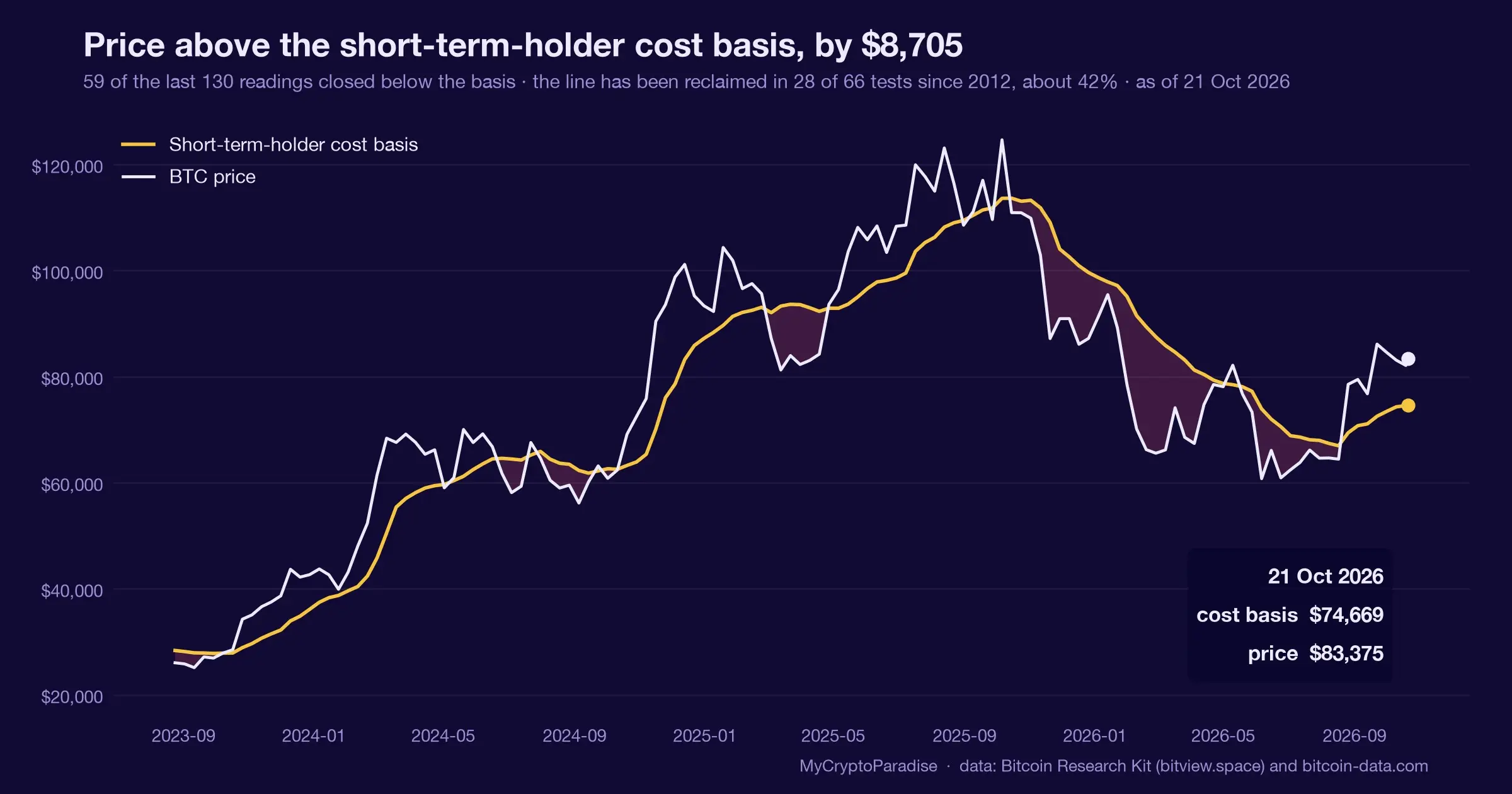
Here is the mechanism. Smart money already accumulated Bitcoin near 61,000 dollars and has distributed most of that position without a big price move. That is textbook quiet distribution. A steady drip of security scares gives the crowd a reason to stay fearful, which is convenient cover for offloading into weak hands.
So this is not the classic accumulation setup. Bearish news at support with fearful retail can mean smart money buying panic. But here the whales already distributed, and participation is near record lows. That flips the read. The fear is being sold into, not bought.
Ground it in price. Bitcoin near 78,323 dollars sits just above the 77,700 dollar support we are watching, with 79,000 dollars now acting as resistance overhead. Momentum is rolling over on the daily, and volume is fading on rallies.
The ParadiseTeam view is that the higher-probability path is one more flush toward new local lows before any durable turn. A confirmed break and retest of the 77,700 to 77,000 dollar zone on weak bounce volume would strengthen that case.
The risk-first note: this is probability, not certainty. A firm reclaim of 79,000 dollars would force us to reassess and respect that the fear did not stick.
The read behind this: we framed this story through our own market analysis, Bitcoin Breaks $79K: Where Is Next Support?
Track it live: our Crypto Fear and Greed Index and the live crypto funding rates both update in real time, so you can watch this shift for yourself.
Related coverage
For exact entries, targets, and stop losses with full risk management, that is what ParadiseFamilyVIP is for. New to reading these moves? Start with our crypto trading strategies guide.
ParadiseTeam is monitoring the market situation closely, and we are taking these developments into consideration while building our trading tactics inside ParadiseFamilyVIP.
Crypto trading involves substantial risk. Prices are volatile and you can lose money. This article is educational and is not financial advice. Past performance does not guarantee future results.
Does the security-fear drag push BTC below 77,700 support next?
This is how 41 Paradisers are calling it. Tap your call.
No calls on this one yet. Tap yours to be the first.
Free account, no password. Members just sign in.



Join the discussion 5
i dont know what to say, another one? like carlos said its getting ridiculous. feels like they keep giving chances to these companies who just... dont protect us 😠 that really worries me.
Another supply chain vulnerability. I note these types of events; they often produce clear reclaims later.
When does this stop being a vendor problem and start being theirs... a third time... seriously.
nah this is getting ridiculous... 🤦♂️ third vendor in a month? feels like the security is a bit of a joke at this point 🙄 for what we pay?!
Third party risk…what is the stop on that for your position size..