

Listen: the breakdown
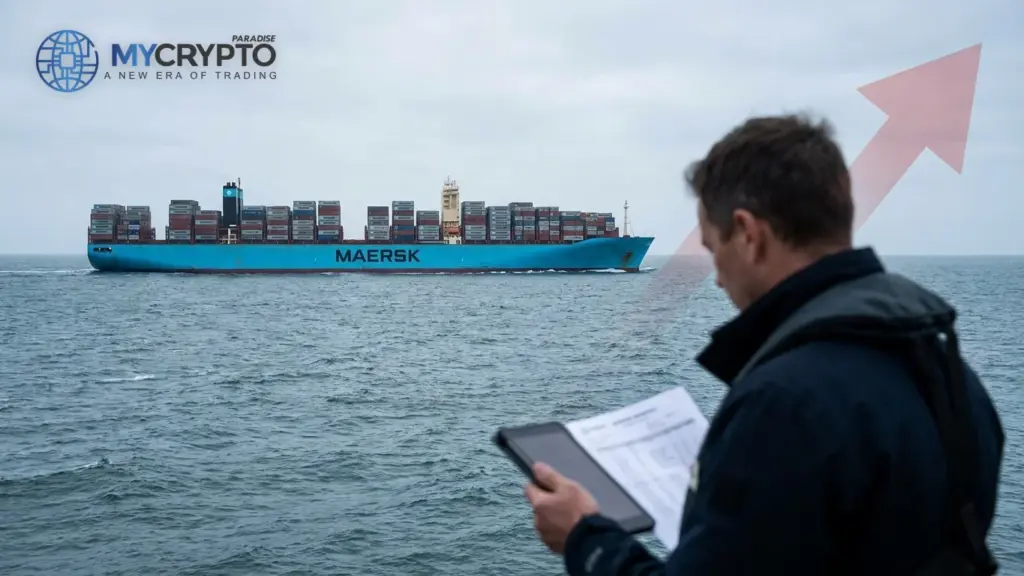
Market briefing: Shipping giant Maersk announced a 20% increase in its Emergency Fuel Surcharge, effective October 2026, due to rising fuel costs from Middle East conflict. Bitcoin was trading near $82,860 as of this announcement.
- Maersk will raise its Emergency Fuel Surcharge (EFS) by 20%.
- This increase takes effect on October 12, 2026, for all shipments.
- The hike is attributed to rising fuel costs from the ongoing Middle East conflict.
Global shipping giant Maersk has announced a significant increase to its fuel surcharge, citing persistent geopolitical tensions. What does this signal for future inflation and risk assets?
Shipping behemoth Maersk has confirmed a 20% increase in its Emergency Fuel Surcharge (EFS), a move set to impact global trade significantly. This adjustment will apply to all export collections and import deliveries, pushing up transportation costs across its network.
The company stated that the hike is a direct consequence of rising fuel charges, themselves a result of the ongoing conflict in the Middle East. Such geopolitical instability continues to exert pressure on global energy markets, creating ripple effects for industries dependent on stable supply chains.
While the announcement is significant, its implementation date is set for October 12, 2026. This extended lead time means the immediate market reaction to this specific surcharge increase is limited, as its direct financial impact is still well over a year away.
However, the underlying reasons for the surcharge, namely persistent geopolitical risk and rising commodity costs, remain highly relevant. This development underscores an environment where inflationary pressures are not only present but are becoming entrenched, influencing long-term economic outlooks.
Persistent inflation signals from shipping giant
The Maersk EFS increase, though delayed in its effect, serves as a stark reminder of persistent global inflationary pressures. Rising fuel costs translate directly into higher operating expenses for nearly every sector, eventually passing through to consumer prices. This development reinforces the narrative of economic uncertainty, driven by commodity price volatility and geopolitical instability. Such a backdrop complicates the task for central banks globally, who are already navigating a delicate balance between managing inflation and supporting economic growth.
Sustained inflationary headwinds could force monetary authorities to maintain tighter policies for longer or even consider further tightening if price pressures become more entrenched. This directly impacts liquidity conditions in broader financial markets, including crypto.
Higher shipping costs and broader inflationary trends generally reduce corporate margins and consumer purchasing power. This can dampen overall economic activity and risk appetite, as investors seek safer havens in times of uncertainty rather than speculative assets.
Delayed fuel hike reinforces macro caution
The immediate impact of Maersk's announcement on crypto markets is largely muted, given its distant effective date. Bitcoin (BTC) was trading near $82,860, reflecting a -1.4% change over 24 hours, while Ethereum (ETH) saw a -1.9% change to $2,561.83.
However, the news reinforces a challenging macroeconomic environment characterized by persistent inflation and geopolitical risk. This context tends to reduce overall risk appetite, making it harder for assets like BTC, ETH, and other altcoins to sustain strong upward momentum.
Smart money traders are likely to view this as another data point supporting a cautious stance. Even if the direct impact is not immediate, the signal of enduring inflationary pressures feeds into a broader narrative that could influence central bank decisions and future liquidity flows.
For retail investors, often focused on short-term price movements, the long-dated nature of the surcharge might obscure its macro significance. This creates a divergence in how different market participants assess the long-term implications of rising global supply chain costs for risk assets.
Monitoring long-term inflation indicators
Traders should monitor several key indicators to assess the ongoing impact of global supply chain costs and inflation. Future inflation prints, particularly core inflation measures, will be crucial in determining the stickiness of these price pressures.
Pay close attention to commentary from central bank officials regarding their inflation outlook and potential monetary policy responses. Any hawkish shifts could signal tighter liquidity conditions, impacting risk assets.
Further announcements from other major shipping companies regarding surcharges or capacity adjustments will confirm whether Maersk's move is an isolated incident or part of a broader industry trend. This would indicate widespread cost increases.
Additionally, watch for developments in the Middle East conflict. Any de-escalation could lead to a reduction in fuel prices, potentially alleviating some of the inflationary pressures highlighted by Maersk's decision.
How Maersk news shapes risk management
The ParadiseTeam reads the Maersk fuel surcharge increase as a reinforcement of long-term macro caution, despite its distant effective date. Bitcoin, currently near $82,860, sits within our identified key support zone of $84,000 to $82,000.
Our short-term bias remains bullish towards the $90,000-$95,000 resistance zone, with a 60% probability of a significant rejection there. This Maersk news adds another layer of macro uncertainty that professional traders will factor into their risk management strategies.
While retail might overlook a surcharge effective in October 2026, smart money integrates such signals into a broader understanding of the market. Persistent inflation could influence the extent of any post-$95,000 correction, potentially validating our longer-term target of $44,000-$55,000.
Professional traders focus on preparing for all scenarios, including how sustained inflationary pressures could impact the probability of a larger correction after the anticipated push to $90,000-$95,000. This emphasizes careful position sizing and strategic stop-loss (SL) placement around current support levels.
The read behind this: we framed this story through our own market analysis, Can Bitcoin Bulls Defend Before $74K?
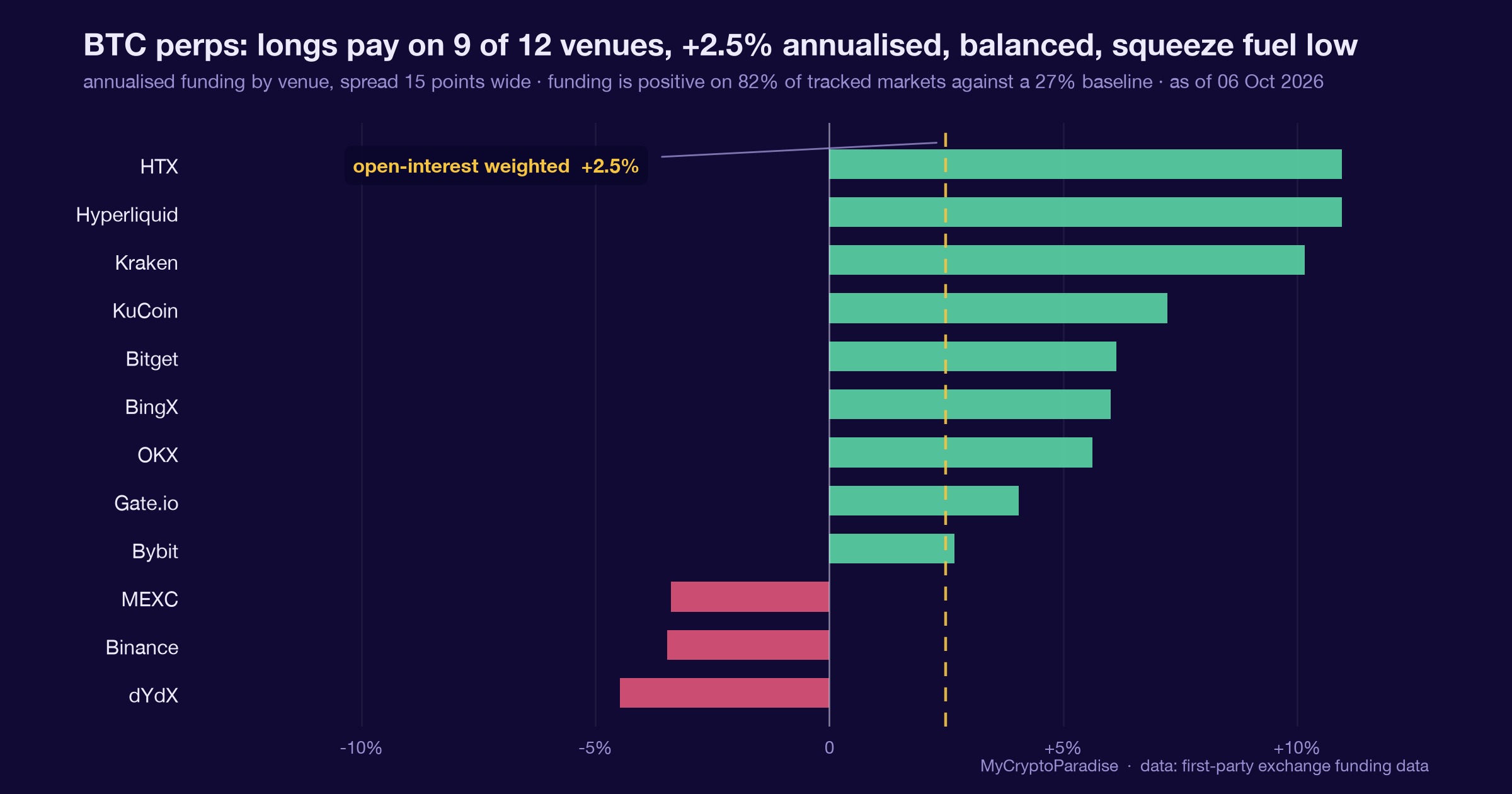
Track it live: our live crypto funding rates tracks this in real time, so you can watch it play out for yourself.
Related coverage
For exact entries, targets, and stop losses with full risk management, that is what ParadiseFamilyVIP is for. New to reading these moves? Start with our crypto trading strategies guide.
ParadiseTeam is monitoring the market situation closely, and we are taking these developments into consideration while building our trading tactics inside ParadiseFamilyVIP.
Crypto trading involves substantial risk. Prices are volatile and you can lose money. This article is educational and is not financial advice. Past performance does not guarantee future results.



Join the discussion
No comments yet. Members, share how you are reading this.