

Listen: the breakdown
Market briefing: Russia plans to ban individual peer-to-peer crypto transactions from July 2027, and the market barely flinched. BTC sat near $81,893, up about 0.6% on the day, while ETH held around $2,415.
- Russia will ban individual P2P crypto transactions from July 1, 2027.
- Central bank guidance covers citizen-to-citizen and broker-to-self-custody transfers.
- BTC near $81,893 and ETH near $2,415 showed almost no immediate reaction.
Russia's P2P crypto ban is set for 2027, yet BTC near $81,893 barely moved. So why is the market treating a national transfer ban as a non-event?
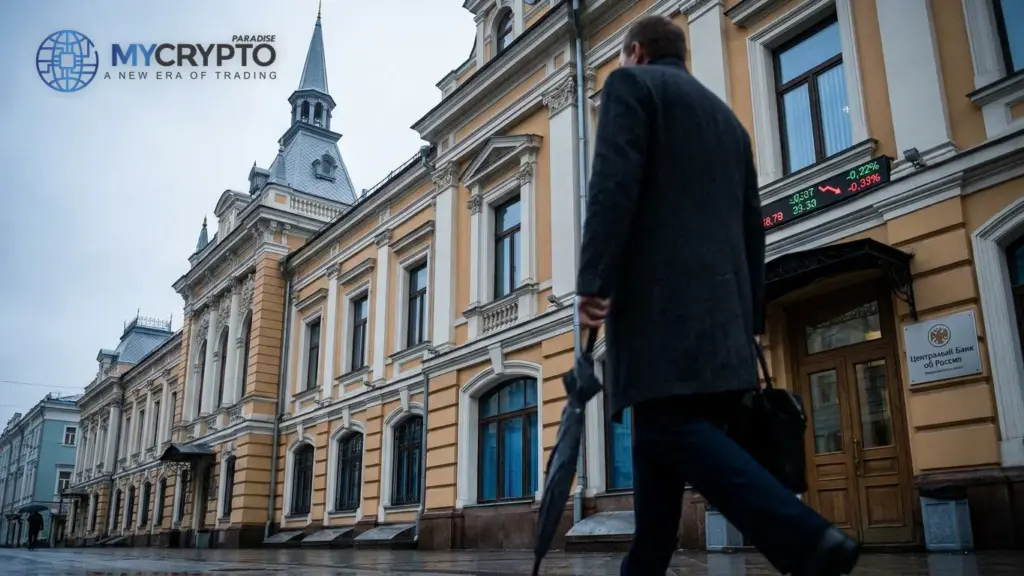
Russia has told its citizens how it wants crypto to move, and the answer is: through approved channels only. The central bank has issued regulatory guidance for a ban on individual peer-to-peer, or P2P, crypto transactions. The rule is scheduled to take effect on July 1, 2027.
The scope is broader than a casual headline suggests. It reaches transfers between Russian citizens using self-custody wallets. It also reaches transfers from a regulated broker to a self-custody wallet. In plain terms, the state wants the exit ramp from the regulated system to narrow.
That framing matters more than the date. This is not a ban on owning crypto. It is a ban on moving it freely between private hands. The flow, not the holding, is the target.
Markets responded with a shrug. BTC traded near $81,893, up roughly 0.6% over 24 hours and essentially flat on the hour. ETH sat near $2,415, slightly red on the day. For a sovereign transfer ban, that is a remarkably quiet tape.
The reason is timing. A rule that arrives in mid-2027 does almost nothing to liquidity in late 2026. Traders discount distant regulation heavily, and this one is distant. The announcement is real, the consequence is scheduled, and the price impact today is close to zero.
What a 2027 flow ban really signals
The transmission here is slow by design, and that is the whole point. A near-term crackdown forces immediate repositioning. A 2027 rule simply joins the long list of future constraints that traders file away and keep trading around.
Step back and the direction of travel is clear. Governments increasingly want digital assets inside the regulated system, not flowing anonymously beside it. Restricting P2P and self-custody transfers pushes activity toward licensed intermediaries, where flows can be seen, taxed, and controlled.
Russia is not acting alone in spirit. The same impulse appears wherever authorities cite illicit finance, tax leakage, or consumer protection. The tools differ, but the instinct to channel crypto through approved pipes is becoming a global default.
There is a quiet irony worth naming. Crypto was sold as the technology that routes around intermediaries, and a decade later the policy response is to legislate the intermediaries back in. Every cycle rediscovers that permissionless money and permissioned states tend to disagree.
For the broader market, the structural read is measured, not alarming. A long lead time suggests a managed transition rather than a sudden shock. That lowers the odds of forced selling or capital flight tied to this specific rule. It does, however, confirm that the regulatory ceiling on free movement keeps getting lower, one jurisdiction at a time.
Why liquidity ignored the Russia headline
The liquidity picture barely registered this news, and the price action proves it. BTC held near $81,893 with a 1-hour change of about minus 0.06%, which is noise, not a reaction. A genuine liquidity event does not look this calm.
Start with BTC, the market's lead car. When a headline this size produces no move in the deepest asset, it tells you order books absorbed it without strain. No cascade of stops, no visible repricing of risk tied to Russian flows.
ETH followed the same script one rung down. It traded near $2,415, modestly red at roughly minus 0.3% on the day and flat on the hour. If a sovereign ban were seen as a near-term threat, ETH's higher beta would have amplified it. It did not.
Alts, which usually exaggerate whatever BTC and ETH do, had nothing to exaggerate. With the majors inert, the long tail stayed inert too. A distant rule simply does not reach that far down the risk curve today.
The honest read is that no single same-day catalyst is driving price here, and this ban is not pretending to be one. It is a scheduled constraint, not a liquidity shock. For now it changes the 2027 map, not the October tape, and smart money is treating it exactly that way: noted, filed, and ignored for trading purposes.
The 2027 clock and what moves it
The date is the variable that matters, because July 2027 is far enough away to be revised, delayed, softened, or widened. Watch for implementation detail long before you watch for price. The gap between a guidance document and an enforced rule is where the real story lives.
Confirmation that this stays a slow burn looks like silence: no acceleration of the timeline, no sudden extension to custody or exchange access, and continued muted price behavior around any Russia headline. That pattern keeps the ban firmly in the background.
Invalidation would look different. If other large jurisdictions move toward near-term P2P or self-custody restrictions, the theme stops being distant and becomes a trend with a clock. That is when self-custody flow data and stablecoin rails start to matter for real.
Inside Russia, the signal to track is substitution. Bans on free movement rarely erase demand; they reroute it. Watch whether activity migrates to licensed intermediaries as intended, or simply finds quieter paths, because that answer shapes how other regulators copy or avoid this model.
For the live tape, keep this story in its lane. It is a structural marker, not a trigger. The things that will actually move BTC and ETH over the coming days sit elsewhere, and a 2027 rule should not be allowed to crowd them out of your attention.
Reading a distant ban against current positioning
The ParadiseTeam treats this Russia headline as context, not a catalyst, and positioning reflects that. With BTC near $81,893 as of the current read, a 2027 rule does nothing to the levels that matter this week. It changes the calendar, not the chart.
Our standing structure still centers on the $78,000 to $79,800 support zone. That band is where overleveraged longs sit exposed and where we have tracked spot buyers absorbing supply. A distant foreign ban does not weaken that zone, so we keep reading dips into it as accumulation rather than breakdown, provided the band holds.
To the upside, the map is unchanged. $85,000 remains the first short-liquidation cluster, with $88,400 and $90,000 stacked above as the stretch targets. Nothing in this news alters where those stops rest or who is trapped against them.
Here is the key point for traders tempted to act on the headline. Regulatory news with a 2027 fuse is exactly the kind of story retail overreacts to and smart money prices at zero. Trading a three-year-out rule as if it were a same-day event is how you hand liquidity to the patient side.
So the ParadiseTeam stance is simple. Respect the support zone, watch the $85K to $90K short pocket, and let this ban sit where it belongs: filed for 2027, not traded in October. Probabilities favor structure over noise here.
The read behind this: we framed this story through our own market analysis, Can Bitcoin Rally Back to $90K?
Track it live: our live crypto funding rates and the crypto liquidation heatmap both update in real time, so you can watch this shift for yourself.
Related coverage
For exact entries, targets, and stop losses with full risk management, that is what ParadiseFamilyVIP is for. New to reading these moves? Start with our crypto trading strategies guide.
ParadiseTeam is monitoring the market situation closely, and we are taking these developments into consideration while building our trading tactics inside ParadiseFamilyVIP.
Crypto trading involves substantial risk. Prices are volatile and you can lose money. This article is educational and is not financial advice. Past performance does not guarantee future results.
Will Russia's 2027 P2P ban actually reduce free crypto movement?
This is how 2 Paradisers are calling it. Tap your call.
No calls on this one yet. Tap yours to be the first.
Free account, no password. Members just sign in.







Join the discussion
No comments yet. Members, share how you are reading this.