


Listen: the breakdown
Developing story update (November 03, 2026, 03:14 UTC):
Update: the overall scale of the Oct 29 breach is now put at roughly 6.3 billion dollars across Binance hot wallets, described as the largest crypto theft on record. This reframes the event we reported but does not change the position for RSR, which remains unverified and part of the roughly 5% Binance says it is still acquiring.
On the backing side, a proof-of-reserves report dated Oct 31 showed coverage above 100% for the verified tokens, including 100.99% for XRP and 100.83% for RLUSD. Binance has also refreshed its proof-of-reserves addresses and begun routing withdrawals through newly generated wallets, so expect deposit and withdrawal addresses to differ from before.
What to watch now: Whether the Nov 4 proof-of-reserves snapshot extends verified coverage to RSR and when RSR withdrawals reopen.
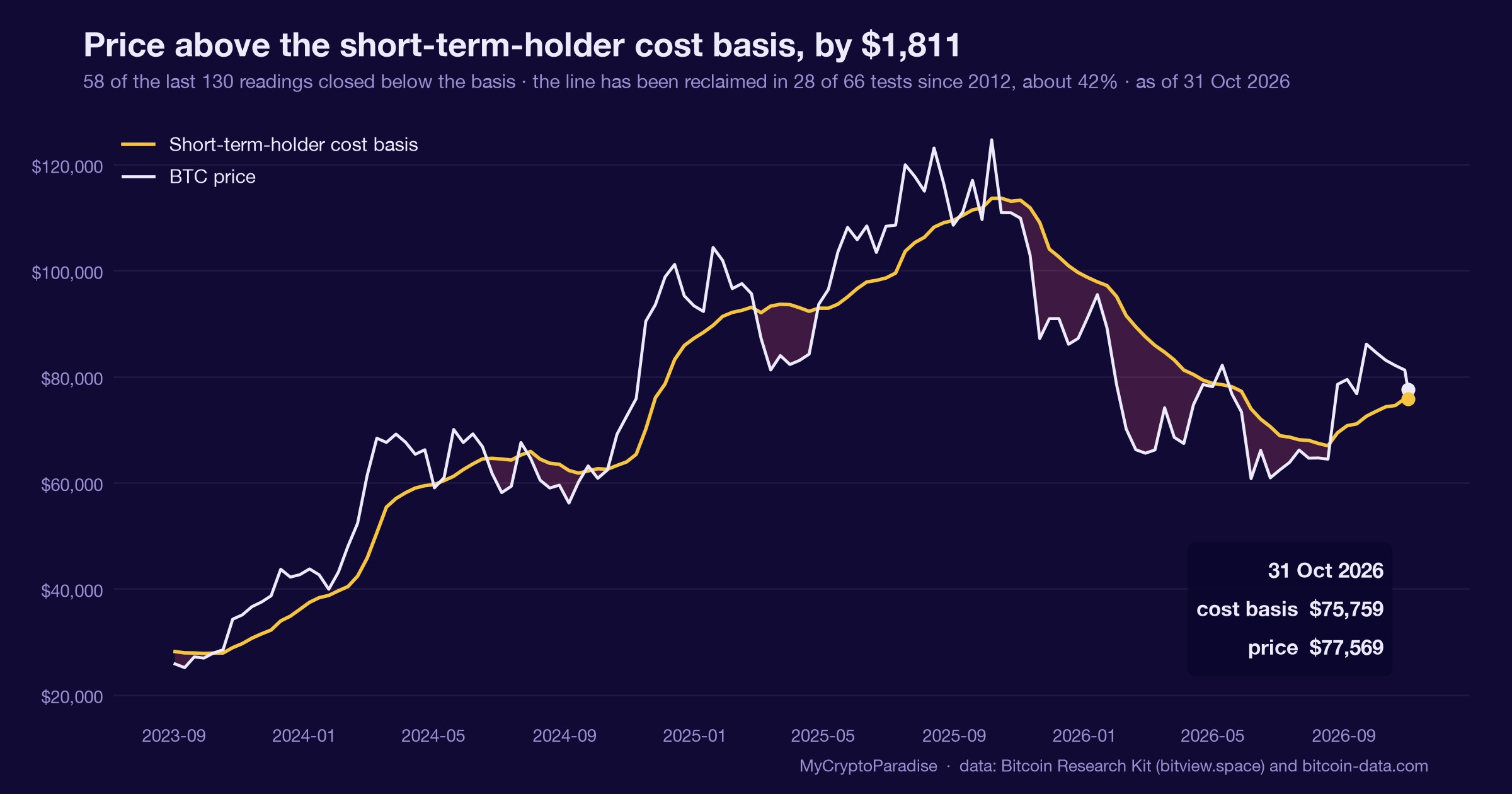
Market briefing: Reserve has told RSR holders the token and its contracts were never at risk in the Oct 29 Binance hot-wallet hack. BTC was near $76,722 and down 2.1% on the day, with majors broadly red for reasons unrelated to this cleanup.
- An attacker drained roughly 3.38B RSR from a Binance hot wallet on Oct 29 and sold it onchain that night
- Reserve confirms the RSR token and its own contracts were not affected, alongside many other listed coins caught in the same breach
- Majors traded broadly red on the day, with no sign of fresh contagion from the incident days later
Days after the Binance hack, Reserve told RSR holders the token and its contracts were never at risk. So does the market still treat an exchange hot-wallet breach as isolated, or as another reason to sell?
Reserve has issued a recovery update for RSR holders, days after the Oct 29 Binance hot-wallet hack. The message is simple. The RSR token and Reserve's own contracts were not affected.
Here is what actually happened. An attacker drained roughly 3.38 billion RSR from a Binance hot wallet on Oct 29, then sold it onchain the same night. RSR was not the only casualty. Reserve notes that many other listed coins and tokens were caught in the same breach, which makes this a custodial failure at the exchange, not a flaw in any one project.
That distinction matters more than it sounds.
The tokens that moved were sitting in Binance's custody when the wallet was compromised. The protocols behind them kept running normally. For holders, the practical question was never whether Reserve's code broke. It was whether an exchange holding their assets could keep them safe.
So this update is damage control, and honest damage control at that. It confirms what a protocol can confirm: its contracts are intact. It cannot undo the onchain sale that already cleared.
We should be clear about what this is not. It is not a fresh exploit, and it is not new price-moving information. It is a project doing the housekeeping that follows a messy week, telling the people who hold its token that the plumbing on their side held. The broader tape, meanwhile, had its own reasons to be red.
What a hot wallet breach actually touches
The transmission here runs through custody, not code. When an exchange hot wallet is drained, the loss lands on assets the exchange was holding, while the underlying protocol keeps settling blocks as if nothing happened. That is exactly the line Reserve is drawing for RSR holders.
Understanding that line changes how you price the event. A contract exploit is a permanent wound to a protocol's trust. A custodial breach is a wound to one exchange's operational security, shared across every token that happened to be sitting in the same wallet.
The macro read follows from there. If the market files Oct 29 as an isolated Binance custody incident, the damage stays contained to recovery logistics and reimbursement questions. If instead it reads the breach as a symptom of broader exchange fragility, fear leaks into everything held on centralized platforms. So far, days later, there is no evidence of acute fresh contagion from this specific incident.
That absence is the real signal. Custodial hacks test whether confidence in centralized exchanges is brittle or merely bruised. A quiet tape after the headlines usually means the former fear has been absorbed rather than amplified.
Reserve's statement feeds that calm for its own holders. It confirms the token and contracts are clean, which removes one specific worry from one specific crowd. It does nothing, and claims nothing, about the wider market, which is the honest framing.
Majors slip red while the cleanup lands
The price picture around this update is best described as indifferent. BTC was trading near $76,722 and down 2.1% on the day as of the data we have. ETH sat near $2,251 and down 1.8%, SOL near $91.84 and down 3.2%, BNB near $695 and down 2.2%.
Notice what that pattern is not. It is not a coordinated flush triggered by this RSR news.
The majors were softening together for reasons that have nothing to do with a protocol telling its holders their contracts are fine. On the hour, BTC, ETH and SOL were essentially flat, moving fractions of a percent. BNB, the token of the very exchange at the center of all this, was down a hair over the hour. That is the tape of a market digesting, not reacting.
So the liquidity cascade this story would normally imply simply is not firing. There is no BTC-led contagion rolling down into ETH and then alts off the back of a hot-wallet breach that cleared days ago.
RSR itself is the one name where the update has any direct relevance, and even there the brief gives us no fresh onchain flow to read. The attacker's sale already happened on Oct 29. What Reserve added this week is reassurance, not a new supply shock or a new buyer. For the broad market, this lands as noise against a backdrop that was already quietly red.
Signs this stays an isolated custodial event
The thing to track from here is whether exchange-risk fear reappears, not whether RSR's contracts are fine. Reserve has settled that part. The open question is how the market frames the next custodial headline.
Confirmation that this stays contained looks boring, and boring is the point. Majors continuing to trade on their own technical structure, BNB holding steady rather than leading a trust-driven selloff, and no cluster of copycat exchange incidents would all say the Oct 29 breach is being filed as a one-off.
Invalidation would look different. A second exchange disclosing a similar hot-wallet problem, visible stablecoin or deposit outflows from centralized platforms, or RSR-specific selling pressure that the brief does not currently show would turn an isolated event into a pattern.
Watch BNB closely as the cleanest tell. It is the token most directly exposed to confidence in Binance itself. If custodial fear were building, BNB would usually crack first and hardest. A roughly flat hourly print and a modest daily decline in line with the rest of the market argue against fresh panic.
For RSR holders specifically, the next data that would matter is onchain, not verbal. Reimbursement mechanics, any re-listing or trading conditions, and real flow into or out of the token would tell you how the crowd is positioning. Until then, this remains a reassurance note, and the market is treating it as exactly that.
What the all-clear says about contagion
The ParadiseTeam reads this update as catalyst housekeeping, not a cause of anything. The Oct 29 hack hit a market whose structure was already in motion. By our framing, headlines like this accelerate or soothe moves that liquidity and positioning set in advance.
Recall the structure we have been working with. We de-risked Bitcoin from around $121,000 and distributed into the $79,000 to $87,000 zone well before the hack landed. That former support now reads as neutral, and BTC was near $76,722 when this RSR note crossed, sitting below it. So the reassurance changes nothing about the levels that actually matter.
Our trigger remains a reclaim of the 0.618 Fibonacci retracement level, which is what would open price discovery and put the top of the first wave back in play. A clean reclaim of the former support zone as resistance would raise those odds. Neither depends on a custodial cleanup note.
The smart-money versus retail contrast is instructive, not actionable here. One tracked whale closed longs just before the hack and flipped short, repositioning on structure while retail reacted to the breach emotionally. This update gives neither side new fuel.
For RSR itself, the honest answer is that the brief shows no accumulation or distribution footprint to trade. Treat it as resolved custodial risk for holders. Keep R:R (risk-to-reward) and your SL (stop-loss) anchored to BTC's levels, because that is where the real decision still sits.
The read behind this: we framed this story through our own market analysis, Binance Hack: Is Bitcoin's Small Drop Bullish?
Track it live: our Crypto Fear and Greed Index and the live crypto funding rates both update in real time, so you can watch this shift for yourself.
Related coverage
For exact entries, targets, and stop losses with full risk management, that is what ParadiseFamilyVIP is for. New to reading these moves? Start with our crypto trading strategies guide.
ParadiseTeam is monitoring the market situation closely, and we are taking these developments into consideration while building our trading tactics inside ParadiseFamilyVIP.
Crypto trading involves substantial risk. Prices are volatile and you can lose money. This article is educational and is not financial advice. Past performance does not guarantee future results.
How will the market treat the next exchange hot wallet breach?
How 1 Paradiser is calling it
The first call is still open
Free account, no password. Members just sign in.









Join the discussion
No comments yet. Members, share how you are reading this.