


Listen: the breakdown
Developing story update (September 30, 2026, 11:55 UTC):
Attackers in Bitget Exploit Begin Transferring Approximately 2,700 ZEC to Ironwood Shielded Pool
According to ZachXBT, attackers allegedly linked to North Korea in the Bitget exploit have begun transferring approximately 2,700 ZEC, worth around $3.8 million, into Zcash’s Ironwood shielded pool. On September 24, 2026, approximately 18,900 ZEC, worth around $28.3 million, was stolen from Bitget.
Market briefing: Suspected North Korean hackers are pushing funds stolen from Bitget through CoW Protocol and Chainflip, with tracking firms watching every hop. BTC held near $83,276, up 0.5% on the day.
- Suspected North Korean hackers are moving Bitget-stolen funds through CoW Protocol and Chainflip.
- MistTrack's TrackAgent flagged the flow; one Chainflip transfer was rejected at the broker interface.
- The September hack drained roughly $351.6 million to $388 million; Bitget brought in outside investigators.
Stolen Bitget funds are moving again through DeFi, and the trackers are watching every hop. So who really controls the exit door on North Korean hacker money now?
Suspected North Korean hackers are trying to launder funds stolen from Bitget. The route runs through CoW Protocol and Chainflip, two cross-chain and decentralized finance (DeFi) tools that let value move without a central operator. On-chain tracking flagged the flow before it settled.
The method was industrial, not clever. Automated scripts created orders on CoW Protocol and set Chainflip deposit addresses as the receiving end. The funds also touched Uniswap, 1inch, and FixedFloat along the way. This is a machine washing coins, not a mastermind.
The attempt did not run clean. One transfer was rejected at the Chainflip broker interface, a small but real roadblock in a process that usually depends on speed and silence.
The original breach dates to late September. Reported losses sit between roughly $351.6 million and $388 million, a spread wide enough to remind everyone that hack accounting is rarely precise on day one. Bitget responded by enlisting outside forensic investigators to trace the money.
What matters now is not the theft itself but the aftermath. Stolen coins in motion are stolen coins looking for a buyer. Every hop through a public protocol leaves a mark that trackers can follow, which changes the odds for the people trying to cash out and the platforms that host them.
Why laundering flows pressure the DeFi trust layer
This story matters because it sits on the trust layer that crypto liquidity actually runs on. When stolen funds route through open protocols, the whole industry inherits a compliance question it did not ask for. Regulators watch these flows closely, and each headline gives them fresh material.
The transmission is indirect but real. Laundering attempts invite tighter scrutiny of cross-chain bridges and DeFi front ends. Tighter scrutiny raises operating friction. Friction can thin the liquidity that market makers rely on to price risk across every pair.
There is a second-order cost too. Stolen coins that reach an exit become sell pressure, because the people holding them are not long-term believers. They are sellers with a deadline. That is a slow drip of supply the market must absorb.
The hopeful read is that the money keeps hitting walls. A rejected transfer and constant tracking show the plumbing is getting harder to abuse. A maturing defense is genuinely bullish for the ecosystem's long-run credibility.
But credibility is a slow asset, and fear is a fast one. In the near term, the market reads large stolen sums in motion as risk, not as a security success story. The headline says hackers, and headlines set the mood before the nuance arrives.
How the flow reads for BTC, ETH and involved alts
The direct price impact on BTC is small, and the tape agrees. Bitcoin was trading near $83,276, up 0.5% on the day, hardly the print of a market in panic over one exchange's old wound. But small is not zero. Stolen funds in motion add a background bid of anxiety to a market already carrying leverage. That anxiety usually shows up first as risk-off rotation, not a headline crash.
BTC tends to absorb these shocks best. It is the deepest, most liquid asset, so laundering noise around a single exchange rarely dents it for long. ETH follows with a slightly heavier beta, since much of this activity lives on Ethereum-based DeFi.
The real exposure sits in the alts closest to the story. Protocols named in a laundering flow carry reputational risk, even when they did nothing wrong and simply hosted an open order book. Traders price that risk quickly and ask questions later.
There is also a supply angle. If any stolen coins clear an exit, they arrive as sellers with no price sensitivity, and thin alt books feel that weight first. That is where the bearish read lands: not a broad market rout, but concentrated pressure on the security narrative and the specific rails involved, while BTC holds the line.
The rejected transfer and the next exit attempt
The single most telling signal is whether more transfers get rejected. One block at the Chainflip broker interface is a data point. A pattern of blocks would confirm that exit routes are genuinely tightening, which slowly drains the incentive to steal at this scale.
Watch the protocols named here for their own response. Public statements, address freezes, or new monitoring would show the industry closing ranks. Silence or a successful cash-out would signal the opposite, and the security narrative would sour.
Confirmation of the bearish read looks like fresh laundering hops that clear, followed by identifiable sell pressure on the involved alts. That is the chain from theft to supply to price working as feared.
Invalidation looks different and more constructive. If the funds stay stuck, if trackers keep pace with each hop, and if no meaningful sell pressure appears, the market gets to file this as a defense win rather than a threat.
Also watch the official investigation. Outside forensic work often surfaces new figures, and the reported range already spans tens of millions. A revised number, up or down, would reset how the market sizes the risk. For BTC itself, the level that matters is not this story but whether the current bid near $83,000 holds through the noise.
Reading the laundering flow through smart money
The ParadiseTeam reads this as a security-narrative story, not a macro driver, and positions accordingly. Smart money treats a laundering headline as background risk, not a reason to abandon a thesis. The mistake retail makes is trading the word hackers instead of the flow behind it.
Ground it in price. BTC held near $83,276 on the day, and $82,000 is the level we care about, the old resistance the market is trying to reclaim as support. This story does not move that level, but it adds a reason for a nervous market to reject it.
Our standing view stays cautious into strength. We expect a possible push toward $88,000 to $90,000, a zone where selling has met buyers before. A hack-driven wobble that fails to break $82,000 support fits a market that still wants a deeper flush before real re-accumulation.
The smart-money question is simple. Who benefits if fear spikes on this headline? The patient buyer, who lets forced and frightened sellers hand over coins cheaper. Retail interest reliably wakes up on dumps, not pumps.
So the ParadiseTeam watches the reaction, not the report. Hold $82,000 with confirmation and the story is noise. Lose it on this kind of fear and the correction we have been mapping toward lower levels gains fresh evidence. Risk first, always.
The read behind this: we framed this story through our own market analysis, Can Bitcoin Push to $99K?
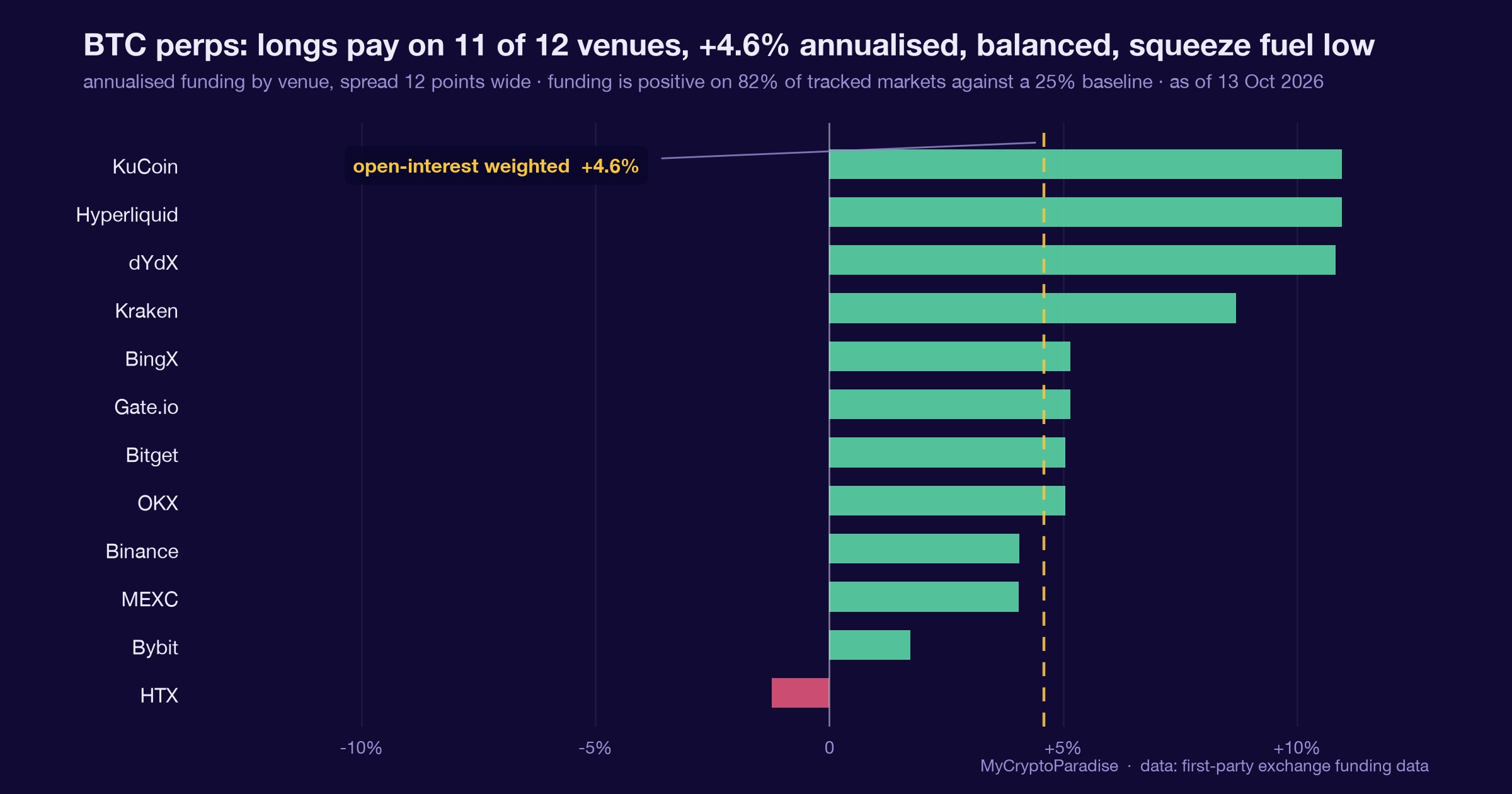
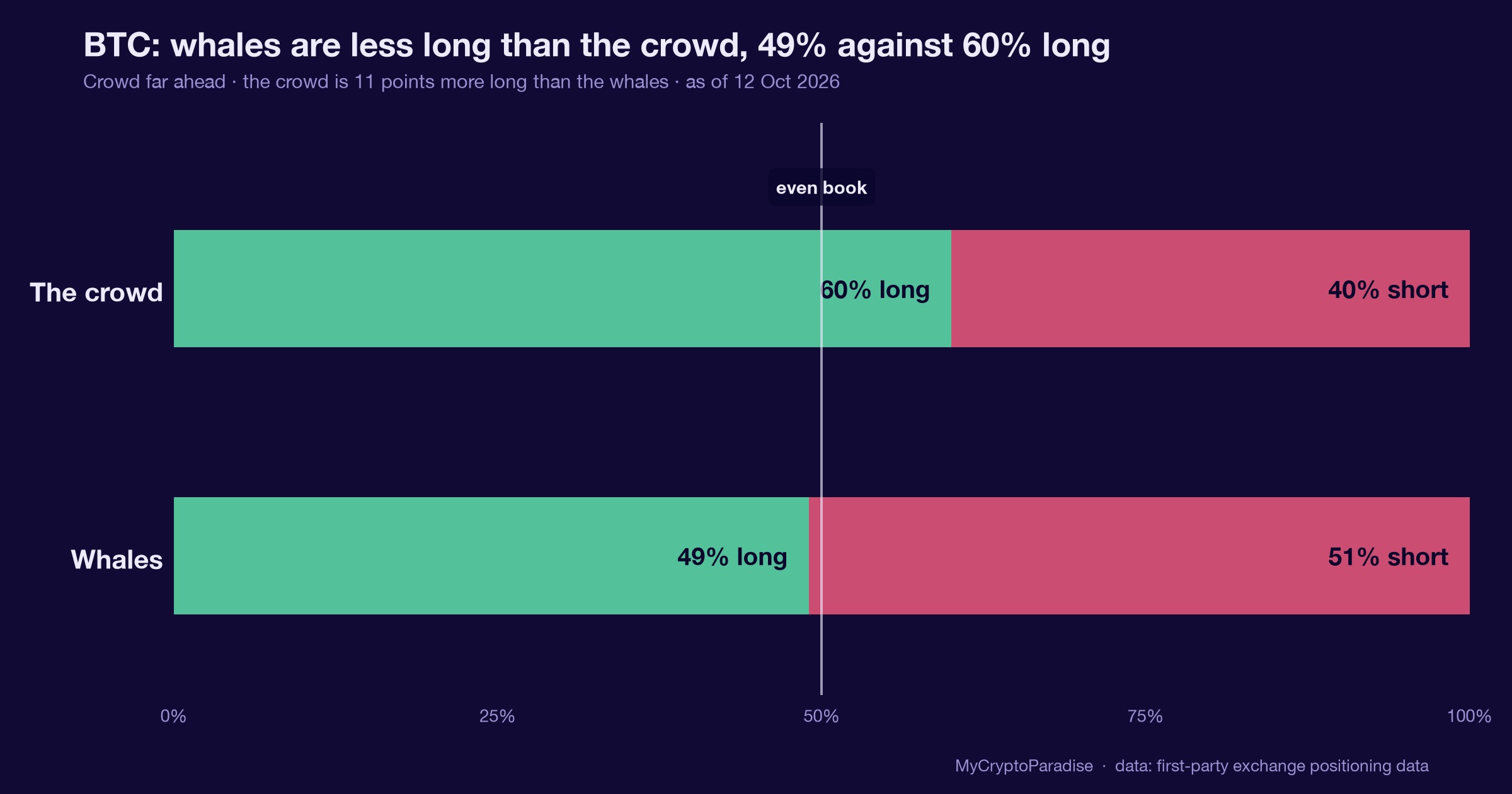
Track it live: our Crypto Fear and Greed Index and the live crypto funding rates both update in real time, so you can watch this shift for yourself.
Related coverage
For exact entries, targets, and stop losses with full risk management, that is what ParadiseFamilyVIP is for. New to reading these moves? Start with our crypto trading strategies guide.
ParadiseTeam is monitoring the market situation closely, and we are taking these developments into consideration while building our trading tactics inside ParadiseFamilyVIP.
Crypto trading involves substantial risk. Prices are volatile and you can lose money. This article is educational and is not financial advice. Past performance does not guarantee future results.
Will crypto's tracking tools keep blocking the stolen Bitget funds from cashing out?
This is how 24 Paradisers are calling it. Tap your call.
No calls on this one yet. Tap yours to be the first.
Free account, no password. Members just sign in.






Join the discussion 7
it's always rough seeing funds stolen, especially since a lot of these victims are just everyday people. i really appreciate these analyses following the flows.
My colleague lost his coins this way; it is why I tell everyone to verify every address, every time. The on-chain data for these wallets could offer good indicators.
verifying addresses is good but what's the one level that matters Katya for keeping funds safe
jessica, you ask about the one level that matters for safety. a cold wallet with a properly secured seed is fundamental, but even that cant protect funds sent to the wrong address. the on-chain trail is verifiable data.
opinions are cheap.. until liquidity dries up and suddenly everyone's "safe" holdings vanish. always verify custody.
the laundering flow itself is less of a concern than the original risk that allowed the theft. without a proper risk framework in place, funds are always exposed.
its always the routing they care about. they can track the money all the way through but dont give it back, not even for everyday people sofia.