


Listen: the breakdown
Market briefing: Michael Saylor called the crypto economy a gold rush through 2035 and sketched a path from roughly three trillion to a hundred and twenty trillion dollars. The real news sits in the plumbing: Strategy is packaging Bitcoin into equity and credit products.
- Saylor sees a crypto gold rush between now and 2035, with the economy scaling from roughly $3T toward $120T
- The pitch ties to yield-bearing and credit structures: a Bitcoin-backed digital dollar near 7% and the MSTR-plus-STRC pairing
- No same-day flow or on-chain evidence appears; the $120T figure is a multi-year thesis, not a trade
Michael Saylor just called the market a Bitcoin gold rush and floated a $120 trillion crypto economy. Is the number the story, or is something quieter changing underneath it?
Michael Saylor gave the crypto crowd a headline it wanted. He said he believes we are in a gold rush between now and the year 2035.
He then attached a number to it. Saylor estimated the crypto economy could grow from roughly three trillion dollars to one hundred and twenty trillion, if it eventually reaches ten percent of the value of other global asset classes. That is a large if, resting on a large assumption, delivered with the usual confidence.
The round number will travel. It is built to. But the part traders should actually mark sits underneath the projection, in the product design.
Saylor framed Bitcoin as digital capital and described Strategy building both equity and credit products around its holdings. He pointed to the common stock, MSTR, as amplified exposure to Bitcoin plus extra upside from the company's growing digital credit business. Alongside it he described the STRC instrument as the credit side of the same structure.
He also floated a Bitcoin-backed digital dollar offering holders yield near seven percent. The theme is consistent: turn a static balance-sheet holding into something that pays.
That structural push is the genuine development here. Bitcoin treasury companies are trying to move past simple buy-and-hold into yield and credit. The hundred and twenty trillion figure is rhetoric to frame a decade. The equity-plus-credit machinery is the thing being built now, and it is what deserves a trader's attention.
Turning idle Bitcoin into productive treasury capital
The transmission here is narrative before it is flow. Saylor is reframing corporate Bitcoin from a passive bet into a productive asset, and narratives about productivity change how balance sheets treat an asset over time.
When a holding is idle, it competes with everything else for a treasurer's attention. When it can be structured into equity exposure plus a yield-bearing credit layer, it starts to look like an instrument rather than a gamble. That shift, if it takes hold, slowly widens the set of buyers who feel comfortable holding Bitcoin-linked products. That is the real channel. More corporate treasuries treating Bitcoin as productive capital means deeper, stickier demand for BTC-linked structures across a multi-year horizon.
The seven percent yield concept matters for the same reason. Yield is the language institutions speak. A Bitcoin-backed digital dollar that pays converts a volatile asset story into a cash-flow story, which is far easier to defend in a boardroom.
We should be honest about the mechanism, though. None of this is a liquidity event today. There is no evidenced flow, no on-chain footprint, no fresh capital shown moving because of these remarks.
So the macro effect is slow and cumulative, not immediate. It marginally deepens the corporate demand channel for Bitcoin exposure if adoption follows the pitch. The hundred and twenty trillion number is a total-addressable-market projection dressed as a forecast. Useful as direction, useless as a timing tool.
Why price barely moves on a decade-long pitch
On its own facts this story leans constructive for crypto, because it reinforces adoption and the productive-treasury narrative. But the read-through to live prices today is thin, and traders should hold both ideas at once.
Start with BTC. Long-horizon adoption talk supports the structural bid, yet there is no confirmed same-day catalyst attached to these remarks. So any move you see around them is interpretation, not a clean cause. Treat a price reaction as sentiment coloring, not a flow response.
ETH and the broader alt complex sit even further from this event. The pitch is Bitcoin-specific, built around Bitcoin treasuries and Bitcoin-backed credit. Alts inherit only the general risk-on tone, if one appears, and that tone is not something this story generates by itself.
Here is the honest part. The absence of a single confirmed catalyst means the cleanest description is a narrative reinforcement, not a liquidity cascade. We are explaining sentiment, not measuring capital.
The incentive picture deserves a flat statement too. This is the largest corporate Bitcoin holder making his standard bull case while promoting products his own company builds. That alignment does not make him wrong. It does mean the commentary reads as talking-book content rather than proof of institutions accumulating right now.
So the practical impact is modest and slow. Constructive for the long-term corporate demand story, close to neutral for today's tape, and no reason to chase a candle on a decade-long projection.
Which signals would turn talk into flow
The confirmation to watch is adoption, not applause. This thesis earns weight only if the products behind it draw real balance-sheet capital.
On the constructive side, watch for genuine uptake of the equity-plus-credit structure and the yield concept. Growth in the digital credit business, real demand for a Bitcoin-backed yield instrument, and other treasuries copying the model would all show the narrative converting into flow. That is what would make the gold-rush framing more than a phrase.
Watch, too, for the corporate treasury trend broadening beyond a single company. One issuer promoting its own products is marketing. Several independent firms adopting yield-and-credit structures around Bitcoin is a pattern, and patterns move demand.
Invalidation is quieter but just as important. If the yield and credit products stall, or if the only voice pushing the productive-treasury story is the one selling it, then the hundred and twenty trillion number stays exactly what it is today. A slide, not a catalyst.
The other tell is price behavior against structure. A story this promotional, arriving into a market already near key resistance rather than at fresh support, is the kind of setting where enthusiasm can meet supply. So watch whether strength holds or fades where sellers are likely to sit.
For now the checklist is simple. Real product adoption confirms the thesis. Silence in the flow data, despite loud commentary, invalidates the urgency. Track the plumbing, not the projection.
Reading the pitch against our macro map
The ParadiseTeam takes this as a long-horizon narrative input, not a reason to change positioning today. The story is structurally constructive, but our standing macro map asks for caution about where strength gets sold.
Our bias remains macro bearish into the current structure. We are watching whether BTC can reclaim eighty-two thousand as support, with an eighty-eight to ninety thousand zone as the first serious resistance and roughly a sixty percent chance of rejection there. A promotional bull thesis arriving as price tests that band is exactly the environment where enthusiasm can meet supply.
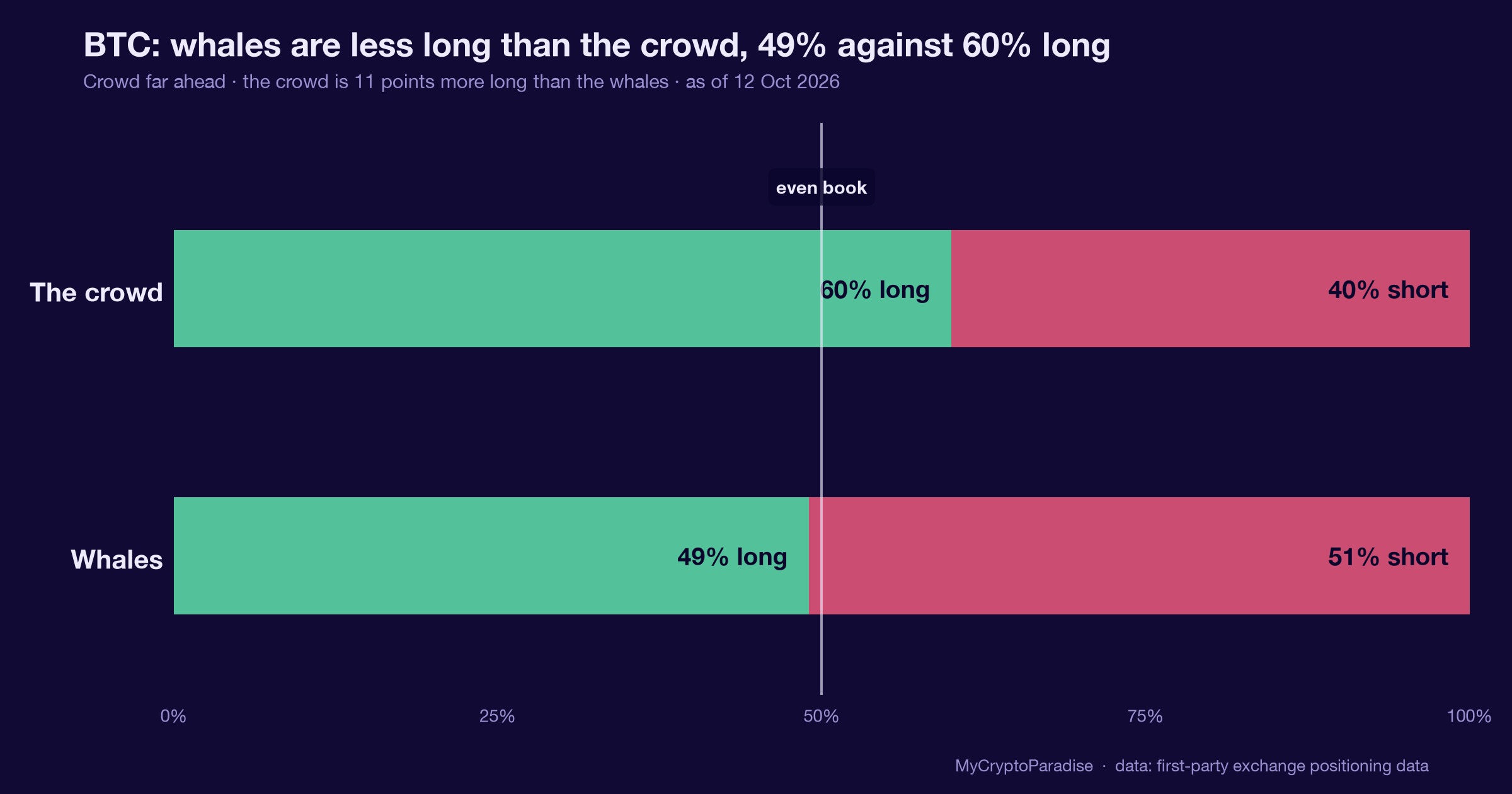
That is the tension worth holding. The event itself leans bullish on adoption, yet on-chain and data logic still finds a sustained push above ninety-nine thousand hard to justify. Smart money does not look eager to reaccumulate at higher prices.
So we separate the decade from the week. The gold-rush framing supports the multi-year corporate demand case. It does nothing to invalidate our expectation of a deeper correction toward the fifty-five to forty-four thousand exchange-of-hands zone before aggressive re-entry gets interesting.
Retail behavior reinforces the caution. Interest spikes on dumps, not on grand projections, which tells us a big round number rarely marks a bottom. It more often marks a mood.
The ParadiseTeam read: file this as narrative fuel for the long thesis, respect the resistance band above spot, and let confirmed flow, not a hundred and twenty trillion dollar slide, decide whether the productive-treasury story is finally moving capital.
The read behind this: we framed this story through our own market analysis, Can Bitcoin Push to $99K?
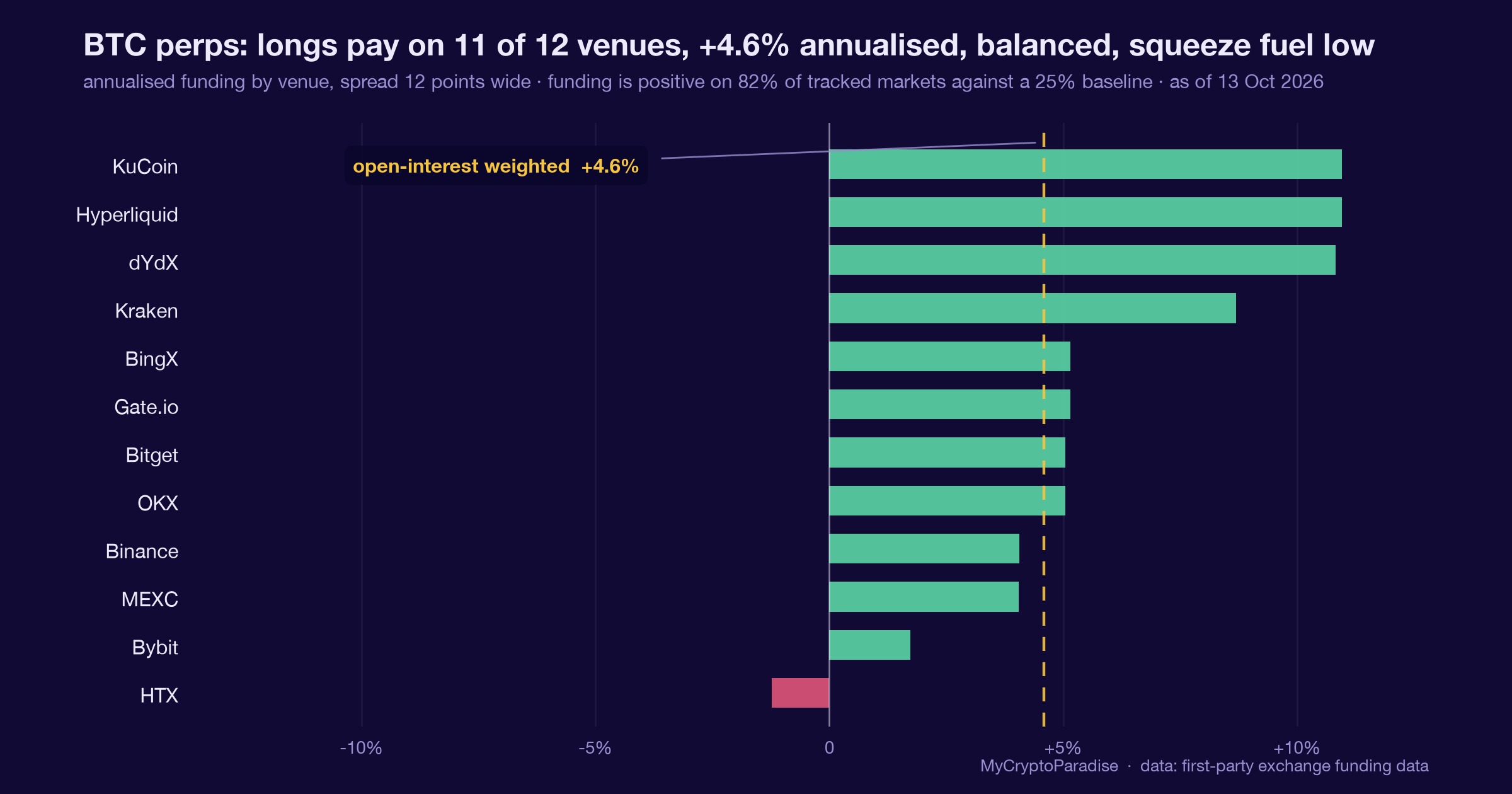
Track it live: our live crypto funding rates and the Crypto Fear and Greed Index both update in real time, so you can watch this shift for yourself.
Related coverage
For exact entries, targets, and stop losses with full risk management, that is what ParadiseFamilyVIP is for. New to reading these moves? Start with our crypto trading strategies guide.
ParadiseTeam is monitoring the market situation closely, and we are taking these developments into consideration while building our trading tactics inside ParadiseFamilyVIP.
Crypto trading involves substantial risk. Prices are volatile and you can lose money. This article is educational and is not financial advice. Past performance does not guarantee future results.
Does the productive-treasury pitch move real corporate flow into Bitcoin within a year?
This is how 14 Paradisers are calling it. Tap your call.
No calls on this one yet. Tap yours to be the first.
Free account, no password. Members just sign in.











Join the discussion 22
Those numbers from Saylor are always a trip 🤯 reminds me of my first memecoin, riding it from nothing to everything and then back to nothing LOL. What a ride! 🎢
it’s a big number from Saylor, yes… but my grandmother knew the value of gold when things got tight, a few sovereigns kept hidden. same feeling here with bitcoin, a safe harbor.
Okay, but a $120 trillion economy? That's a huge jump from here, it feels like he's trying to design a future that just won't click. 🤔 The interface is too complex!
Interface too complex" is right. We need actual utility, not just another layer of financialization for existing assets.. or people will just dump it.
those large numbers from saylor remind me of the old coffee tin my mother kept I always looked forward to seeing how much it bought each year
i agree andres that coffee tin metaphor really hits when you see the stablecoin inflows and outflows across exchanges its like measuring that money from year to year
Saylor-san always has such big ideas! 😅 I get a little nervous thinking about numbers that huge, but it's exciting to imagine. ✨
The ideas are big for sure, Yuki. But those numbers always make me wonder about the downside- what if it's not a gold rush, but a gold... trickle? 🤔
Saylor's numbers aside, I just track the stablecoin flows. its easier to see when people actually move capital onto exchanges than just talk about it.
Gold rush implies you gotta get there first... plenty of people already dug their claim.
Ray, I understand your concern that the rush is over, but for me this is about fundamental shifts, like my mother's wedding gold. The thesis remains, even if the early claims are staked.
It's hard to imagine something like this being a "gold rush," isn't it? Like Yuki said, those numbers are just so big. I worry about what would happen to all those smaller coins if that came true, sorry if that's a silly question!
gold rush is right, its good to have something you can hold yourself without relying on a bank or anyone else.
yeah saylor just nails it every time 🎯 gives me a buzz seeing those numbers, even if i wish i got in earlier like some of the lads 😅 shoulda listened to seamus at the bar! 🤦♂️
i always get a little overwhelmed when i see these really really big numbers too yuki-san 😅 like even just thinking about how i almost lost my small savings makes me careful now.
I hear "gold rush" and think of my mother's gold chain, our family's safety net... so it's kinda cool to think of crypto like that now. Saylor has big visions, eh? 🤔
i can see the appeal of that comparison, Noah, but a gold rush implies a finite resource, a zero-sum game. this is something quite different.
Saylor's numbers can get a bit wild, no? 😅 I always look at these massive projections and just think of all the ways it could go sideways first. Lisbon is too small for that kind of risk.
Gold rush, huh? 😅 I always wonder about the 'exit liquidity' in these big numbers. Who's holding the bag when everyone rushes out?! chopped up on 1m, myself.
The 2007 attacks made me distrust anything I couldn't verify independently. So when Saylor talks $120 trillion, I'm thinking about the underlying data sources and how to replicate those models.
what's the one level that matters in all this.
Saylor's numbers are definitely big debits! 😅 But I always look for the offsetting credit, and for me, that's having the risk-reward line booked before anything else.