

Listen: the breakdown
Developing story: This story is still unfolding. We are tracking it and will update this article as more details are confirmed.
Market briefing: BTCPay Server told operators to shut down after hot wallets were drained across multiple servers, with the attack tied to North Korea days after the record Binance hack. BTC was trading near $78,545, up 1.2% on the day, showing no sympathy sell-off yet.
- BTCPay Server urged operators to shut down after hot wallets were drained; cause, scope and amount undisclosed
- The breach is tied to North Korea, days after the record $6.3bn Binance hack and 2025's $1.5bn Bybit theft
- BTC held near $78,545 and ETH near $2,290, both green on the day, with no sell-off signature off this headline
State-linked hackers just added the BTCPay Server stack to their list, days after the biggest exchange hack ever. So why aren't BTC and ETH selling the news?
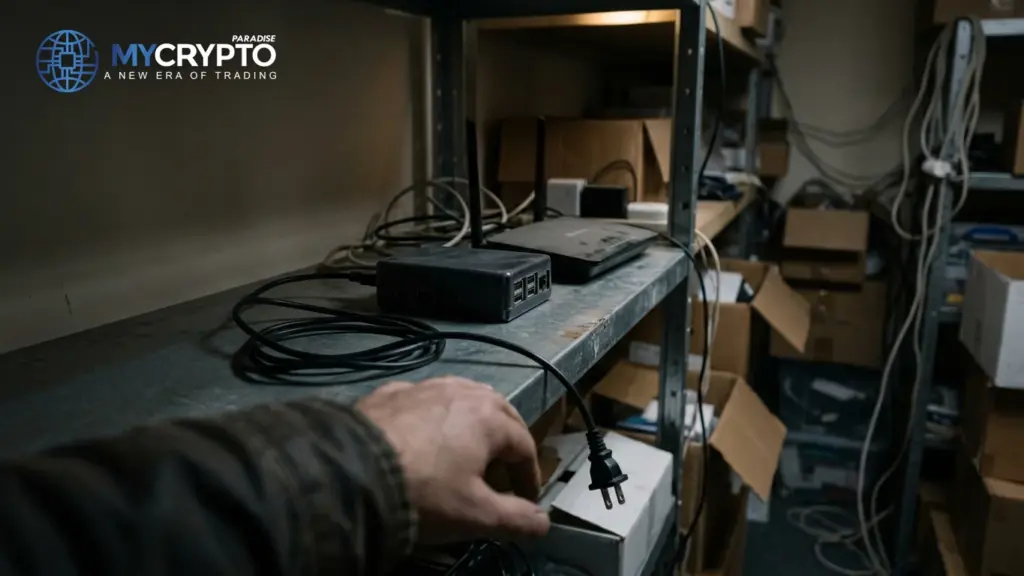
BTCPay Server has told operators to shut down their instances. The trigger was blunt. Hot wallets were drained across multiple servers. The cause, the server count, and the stolen amount all stay undisclosed for now.
The fingerprints point north. Operators tied to North Korea have spent this cycle climbing the food chain. Ronin, then Atomic Wallet, then Bybit's $1.5bn heist in 2025, then the record $6.3bn theft from Binance. BTCPay's self-hosted hot wallets look like the next rung on that ladder.
What makes this one land differently is the target. Binance and Bybit are custodial giants with balance sheets built to absorb pain. Binance covered 90% of its losses. BTCPay is self-hosted software, run by merchants and small operators on their own hardware. There is no corporate cushion standing behind a drained node.
So the structural worry widens. The security risk no longer sits only with the big custodians. It now reaches the semi-custodial plumbing that everyday crypto commerce quietly runs on. That is a trust problem, not merely a loss figure.
Yet here is the part that refuses to follow the script. BTC and ETH are both still green on the day. Over the last hour both are only marginally softer, a rounding error rather than a reaction. The headline screams, and the majors shrug. We will not pretend that is the panic the words seem to demand.
Why state hacks now reach self hosted rails
The transmission here runs through trust, not through a single balance sheet. Each state-linked breach lifts the security risk premium that the whole market quietly prices in. When the target was a custodial exchange, the fear had a clear address. A drained BTCPay node has no address and no backstop.
That matters for how capital thinks about custody. Custodial exchanges carry counterparty risk you can at least name. Self-hosting was the answer for operators who wanted to remove that risk. This breach suggests the self-hosted path carries its own operational risk at the hot wallet layer.
So the mental model shifts. Both routes now look exposed, each in its own way. That is the real macro effect: a slow rise in the cost of trusting any layer that touches live keys.
Still, honesty matters more than a tidy narrative. The BTCPay attack remains undisclosed in cause and size. We cannot show how much liquidity it actually moved, because the numbers do not exist yet.
That gap limits the damage this specific event can be proven to have done. A record exchange hack is a measurable shock. An undisclosed breach of self-hosted software is a trust signal first and a liquidity event second, if at all.
The pattern is what unsettles us, not this one print. State operators are scaling in both ambition and target type, and the market is being asked to absorb that drift quarter after quarter.
Reading the trust hit against unmoved majors
On its own facts this is a bearish security headline. Theft from live wallets is a straightforward negative, and the first-order read on any hack is risk-off. That is the honest starting point before any clever reframing.
The usual cascade would run from the headline into broad de-risking. BTC leads lower as the deepest, most liquid asset. ETH follows with a slightly larger move. Alts amplify both, because thin books exaggerate every impulse. That is the script the words are writing.
The tape is not reading from it. BTC sat near $78,545, up 1.2% on the day. ETH held near $2,290, up 1.1%. Neither shows the sell signature you would expect if this story were driving flows.
So the liquidity stress looks concentrated, not contagious. The risk appears pinned to the affected servers and the platforms already named, rather than bleeding into a market-wide markdown. The majors are absorbing the headline instead of reacting to it.
We are careful not to flip this into a bullish story either. Absorbing a headline is not the same as fresh accumulation. There is no evidence here of smart money stepping in to buy this specific fear.
The cleaner read is simply this. A real theft is underway, the direction of the news is negative, and yet the price has declined to participate. That standoff, not a clean selloff, is the market impact worth watching.
What confirms contagion versus a contained breach
The first thing to watch is disclosure. Scope, server count and stolen size are still blank. If those numbers land large, the trust premium hardens and the bearish case gains real weight. If they land modest, the story fades into the long ledger of contained incidents.
Second, watch for contagion signatures across self-hosted and semi-custodial tools. A single drained stack is an incident. A cluster of related drains is a systemic problem, and the market would be right to reprice that.
Third, watch the majors for a delayed reaction. Sometimes fear arrives late, once the full figure is public. If BTC loses the day's green and sellers show up with volume, that would confirm the headline is finally biting.
Invalidation of the bearish case is simpler. If BTC and ETH keep holding, or push higher, while the breach stays contained, the news has been digested and the risk was indeed concentrated.
There is also a sober base case we should name. Most of these stories resolve into tighter operator security and a quiet patch cycle, not a market event. The infrastructure survives, the headlines move on, and the chart barely remembers.
We would treat any sharp spike in exchange outflows or a jump in stablecoin dominance as the tell that trust is actually cracking. Absent that, the responsible read is a developing security story with a limited, measured market footprint rather than a fresh leg of broad de-risking.
What the standoff signals for liquidity and positioning
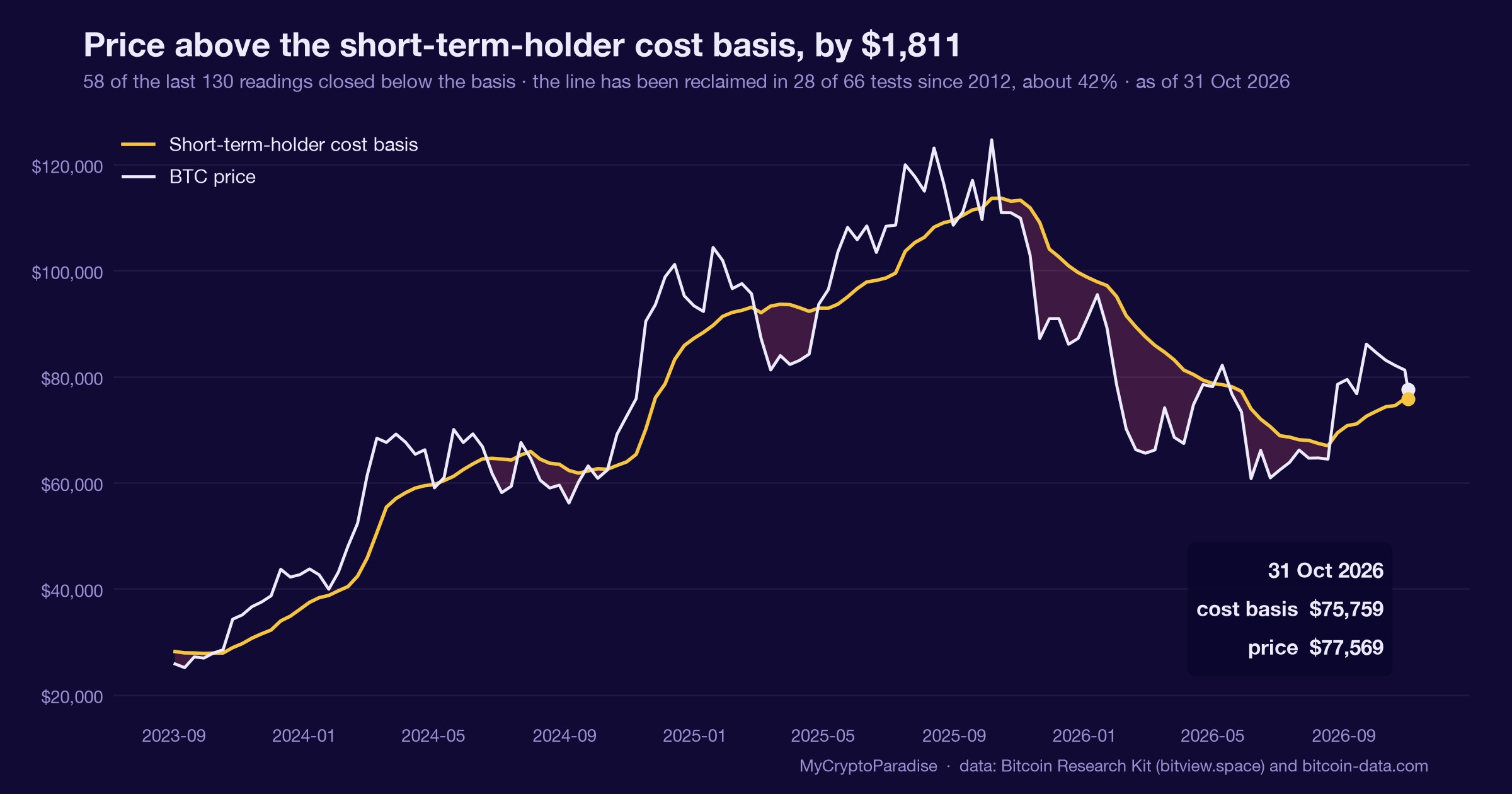
The ParadiseTeam reads this through structure, not the headline. BTC was trading near $78,545 as of the current print, sitting right at the lower boundary of the former support zone around $79,000 that the team now treats as neutral. The hack arrives into that decision point, it does not create it.
That matters for who is in control. Our standing read is that the recent top was already set near $121,000, well before the Binance shock, via an ending diagonal and a shooting star. Hacks have been catalysts for moves, not their cause. This breach fits that pattern.
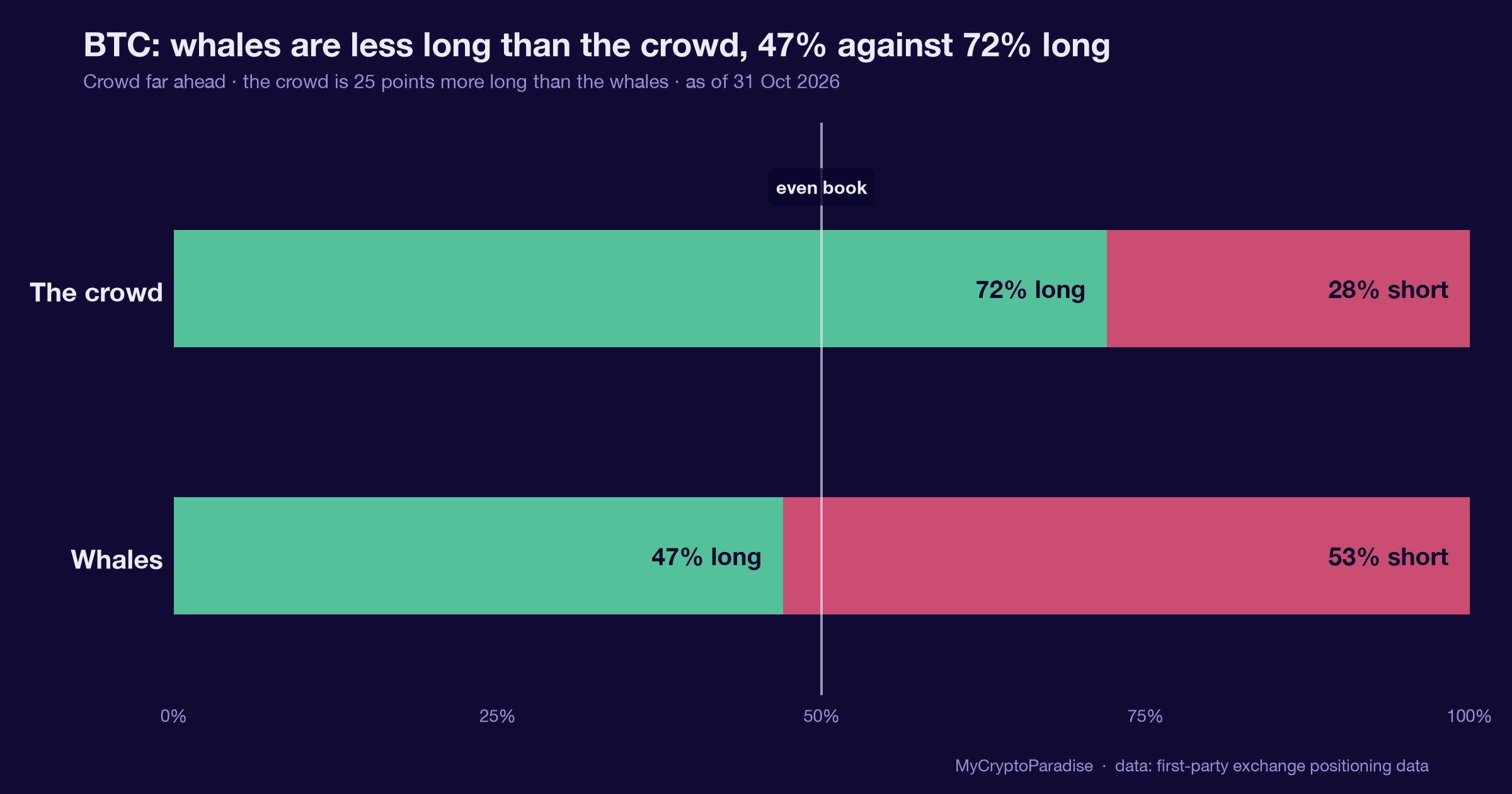
Whale positioning reinforces the caution. One tracked whale closed a long right before the Binance hack and has since flipped short. That repositioning was executed before the news, while retail reacted to it. The edge sits with those who moved early.
So the levels frame the next decision cleanly. A reclaim of the $79,000 zone as support, then a push toward the distribution band near $87,000, would raise the odds of the market ignoring these headlines entirely. Losing that zone and the 0.618 retracement keeps price discovery to the downside off the table.
The honest conclusion is a standoff. Bearish news, flat-to-green majors, and a market at a known structural hinge. We are not treating this breach as a reason to chase either way. We watch whether the former support reclaims as resistance or holds, because that, not the headline, decides the next move.
The read behind this: we framed this story through our own market analysis, Binance Hack: Is Bitcoin's Small Drop Bullish?
Track it live: our Crypto Fear and Greed Index and the live crypto funding rates both update in real time, so you can watch this shift for yourself.
Related coverage
For exact entries, targets, and stop losses with full risk management, that is what ParadiseFamilyVIP is for. New to reading these moves? Start with our crypto trading strategies guide.
ParadiseTeam is monitoring the market situation closely, and we are taking these developments into consideration while building our trading tactics inside ParadiseFamilyVIP.
Crypto trading involves substantial risk. Prices are volatile and you can lose money. This article is educational and is not financial advice. Past performance does not guarantee future results.
Do rising state hacks threaten a broad crypto sell off soon?
How 1 Paradiser is calling it
The first call is still open
Free account, no password. Members just sign in.









Join the discussion
No comments yet. Members, share how you are reading this.