


Listen: the breakdown
Market briefing: A multisig user lost $7.4M to a social engineering scam after approving just two of seven withdrawal requests. BTC shrugged it off near $80,573, up on the day, but the trust damage is slower and quieter.
- A multisig user lost $7.4M to a social engineering scam, with roughly $7M drained almost instantly
- The victim approved 2 of 7 withdrawal requests and confirmed the transaction on both hardware screens
- BTC traded near $80,573 as the news broke, treating the theft as isolated rather than systemic
A careful multisig user just lost $7.4M to a social engineering scam, even after checking both hardware devices. If diligence did not save them, is retail quietly underpricing the risk?
A multisig user just lost $7.4M. Not to a code exploit. To a conversation.
The victim approved two of seven withdrawal requests. That was enough. Those two signatures handed an attacker permission to spend the wallet's ETH, BTC and USDT. The attacker then moved fast, draining roughly $7M almost instantly.
Here is the detail that should worry everyone. The victim checked the payment on both hardware devices. Each screen confirmed the transaction looked correct. The hardware did its job. The human was still steered into signing away control.
That is social engineering, not a hack in the usual sense. No firewall broke. No private key leaked. The attacker simply manufactured trust and let the user do the rest.
This lands in a crowded week for crypto security. A separate wallet drain cost one exchange $16M through phishing. A trading bot paused services after a $954K Solana drain. The pattern rhymes.
None of it moved the market. BTC traded near $80,573 as this story broke, up on the day. ETH held above $2,340. A seven-figure theft barely registered on the tape.
That calm is the real story. The market treats each scam as someone else's problem, right up until it is not. Smart money stays unbothered because this reads as isolated, not systemic. Retail, meanwhile, keeps assuming the next clever message is the one meant for someone else.
Why multisig did not save this user
Security is the quiet tax on crypto adoption. Every large social engineering scam raises that tax. It tells new capital the on-ramp has hidden trapdoors.
The transmission runs through confidence, not price. A $7.4M loss does not dent total liquidity. But it chips at the thing crypto sells hardest: the promise that you, and only you, control your funds.
That promise just failed a careful user. They owned a multisig. They held two hardware devices. They checked both screens. And they still lost control. If the diligent get caught, the hesitant stay on the sidelines.
Policy makes it worse. A congressional review found the U.S. is not doing enough against the surge in cyber scams. Enforcement lags the fraud. Victims rarely recover anything.
The macro effect is slow and real. Fragmented regulation plus rising fraud equals a higher mental cost to hold crypto. Fewer new entrants means thinner organic demand over time. Thinner demand means price leans harder on institutional flows and leverage than on broad conviction.
So the mechanism is adoption friction. Each headline scam makes self-custody feel less like freedom and more like liability. The industry answers with better tools, which is genuine progress, yet the attack surface keeps shifting from code to psychology, where no device can fully protect you.
Trust erodes faster than the order book
Price action says nothing broke. BTC sat near $80,573 as the news spread, green on the day. ETH held firm above $2,340. The order book absorbed the story without a flinch.
That absorption is exactly why we read the drift as bearish, not benign. The loss is localized. It does not pull liquidity from BTC or ETH directly. But it feeds a slow erosion of retail trust, and retail trust is the fuel for the next leg of broad demand.
BTC leads this chain, as always. When security fear rises, marginal new buyers hesitate first on the largest, safest name. If they hesitate on BTC, they never reach ETH. And if ETH demand thins, the altcoin bid, the thinnest and most sentiment-driven layer, dries up fastest.
Alts feel this transmission hardest. They live on confidence and fresh capital. A steady drip of seven-figure scam headlines raises the perceived cost of holding anything smaller and less liquid.
So the mechanism here is not a sell-off. It is a withheld bid. No one dumps on a scam report. They simply decline to buy, or they move size to cold storage and sit on their hands.
That is how a story with no visible price impact still leans bearish. It subtracts from future demand quietly, one cautious holder at a time.
The line between isolated and systemic
The key question is whether this stays isolated. One $7.4M loss is a tragedy for one user. A cluster of them in a single week starts to look like a trend.
Watch the frequency. This scam, the $16M exchange phishing drain, the $954K bot exploit: three in close succession. If that cadence holds, the market stops treating each as a one-off. That is when confidence starts to price in.
Watch the method, too. This attacker beat a careful user holding two hardware devices. If the same social engineering template spreads, expect copycats targeting multisig holders specifically. The playbook is now public.
Watch the regulatory response. A congressional review already flagged the gap between fraud and enforcement. Any concrete action, a task force, mandatory reporting, recovery funding, would ease the slow trust bleed. Continued silence confirms it.
What would invalidate the bearish read is simple. If exchanges and wallet providers roll out visible friction, clearer signing prompts, delayed withdrawals, better warnings, and scam losses plateau, the trust tax stabilizes and adoption resumes its path.
What confirms it is more of the same. More clever messages. More signed approvals. More victims who did everything right and still lost. Each one tells the hesitant to wait another cycle.
For now, the tape is quiet. Quiet is not the same as safe. The most expensive lessons in this market arrive without a price alert.
Caution building beneath an unmoved price
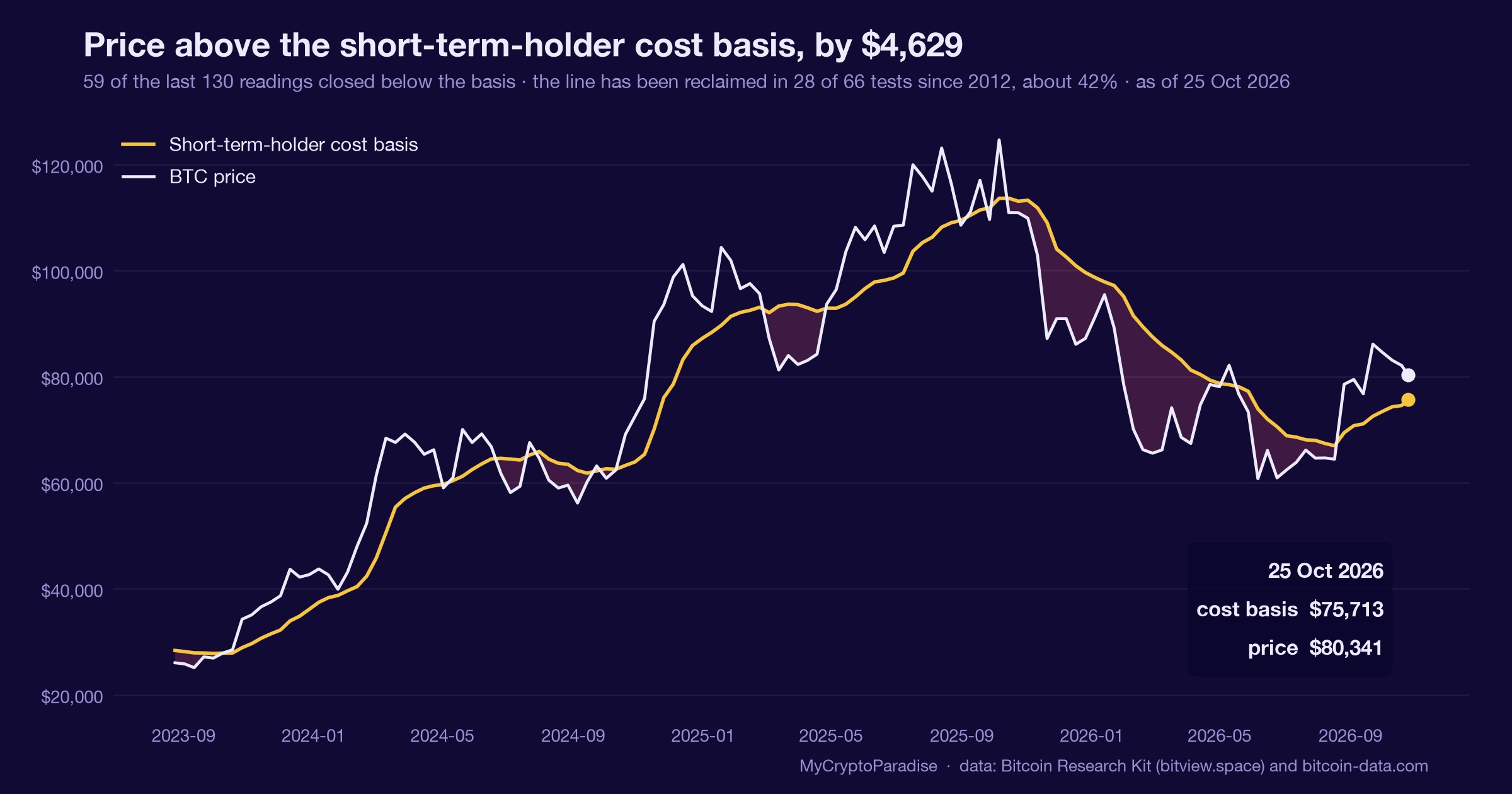
A quiet tape is hiding a soft foundation, and the ParadiseTeam is not fooled by the calm. BTC was trading near $80,573 as of this story, but the structure beneath it is fragile. Smart money on spot tried to defend $81,000 and failed. It is now selling back into strength.
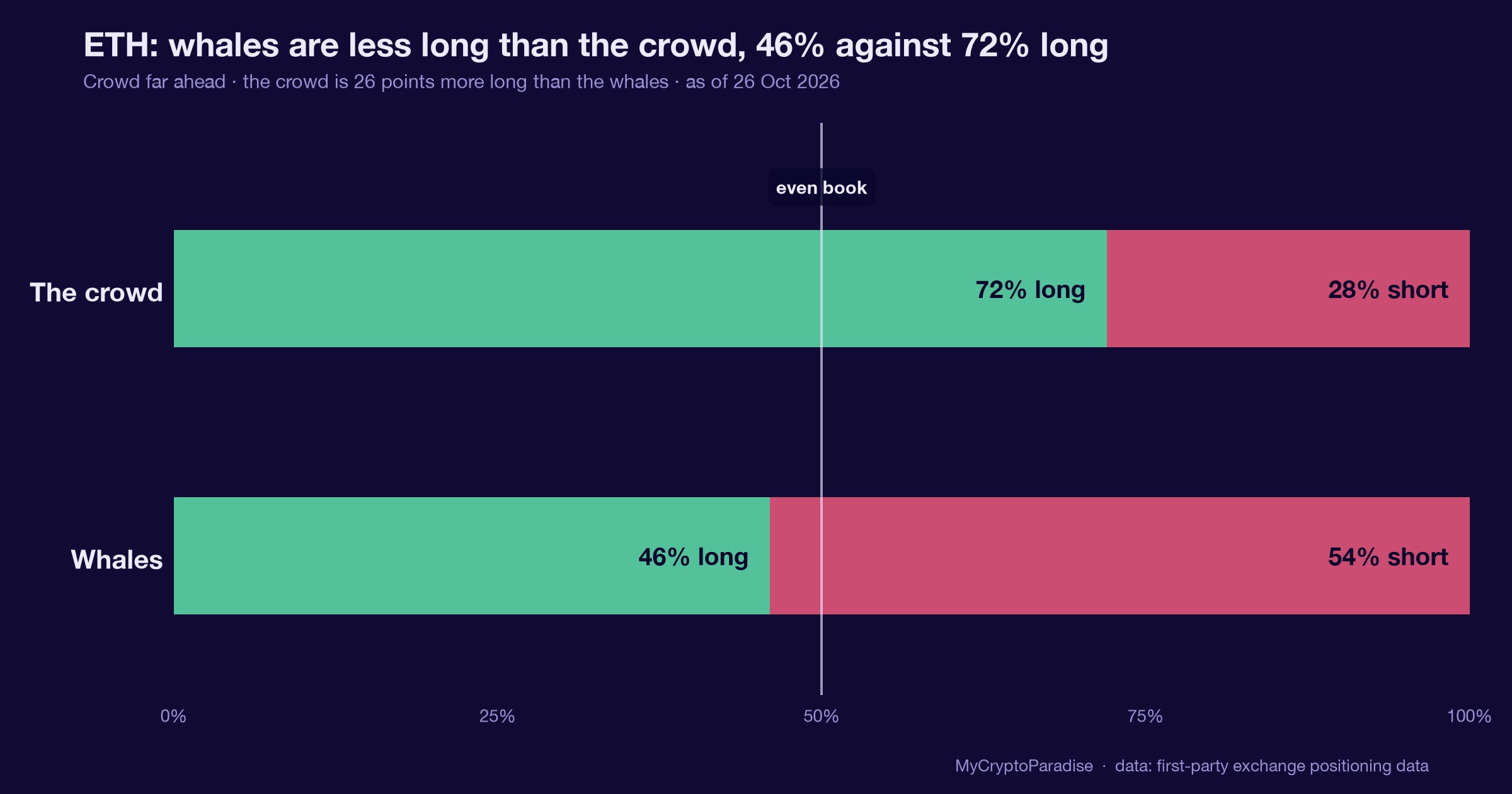
This scam does not move those levels. It reinforces the caution behind them. The market lens shows retail crowding longs while funding flips positive without price following. That is longs getting trapped, not conviction building.
A steady feed of security scares adds to that fragility. It keeps marginal buyers away precisely when the market needs fresh demand to reclaim $81,350 and push for the $90,000 fifth-wave target. Scam fear and crowded longs pull the same way.
The ParadiseTeam flags $79,000 as the line that matters. Lose it and the medium-term bullish structure invalidates, opening a deeper path the lens puts near $44,000. A trust-eroding backdrop makes that break easier for market makers to engineer in thin liquidity.
For positioning, not a signal: strength here can meet sellers, and stops sitting under $79,500 are exactly where low liquidity invites a sweep. Early smart money long signals exist but lack full confirmation.
So treat the calm as conditional. The scam is isolated. The caution it adds is not. Until $81,000 flips back to support and real demand returns, the risk-first stance stays.
The read behind this: we framed this story through our own market analysis, Bitcoin at Support: Can Bulls Fight Back?
Track it live: our live crypto funding rates and the Crypto Fear and Greed Index both update in real time, so you can watch this shift for yourself.
Related coverage
For exact entries, targets, and stop losses with full risk management, that is what ParadiseFamilyVIP is for. New to reading these moves? Start with our crypto trading strategies guide.
ParadiseTeam is monitoring the market situation closely, and we are taking these developments into consideration while building our trading tactics inside ParadiseFamilyVIP.
Crypto trading involves substantial risk. Prices are volatile and you can lose money. This article is educational and is not financial advice. Past performance does not guarantee future results.
Do rising scam losses signal a real threat to crypto adoption?
How 1 Paradiser is calling it
The first call is still open
Free account, no password. Members just sign in.







Join the discussion
No comments yet. Members, share how you are reading this.