

Listen: the breakdown
Market briefing: Tether has led a pre-seed round in Bolivian fintech Peso, embedding USDT into food delivery, QR, point-of-sale and bank-linked accounts. BTC sits near $84,158, up about 1.2% on the day as the story builds adoption, not price.
- Tether led a pre-seed round in Bolivian fintech Peso, size undisclosed.
- Peso routes USDT into Yango food delivery, QR, POS and ACH-linked virtual accounts.
- The capital funds expansion across four Latin American markets.
Tether just backed a Bolivian fintech to route USDT into food delivery and bank-linked payments. Is this the template for emerging-market adoption?
Tether has led a pre-seed funding round in Peso, a Bolivian fintech building everyday payment rails on USDT. The size of the check was not disclosed. Pre-seed means early, so the number is less interesting than the direction.
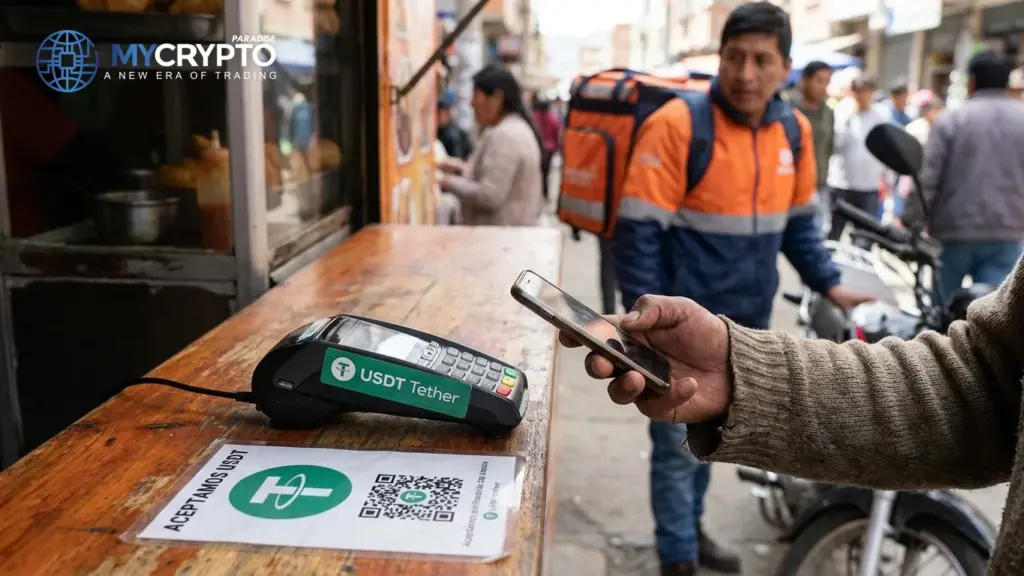
Peso has already integrated USDT payments into Yango's food delivery platform in Bolivia. Customers can now settle their orders directly in USDT. That is the headline detail: a stablecoin paying for dinner, not sitting in a trading account.
The company does more than one app. It offers QR code payments, point-of-sale terminals for merchants, and virtual accounts linked to Bolivia's banking system through ACH transfers. In plain terms, Peso connects a dollar-pegged token to the local bank plumbing most people already use.
The investment is meant to support expansion across four Latin American markets. So this is not a one-country experiment. It reads as a regional play, with Bolivia as the first proof point.
The structural change is simple. Tether is no longer only minting tokens and holding treasuries. It is buying its way into the payment layer where money actually moves, one food-delivery integration at a time. That shifts USDT from a trading instrument toward a spending instrument in markets where the local currency is weak. For traders, the price impact is negligible today. The adoption signal is not.
Why stablecoin rails matter in weak-currency markets
The transmission here runs through utility, not price. Tether is funding infrastructure that puts USDT into daily consumer spending. That is a different lever than a treasury trade or an ETF flow.
In underbanked markets with fragile local currencies, a dollar-pegged token solves a real problem. People want to hold and spend something stable. When a food-delivery app, a merchant terminal and a bank-linked account all accept USDT, the token stops being speculative and starts being money.
This deepens USDT's transactional float. Every merchant that settles in it, every virtual account that holds it, adds to the balances that live on-chain for payments rather than trading. Network effects compound quietly: more acceptance points pull in more users, who pull in more merchants.
That float matters for the wider ecosystem. USDT is the dominant settlement layer across crypto exchanges and the main quote currency for most pairs. A larger, stickier real-world float strengthens the rails everyone trades on.
Here is the honest part. This is incremental, not transformational. A pre-seed stake in one Bolivian fintech will not move BTC or ETH. The macro value is the template: if Tether repeats this country by country, the stablecoin adoption story keeps building a floor of genuine demand underneath the asset class, independent of the price cycle.
How the adoption read filters down to crypto
Read on its own facts, this story is mildly bullish for the ecosystem and effectively silent on near-term price. The chain is adoption, then float, then sentiment, and only very faintly, price.
Start with USDT itself. More acceptance means more real-world balances, which strengthens the stablecoin that settles most trades. That is a structural positive, but it is slow and does not print on a chart this week.
For BTC, the direct effect is close to zero. Bitcoin near $84,158, up around 1.2% on the day, is moving on its own flows, not on a Bolivian payments round. Treat this as a tailwind for the narrative, not a catalyst for the candle.
ETH carries a slightly more relevant thread. USDT lives on multiple chains, and deeper stablecoin usage supports the networks that host it. Still, ETH near $2,474 is driven by its own dynamics, not this deal.
Alts see the faintest signal of all. A healthier stablecoin base is good background liquidity for the long tail, but nothing here points money at any specific token.
So the liquidity cascade is more of a trickle. The value is cumulative. Each integration is one brick. Watch whether Tether keeps laying them, because a wall of emerging-market payment rails would eventually matter far more than any single pre-seed check.
What confirms Tether is scaling this model
The confirmation to watch is repetition. One Bolivian deal is an anecdote. A pattern across the stated four Latin American markets is a strategy. If Tether announces the next country-level integration on similar terms, the template read strengthens.
Watch real usage at Peso, not just the launch. The useful signal is transactions settled in USDT through Yango, QR payments and merchant terminals that actually grow. Payment rails are judged by throughput, not press releases. Many a glossy launch has gone quiet once the novelty faded.
Track the virtual accounts tied to Bolivia's banking system. If ACH-linked USDT balances climb, that shows the token sticking as held money, not just passing through as a quick conversion.
The invalidation is equally clear. If this stays a single-country pilot with no regional follow-through, it stays a minor headline. Stalled expansion, regulatory friction in a target market, or quiet integrations that never scale would all signal the template is not forming.
For price traders, the practical note is restraint. Do not trade BTC or ETH off this. The thing to monitor is the slow aggregate of stablecoin adoption data over weeks and months. That accumulation, if it continues, is what eventually shows up in liquidity and demand, long after any single announcement is forgotten.
What this adoption step means for positioning
The ParadiseTeam frames this cleanly: a genuine adoption positive for the stablecoin base, but not a reason to change your BTC posture today. The driver and the chart are on different timelines.
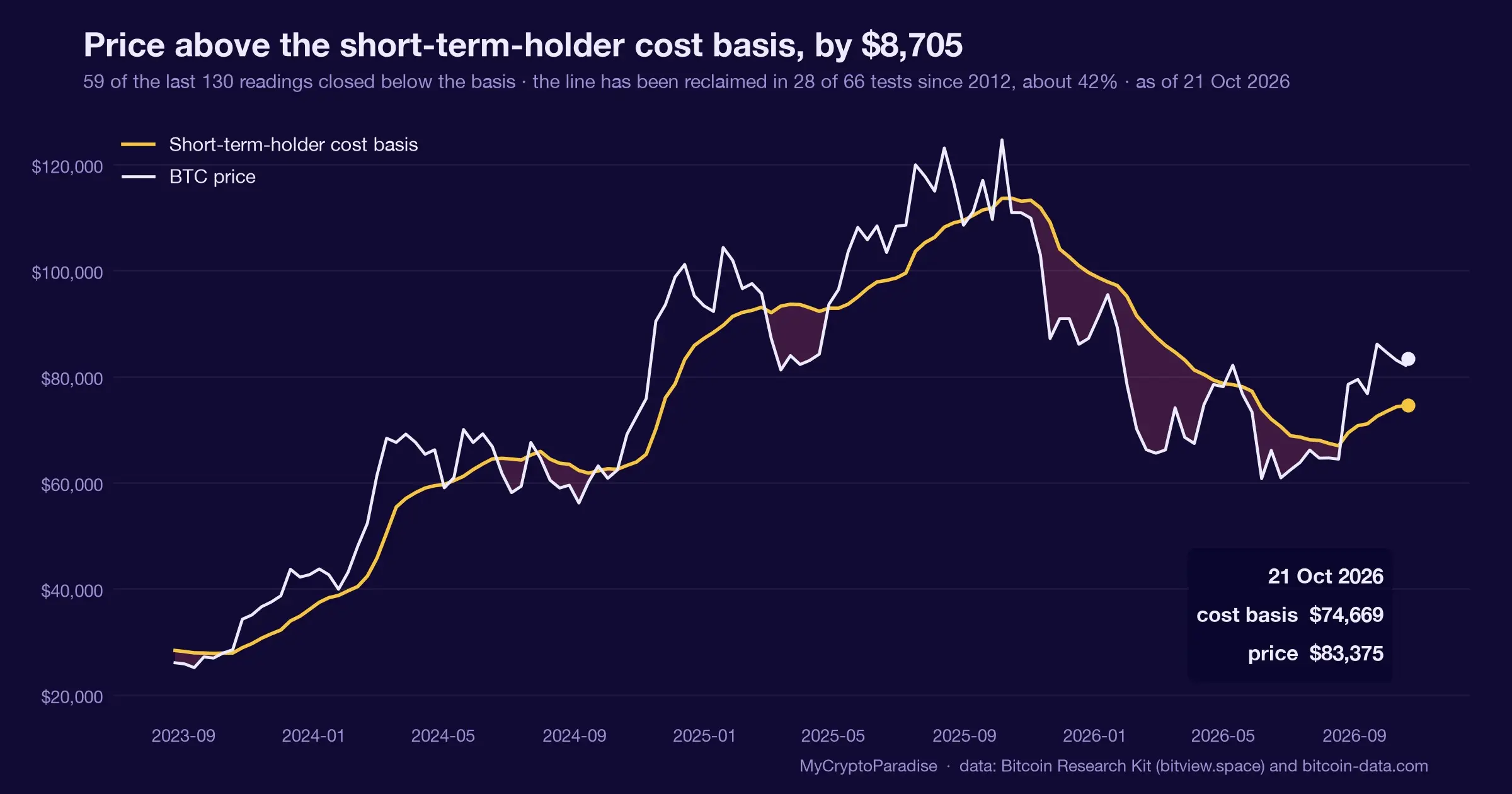
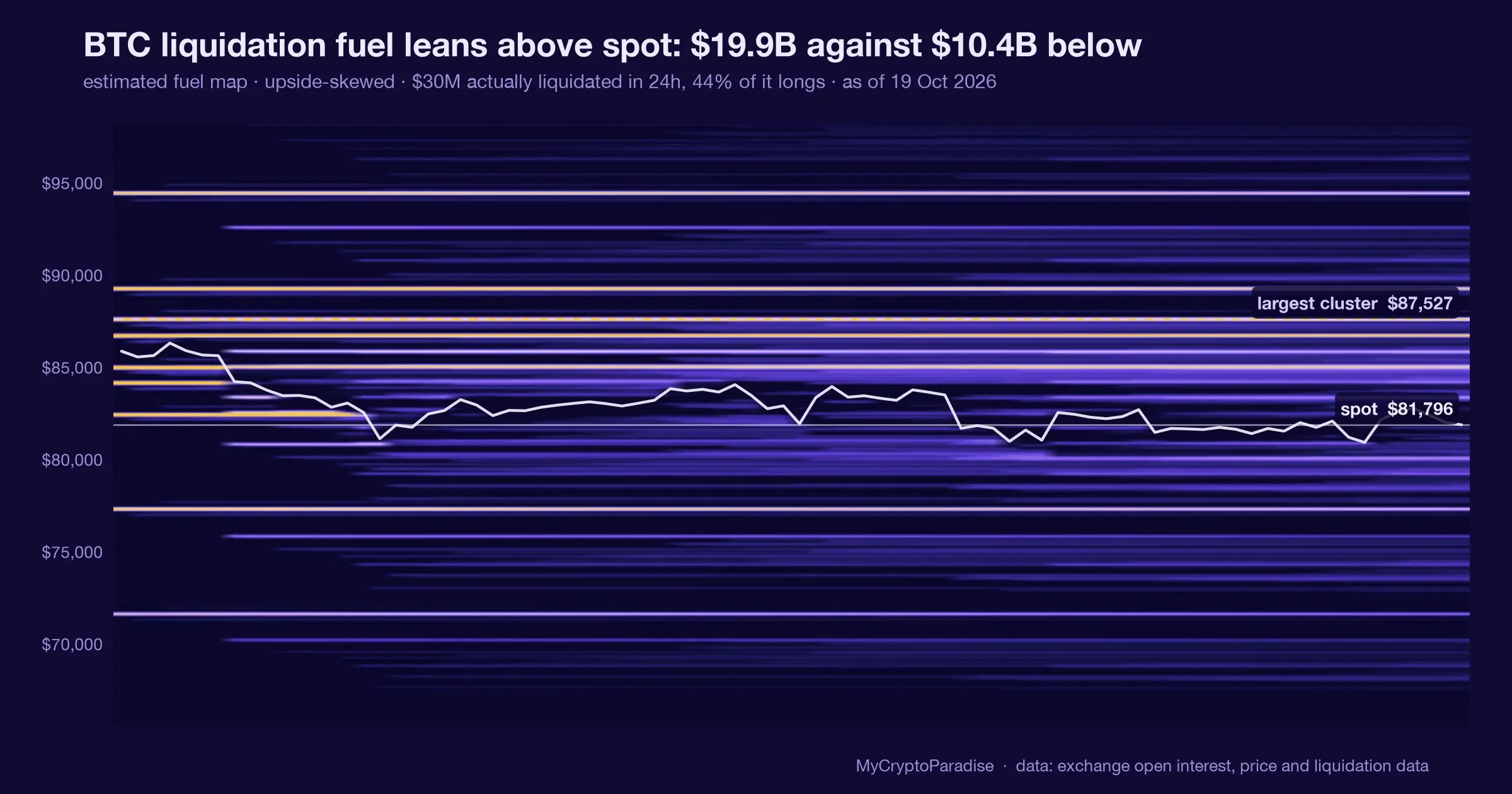
Our standing read on BTC remains cautious at these levels. With price near $84,158, the band from $82,000 to $84,200 has turned into resistance rather than support. Whales have leaned heavily toward selling in recent sessions, so strength into that zone deserves respect, not chasing.
That caution is about the tape, not this news. A Bolivian payments round does not alter where the stops sit or who is distributing. It simply adds a slow brick to the long-term demand story under USDT.
We still see medium-term bullish divergences building as bearish momentum fades, which keeps a push toward $90,000 on the table before any larger rejection. On the downside, $73,000 is the structure level that matters; a clean break there would change the market structure.
Here is how we hold both ideas. The adoption trend is a reason to stay constructive on the asset class over quarters. The price structure is a reason to stay disciplined over days. Smart money is not using this story to accumulate or exit, so there is no edge to trade in it. File it under thesis, not trigger, and let the levels, not the headline, govern the risk.
The read behind this: we framed this story through our own market analysis, Can Bitcoin Recover From This Support?
Track it live: our live crypto funding rates and the Crypto Fear and Greed Index both update in real time, so you can watch this shift for yourself.
Related coverage
For exact entries, targets, and stop losses with full risk management, that is what ParadiseFamilyVIP is for. New to reading these moves? Start with our crypto trading strategies guide.
ParadiseTeam is monitoring the market situation closely, and we are taking these developments into consideration while building our trading tactics inside ParadiseFamilyVIP.
Crypto trading involves substantial risk. Prices are volatile and you can lose money. This article is educational and is not financial advice. Past performance does not guarantee future results.
Is Tether's Peso stake the template for LatAm, or a one-off pilot?
This is how 1 Paradiser is calling it. Tap your call.
No calls on this one yet. Tap yours to be the first.
Free account, no password. Members just sign in.
Follow this topic: Stablecoin news







Join the discussion
No comments yet. Members, share how you are reading this.