


Listen: the breakdown
Market briefing: The Liquid Network halted transfers after a reported $320 million Bitcoin exploit, though roughly $285 million came back. Bitcoin shrugged it off, trading near $86,408 and up about 1.8% on the day.
- Liquid Network froze all transactions after a reported $320M Bitcoin exploit.
- Around $285M of the stolen funds were reportedly returned, limiting the net loss.
- Bitcoin held near $86,408, up about 1.8% on the day, treating the news as stale.
The Liquid Network exploit halted a major Bitcoin settlement layer, yet most funds came back and Bitcoin never flinched. So why is this hitting your feed now?
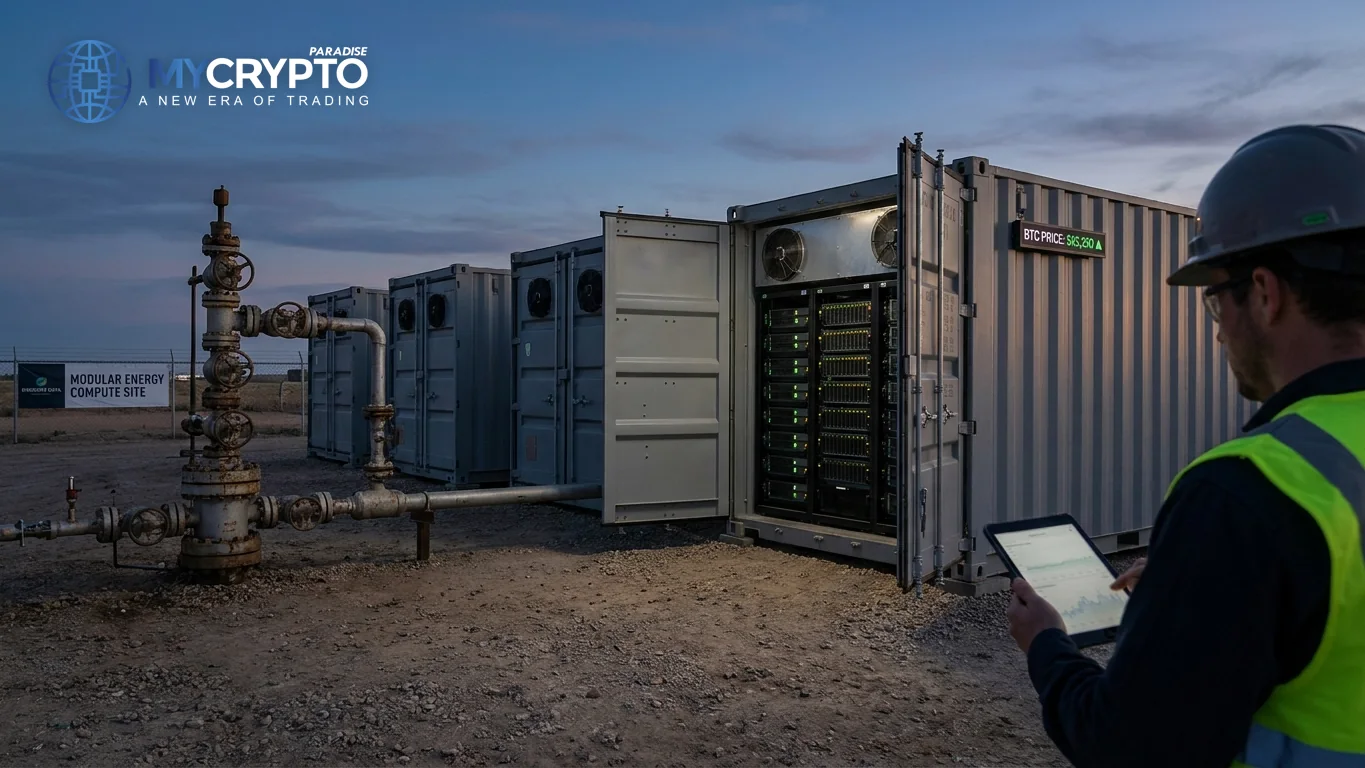
The Liquid Network, a major Bitcoin settlement layer used by exchanges and institutions, halted all transactions after a security exploit reportedly drained around $320 million in Bitcoin. The incident traces back to September 2026. On raw numbers, it ranks among the largest crypto attacks of the year.
Then comes the twist. Roughly $285 million of the stolen funds were reportedly returned.
That recovery reframes the entire story. A near total clawback turns a catastrophic headline into a contained operational scare. The network froze transfers to limit the bleed, and most of the value eventually found its way home. The remaining shortfall is real, but modest against the original figure.
Context matters more here than the drama. September was a brutal stretch for crypto security, with thefts surging 462% to roughly $766 million. A separate exchange incident near $387 million did much of that damage. Liquid's loss simply added to a grim monthly tally.
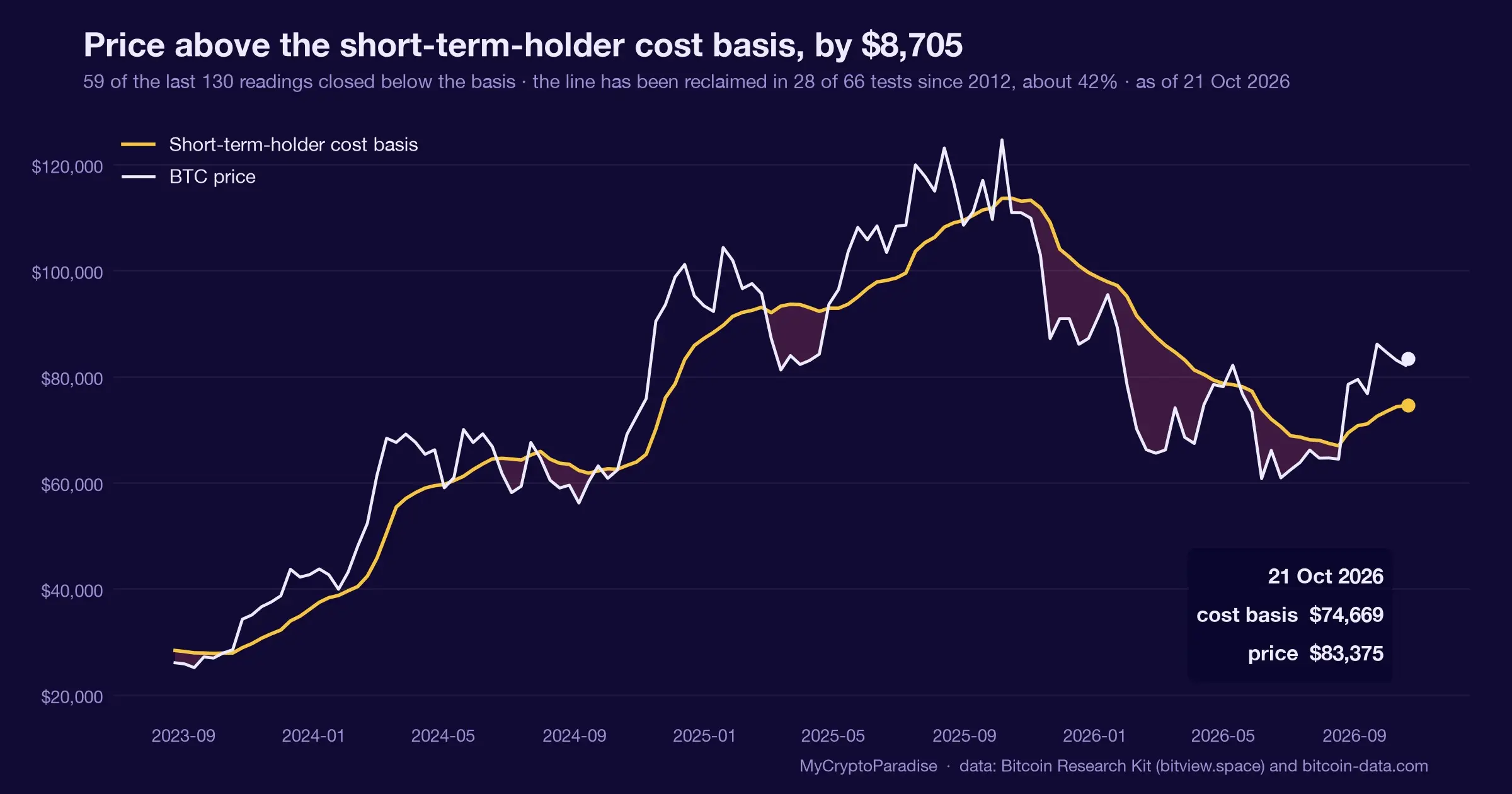
Yet Bitcoin barely noticed. It was trading near $86,408 as of the latest read, up about 1.8% on the day and roughly 3% in October.
So the structural point is simple. Markets price live information, not recycled headlines, and this information is weeks old with most funds already back. The breaking-news framing has arrived late to a story the order book settled long ago. It is a useful reminder that a scary word in a push notification is not the same thing as a scary balance sheet.
Why a settlement layer breach matters
The reason a Liquid Network exploit deserves attention is plumbing, not price. Settlement layers move Bitcoin between exchanges and institutions quickly and privately. When that layer halts, the normal flow of coins across the market slows, and slowed flow is the first place systemic stress ever shows up.
So the honest transmission chain runs through confidence, not forced selling. A breach raises the perceived risk premium on holding assets near any bridge or custody layer. That nudges some institutional flow toward caution, which can thin liquidity at the edges even when headline prices stay calm.
Here, though, the mechanism never fully engaged. The halt was contained and most funds returned, so the confidence hit stayed local to the affected system rather than spreading into broad Bitcoin liquidity. That distinction is everything for a trader. A permanent $320 million hole with coins gone forever would tighten supply and spook custodians for weeks. A temporary freeze with a near full recovery is closer to a fire drill.
The broader September spike in thefts does matter structurally. It tells you attackers are probing infrastructure harder as prices climb. Rising value attracts rising effort, which is the least surprising pattern in this industry. But one recovered incident does not move the macro needle for BTC. The market reads it as an isolated infrastructure event, absorbs it, and returns its attention to the levels that actually set direction.
How markets shrugged off the drain
Start with the tape, because the tape is the verdict. Bitcoin sat near $86,408, higher on the day and higher on the month, while this exploit headline circulated. That is the market telling you it already knows and does not care.
The cleanest read is that the event is priced, or more precisely, that it was never meaningfully priced in the first place. A September loss, mostly recovered, carries almost no fresh information for an October order book.
For BTC specifically, the liquidity impact is close to zero. No large supply was permanently removed, no forced liquidation cascade followed, and no custody panic drained exchange reserves. The coins that left came back.
Ethereum and the broader alt complex show even less sensitivity. Second-order assets tend to amplify genuine Bitcoin stress, but there is no stress here to amplify. Without a real BTC liquidity shock, there is nothing for ETH or alts to echo downward.
The one honest risk is reflexive. If enough retail traders react to the word exploit without reading the recovery, a brief, shallow dip of fear selling is possible. That would be sentiment, not substance.
And sentiment-only dips on stale news are exactly where smarter capital likes to buy. The mechanism is simple: panic sellers hand cheap coins to anyone who read past the headline. On these facts, the net market effect reads as neutral, a non-event wearing an alarming costume.
Signals that this stays contained
The first thing to watch is whether the Liquid Network restores full transactions cleanly. A smooth resumption confirms the contained read. A repeated or extended halt, by contrast, would tell you the damage ran deeper than the recovery figure suggested, and that is the invalidation line.
Next, track exchange reserves and any sign of withdrawal pressure around the affected infrastructure. Stable balances confirm confidence held. A sudden drain would signal institutions quietly stepping back, which is the only path by which this story grows teeth.
Watch open interest, or OI, which is the total value of outstanding derivative positions. If OI stays steady while this news circulates, traders are unbothered. A sharp drop would show leverage flushing out on fear.
Cumulative volume delta, or CVD, the running tally of buying versus selling pressure, is the tell for who is acting. Rising CVD into any news-driven dip means buyers are absorbing the panic, which confirms the smart-money-accumulates reading.
Finally, watch for copycat headlines. September's theft surge means more incidents are plausible, and a genuinely new, unrecovered exploit at a critical layer would be a different story entirely. That would warrant real caution.
The confirmation you want is boring: transfers resume, reserves hold, OI and CVD stay firm, and Bitcoin keeps trading on its own levels. Boring, in this case, is bullish for the contained thesis and the simplest outcome to respect.
Reading stale FUD against live support
The ParadiseTeam view is that this exploit is noise laid over a structure that already has its own plot. With Bitcoin near $86,408, the levels that matter sit above and below, not in a September incident report.
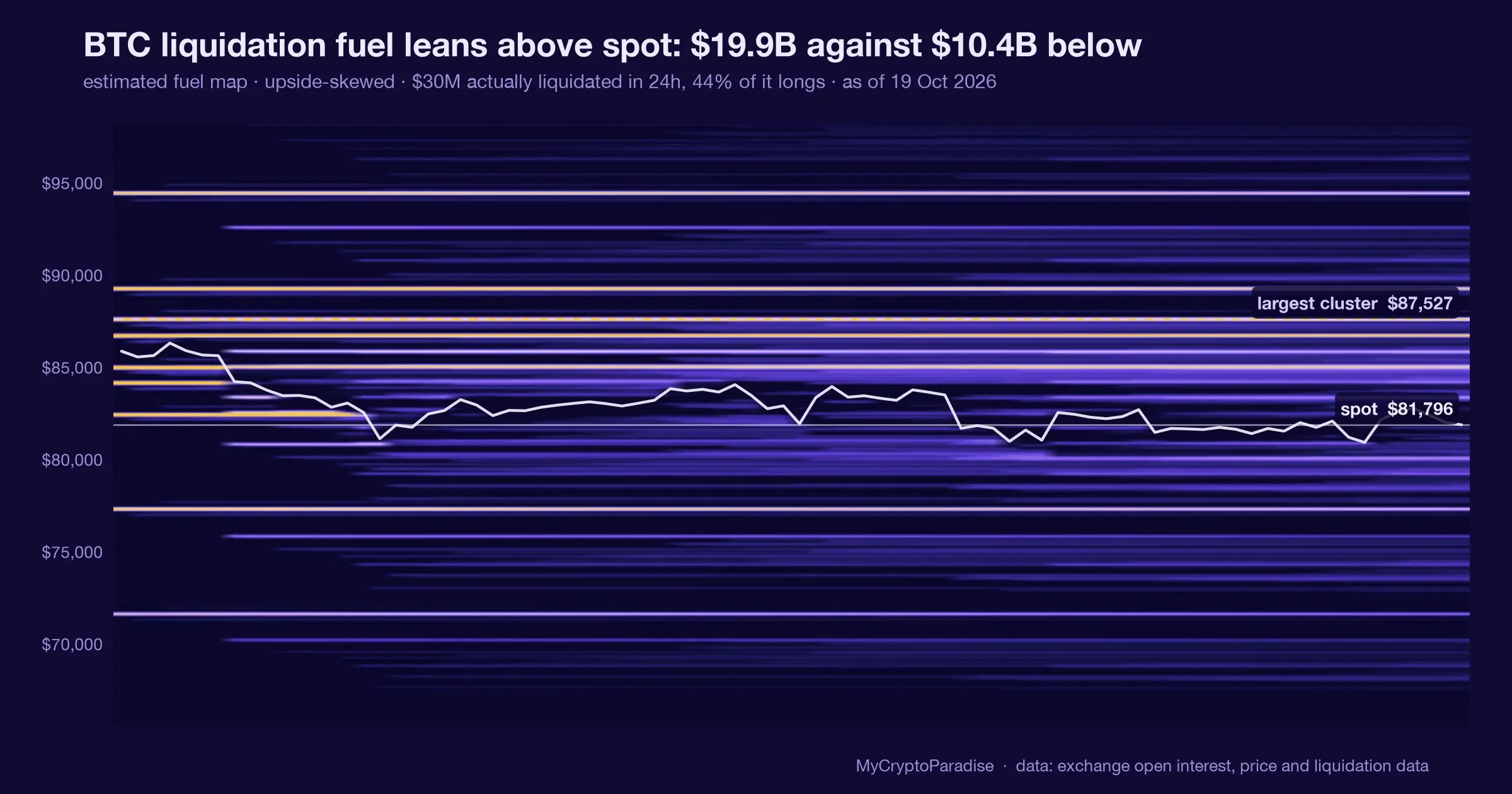
The map is unchanged. Support clusters around $82,000, where moving-average and Fibonacci confluence meet prior price action. The decisive overhead band is $88,000 to $90,000. This story moves none of those lines.
What it does do is test discipline. Price sits just under heavy resistance while a scary headline recirculates. Fearful retail is exactly the crowd a stale exploit story can shake, and shaken hands near support tend to sell to steadier ones.
The ParadiseTeam reads current conditions as a possible short-term bounce from the $82k zone, where selling pressure is being absorbed, against a cautious macro backdrop. Whales still lean net sellers, roughly 65% to 35%, so strength into $88k to $90k deserves suspicion, not celebration.
So frame the news this way: it changes nothing fundamental, but it may add a little fear exactly where fear is least useful. A rejection at $88k to $90k would keep the macro caution intact, with the deeper $55k to $44k zone the longer risk if support eventually fails.
Risk first, always. Define your invalidation before entry, mind your risk-to-reward, or R:R, and do not let a recycled headline make your decisions for you. The structure, not the story, holds the edge.
The read behind this: we framed this story through our own market analysis, Can Bitcoin Bounce From Support?
Track it live: our Crypto Fear and Greed Index and the live crypto funding rates both update in real time, so you can watch this shift for yourself.
Related coverage
For exact entries, targets, and stop losses with full risk management, that is what ParadiseFamilyVIP is for. New to reading these moves? Start with our crypto trading strategies guide.
ParadiseTeam is monitoring the market situation closely, and we are taking these developments into consideration while building our trading tactics inside ParadiseFamilyVIP.
Crypto trading involves substantial risk. Prices are volatile and you can lose money. This article is educational and is not financial advice. Past performance does not guarantee future results.
Will BTC clear the $88k to $90k resistance or fall back toward $82k support?
This is how 17 Paradisers are calling it. Tap your call.
No calls on this one yet. Tap yours to be the first.
Free account, no password. Members just sign in.











Join the discussion 45
That BTC held its level is important, a sign of maturity compared to earlier events. I remember those Mt. Gox days well.
i find the idea of BTC holding 86k after a major exploit a bit optimistic - that much basis compression, or perp-versus-spot divergence, might suggest a re-evaluation of the premium perhaps.
Yeah, that's why I always keep me coins off exchanges where I can 🔐, too many stories like this one flying around 💸. Fair play to the crew for getting the funds back though 💪.
It's why I hold what I hold. That fast rebound only matters if your purchasing power wasn't eroded while it was offline.
what was your stop and size on that exposure, Ray.. always the first thing I check when things like this hit.
yes Emma and then if they also had a written plan for what comes after the recovery its even better 📋
i always worry about all the different layers and what happens if one breaks, its like when i lost my bank card once and had no cash, just stuck 😟
wow... the quick recovery always gets me... i'm always watching to see if big players are just kinda moving things around like that 🤔... gotta wonder who's really pulling strings.
man, imagine if i tried to catch that 1m bounce during a halt! 💀 i just know i'd get chopped up worse than usual. feels like a good reminder to always look for the exit, huh?
It is good to see that most funds returned... I always double-check the recipient address when sending even small amounts because of stories like this.
Most funds returned" doesn't mean it wasn't a failure - it just means they got lucky with the attacker. The protocol failed; that's the point.
I see your point about the protocol failing. But for the users, the funds returning is what matters most, especially with such a large amount. This is a very real concern for everyone.
Most of it came back because they let it... The part about BTC holding near 86k after a hit like that... that's the part that's not adding up.
Yeah, seriously Ray! The charts barely flinched after that news dropped... like, the volume was crazy. 🤔
Ray, the speed of recovery and the network's resilience after such an event are indeed key. It makes me consider what kind of an exploit, short of a 51% attack, would genuinely shake the underlying thesis.
I see it more like a design failure than a deliberate choice... the market structure around BTC is too robust for a single exploit to just *undo* it. 💥
design flaw or not, someone chose to send it back. that's the part that sticks out. the price still dont make sense.
That would suggest a strong underlying demand and liquidity, similar to how a structure maintains its integrity under localized stress.
Someone chose" is still too abstract, Ray. It’s like saying "someone designed the UI" when the bug was in the back-end code. The system architecture itself is what's holding steady, not individual choices after the fact!! The market pattern is clear.
Seeing the network halt is always the first thing I check 🤔. It's not just about the numbers, but what it means for actual usage... like moving money back home 🇸🇳💸.
It's always the exit liquidity that matters, not the initial impact.. Opinions always get repriced in the end.
i think the initial impact *does* matter, elif. how the network react's to a big hit often dictates long term sentiment and the subsequent exit.
my focus was on the stablecoin flows off liquid after the halt its a good reminder of how quickly funds can move even during an outage
Mei Lin, you hit it exactly, the speed is wild 🚀. Stablecoins were how my family first kept some value, so I remember that feeling well. That movement 💨 during a halt is a powerful reminder.
yeah seems like a lot of these big moves are well timed for someone. always makes me wonder what the real level is that matters.
the prompt about funds returning seems a bit optimistic, given the initial halt and the potential for a basis disruption if it had persisted. that 86k level is still interesting to watch, however.
The reclaim of a key zone after such an event is what matters. The liquidity available to rebuild is also a factor.
Jonas, the resilience of the issuance schedule, yes, it was a fine piece of mathematics. Always good to see a clear calculation hold its line.
yeah, the prompt about funds returning seems a bit optimistic, given the initial halt and the potential for a basis disruption if it had persisted. that 86k level is still interesting to watch, however.
it seems we are both observing the same level, but for different timeframes. the immediate basis impact of such a halt could have been significant, especially if the delay had extended beyond a few hours. that 86k level then becomes a liquidity test, does it not??
The actual risk here isn’t about how quickly funds returned, but the conditions required for a stop-loss to trigger reliably. That's the key.
holding near 86k, especially after the reclaims needed to sustain that zone, feels a bit convenient for the narrative. a lot of liquidity was in play.
yo lukas, i get that "convenient" feeling... especially with how much volume usually dips after a big news event like that. 🤔 just feels weird it barely budged.
The liquidity in play feels like the whole point to me. You get real price discovery when the big money has to move.
just another data point for volatility on the altcoin list. my checklist says look for the recovery speed not the initial shock.
always good to see the debits come back to the credit side. reminds me of a time a petty cash box went on an unauthorized holiday! 😅
It's the "most funds returned" part that gives me pause 🤔. When they say "most," what percentage are we actually talking about for retail users? Four-hour noise is not a signal.
Ingrid, that is a good question... and also, how did they verify who the "retail users" even were?
Ingrid- your insight here is keen, and takes me back to the liquidity questions that first drew me to Bitcoin. So many assume all 'returned' funds are equal.
I remember watching the 2007 attacks, seeing how quickly things went offline. Always makes me wonder about the full extent of a network's dependencies.
it's these kinds of stories that keep me so cautious... i always wait a bit for the dust to settle before I do anything. 🐶 so many tempting things out there...
I always download the price history first before I believe anything. The 86k support line holding steady after this.. that's what caught my eye.
It is always sensible to verify data independently, Fatima Zahra. The more pertinent question for me is what percentage of the total supply was affected by the exploit.
hmm, i think the more important thing here is how quickly they got those funds back! 😲 not all hacks end like that! 💪🚀
Yes, the recovery aspect is key. Though the article mentions the funds were "returned," it's worth noting the Liquid team identified the vulnerability and patched it within days... the speed of the fix matters for confidence.