

Listen: the breakdown
Market briefing: Iran has threatened to shut the Bab el-Mandeb Strait and link it with the Strait of Hormuz, and risk-off nerves are showing. Bitcoin slid toward $83,159, down almost 3 percent, with Ethereum weaker near $2,639.
- Iran threatens to shut the Bab el-Mandeb Strait, tying it to the Strait of Hormuz to 'change the battlefield.'
- The oil-supply threat feeds risk-off sentiment and pulls capital from crypto; BTC fell near $83,159, ETH near $2,639.
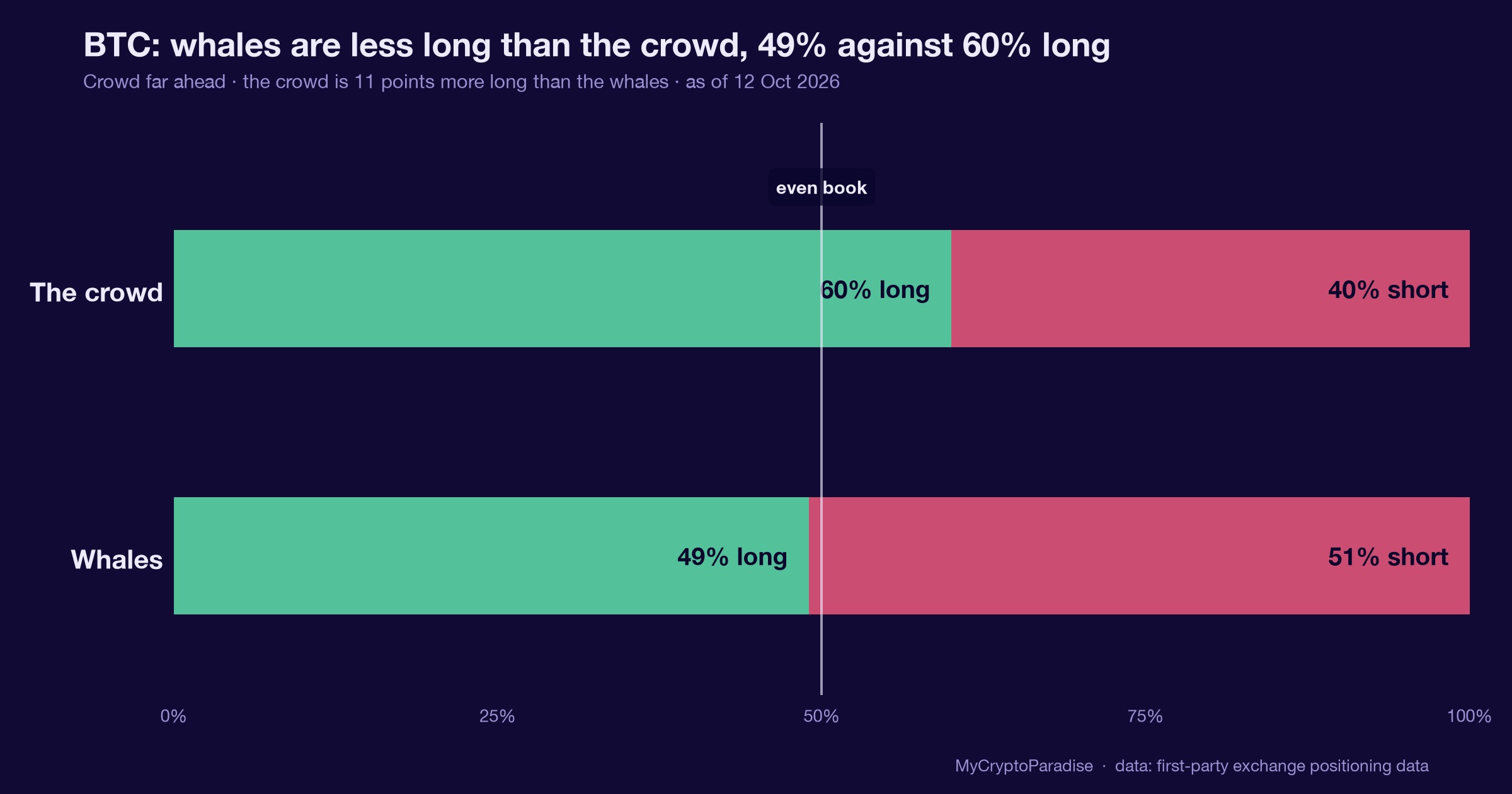
- Retail sits long and greedy into the shock, leaving stacked stops that favour distribution over a clean dip-buy.
Iran's threat to shut the Bab el-Mandeb Strait just met a jittery crypto market, and Bitcoin is already sliding. Is this a geopolitical dip to buy, or the start of something deeper?
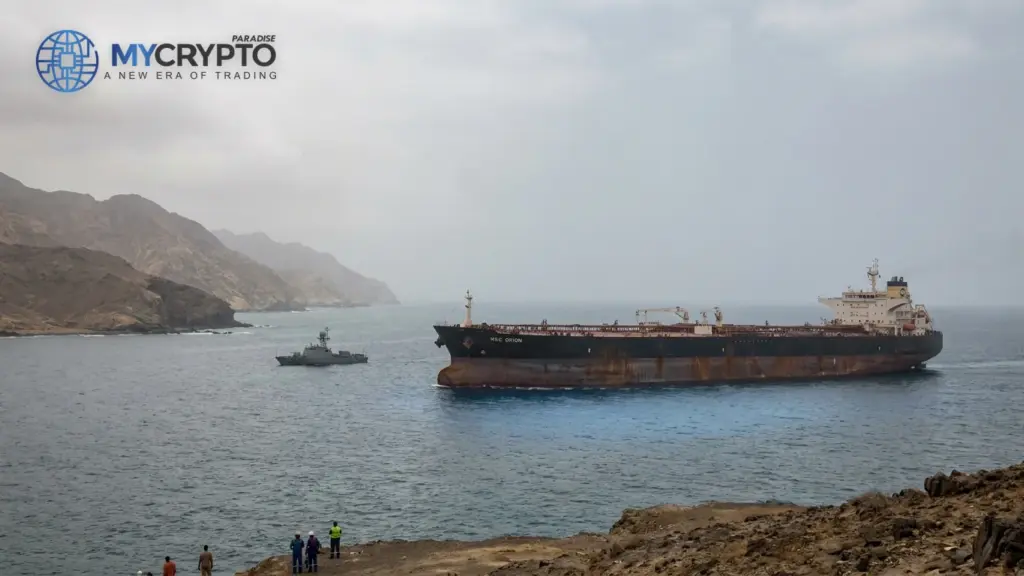
Iran has threatened to shut down the Bab el-Mandeb Strait, and it tied the move to the Strait of Hormuz in the same breath. Linking the two chokepoints, Tehran said, would change the battlefield. That is not a small claim. Together these two narrow passages carry a large share of the world's seaborne oil.
Neither strait is currently considered safe for tankers, and Saudi cargoes look most exposed. In July, Iranian-backed Houthi forces in Yemen declared a blockade of Saudi oil shipments, which broke the Yanbu workaround traders had leaned on. The threat now stretches across both ends of the Red Sea route at once.
Europe is paying attention. The EU's top foreign-affairs official, Kaja Kallas, met Iranian Foreign Minister Abbas Araghchi and raised concerns about free transit through both the Strait of Hormuz and Bab el-Mandeb. Diplomacy is moving, but so is the risk premium.
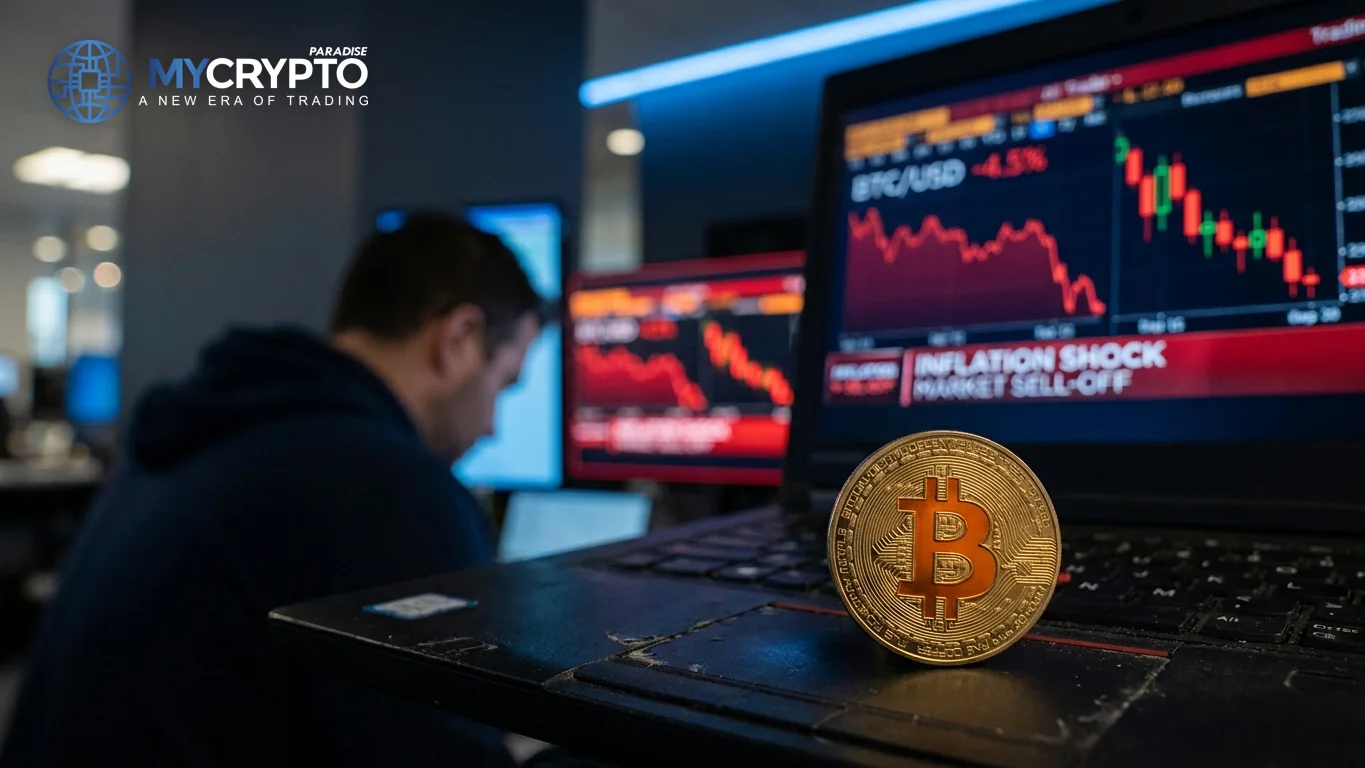
Bitcoin did not wait for confirmation. It slid toward $83,159, down almost 3 percent on the day.
Here is why traders should care. A credible threat to oil supply lifts energy prices, feeds inflation fear, and pushes capital toward safety. Crypto sits at the far, risk-on end of that chain, so it tends to feel the tremor last and hardest. The story is geopolitical, but the transmission into BTC and ETH is pure liquidity.
Two chokepoints could squeeze global oil
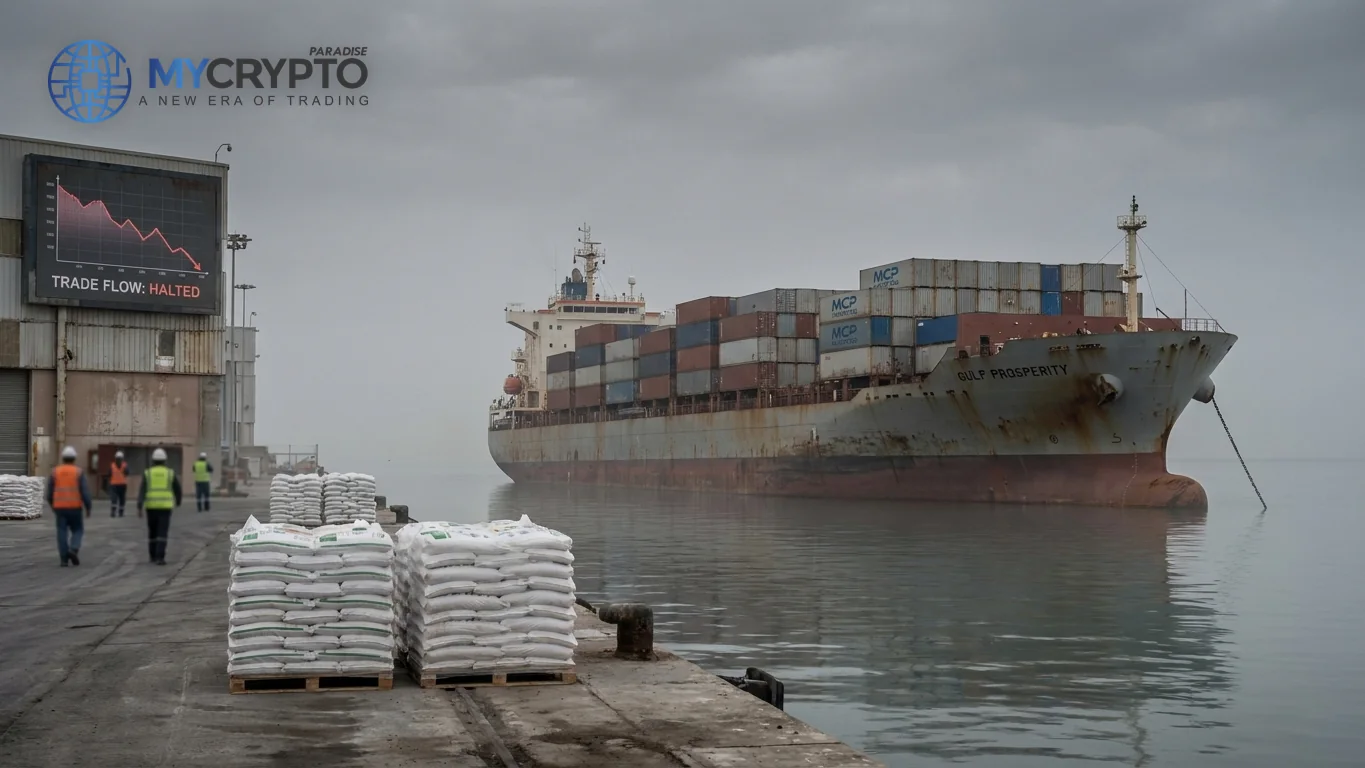
The mechanism runs through oil, not through crypto directly. If tankers cannot pass safely through Bab el-Mandeb and Hormuz, insurers reprice the routes, freight costs climb, and the marginal barrel gets more expensive. Higher energy prices are, in effect, a tax on everything else.
That matters for rates. Sticky oil-driven inflation gives central banks a reason to stay cautious, which keeps real yields firm and the dollar bid. Firm yields and a strong dollar are historically a headwind for assets that pay no coupon, and Bitcoin is the purest example.
Risk-off is not one event. It is a sequence: fear enters through the headline, spreads through equities and credit, then drains liquidity from the speculative edge of the market. Crypto lives on that edge.
There is a wrinkle worth naming. Bitcoin is sometimes sold as digital gold, a safe haven for exactly these moments. In practice, on days like this, it trades far more like a high-beta risk asset than a bunker, and the safe-haven story tends to arrive after the bounce rather than during the drop. So the driver here is not really a crypto story. It is a macro liquidity story wearing a geopolitical mask, and that is precisely why it deserves your attention.
Risk-off pressure reaches BTC and ETH
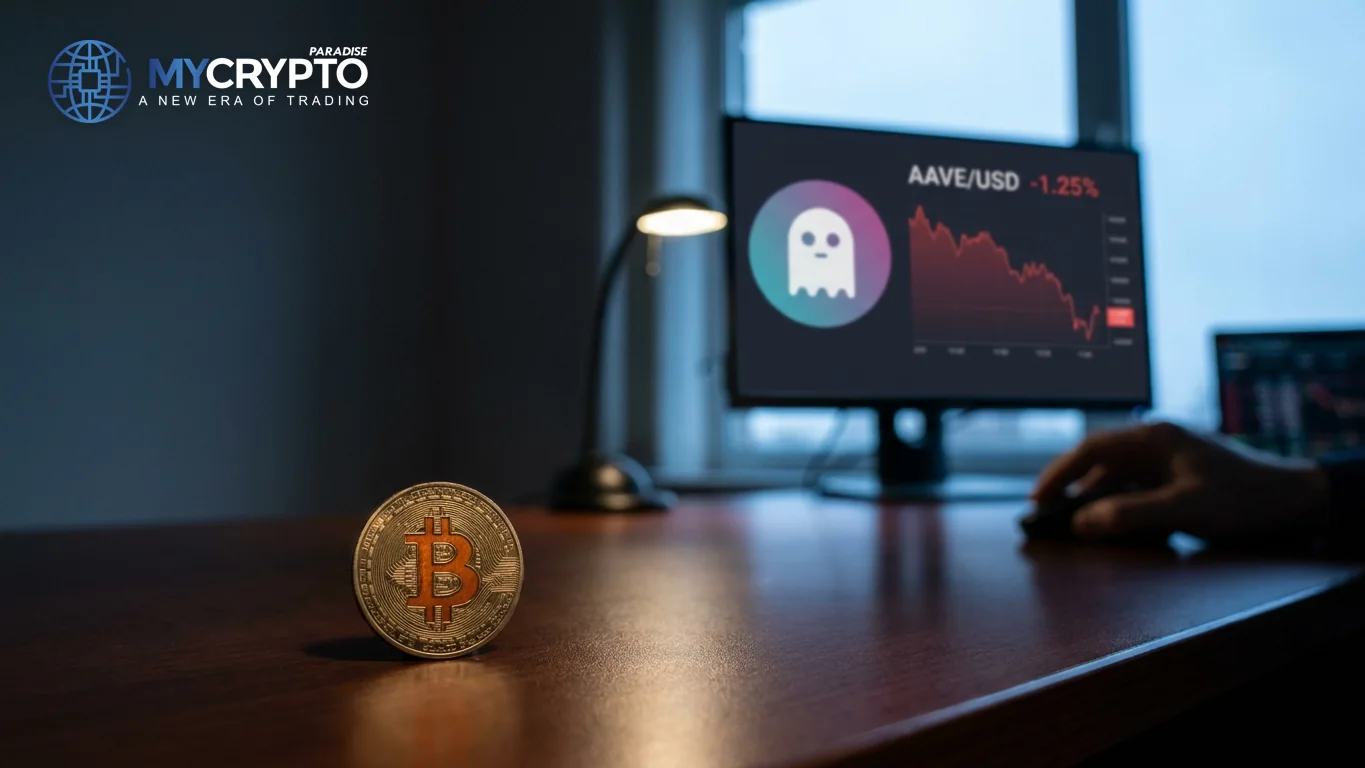
Bitcoin leads the reaction, and it already has. Price slipped toward $83,159, down about 2.9 percent over 24 hours, with a softer one-hour drift beneath it. That is an orderly bleed, not yet a panic, and the distinction matters.
ETH is moving in sympathy but weaker. It fell around 3.4 percent to roughly $2,639, underperforming Bitcoin on the day. In risk-off phases, capital usually retreats up the quality curve: from alts to ETH to BTC to cash.
Alts sit at the end of the whip. When liquidity tightens, thin order books widen, and the same sell pressure that nudges Bitcoin can gut a smaller token. Leverage makes it worse, because crowded longs turn into forced sellers the moment support cracks.
The key question is where the stops sit. A large cluster of retail long positions has built up during the recent grind higher, and those stops become fuel. A geopolitical headline is exactly the kind of spark that reaches for them.
None of this guarantees a cascade. Oil-shock fears can fade as fast as they arrive if diplomacy holds. But the structure right now favours the downside, because the market entered this headline long, greedy, and leaning the wrong way for a shock.
Escalation or diplomacy decides the tape
Watch the oil tape first, because crypto is downstream of it. If crude spikes and holds, the risk-off narrative gains weight and pressure on BTC persists. If oil fades back, the crypto selloff likely loses its engine within days.
Diplomacy is the swing factor. The Kallas and Araghchi channel suggests both sides are still talking, and any signal of de-escalation would strip the premium quickly. Geopolitical risk is priced in fear and unwound in relief.
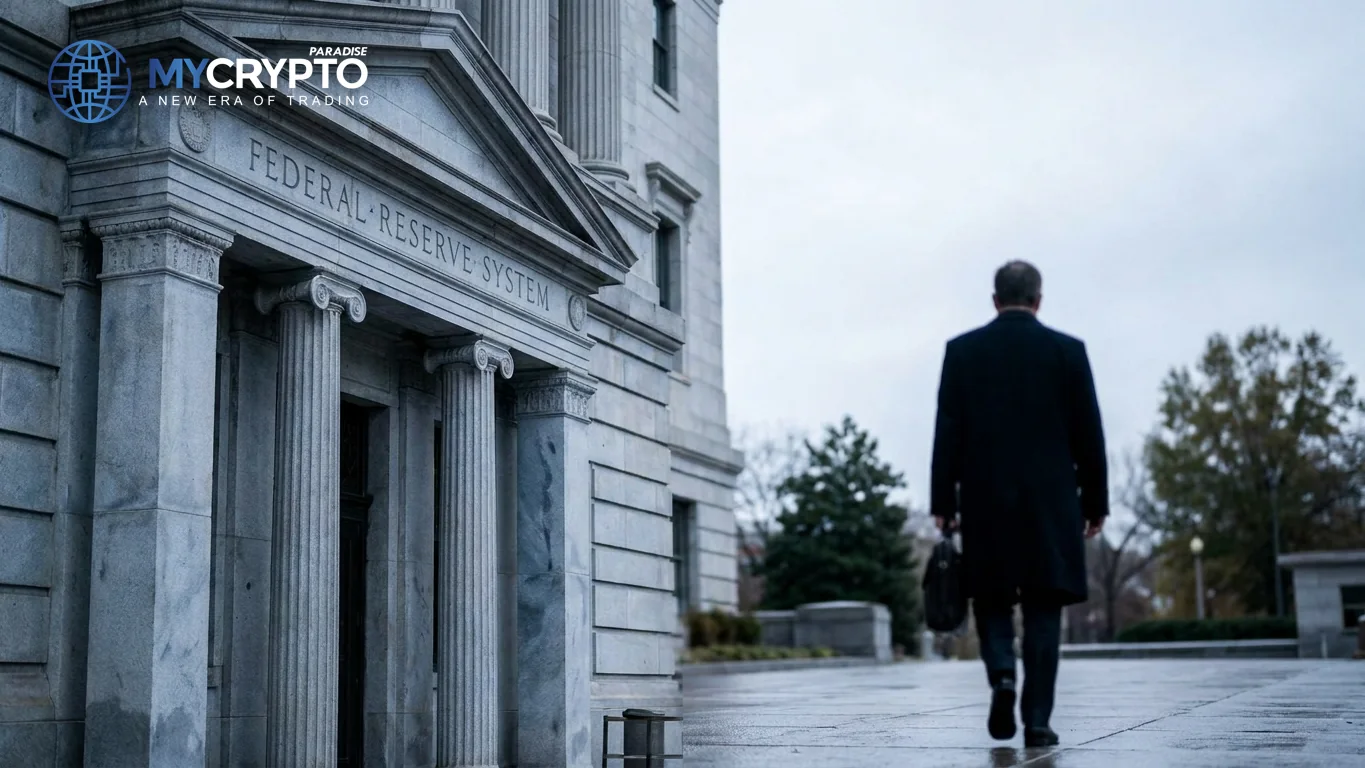
On Bitcoin itself, the levels matter more than the headlines now. A clean loss of current support that opens the path toward the $67,000 zone would confirm the market is treating this as a genuine risk event. Holding above and reclaiming ground would suggest the shock is being absorbed.
Invalidation of the bearish read is a firm bounce and a reclaim of $88,000 resistance. That would tell us buyers overwhelmed the fear, and the distribution thesis weakens.
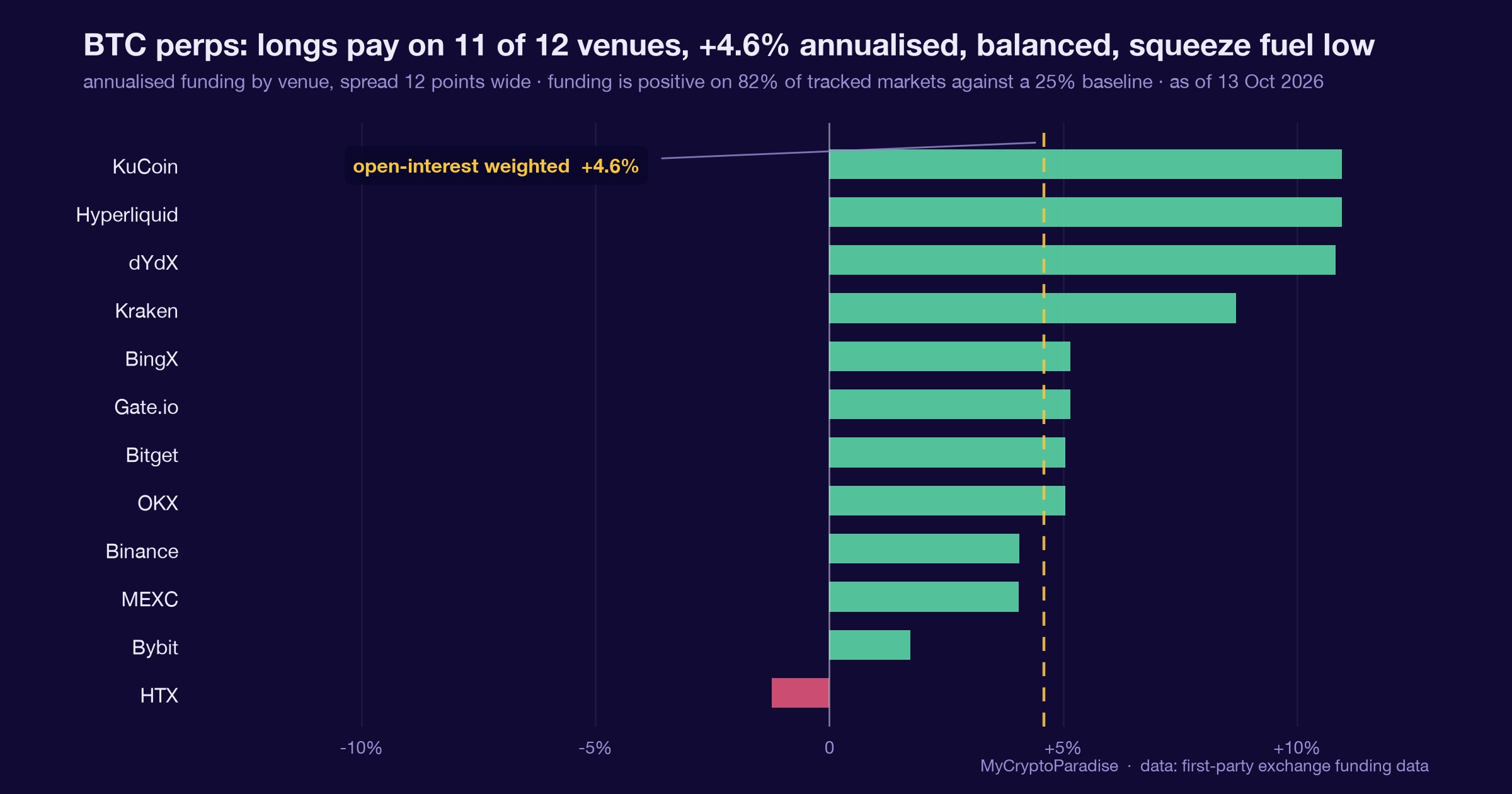
Volume and funding are worth tracking too. A flush on rising volume with funding resetting negative is healthier than a slow grind on thinning liquidity. The first clears out leverage; the second just delays it.
Above all, separate the headline from the price. Iran has threatened chokepoints before, and markets carry a short memory. What confirms this time is follow-through, in oil, in flows, and in whether support actually breaks.
Smart money distributes into geopolitical fear
Iran's threat fits the ParadiseTeam's existing map rather than breaking it. Our weekly read sees smart money distributing into retail's extreme greed, and a geopolitical shock is a convenient excuse for that distribution to accelerate.
Ground it in price. Bitcoin was trading near $83,159 as of the latest read, sitting below the $88,000 resistance we have flagged and above the $67,000 liquidation zone we are watching. That is no-man's-land: not a reclaim, not yet a capitulation.
Consider who benefits. Retail entered this week heavily long and greedy, which means stops sit stacked below current support. A risk-off headline hands larger players a reason to press price into that liquidity, exactly the distribution pattern the ParadiseTeam has described.
We are not chasing this short blindly. The ParadiseTeam wants price-action confirmation, a decisive support break with follow-through, before treating $67,000 as the next magnet and the $44,000 to $55,000 band as the deeper exchange-of-hands zone.
For anyone already long, the risk-first move is simple: protect the position. Stops to breakeven or profit, no new aggressive longs into a shock, and patience for the reclaim of $88,000 that would reopen upside probability. R:R (risk-to-reward) only favours the buyer once fear is spent, not while it is still spreading.
The read behind this: we framed this story through our own market analysis, Can Bitcoin Reach a New High at $169K?
Track it live: our Crypto Fear and Greed Index and the live crypto funding rates both update in real time, so you can watch this shift for yourself.
Related coverage
For exact entries, targets, and stop losses with full risk management, that is what ParadiseFamilyVIP is for. New to reading these moves? Start with our crypto trading strategies guide.
ParadiseTeam is monitoring the market situation closely, and we are taking these developments into consideration while building our trading tactics inside ParadiseFamilyVIP.
Crypto trading involves substantial risk. Prices are volatile and you can lose money. This article is educational and is not financial advice. Past performance does not guarantee future results.
Where does Bitcoin go next as the Iran strait threat plays out?
This is how 11 Paradisers are calling it. Tap your call.
No calls on this one yet. Tap yours to be the first.
Free account, no password. Members just sign in.





Join the discussion 4
Doesn't the bigger liquidity picture from the BoJ intervention last week and the dollar index strength matter more here than one strait threat... seems more significant.
Yeah, this is why I started checking oil futures! 🛢️👀 So many narratives now, it's hard to keep up. Remember that pump when it was all about the Ukraine war?! 🚀 My brain is always trying to connect the dots. 🤔
so the immediate thought is whether this geopolitical tension is simply the narrative layered onto existing downward pressure, or the actual catalyst. seems rather convenient.
I'm sorry, I don't really see how this is about the strait itself? Like, isn't it more the general market fear being talked up, not specifically this one route? Just curious!