

Listen: the breakdown
Developing story update (September 12, 2026, 18:06 UTC):
Our sources confirm new attacks on vessels near Oman’s Khasab, indicating a further broadening of the conflict’s geographical reach and potential impact on critical shipping lanes. This development introduces additional uncertainty for global trade and supply chains, which could exert further inflationary pressure.
Beyond the initial oil price surge, traditional financial markets have also reacted, with stocks and bonds slumping on Thursday. This broader market downturn suggests increasing risk aversion among investors, reinforcing a bearish macro outlook and potentially influencing liquidity conditions across all asset classes, including crypto.
What to watch now: Traders should monitor for further escalation in maritime attacks and the continued reaction of global equity and bond markets.
Developing story update (September 12, 2026, 17:45 UTC):
Update: the situation has escalated on the supply side. Based on our sources, the US has now reportedly struck Iranian oil tankers, shifting from absorbing attacks to directly hitting Iran’s oil assets. This is a meaningful step up from the earlier phase where US aircraft were the ones being hit.
On physical supply, Saudi crude production has reportedly pulled back by roughly 1.9 million barrels per day following the pipeline closure and facility attacks. A loss of that scale keeps upward pressure on oil and reinforces the macro headwind backdrop.
Notably, Bitcoin and Ethereum remain only marginally lower and have not reacted with a sharp safe-haven move or a capitulation flush. That muted response is the key tell for traders: the market is absorbing the escalation rather than repricing it aggressively in either direction, which probably keeps whales patient for a deeper correction before committing.
What to watch now: Whether a direct US strike on Iranian oil assets finally forces a crypto volatility break, or BTC keeps absorbing the news near $77k.
Developing story update (September 12, 2026, 17:23 UTC):
Update: the energy shock is now feeding through beyond crude. Diesel has pushed above $6 a gallon for the first time, a signal that the supply disruption is reaching real economy costs rather than staying confined to the oil complex.
Traditional markets also cracked, with stocks and bonds both slumping on Thursday. That matters for crypto because a simultaneous sell-off in equities and bonds removes the usual hedge and tends to drain liquidity across all risk assets. Bitcoin and Ether remain only modestly lower, which fits a slow macro bleed rather than a safe haven bid, and leaves leveraged longs exposed if the pressure persists.
What to watch now: Watch whether the equity and bond slump deepens into a broad liquidity squeeze that finally drags crypto toward the lower correction zone.
Developing story update (September 12, 2026, 16:39 UTC):
The oil spike is now visibly feeding into fuel costs: diesel has pushed above $6 per gallon, based on our sources. That is the pass-through traders should watch, because higher fuel prices are a direct feed into headline inflation and strengthen the case for a longer risk-off stretch across markets.
Crypto itself is barely moving on the headline. Bitcoin and Ether are within a fraction of a percent of where they sat when this story broke, so there is no direct immediate catalyst yet. The read stays the same: this macro pressure supports the deeper-correction bias rather than triggering it on its own, and leveraged longs remain the vulnerable side if inflation fears intensify.
What to watch now: Whether rising fuel and diesel costs start showing up in inflation prints and force a broader risk-off move that finally drags crypto lower.
Developing story update (September 12, 2026, 15:57 UTC):
Update: the earlier unconfirmed report of a strike on a Saudi pipeline has now firmed up. Based on our sources, Saudi Arabia has shut down a crucial pipeline after a drone attack originating from Iraq, which widens the conflict to a new front. Traders should note that the attack origin and confirmed shutdown, rather than a feared possibility, raise the odds of further supply disruption.
Separately, attacks on vessels have been reported near Oman’s Khasab, close to the Strait of Hormuz chokepoint. Oil remains in the $100 to $110 band with no fresh spike beyond earlier levels, and Bitcoin continues to trade flat around $77,000, showing no safe-haven bid at current prices. Our read is unchanged: smart money looks patient for a deeper correction rather than reacting to this macro escalation.
What to watch now: Whether the Iraq-origin drone attacks and Khasab vessel strikes pull oil above its prior $110 peak and force a crypto reaction.
Developing story update (September 12, 2026, 14:48 UTC):
Since publication, the conflict has taken a further turn: based on our sources, the US has struck Iranian oil tankers. This moves the story beyond Iranian and Houthi attacks on regional energy targets into direct action against Iranian oil assets, which is a more direct escalation between the two sides.
For traders, the immediate crypto reaction stayed muted. Bitcoin is holding around $77k and Ethereum near $2,540, with only modest 24h declines despite the fresh headline. This continues to look like broad macro risk-off pressure rather than a crypto-specific catalyst, and it keeps the deeper-correction scenario toward the $55k to $44k zone in play if oil and inflation fears intensify.
What to watch now: Whether direct US strikes on Iranian oil assets trigger a fresh oil spike and a sharper risk-off leg in crypto.
Developing story update (September 12, 2026, 14:23 UTC):
The story has widened beyond oil and crypto into a broad cross-asset move. Based on our sources, global stocks and bonds have slumped together as the escalating conflict feeds intensifying inflation fears, a combination that historically de-risks the whole market at once.
For traders this matters because a simultaneous stock and bond selloff removes the usual safe haven inside traditional markets, which tends to accelerate flight-to-safety flows and pressure risk assets like crypto. It reinforces our existing read that external shocks can quickly push leveraged positions toward liquidation, likely deepening the correction rather than sparking a durable relief bounce.
What to watch now: Whether the joint stock and bond slump keeps pressuring BTC toward the $55k-$44k accumulation zone.
Developing story update (September 12, 2026, 14:00 UTC):
The pressure on Middle East energy infrastructure has moved from threat to fact. Based on our sources, Saudi Arabia has shut down a crucial oil pipeline following a drone attack originating from Iraq, hardening the supply-side story that first pushed crude toward $110. Refined product costs are now feeding through as well, with diesel prices exceeding $6 per gallon.
Crypto, which was barely moving when this story broke, has now started to react. Bitcoin is down roughly 2.3% and Ether roughly 3.2% over the last 24 hours. This is more consistent with a broad flight-to-safety and rising-inflation fear than a crypto-specific catalyst, and it likely keeps probability skewed toward further downside as leveraged longs get pressured.
What to watch now: Whether the pipeline outage extends and drags BTC toward the lower accumulation zone as risk assets stay under pressure.
Developing story update (September 12, 2026, 13:16 UTC):
The oil move now has hard numbers behind it. Crude has pushed past $100 a barrel, with Brent climbing above $107, reaching $108 and briefly touching $110, its highest level since May. This turns the earlier vague spike into a confirmed supply shock that traditional markets are pricing as an inflation risk.
A fresh escalation has widened the supply threat: Saudi Arabia has shut down a crucial pipeline after a drone attack coming from Iraq, based on our sources. That removes barrels from an already tight market and raises the odds of further upside pressure on energy.
Crypto’s reaction stays muted. Bitcoin is roughly flat near $77.3k and Ethereum slightly higher, so there is no capitulation or clear flight-to-safety move yet. Our read is unchanged: smart money likely stays sidelined, watching whether this energy-led inflation scare eventually forces the deeper correction they want for accumulation.
What to watch now: Whether the oil supply shock and pipeline shutdown finally drag crypto into the deeper correction, or leave BTC range-bound near $77k.
Developing story: This story is still unfolding. We are tracking it and will update this article as more details are confirmed.
Market briefing: The Middle East war just broadened, with Iranian strikes damaging US aircraft in Jordan and oil prices spiking again. Yet BTC sat near $77,321, down 0.8 percent, refusing to break, which tells you more than the headlines do.
- Iranian strikes hit a US air base in Jordan, damaging multiple military aircraft as the Middle East war widens.
- Oil prices spiked again after attacks on tankers and Saudi facilities, deepening the global risk-off backdrop.
- BTC held near $77,321 despite the shock, with smart money still waiting for a deeper correction toward $55k to $44k.
The Middle East war just broadened again, oil spiked, and US aircraft were hit in Jordan. So why is Bitcoin barely moving while the headlines scream?
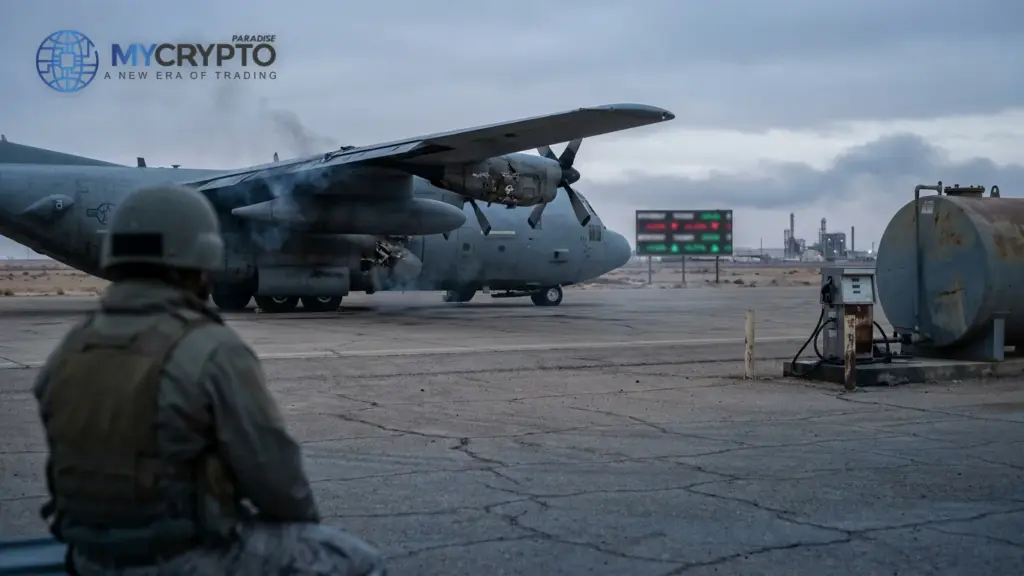
The Middle East war widened overnight, and this time it landed on hardware. Iranian strikes hit the Muwaffaq Salti Air Base in Jordan, also known as the Al-Azraq base, damaging multiple US military aircraft. That is a direct blow to US assets, not a proxy skirmish.
The escalation did not appear from nowhere. Tensions have compounded since the October 7 attacks on Israel and the start of the Gaza war, with Israel fighting Iran-backed militias including Hamas, Hezbollah, and the Houthis. On February 28, 2026, Israel and the United States began a series of strikes against Iran, and the retaliation has spread across the region.
The IRGC, the Islamic Revolutionary Guard Corps, says it targeted four US bases, including Al Udeid in Qatar and Ali Al Salem in Kuwait, plus two US warships and eight other vessels. A strike on a residential area in Tel Aviv killed one civilian woman in her forties and injured 27 others.
The human cost is real. One conflict monitor estimated 276 fatalities over a five-day period, and the fronts keep multiplying.
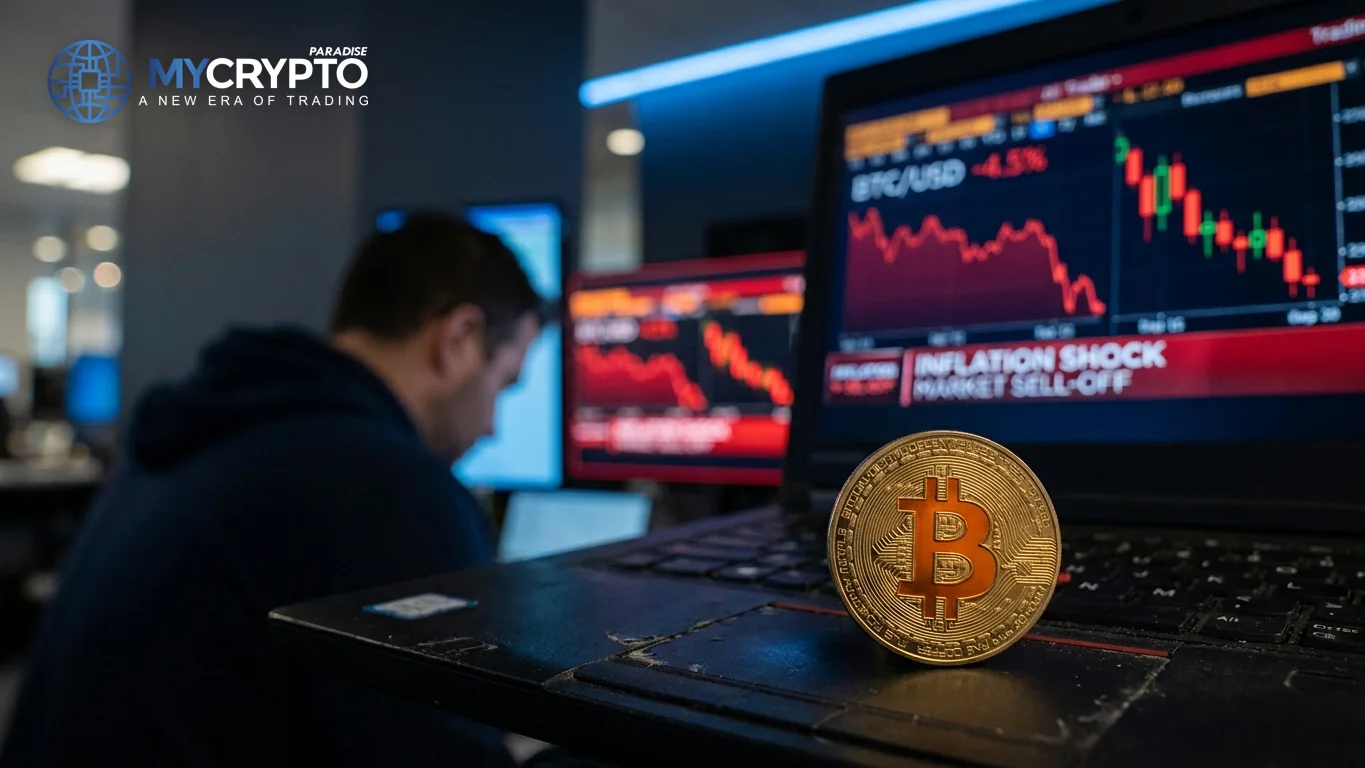
Markets felt it through oil. Prices spiked in recent weeks as US forces struck three Iranian oil tankers and Houthi rebels attacked Saudi oil facilities. Crude is the cleanest transmission line from a war to your portfolio. What is striking is what crypto did with it: almost nothing. BTC traded near $77,321, down 0.8 percent on the day, while ETH ticked higher. A widening war, and the tape shrugged.
Oil is the wire carrying this shock
Oil is the reason a distant war reaches your screen. When crude spikes, it feeds straight into inflation expectations, and that is the variable central banks watch most closely. Higher oil means stickier inflation, and stickier inflation means rates stay higher for longer. That is the macro chain, and it runs against risk assets.
Crypto sits at the far, sensitive end of that chain. BTC and ETH have no earnings and no coupon. They are pure liquidity plays, so anything that keeps money expensive and cautious weighs on them, even without a single crypto-specific headline.
That is why this matters beyond the war itself. The strikes reinforce a risk-off backdrop that was already building through ETF outflows and cautious whales. Geopolitics did not create the headwind. It thickened one that was already there.
Here is the honest part. There is no single confirmed same-day catalyst forcing crypto lower today, so we frame this as an interpretive read, not a proven cause. The war is a fact. The muted price reaction is a fact.
The connection between them is our analysis: a market that ignores a broadening war and a fresh oil spike is a market that has already decided its direction is set by liquidity, not headlines. Fear is not translating into forced selling yet, which means the real move still waits for a liquidity trigger, not a news one.
Why BTC absorbed the war headline first
BTC is the shock absorber, and it absorbed this one. Price held near $77,321 through a widening war and a fresh oil spike, which is unusual behaviour for an asset that supposedly craves chaos hedges. When the biggest, most liquid crypto refuses to break on genuinely bad news, that tells you the sellers who wanted out are largely already out.
ETH did something quietly interesting. It gained on the day while BTC dipped, a minor rotation that shows risk appetite is not fully dead, just selective. Traders nibbled the second-largest asset rather than fleeing the whole complex.
Alts are the tell for later. In a real risk-off cascade, the smaller coins bleed first and hardest, because liquidity drains from the edges inward. Right now that cascade has not started, which is why the tape looks calm. That calm is the trap worth naming. A range-bound market during escalating headlines often lulls retail into adding leverage, betting the worst is priced in.
Our read is that the muted reaction is not strength. It is a market waiting. The liquidity that matters, the sidelined stablecoin reserves, has not moved into crypto, so nobody is stepping in to buy this dip with conviction. Until that changes, every geopolitical shock lands softly on the surface while the real pressure builds underneath, waiting for the level that finally forces hands.
The $58,000 line that decides the next leg
The number to watch is not a war headline. It is $58,000. That was the previous low, and losing it decisively would confirm the deeper correction we have been mapping, opening the path toward the $55,000 to $44,000 zone where the real buyers are expected to appear.
On the way there, $77,700 has already broken as medium-term support. That break is the first crack in the structure, and it flips the burden of proof onto the bulls.
Confirmation of the bearish case looks like this: oil stays elevated, the war keeps widening, and BTC rolls through $58,000 on rising sell volume rather than pausing. That combination would mean the macro headwind finally found its trigger.
Invalidation is cleaner to define. A reclaim of the $82,000 to $88,000 resistance band would flip the bias outright and tell us the correction thesis is wrong.
Watch the divergences too, because they are speaking. On the daily, price is printing higher highs while volume prints lower highs, a classic bearish divergence that says buyers are getting tired even as price grinds up. Underneath, a historical on-chain model shows supply being quietly absorbed at these lows.
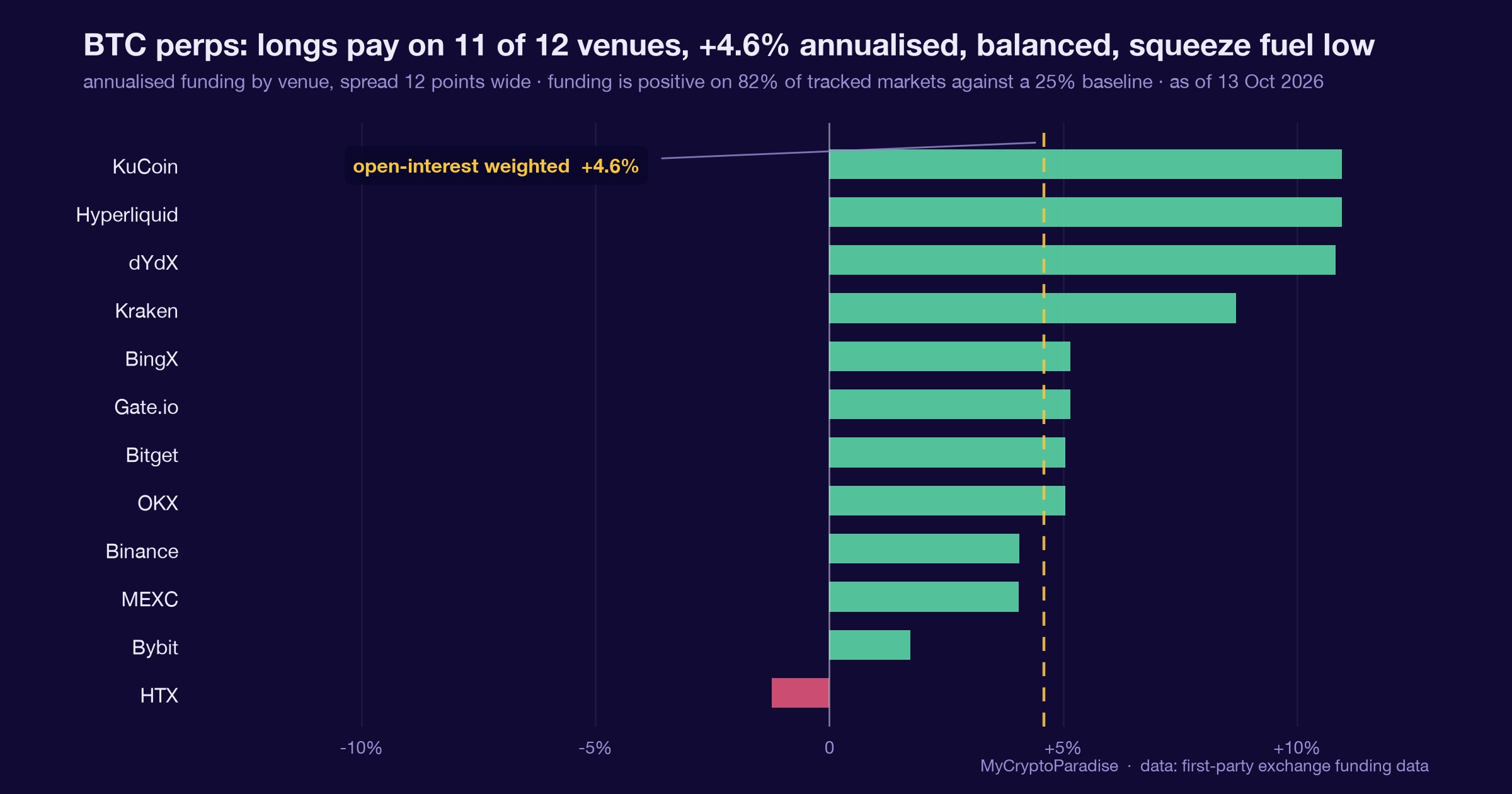
So the two signals to track are simple. First, whether stablecoin reserves start rotating into crypto, the sign smart money is finally engaging. Second, whether retail keeps piling into leveraged longs. If the crowd stays long into a war and a broken support, they are building the very fuel a downside squeeze runs on.
What a calm tape says about positioning
The ParadiseTeam sees a market that is calm for the wrong reasons. A broadening Middle East war, damaged US aircraft, and another oil spike should rattle a fragile market, yet BTC barely flinched near $77,321. That composure is not a bottom signal. It is a market that has not yet been tested at the price where testing actually happens.
Our higher-timeframe bias stays firmly to the downside, targeting a deeper correction into the $55,000 to $44,000 exchange-of-hands zone. This war does not change that map. If anything, it strengthens the case, because it adds a macro headwind while giving retail a scary story to fade.
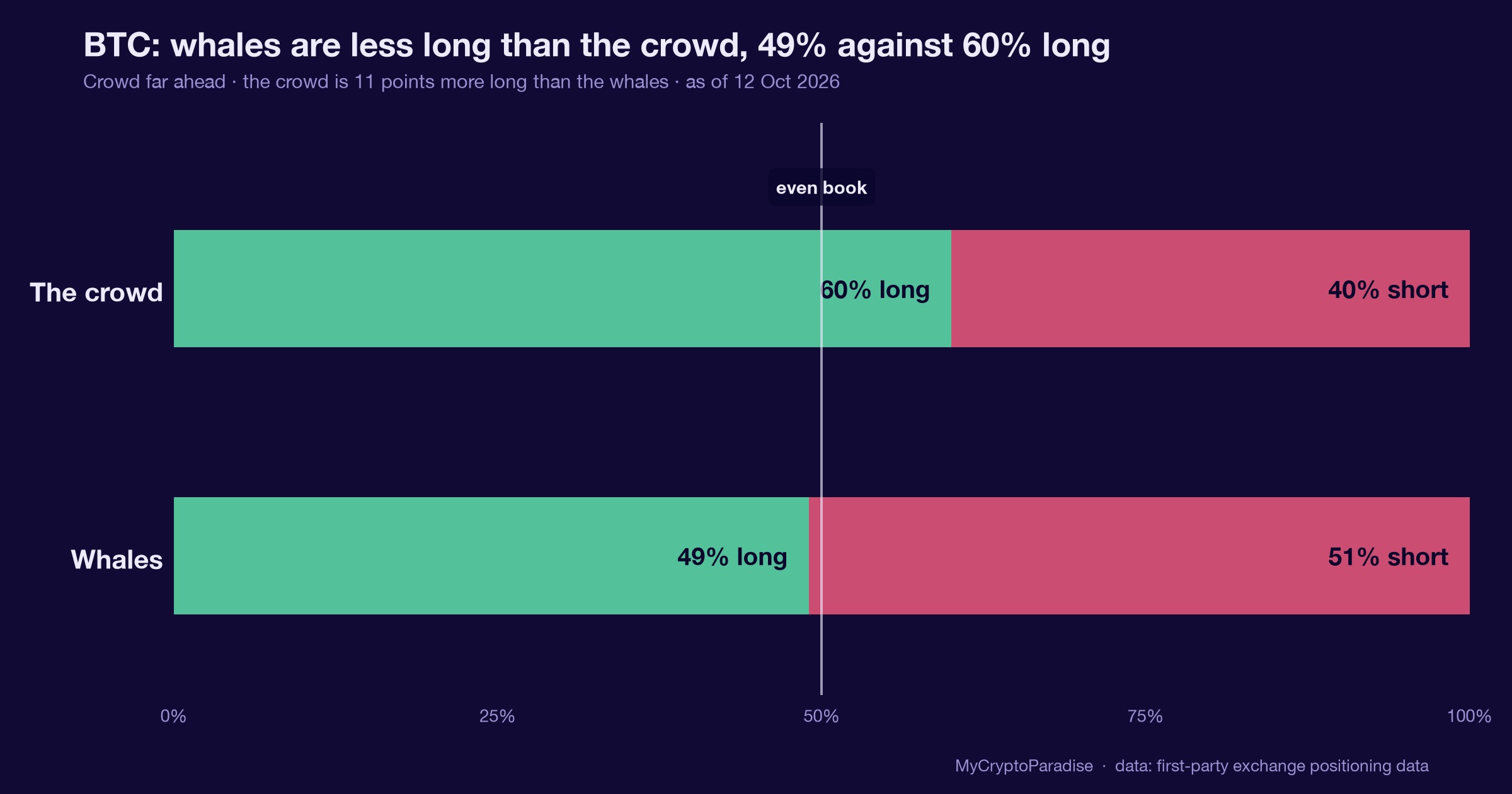
The positioning read is the whole point. Whales are still sitting in stablecoins, reserves untouched, patiently waiting for lower prices. Retail, meanwhile, is stacking leveraged longs, which is exactly the liquidity a downside squeeze feeds on. That is the setup underneath the quiet tape.
With $77,700 already lost, the levels that decide the next weeks are $58,000 below and the $82,000 to $88,000 band above. Below the first confirms the flush. Reclaiming the second invalidates the whole thesis, and we would respect that.
The uncomfortable truth is that markets rarely reward the obvious trade. Everyone expects a war to send crypto soaring as a hedge. It has not, and that gap between the expected reaction and the actual one is where the real information lives.
The read behind this: we framed this story through our own market analysis, Can Bitcoin Hold This Support?
Track it live: our live crypto funding rates and the Crypto Fear and Greed Index both update in real time, so you can watch this shift for yourself.
Related coverage
For exact entries, targets, and stop losses with full risk management, that is what ParadiseFamilyVIP is for. New to reading these moves? Start with our crypto trading strategies guide.
ParadiseTeam is monitoring the market situation closely, and we are taking these developments into consideration while building our trading tactics inside ParadiseFamilyVIP.
Crypto trading involves substantial risk. Prices are volatile and you can lose money. This article is educational and is not financial advice. Past performance does not guarantee future results.
With the war widening and oil spiking, where does BTC head next?
This is how 37 Paradisers are calling it. Tap your call.
No calls on this one yet. Tap yours to be the first.
Free account, no password. Members just sign in.









Join the discussion 3
BTC holding isn't a "shrug." It's speculation by people with no skin in the game. Where's the volume data backing this, please?
man, last time oil spiked like this I kept tryna scalp it, got chopped up good 💀 lesson learned, anyone else?
Honestly, I'm watching the spread between Brent and WTI closer than the price action itself. That's usually the first debit to hit my ledger. 📈