

Listen: the breakdown
Developing story update (September 09, 2026, 02:56 UTC):
The US military has now officially confirmed the ballistic missile launch through US Central Command, moving this from Iran’s own claims into confirmed territory. The stated position remains that no US Navy ships were hit.
Notably, the US has still not acknowledged the second, previously undisclosed attack reported for Monday, which leaves the full scope of the exchange unconfirmed. Crypto markets continue to shrug it off: BTC and ETH are effectively flat, with BTC still capped just under the $79,000 area.
What to watch now: Whether the US acknowledges the unconfirmed Monday attack, and any BTC break of $79,000 resistance.
Developing story update (September 09, 2026, 02:35 UTC):
Update: Our sources now place the flashpoint at the Strait of Hormuz, where a US-Iran standoff was reported on September 5. Alongside the earlier Iranian missile firings at Navy warships, the US side has now been tied to strikes on three Iranian ships, including a tanker near Kharg Island. This puts the confrontation directly on the world’s most important oil chokepoint.
For traders the read is unchanged so far: Bitcoin is holding near 78,800 with a slight 24-hour dip and Ether flat, so the market is still treating this as a contained regional escalation rather than a broad risk-off catalyst. The fact that no US ships were reported hit likely caps the immediate fear premium. Watch the Strait of Hormuz for any move that threatens actual oil flow, since that is the trigger that could probably force a real volatility repricing across crypto and macro.
What to watch now: Any disruption to oil shipping through the Strait of Hormuz that turns a contained clash into a supply shock.
Developing story update (September 09, 2026, 01:30 UTC):
US Central Command has now publicly confirmed that Iran launched ballistic missiles at US Navy ships, closing the earlier gap where the US military had not acknowledged the strikes. This moves the event from one side’s claim to an officially confirmed exchange, which tightens the risk backdrop traders should be watching.
The confirmation also frames the sequence around a direct standoff in the Strait of Hormuz on September 5, a chokepoint for global oil flows. US officials continue to report that no US Navy ships were hit.
What to watch now: Whether official confirmation triggers a formal US response or a shipping disruption in the Strait of Hormuz.
Developing story: This story is still unfolding. We are tracking it and will update this article as more details are confirmed.
Market briefing: Iran has fired ballistic missiles at US Navy warships, including a carrier and destroyers, and Washington answered by sinking five more Iranian tankers. Bitcoin was trading near $78,644, barely moving, which tells us the market is already risk-off.
- Iran's IRGC launched ballistic missiles at a US aircraft carrier and destroyers DDG-119 and DDG-53; US officials say no ships were hit.
- CENTCOM confirmed the launches, and the US military then destroyed five more Iranian oil tankers.
- BTC held near $78,644 with a shrug, which reads as an already-defensive market rather than a calm one.
Iran missile strikes on US Navy warships just escalated a shooting conflict near the world's most important oil lane. So why did Bitcoin barely blink?
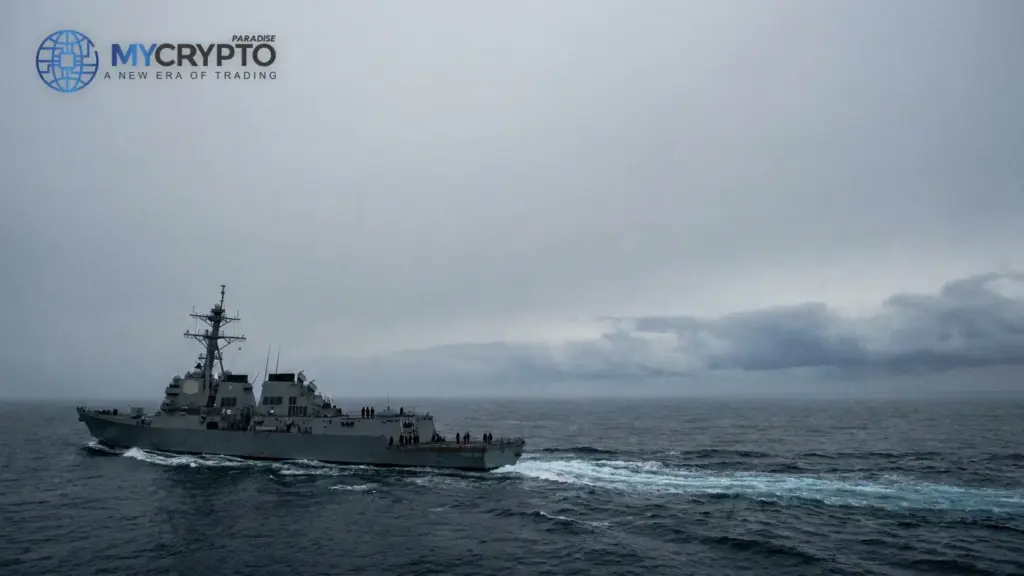
Iran fired ballistic missiles at United States Navy ships. The IRGC Aerospace Force announced on September 5 that it had targeted a US aircraft carrier and a guided-missile destroyer. It named the destroyers DDG-119 and DDG-53 directly.
The missiles flew over the weekend. Then a second, previously undisclosed attack followed on Monday, aimed again at US Navy ships. US Central Command confirmed the launches happened.
Crucially, US officials said no ships were hit. That matters. A missed strike and a direct hit produce very different headlines, and for now this is the former.
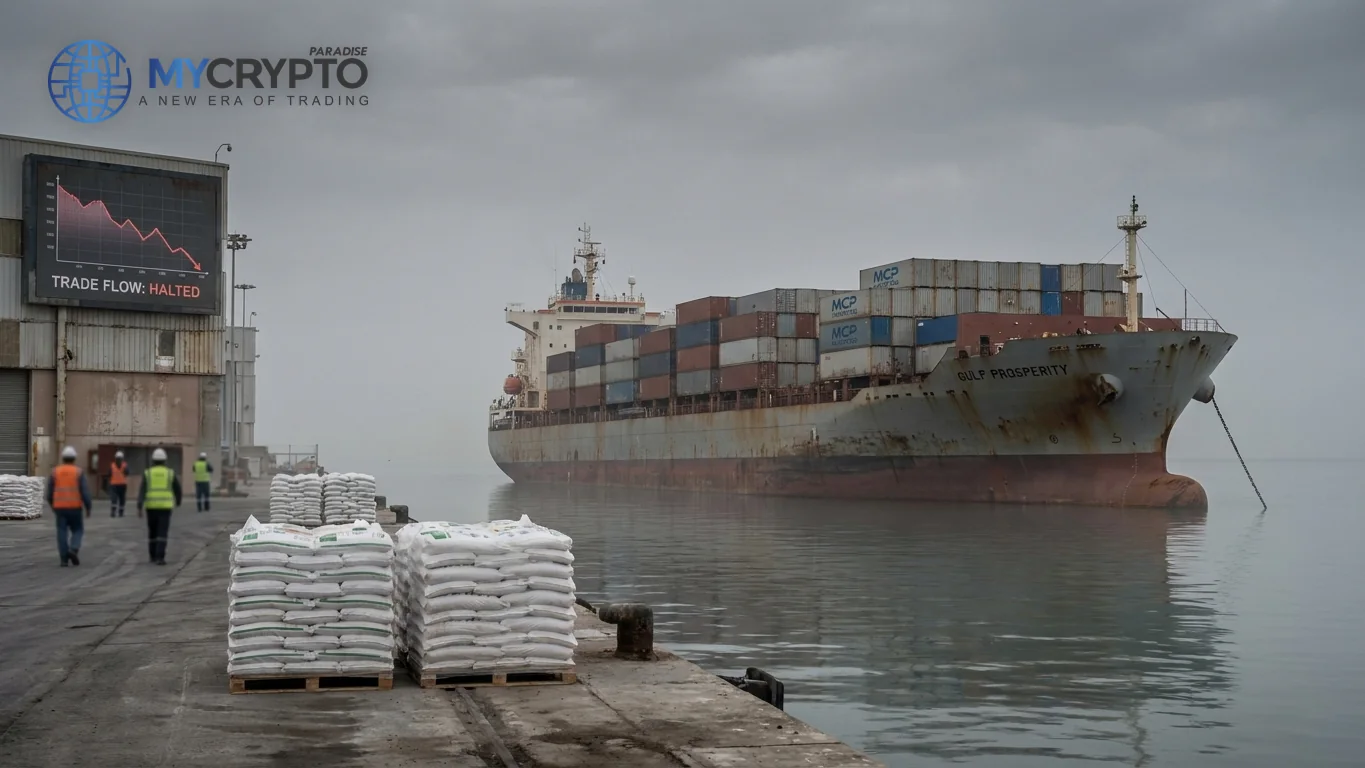
Iran did not frame this as unprovoked. The IRGC said the strikes answered US military actions against Iranian tankers and the enforcement of a naval blockade. Washington's reply arrived fast: the US military destroyed five more Iranian oil tankers after the attacks on its warships. So we have missiles exchanged, tankers sinking, and a blockade being enforced with live fire near the Strait of Hormuz. On paper, that is a serious escalation for global risk.
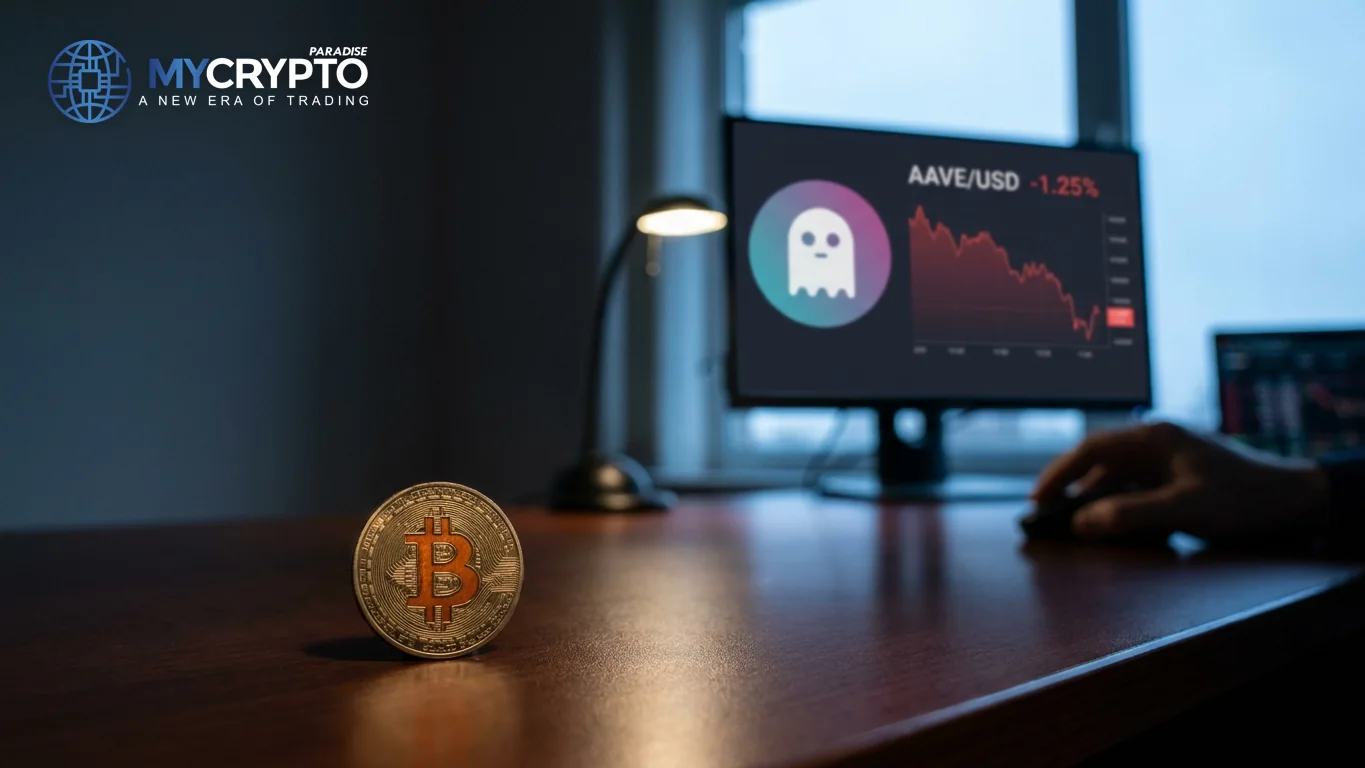
And yet crypto barely moved. Bitcoin was trading near $78,644, down less than one percent on the day, while Ether sat around $2,490 and essentially flat. Markets that are genuinely surprised tend to gap. Markets that are already braced tend to yawn. This one yawned, and that reaction is the real story worth reading closely here.
How a shipping-lane conflict reaches your portfolio
The transmission runs through oil, not tokens. Missiles near the Strait of Hormuz threaten the passage a large share of seaborne crude moves through. When that lane looks contested, oil risk premium rises, and so do inflation expectations.
Higher inflation expectations are the enemy of speculative assets. They push back the timeline for easier money and keep real yields firm. Crypto, sitting at the far end of the risk curve, feels that pressure first and hardest.
There is also a pure liquidity effect. Open military conflict between major powers drives a flight to perceived safety. Capital rotates toward cash, short-dated government paper, and sometimes gold, draining liquidity from anything that trades on hope and leverage.
Bitcoin still trades as a risk asset in these moments, not a haven. The digital-gold narrative is compelling in a press release and unreliable in a crisis tape. When investors de-risk across the board, they sell what they can, and crypto is liquid enough to be sold quickly.
The honest caveat: no single confirmed same-day catalyst is driving the tape, so this is our interpretation, not a proven cause. The muted price reaction supports that reading. If this event were a clean bearish trigger, we would expect a sharper flush.
Instead it acts as an accelerant on an existing downtrend. It does not start the fire. It quietly feeds one that was already burning under the surface.
The muted tape and what a shrug really means
A geopolitical shock usually hits Bitcoin first. BTC is the deepest, most liquid crypto asset, so global risk-off flows pass through it before anything else. Here, that first hit was small: near $78,644, down under one percent.
That calm is not comfort. A market that absorbs missile strikes with a shrug is often a market that has already sold and is now thinly bid. The buyers who would panic later may have left earlier.
Ether told the same story, flat near $2,490. When ETH refuses to lead higher on any excuse, the appetite for duration and beta is simply absent. That is a defensive posture, not a coiled spring.
Alts are where the real damage tends to land. In a genuine liquidity drain, capital retreats up the quality ladder, out of small caps, into majors, then out of crypto entirely. Thin order books mean small sell flows move price a lot.
Watch cross-exchange behaviour rather than one screen. If BTC dominance grinds higher while alts bleed, that confirms de-risking, not rotation. Retail often reads a flat Bitcoin as safety and steps into alts, right as liquidity is leaving them.
The setup is asymmetric. Upside needs a de-escalation headline and fresh demand that is currently missing. Downside needs only continuation of what is already in motion. In a market primed bearish, the path of least resistance stays lower until the tape proves otherwise.
The escalation triggers that flip crypto risk
The oil tape is your leading indicator now, not the crypto chart. If crude spikes on a Hormuz disruption or a confirmed direct hit on a US ship, expect a delayed risk-off wave to reach Bitcoin. A calm oil price keeps this contained.
Escalation is the invalidation of the calm. A US ship actually struck, a full blockade, or a broadening of targets would turn a shrug into a scramble. That is the scenario that forces the flush this market has so far avoided.
De-escalation is the bullish off-ramp. Back-channel talks, a pause in tanker seizures, or a quiet return to the status quo would let risk premium bleed out. Crypto could then relieve to the upside simply because a fear that never fully priced in gets removed.
Watch Bitcoin's behaviour on any spike in volatility. A sharp wick down that is bought back fast suggests real demand waiting below. A slow grind lower with no bounce suggests there is nobody home to catch it.
Open interest, meaning the total value of outstanding leveraged positions, is the other tell. Rising open interest into a falling price means fresh shorts pressing, and those can squeeze violently on any peace headline. Falling open interest means positions are being closed and conviction is thin.
For now, treat rallies as suspect and breakdowns as credible. The burden of proof sits with the bulls until escalation resolves or demand returns.
Why this shock lands on an already-heavy market
The ParadiseTeam reads this through an existing bearish lens, and this event fits it rather than breaks it. Our working bias has been a macro bear continuation, with real demand absent until a capitulation lower. This strike does not change our structure; it reinforces it. A genuinely bullish market absorbs bad news and rips. This one absorbed missile strikes and stayed flat near $78,644, which reads as heavy, not resilient.
We are not treating $78K as strong support to accumulate into. Smart money, on our read, is still sidelined, waiting for a flush that clears trapped longs and resets sentiment. The zone we keep circling for that reset sits far lower, toward the high $50Ks and, in a deeper capitulation, the mid $40Ks.
Retail is doing the opposite of us. A flat Bitcoin during a war headline feels safe, so dip-buyers step in early. Buying stability that has not been tested is how tops in confidence become bottoms in patience.
The mechanism to watch is where stops sit. Below recent lows lies a pool of liquidity that a real escalation could reach for. That is a classic place for a bearish event to trigger the exact stops that fuel the next leg.
For now the ParadiseTeam favours patience over positioning. Probabilities, not promises: we would rather buy proven demand after a flush than defend a level a shooting war is leaning on.
Track it live: our Crypto Fear and Greed Index and the live crypto funding rates both update in real time, so you can watch this shift for yourself.
Related coverage
For exact entries, targets, and stop losses with full risk management, that is what ParadiseFamilyVIP is for. New to reading these moves? Start with our crypto trading strategies guide.
ParadiseTeam is monitoring the market situation closely, and we are taking these developments into consideration while building our trading tactics inside ParadiseFamilyVIP.
Crypto trading involves substantial risk. Prices are volatile and you can lose money. This article is educational and is not financial advice. Past performance does not guarantee future results.
After Iran's strikes on US Navy ships, where does Bitcoin go from here?
This is how 42 Paradisers are calling it. Tap your call.
No calls on this one yet. Tap yours to be the first.
Free account, no password. Members just sign in.






Join the discussion 2
Ehh, always look for the reaction on the 15m. 🧐👀 My charts barely twitched, so it's a non-event for me. 🤷🏾♀️📉
The muted reaction is notable. What are the relevant on-chain transaction volumes for the past 24 hours?