

Listen: the breakdown
Update on this developing report (September 11, 2026, 06:37 UTC):
Iran and Gulf states to meet for talks on Strait of Hormuz agreement, FT reports
Developing story: This story is still unfolding. We are tracking it and will update this article as more details are confirmed.
Market briefing: Iran's IRGC claims it struck a US military vessel in the Strait of Hormuz, and the US says it destroyed three Iranian tankers in return. Crypto barely moved. BTC sits near $79,973, holding for now inside a bearish macro backdrop.
- IRGC claims it hit a US military vessel and targeted tankers in the Strait of Hormuz
- US military says it destroyed three Iranian crude oil tankers in retaliation
- BTC near $79,973 and ETH near $2,502 barely reacted, no panic priced in yet
Iran's IRGC says it struck a US vessel in the Strait of Hormuz, yet crypto shrugged. If a military clash cannot move price, what exactly is the market waiting for?
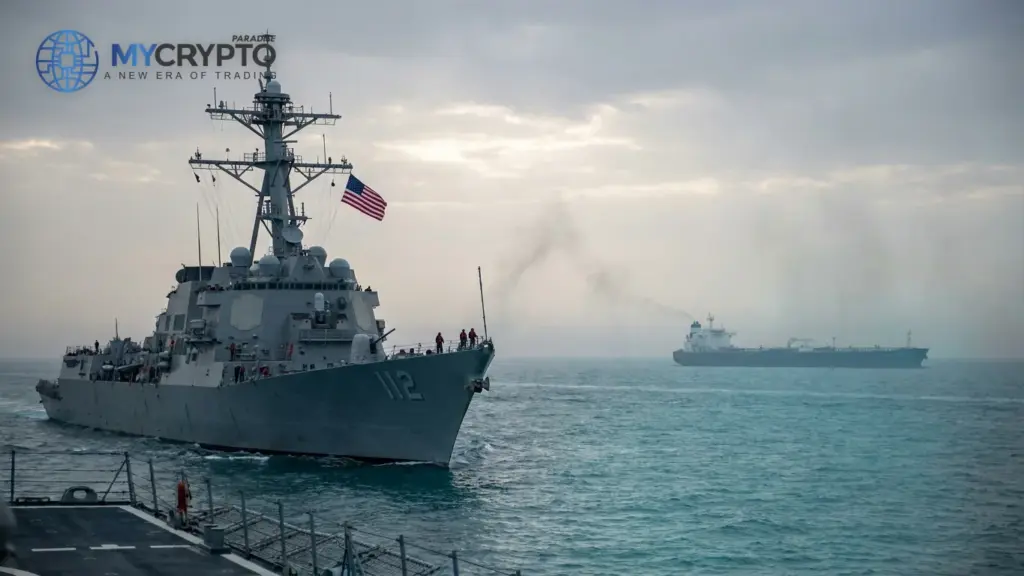
Iran's Islamic Revolutionary Guard Corps claims it attacked a US military vessel in the Strait of Hormuz. The IRGC described the target as remotely operated or unmanned, intercepted while entering what it called a protected area.
The claims did not stop there. The IRGC says it also targeted three oil tankers on an unauthorized route through the strait, plus three more vessels it described as US affiliated in other areas.
The US military did not stay quiet. It states it struck and destroyed three Iranian crude oil tankers in retaliation for attacks on its warships. Two narratives, one of the most sensitive shipping corridors on earth.
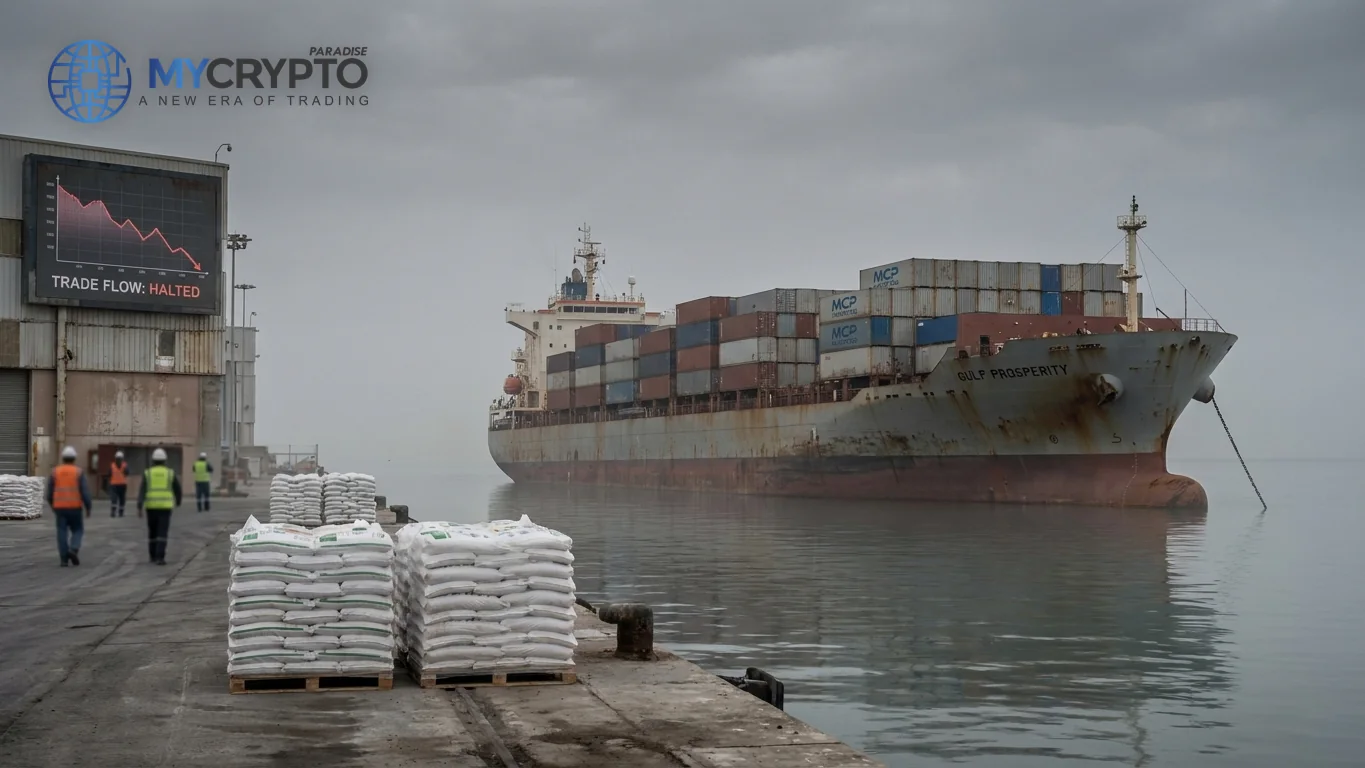
The Strait of Hormuz carries a large share of the world's seaborne oil. A confirmed military exchange there is the kind of headline that usually jolts risk assets and energy markets in the same breath.
And yet, crypto barely noticed. BTC traded near $79,973 with a 1-hour change of -0.1%. ETH sat around $2,502 with a flat hour. Numbers that look like a quiet Tuesday, not a conflict in a critical chokepoint.
That gap between the headline and the tape is the real story. Markets price war when they believe it changes supply or policy. So far, traders are treating these claims as noise inside a downtrend that already had its mind made up.
A chokepoint clash meets a risk-off tape
Geopolitical shocks matter to crypto through one main channel: global risk appetite. When a conflict threatens oil supply, energy prices can rise, inflation expectations firm, and central banks lean less friendly. That combination usually pulls capital away from speculative assets.
The Strait of Hormuz is the pressure point. A large slice of global crude moves through it daily. A credible threat to that flow can lift energy costs and tighten financial conditions, which is the opposite of what risk assets want.
Here is the honest part. There is no single confirmed same-day catalyst driving crypto right now, so we frame the macro reaction as our interpretation, not a proven cause. This event does not explain today's price by itself.
What it does is reinforce an already fragile backdrop. Risk-off conditions tend to reward perceived safe havens and punish leverage. Crypto still trades as a high-beta risk asset, so an escalating Iran-US conflict adds weight to the bearish side of the scale.
The muted price response tells its own story. If this were a genuine black swan, we would expect a violent repricing. Instead we get a shrug, which suggests the market either doubts escalation or has already positioned defensively.
Either way, the Strait of Hormuz headline does not rescue a weak structure. It quietly confirms why patient capital is in no hurry to buy.
Why the tape stayed calm under BTC and ETH
Start with the reaction, because it is the tell. BTC moved -0.1% on the hour and holds near $79,973. ETH is flat near $2,502. No capitulation, no spike in forced selling, no obvious safe-haven bid into crypto either.
That calm matters more than the headline. A real war-premium shock cascades fast: BTC leads lower, ETH follows with a wider swing, and alts get hit hardest as liquidity drains toward the majors. None of that is happening today.
Instead, liquidity is sitting on its hands. Thin reaction to a serious geopolitical claim usually means positioning is already light, or that traders simply do not believe the escalation sticks. Both point to a market waiting, not fleeing.
For alts the read is unforgiving. In a risk-off drift with no fresh inflows, they bleed relative strength even without a dramatic crash. Capital rotates up the quality curve toward BTC, and the long tail underperforms.
There is a dry irony here. A tanker exchange in the world's key oil chokepoint, and the asset class that markets itself as digital gold does not so much as flinch. So the impact is not a crash. It is the absence of a bid. A structurally weak market that cannot rally on calm and does not panic on conflict is a market grinding, and grinding tends to favor the downside until proven otherwise.
Escalation signals versus a fast de-escalation
The first thing to watch is whether these claims harden into sustained conflict or fade within days. A one-off exchange that de-escalates keeps crypto in its current range. Repeated strikes near the Strait of Hormuz would raise the odds of a genuine risk-off repricing.
Watch oil and broad risk sentiment as the early tell. If energy prices climb and equities wobble on escalation headlines, crypto's high-beta nature means it likely follows lower, not higher.
On the chart, the levels do the confirming. A clean loss of near-term support with rising volume would validate the bearish case and open the path toward deeper lows. That is the invalidation of any bounce hope.
The other side is honest too. A decisive reclaim of the key higher resistance zone, holding on a retest, would tell us the structure is repairing and the risk-off read is wrong. Until that happens, we treat strength as suspect.
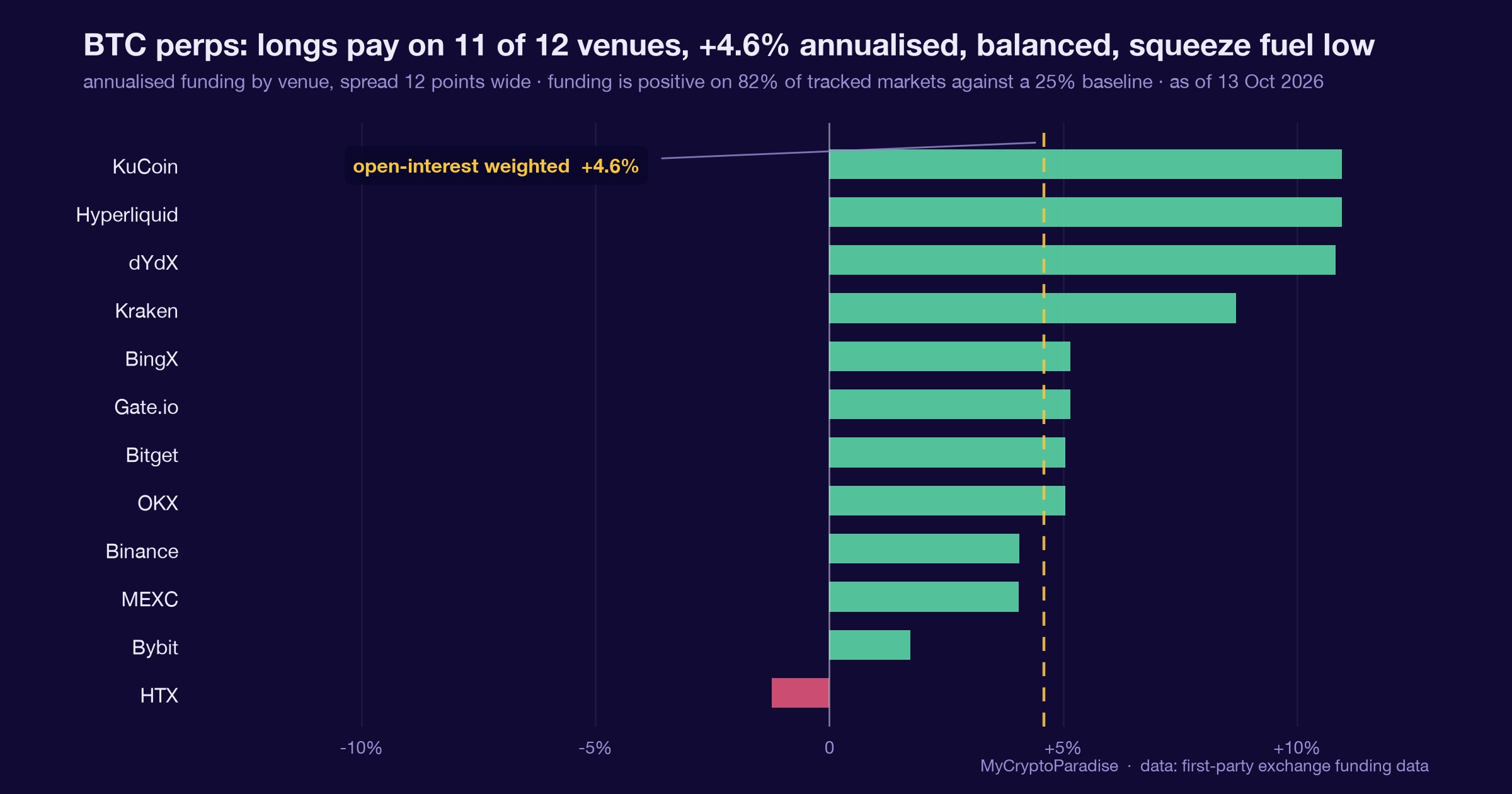
Watch open interest (OI, the total value of open derivatives contracts) and funding for stress. A calm spot tape hiding crowded leverage is how quiet days turn violent. If OI builds into resistance while price stalls, that is distribution, not accumulation.
Finally, watch whether volume ever shows up. This move needs participation to mean anything. Low-volume drift in both directions keeps the range intact and keeps patient capital exactly where it wants to be: waiting.
What this shock means for MCP's bearish map
The ParadiseTeam reads this conflict as pressure on an already bearish map, not a new trend by itself. BTC near $79,973 is leaning on the $79,000 area as a temporary defense, and that is a thin cushion, not a floor.
The overhead problem has not changed. The $82,000 to $88,000 weekly zone remains heavy resistance, and until price reclaims it decisively, we treat any war-headline bounce as a rally to sell rather than a bottom to buy.
Stops tell the story of who is trapped. Sell stops sit stacked below the prior low near $58,000, and a break there points toward the $44,000 region we view as the real exchange-of-hands zone. That is where a capitulation flush would let patient capital step in.
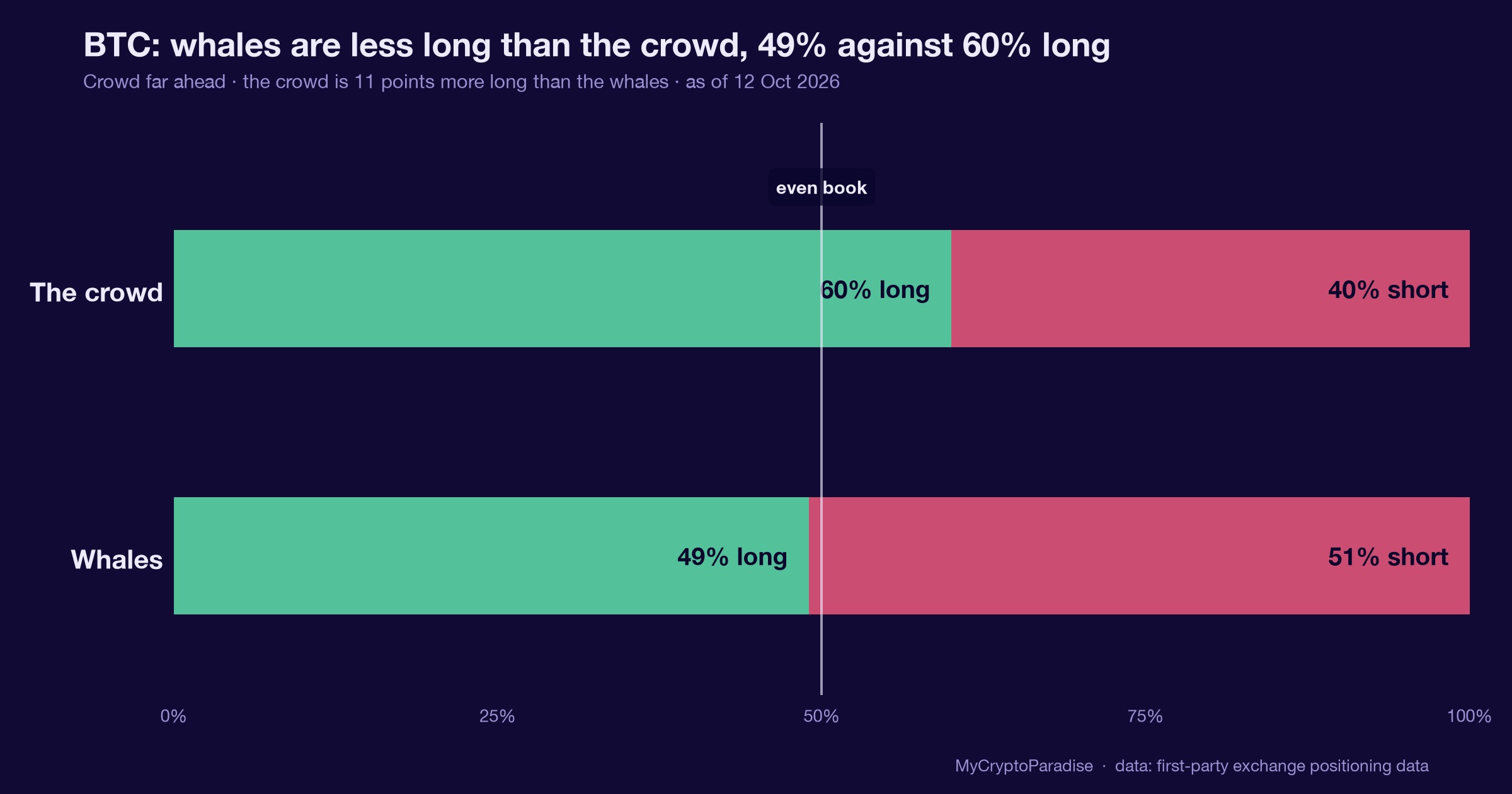
The muted reaction fits our smart-money read. There is no sign of aggressive absorption of selling here. Smart money is still waiting for a proper capitulation event, not chasing a geopolitical headline that the tape itself is ignoring.
Retail remains the mirror image, leaning bullish while momentum leans down. That mismatch is exactly why we stay defensive.
What would change our mind is simple and specific. A clean daily reclaim of the $82,000 to $84,000 level, holding on a retest with real volume, would invalidate the bearish structure. Absent that, the Strait of Hormuz shock is one more reason we expect lower prices before higher ones. Probabilities, not certainty.
The read behind this: we framed this story through our own market analysis, Bitcoin Whale Shorts $51M: What Does He Know?
Track it live: our Crypto Fear and Greed Index and the live crypto funding rates both update in real time, so you can watch this shift for yourself.
Related coverage
For exact entries, targets, and stop losses with full risk management, that is what ParadiseFamilyVIP is for. New to reading these moves? Start with our crypto trading strategies guide.
ParadiseTeam is monitoring the market situation closely, and we are taking these developments into consideration while building our trading tactics inside ParadiseFamilyVIP.
Crypto trading involves substantial risk. Prices are volatile and you can lose money. This article is educational and is not financial advice. Past performance does not guarantee future results.
Where does BTC head next as Iran-US tensions simmer?
This is how 30 Paradisers are calling it. Tap your call.
No calls on this one yet. Tap yours to be the first.
Free account, no password. Members just sign in.



Join the discussion 2
yeah, it's kinda what I expected, but it helps my nerves to see the theory confirmed in real time when I'm watching my own tiny portoflio.
wow, i was watching the news feeds and the charts pretty close after those headlines dropped... seems like we're still holding steady, which is good to see 🤔. glad the market aint spiraling...