


Listen: the breakdown
Market briefing: IoTeX told its delegates to patch a 9.8-severity Linux kernel bug that can grant remote root, echoing an earlier Cardano warning. BTC traded near $78,606 and ETH near $2,308.75, both green, with no risk-off reaction.
- CVE-2026-98432 is a critical Linux kernel flaw scored 9.8 out of 10
- IoTeX and Cardano both told node operators to patch, with no exploit reported
- BTC held near $78,606 and ETH near $2,308.75, showing zero risk-off
A critical Linux kernel bug has IoTeX node operators racing to patch before anyone gets hurt. But does a 9.8-severity advisory actually move the price, or is this just plumbing?
IoTeX issued a security advisory to its delegates and node operators. The target is CVE-2026-98432, a critical Linux kernel flaw scored 9.8 out of 10. The team warned it could hand a remote attacker root access over TCP. Its instruction was blunt: patch today.
The bug is a use-after-free in the kernel's IPv4 TCP connection-setup code. A remote, unauthenticated attacker can reach it by sending a crafted packet to a publicly reachable port. That matters because validator and delegate servers listen on open ports by design. Kernels dating back to version 4.4 are affected, across multiple distributions including Ubuntu.
IoTeX is not alone here. Days earlier, Cardano's coordination body warned its stake pool operators about the same flaw, citing crashed or in some cases compromised block-producing servers. Stable kernel fixes already shipped on October 11 and 15. So this is a patch notice, not a breach.
One honesty note belongs up front. The IoTeX exposure rests on IoTeX's own statement, and no independent reporting in our gathered evidence confirms it specifically. The underlying kernel bug is real and well documented. Whether IoTeX nodes were ever genuinely at risk is the team's own assessment, and we are flagging that rather than dressing it up as settled fact.
A kernel flaw reaches validator infrastructure
A 9.8 severity score is about as high as the scale goes. It means remote, unauthenticated, and easy to weaponise once a reliable exploit circulates. For a public blockchain, the attack surface is every node facing the internet. Validators and delegates are, by job description, machines that listen for connections.
The transmission here runs through infrastructure, not money flows. A kernel flaw does not drain liquidity or shift macro conditions. It threatens uptime and integrity at the node layer. If enough block-producing servers crash or get compromised, a chain can halt or fork.
That is why the advisories matter more than the headline number. Cardano and IoTeX are doing the unglamorous work: telling operators to patch before anyone has to explain an outage. The fixes shipped weeks ago, so the remaining gap is purely operational, meaning which operators actually updated.
The dull truth of crypto security is that most incidents are patches nobody applied.
For traders, the distinction is everything. This is a precautionary notice, not a realised event. No outage, no chain halt, and no compromised delegate appears in the record. So the structural read is risk reduction, assuming operators listen, rather than a fresh threat landing on the tape and forcing anyone to reposition.
Majors priced no risk-off from this
BTC told the clearest story by doing nothing unusual. It traded near $78,606, up about 1.2% on the day, with flat hourly movement. ETH sat near $2,308.75, up 1.7%. Neither chart shows the signature of a risk-off scramble.
That silence is the signal. A genuine systemic threat shows up as widening ranges, funding swings, and a sudden bid for safety. Instead both majors drifted green inside normal ranges. The market read this as housekeeping, and on the facts it was right to.
Liquidity never cascaded because there was nothing to cascade from. BTC is the risk anchor, and when it stays calm, ETH and the alts take their cue from it. No forced selling, no liquidation spiral, no flight from the node-heavy proof-of-stake names.
Any real impact would be idiosyncratic, not systemic. IOTEX and ADA are the tokens with direct node exposure. Yet IOTEX is not visibly trading on this advisory at all, which tells you the crowd sees a memo, not an emergency.
Infrastructure risk and liquidity risk are different animals. This one stayed in its cage.
Exploit reports, not advisories, move tokens
The advisory itself is not the catalyst. What would actually move a token is evidence that unpatched operators got exploited. Watch for follow-up reports of node downtime, a chain halt, or a compromised block producer on either network. That is the line between a memo and an incident.
Confirmation of trouble would look specific and operational. A measurable drop in active delegates. Missed blocks. An IoTeX or Cardano status update acknowledging an outage. Any of those would justify repricing IOTEX or ADA on their own merits, separate from BTC.
Invalidation is simpler and more likely. Operators patch, the kernel fixes propagate, and the story dies quietly, as these usually do. Silence over the coming days is the healthy outcome for uptime, even if it makes for a boring headline.
Keep one eye on the broader tape too. If BTC and ETH stay green with tight ranges, this never graduated from plumbing to price. A sudden risk-off move, by contrast, would almost certainly trace to something larger than a kernel CVE, not to this advisory.
The thing to fear is the exploit nobody announced, not the patch everybody did.
Reading an infra scare against the $79K zone
The ParadiseTeam frames this the way our standing lens frames hacks: a catalyst at most, never a cause. Market structure sets the move before the headline arrives. A patch advisory with no exploit does not touch BTC's levels, and we are not treating it as if it does.
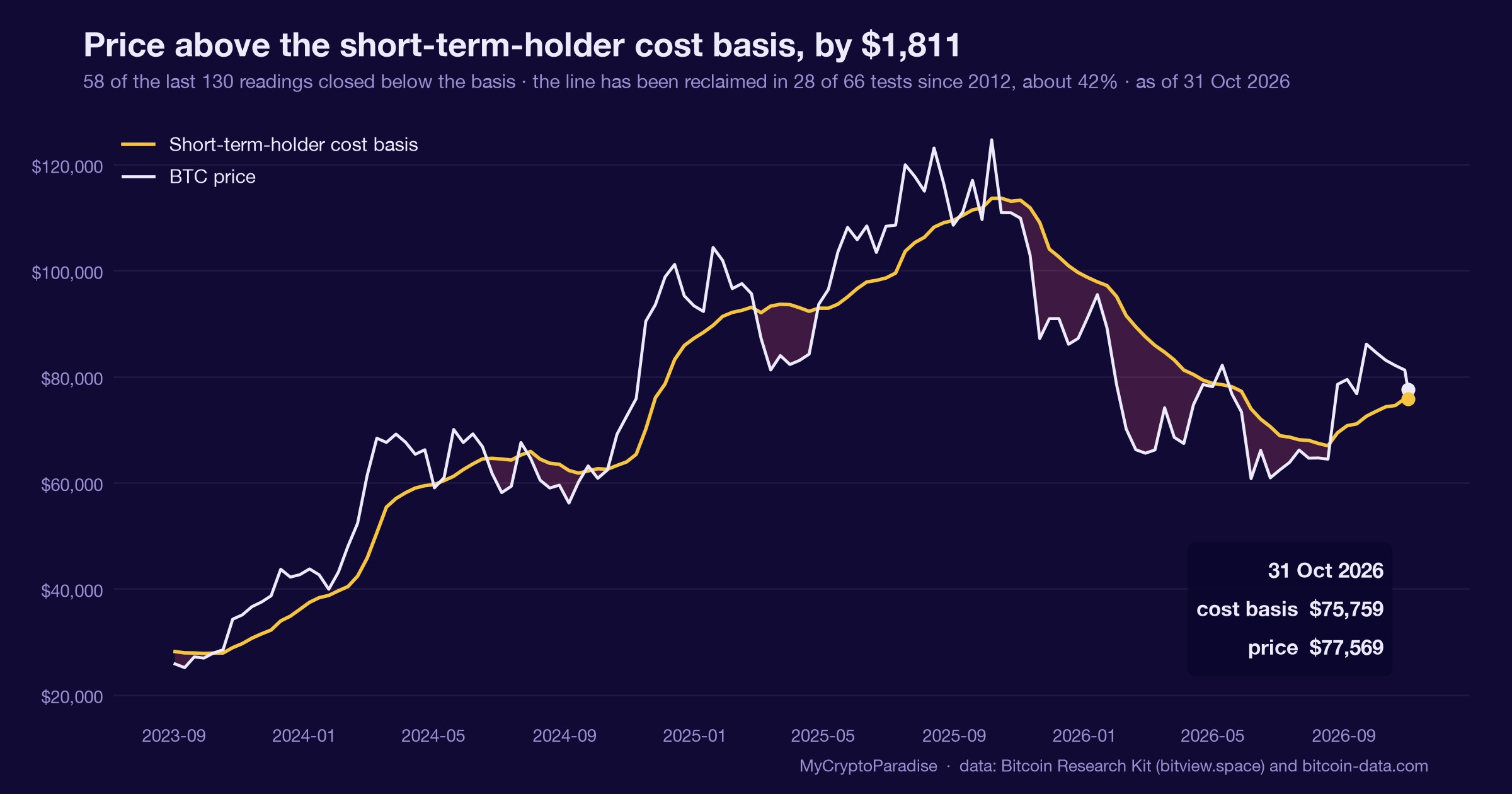
Ground it in price. BTC was trading near $78,606 as of the brief, sitting just under the $79,000 zone that once acted as support and now reads as neutral. That former support turned possible resistance is the level we actually care about, and a kernel bug does not change where it sits.
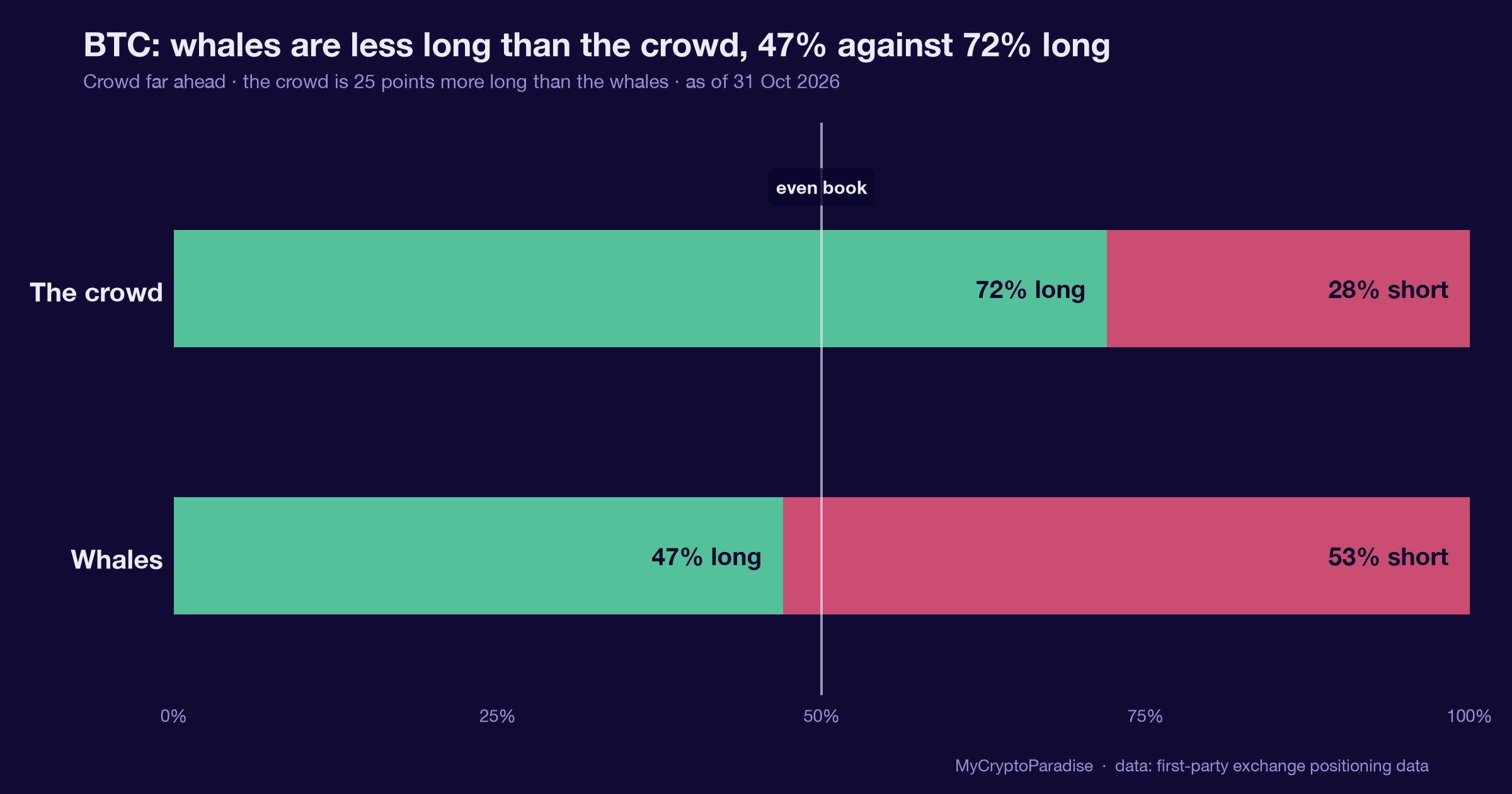
Our stance stays short-term neutral-to-cautious and system-driven. We de-risked well before this, and tracked whale positioning had already flipped short ahead of the recent volatility. Smart money repositioned on structure, not on advisories like this one.
So the honest insight is a non-event for positioning. Reclaiming $79,000 as resistance would raise the odds of a push toward the first-wave top. Failing it keeps the cautious stance intact. This story sits outside that question entirely.
Retail hunts for a reason in every headline. Sometimes the plumbing is just plumbing.
The read behind this: we framed this story through our own market analysis, Binance Hack: Is Bitcoin's Small Drop Bullish?
Track it live: our Crypto Fear and Greed Index and the crypto liquidation heatmap both update in real time, so you can watch this shift for yourself.
Related coverage
For exact entries, targets, and stop losses with full risk management, that is what ParadiseFamilyVIP is for. New to reading these moves? Start with our crypto trading strategies guide.
ParadiseTeam is monitoring the market situation closely, and we are taking these developments into consideration while building our trading tactics inside ParadiseFamilyVIP.
Crypto trading involves substantial risk. Prices are volatile and you can lose money. This article is educational and is not financial advice. Past performance does not guarantee future results.
Does this kernel bug end up moving IOTEX or ADA at all?
How 1 Paradiser is calling it
The first call is still open
Free account, no password. Members just sign in.










Join the discussion
No comments yet. Members, share how you are reading this.