

Listen: the breakdown
Developing story update (September 28, 2026, 19:03 UTC):
Our sources indicate that while reports of Iran agreeing to halt uranium enrichment persist, there is still no official confirmation from Tehran. This suggests the initial report from Al Hadath remains unverified by a primary party.
Diplomatic efforts continue, with Qatar and Pakistan acting as mediators. However, Washington and Tehran reportedly remain divided on the specific terms and sequencing of any potential agreement, highlighting ongoing hurdles.
Further developments include the arrival of US fighter jets in Israel, though security sources downplay this as an escalation. Separately, 8 US Marines were reportedly injured in an Iranian attack near Hormuz earlier this month, underscoring continued regional tensions.
What to watch now: Traders should watch for official confirmation from Tehran and any concrete progress from Qatari and Pakistani mediation efforts.
Developing story: This story is still unfolding. We are tracking it and will update this article as more details are confirmed.
Market briefing: Iran has agreed to halt uranium enrichment for US sanctions relief, and oil turned negative on the day. Bitcoin barely flinched near $84,035.
- Iran agreed to halt uranium enrichment in exchange for US sanctions relief.
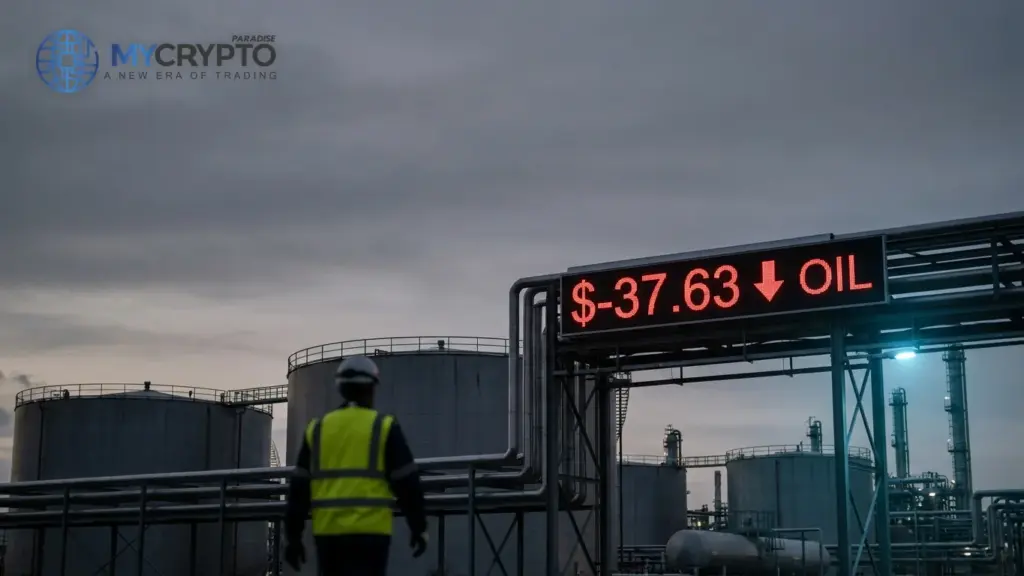
- WTI crude oil turned negative on the day as the geopolitical risk premium drained.
- Bitcoin held near $84,035 and Ethereum near $2,709, showing little reaction.
Iran agreed to halt uranium enrichment for US sanctions relief, and oil fell hard. So why did Bitcoin barely move on the same headline?
Iran has agreed to halt uranium enrichment in exchange for United States sanctions relief. The agreement follows earlier signals that President Trump was willing to release frozen Iranian funds and ease sanctions in return for concrete steps on the nuclear program. That is a real de-escalation. A months-long source of Middle East risk premium just softened, at least on paper.
Traditional markets answered fast. WTI crude oil turned negative on the day, giving back its geopolitical fear bid almost immediately. When the war premium leaves oil, it usually leaves in a hurry.
Crypto, by contrast, mostly shrugged. Bitcoin traded near $84,035, down about 0.5 percent over 24 hours but up slightly on the hour. Ethereum sat near $2,709, quietly green on the day. No panic, no melt-up, just a market that read the headline and stayed roughly where it was.
The agreement is still developing. Diplomatic frameworks announced in one news cycle have a long history of looking very different a month later, and enforcement details on enrichment and frozen funds remain thin.
But the price behavior tells its own story. Oil, tied directly to Gulf supply, cared a great deal. Bitcoin and Ethereum, whose flows are driven far more by liquidity, rates, and positioning, treated the same news as background noise. That gap is the actual story here, and it is worth understanding rather than forcing a reaction that the tape does not show.
How a war premium leaving oil reaches crypto
The transmission from this headline to crypto runs through oil and inflation, not through any direct crypto lever. Lower oil eases input costs across the economy. That is disinflationary at the margin, and disinflation is what lets central banks think about easier policy.
Easier policy, in theory, supports risk assets like Bitcoin. So the second-order case for crypto is mildly constructive: less geopolitical stress, cheaper energy, a softer inflation path. But second-order is the key phrase. The chain from an Iran enrichment halt to Bitcoin liquidity is long and full of leaks. Each link, from oil to inflation prints to rate expectations to actual flows, dilutes the signal.
That is why crypto can ignore a headline that moves oil sharply. Oil sits one step from the event. Bitcoin sits four or five steps away, behind a wall of variables that matter far more day to day.
There is also the reduced-risk-premium angle. When a geopolitical threat fades, safe-haven bids fade with it. Some traders have argued Bitcoin carries a haven bid during conflict. If that were dominant here, de-escalation would pressure it. Instead it held. That absence of reaction quietly undercuts the idea that this particular news drives crypto in either direction.
The honest read is that no single confirmed catalyst is moving crypto today. This de-escalation is real, but its effect on Bitcoin is an interpretation, not a mechanism you can point to on the chart.
Oil reacts sharply while Bitcoin stays flat
Follow the liquidity and the muted reaction makes sense. The clearest impact landed in oil, which turned negative on the day as the risk premium drained out. That is a direct supply-side response to a Gulf de-escalation.
Bitcoin, the top of the crypto liquidity stack, absorbed the news without a trend change. Near $84,035, it stayed inside its recent range, down a fraction on the day but firmer on the hour. No liquidation cascade, no breakout.
Ethereum behaved the same way, holding near $2,709 and slightly green over 24 hours. When the majors barely move, alts have no fresh fuel to run on either. Nothing in this event redirected capital toward smaller caps.
That flat response is itself information. A genuine liquidity shock, an inflow wave, an ETF decision, a supply shock, tends to show up first as a sharp BTC move, then ETH, then a scramble in alts. None of that fired here.
So the read is decoupling, at least for this headline. Crypto priced the Iran news as macro texture, not as a driver. Traders positioned for a haven unwind or a risk-on rip on this story alone would have found the tape stubbornly unhelpful.
The cleaner interpretation: crypto is currently trading its own book. Rates, positioning, and internal flows dominate. A diplomatic breakthrough that reshaped the oil curve simply did not reshape the order book for Bitcoin or Ethereum in any measurable way today.
The prints that would make crypto care
The first thing to watch is durability. This agreement is still developing, and diplomatic halts can stall as fast as they arrive. If enrichment actually stops and frozen funds move, the disinflation story gains weight. If the framework unravels, oil's risk premium can snap right back.
Watch oil as the live tell. Sustained lower crude keeps feeding the softer-inflation narrative that could, over weeks, ease financial conditions. A sharp reversal in oil would signal the market doubts the deal.
For crypto specifically, the confirmation is indirect. It shows up in inflation data and rate expectations, not in the Iran headline itself. Watch the next inflation print and how yields respond to cheaper energy.
The invalidation of the decoupling read is simple: if Bitcoin suddenly trends hard on a follow-up geopolitical or oil headline, the correlation is alive after all. So far the tape says otherwise.
Be honest about the noise. Bitcoin's small hourly bounce and Ethereum's mild green are within normal intraday range. Do not read a trend into a rounding error.
The practical stance is patience. This is a macro development that changes the backdrop slowly, if at all, for crypto. The market is telling you it does not consider this a crypto catalyst today. Respect that message rather than trading a narrative the order book refuses to confirm, and let the harder data, not the diplomatic headline, decide the next real move.
What a non-reaction says about positioning
The ParadiseTeam reads this as a macro headline that leaves our structure untouched. Bitcoin was trading near $84,035 as of the print, and this news gives no reason to change the levels that actually matter.
Those levels stay the same. The battleground is $82,000, previous resistance the market is trying to reclaim as support. Holding it cleanly keeps a path open toward the $88,000 to $90,000 zone. That zone is where we expect sellers to lean in, and it remains a high-probability rejection area rather than an easy runway.
Our standing macro bias is cautious. We expect strength to be tested, not trusted, and a sustained rally above $99,000 still looks illogical from where smart money appears positioned. This Iran story does not soften that caution, because it never entered the crypto order book in the first place.
Here is the useful part. When major geopolitical news moves oil but not Bitcoin, it tells you crypto is trading its own internal book. Positioning, not headlines, is driving price. That makes the $82,000 hold and the $88,000 to $90,000 reaction far more meaningful than any diplomatic cable.
Retail tends to want a story for every move. Sometimes the honest answer is that the move did not happen. Watch whether $82,000 defends as support, because that structural question, not sanctions relief, decides the next leg. Probabilities, not promises, and the tape stays the referee.
The read behind this: we framed this story through our own market analysis, Can Bitcoin Push to $99K?
Track it live: our Crypto Fear and Greed Index and the live crypto funding rates both update in real time, so you can watch this shift for yourself.
Related coverage
For exact entries, targets, and stop losses with full risk management, that is what ParadiseFamilyVIP is for. New to reading these moves? Start with our crypto trading strategies guide.
ParadiseTeam is monitoring the market situation closely, and we are taking these developments into consideration while building our trading tactics inside ParadiseFamilyVIP.
Crypto trading involves substantial risk. Prices are volatile and you can lose money. This article is educational and is not financial advice. Past performance does not guarantee future results.
Does the Iran de-escalation matter for Bitcoin over the next few weeks?
This is how 17 Paradisers are calling it. Tap your call.
No calls on this one yet. Tap yours to be the first.
Free account, no password. Members just sign in.





Join the discussion 20
how can it be a shrug... when some of us are out here just trying to keep what we have... after all that. not even a full recovery yet. this feels wrong.
wrong" is right, Samuel. The purchasing power lost on these dips is real, not just numbers on a screen.
Yet Bitcoin held near $84k" - based on what exactly?! Oil went negative, but crypto just shrugged? That correlation feels more like an assumption than an observed invalidation point.
mateusz, right?! i got chopped up trying to long that. seems like a lot of folks were expecting more action then we got! 📉
Even with oil going negative, the engine still needs its fuel to move... and I'm always looking at the downside first. Mateo, you have a point though.
The market's resilience here is notable, reminding me of early observations about its decoupling. Price held above 83,800 through the London open.
kenji, totally! it's like a lot of the 'macro' chatter forgets the millions of micro-transactions keeping things humming 💸🌍 and those aren't stopping for politics! ⬆️
“bitcoin just shrugged” 🤔 while people I know lost everything from crypto schemes that preyed on them?? This "shrug" feels more like a punch to the gut for families trying to send money 💔.
I find the "Why crypto shrugged" part of the analysis less convincing. While geopolitical events certainly matter for risk assessment, the underlying thesis for me is about monetary independence, not a simple correlation to oil prices.
these headlines always miss the point dont they. if oil went negative its just another reminder that all the noise doesnt matter. its the level that matters.
The market's reaction here isn't a shrug, it's a clear debi--credit entry from long-term holders. Zoom out on the daily chart, Mateusz, the 1:3 risk-reward line was holding. 📊 No magic, just numbers.
Geopolitical events are a factor for my risk assessment. The question is always how an event impacts your invalidation level.
yeah, totally, and like not just invalidation levels, but how it shifts peoples perceptions of risk too 🤔.
geopolitical events are external and unpredictable. its better to focus on internal factors and your written plan.
Sandra, it is good to see others factoring in these global shifts. For me, it is about understanding how these events affect the supply of fiat money that might eventually flow into sats.
If oil goes negative, but BTC's purchasing power holds stable, what does that say about the real market mover here.. not geopolitics? 🤔
i still cant believe how bitcoin held up through all this geopolitical stuff... my girlfriend keeps asking if I'm even listening when she talks 😅 but im just glued to the charts man.
sanctions always make me think about capital controls my family couldn't get money out in 75 but this time it seems different
agree with Mateusz here, stablecoin exchange flows show net inflows of 700M USD over past 24h, suggests some rotation in, not shrugging. whats the long term holder entry data based on
meis, that 700m is only 0.2% of total stablecoin cap, its barely a blip. not enough to suggest real rotation.