

Listen: the breakdown
Market briefing: Houthi ballistic missiles struck Saudi territory and breached some air defenses near Riyadh. Crypto barely moved: BTC sat near $83,518 and ETH near $2,509 as the market shrugged off another regional flare-up.
- Houthi rebels fired ballistic missiles and drones at Saudi Arabia, with sirens and explosions near Riyadh
- A missile strike hit Riyadh's international airport, killing 13 people and wounding hundreds; Saudi Arabia opened a probe into failed intercepts
- BTC held near $83,518 and ETH near $2,509, a muted reaction that tells its own story about where risk sits
Houthi missiles hit a Saudi airbase and breached some defenses near Riyadh, yet crypto barely flinched. So what does this missile attack really change for Bitcoin?
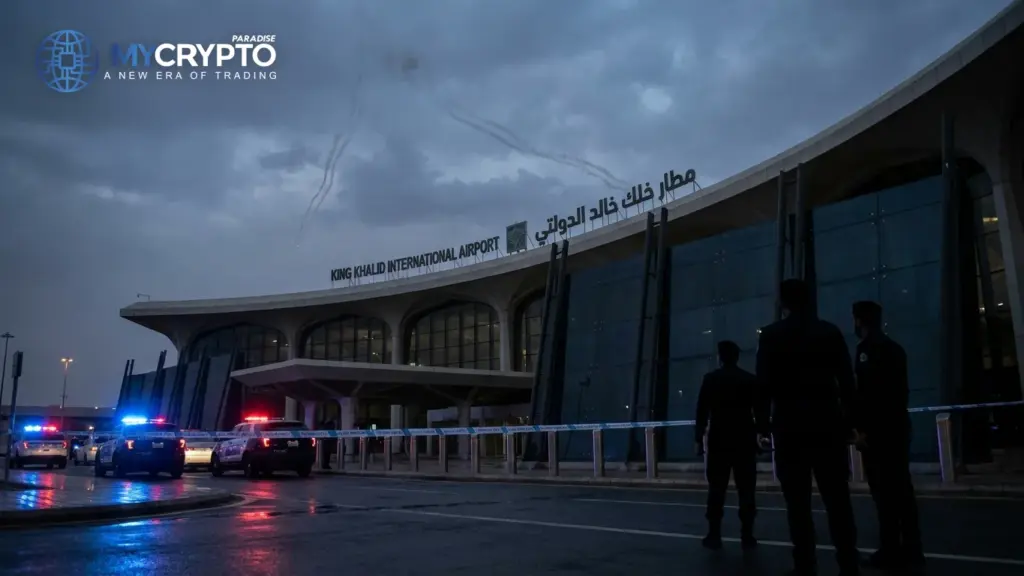
Houthi rebels fired ballistic missiles toward Saudi Arabia again. Saudi forces intercepted several aimed at Riyadh. Others got through. Sirens sounded in the capital, and explosions were heard on Monday night near Prince Sultan Airbase.
The human cost is real. A missile strike on Riyadh's international airport killed 13 people and wounded hundreds. The coalition also intercepted two ballistic missiles fired toward Khamis Mushait. Drones joined the barrage. Saudi Arabia has now launched an investigation into how its air defenses failed to stop some of them.
That last detail matters more than the headlines suggest. When a wealthy state with layered defenses admits it missed incoming fire, the story stops being about one airport. It becomes about how durable the shield really is.
And yet the crypto tape says almost nothing happened. BTC traded near $83,518, down a fraction on the day. ETH sat near $2,509, also barely red. No spike in fear, no flight to safety, no scramble for the exits.
That gap between the severity of the event and the flatness of the price is the actual news here. Markets have watched this conflict for years. They have learned to separate a tragic regional strike from a global liquidity shock. The reaction, or lack of one, is a message about how the market is currently pricing geopolitical tail risk.
Regional conflict versus global liquidity
The transmission chain from a missile strike to Bitcoin runs through oil, risk appetite, and liquidity, in that order. A direct hit on Saudi airport and airbase infrastructure threatens the one thing global markets care about: the stability of crude supply out of the Gulf.
When that supply looks fragile, energy prices can jump. Higher energy feeds inflation. Stickier inflation complicates central bank easing. Tighter policy drains the cheap money that risk assets, including crypto, lean on. That is the long chain, and every link has to fire for crypto to feel it.
So far, most of the links are quiet. There is no confirmed oil shock in the data, no broad risk-off wave, no sudden dollar bid. The attack is severe locally but contained globally, at least for now.
That containment is why the macro impact reads as limited. The conflict adds to a backdrop of regional instability rather than triggering a fresh systemic event. Risk assets tend to flinch at Middle East headlines, then recover once the supply picture holds.
The honest read: this is a real escalation with limited confirmed spillover to global liquidity. The danger is not today's price action. It is the tail scenario where repeated strikes finally break something in the energy market. Until then, the news is a background drag, not a directional driver.
A muted tape under the surface
Read through our bearish lens, this is a slow leak, not a flush. Geopolitical escalation of this kind nudges risk appetite lower at the margin, and a market already soft gives back ground rather than rallying on it.
Start with BTC. It was trading near $83,518 as of the latest print, carrying a slight 24h loss. No panic wick, but no relief bid either. In a genuinely risk-hungry tape, a contained regional strike gets bought within the hour. This one simply sat there, and sitting still under pressure is itself a mild tell.
ETH mirrors it near $2,509, also modestly red. The leaders are not leading higher, which caps any impulse in the rest of the market.
Alts feel this most. They are the high-beta tail of the same risk curve, so when BTC and ETH drift without a buyer stepping up, speculative capital has little reason to rotate down the risk ladder. Thin conviction at the top becomes thinner conviction at the bottom.
The absence of a crash is not the same as strength. It can simply mean the bad news is not large enough to force sellers, while the backdrop is not easy enough to invite buyers. That is the texture of a market absorbing a negative headline without a catalyst large enough to reprice it, and absorbing is not the same as advancing.
Signs the drag turns into a trend
The single thing to watch is whether this stays regional or starts touching oil. If strikes keep breaching defenses and crude finally gaps higher, the quiet macro link wakes up, and that is when a slow drag can become a real risk-off move across crypto.
Watch the dollar and bond yields alongside energy. A sharp dollar bid plus rising yields on the back of Gulf headlines would confirm that global capital is treating this as a genuine macro event, not a local tragedy. So far, that confirmation is missing.
On the chart, the confirmation of weakness is simple. A clean loss of BTC's $82,000 support, with momentum, would say the geopolitical drag is compounding into real selling. That would open the $81,000 lower boundary quickly.
The invalidation is just as clean. If BTC defends $82,000 and reclaims the $84,000 area despite the escalating headlines, the market is telling you it has fully discounted this conflict. Strength into bad news is the tell that sellers have no fresh fuel.
Be honest about the uncertainty. There is no single confirmed same-day catalyst driving price here, so the bearish tilt rests on the backdrop, not on a proven cause. Treat follow-through as the judge. The headline is the setup for a reaction, not proof of one, and the next few sessions decide which way the quiet breaks.
What the quiet tape says about positioning
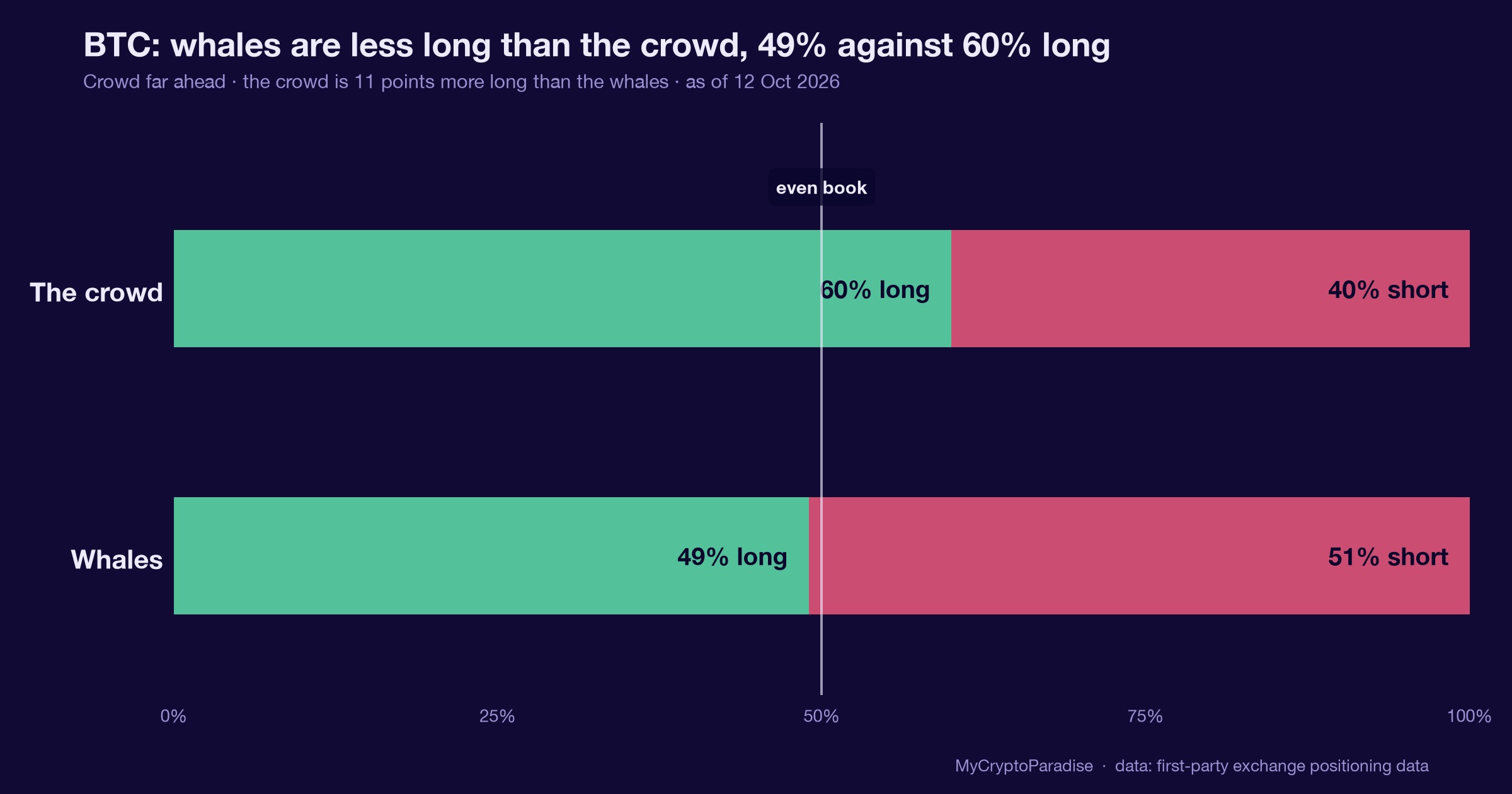
The ParadiseTeam frames this through where support and smart money currently sit. BTC near $83,518 is parked just above the $82,000 level that whales have been defending, with a notable long opened around $82,300 and buyers absorbing supply on the recovery.
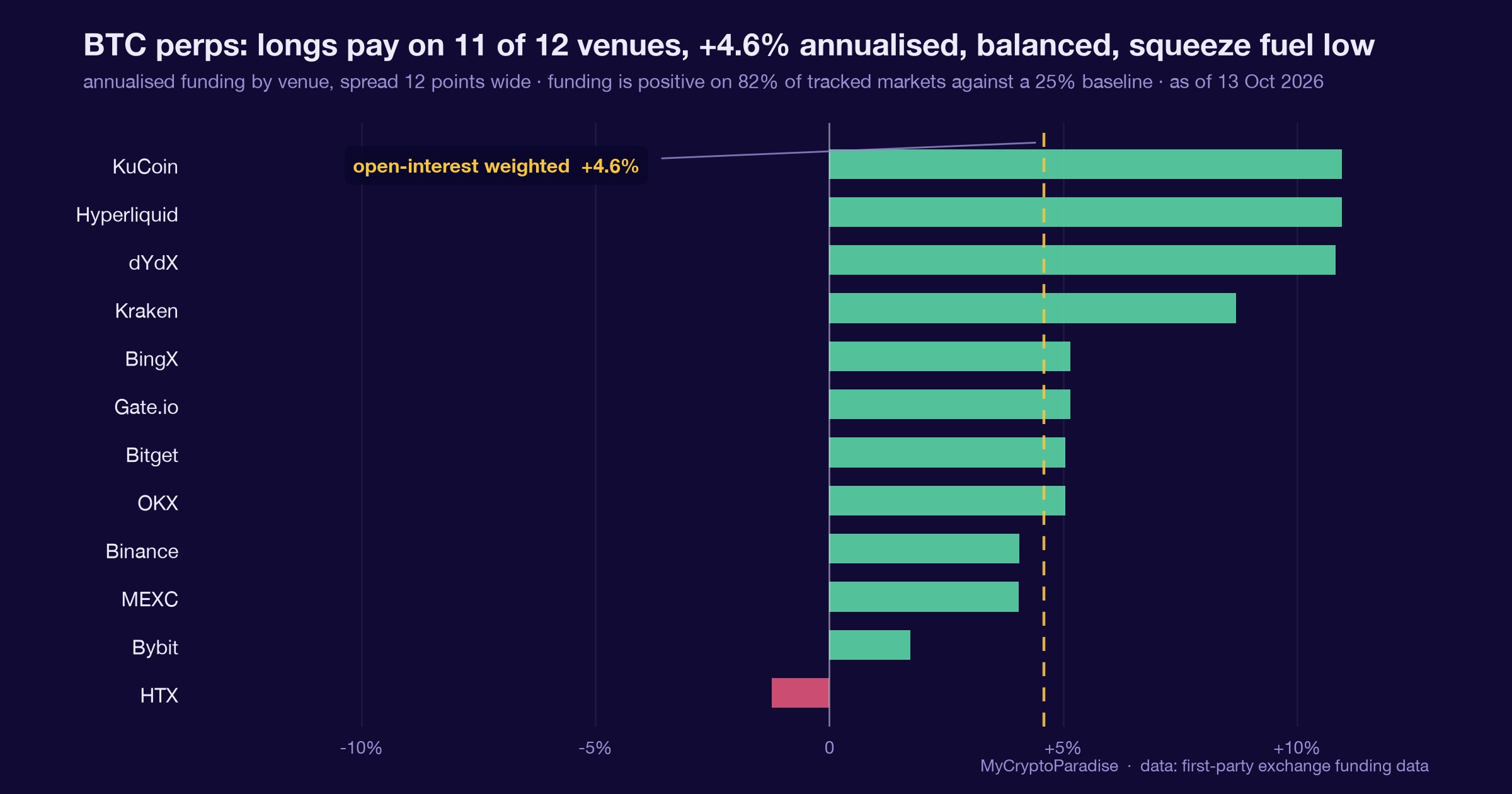
That matters for how we read the missile headline. A negative geopolitical event landing while price holds above defended support, with open interest near lows and funding at a 90-day baseline, is not the profile of a market about to capitulate on the news. There is little leverage to flush.
So the near-term structure and the bearish verdict can coexist. The verdict reflects what this escalation does to risk appetite on its own facts. The structure reflects who is holding the line underneath. Both are true at once.
Our standing caution still applies above. Any strength that carries toward the $90,000 resistance, which we read as roughly a 60% chance of rejection, is where a tired market is more likely to meet sellers than a geopolitical headline down here.
For now the levels do the talking. $82,000 is the floor that defines the regime; lose it with conviction and the $81,000 boundary comes into play. Hold it and reclaim $84,000, and this attack becomes another headline the market already priced. The read is probabilistic, risk-first, and it waits for price to confirm rather than front-running a story the tape is ignoring.
The read behind this: we framed this story through our own market analysis, Bitcoin at $82K: Can Bulls Defend It?
Track it live: our Crypto Fear and Greed Index and the live crypto funding rates both update in real time, so you can watch this shift for yourself.
Related coverage
For exact entries, targets, and stop losses with full risk management, that is what ParadiseFamilyVIP is for. New to reading these moves? Start with our crypto trading strategies guide.
ParadiseTeam is monitoring the market situation closely, and we are taking these developments into consideration while building our trading tactics inside ParadiseFamilyVIP.
Crypto trading involves substantial risk. Prices are volatile and you can lose money. This article is educational and is not financial advice. Past performance does not guarantee future results.
Does Middle East escalation finally move crypto in the next few sessions?
This is how 1 Paradiser is calling it. Tap your call.
No calls on this one yet. Tap yours to be the first.
Free account, no password. Members just sign in.









Join the discussion
No comments yet. Members, share how you are reading this.