

Listen: the breakdown
Market briefing: Secretary of Defense Pete Hegseth is enacting significant internal military reforms, including personnel reductions and cyber defense directives. These developments show no direct impact on crypto markets, with Bitcoin currently trading near $83,817.
- Secretary Hegseth is reducing 20% of US general and admiral positions by January 1, 2027.
- Half a dozen senior officers have been forced out, and civilian tenure appointments abolished.
- A classified directive orders U.S. Cyber Command to use AI against election interference.
Recent reports detail Secretary of Defense Pete Hegseth's sweeping reforms within the US military, from leadership purges to cyber defense mandates. But do these significant policy shifts resonate in the crypto market?
Secretary of Defense Pete Hegseth is implementing substantial changes across the United States military. A key initiative includes a plan to reduce 20% of all US general and admiral positions, a move expected to be completed by January 1, 2027. These leadership adjustments are already underway. Hegseth has reportedly forced out at least half a dozen senior officers, some of whom were considered contenders for replacement roles. He has also abolished new tenure appointments for civilian professors at military academies, signaling a broader overhaul of institutional policies.
Beyond personnel, Hegseth signed a classified directive. This order mandates U.S. Cyber Command and military intelligence to deploy advanced technologies, including artificial intelligence (AI), to combat foreign interference in elections. This highlights a strategic pivot towards enhanced cyber defense capabilities within the military.
While these reforms mark significant internal shifts within US defense policy, the crypto market has shown no direct reaction. Bitcoin was trading near $83,817 as of this report, marking a +0.3% change over 24 hours. Ethereum stood at $2,675.28, with a -0.7% change over the same period.
Understanding Hegseth's Military Policy Changes
The reforms initiated by Secretary Hegseth are fundamentally about optimizing military leadership and enhancing national security. Reducing top-ranking positions aims to streamline command structures and potentially increase efficiency within the vast defense apparatus.
The directive to deploy AI against election interference underscores a critical focus on safeguarding democratic processes from external threats. This move reflects an evolving understanding of modern warfare, where information and cyber security play central roles. These developments are primarily confined to the geopolitical and domestic policy spheres. They do not introduce new global liquidity events or alter fundamental risk appetites that typically drive crypto market movements. Therefore, their direct relevance to digital asset valuations remains minimal.
While important for national security, these internal military adjustments do not affect the supply or demand dynamics for Bitcoin, Ethereum, or other digital assets. The mechanisms linking military policy to crypto market performance simply do not exist in any direct, actionable form for traders.
Minimal Crypto Market Reaction to Defense Reforms
The crypto market has exhibited no discernible impact from Secretary Hegseth's military reforms. Bitcoin's minor price movements, like its +0.33435% gain over 24 hours and -0.0695% dip in the last hour, are well within normal daily volatility. These fluctuations are not indicative of a market reacting to internal US defense policy.
Ethereum's performance, trading at $2,675.28 and down 0.7% over 24 hours, similarly shows no correlation. These price actions are part of routine market activity, influenced by broader economic factors or crypto-specific catalysts, not military personnel changes or cyber defense directives.
There is no evidence of smart money or retail positioning shifting in response to this news. Large institutional players are not re-evaluating their crypto allocations based on military leadership changes, nor are retail traders panicking or accumulating based on such reports. The market's attention remains elsewhere.
This event does not trigger any liquidity cascades, either positive or negative, across Bitcoin, Ethereum, or the broader altcoin market. Crypto assets are driven by factors like regulatory clarity, institutional adoption, technological innovation, and macro liquidity conditions, none of which are touched by these military reforms.
Observing Broader Crypto Catalysts, Not Military Shifts
For crypto traders, the focus should remain on genuine market catalysts. Confirmation of bullish or bearish momentum typically comes from shifts in global liquidity, significant regulatory developments, or major institutional inflows. Internal military reforms simply do not fit this profile.
Traders should continue to monitor key macroeconomic indicators, central bank policies, and developments within the digital asset ecosystem itself. These include progress on spot Bitcoin or Ethereum exchange-traded funds (ETFs), major protocol upgrades, or significant shifts in on-chain metrics.
Confirmation of a market move, whether an upward breakout or a downward capitulation, is usually accompanied by corresponding changes in trading volume, open interest (OI), and cumulative volume delta (CVD). These indicators provide tangible evidence of conviction behind price action, which is absent here.
Invalidation of a trend often comes from a failure to hold critical support or resistance levels, or the emergence of significant bearish or bullish divergences on high timeframes. These are the signals that smart money watches, not news about military command structures. This story underscores the need to filter out irrelevant noise.
Reading Market Structure Amidst Non-Crypto News
While Secretary Hegseth's military reforms are not a crypto market driver, the ParadiseTeam's standing market lens provides critical context for current price action. Bitcoin, trading near $83,817, operates within a framework where key technical levels still dictate potential moves.
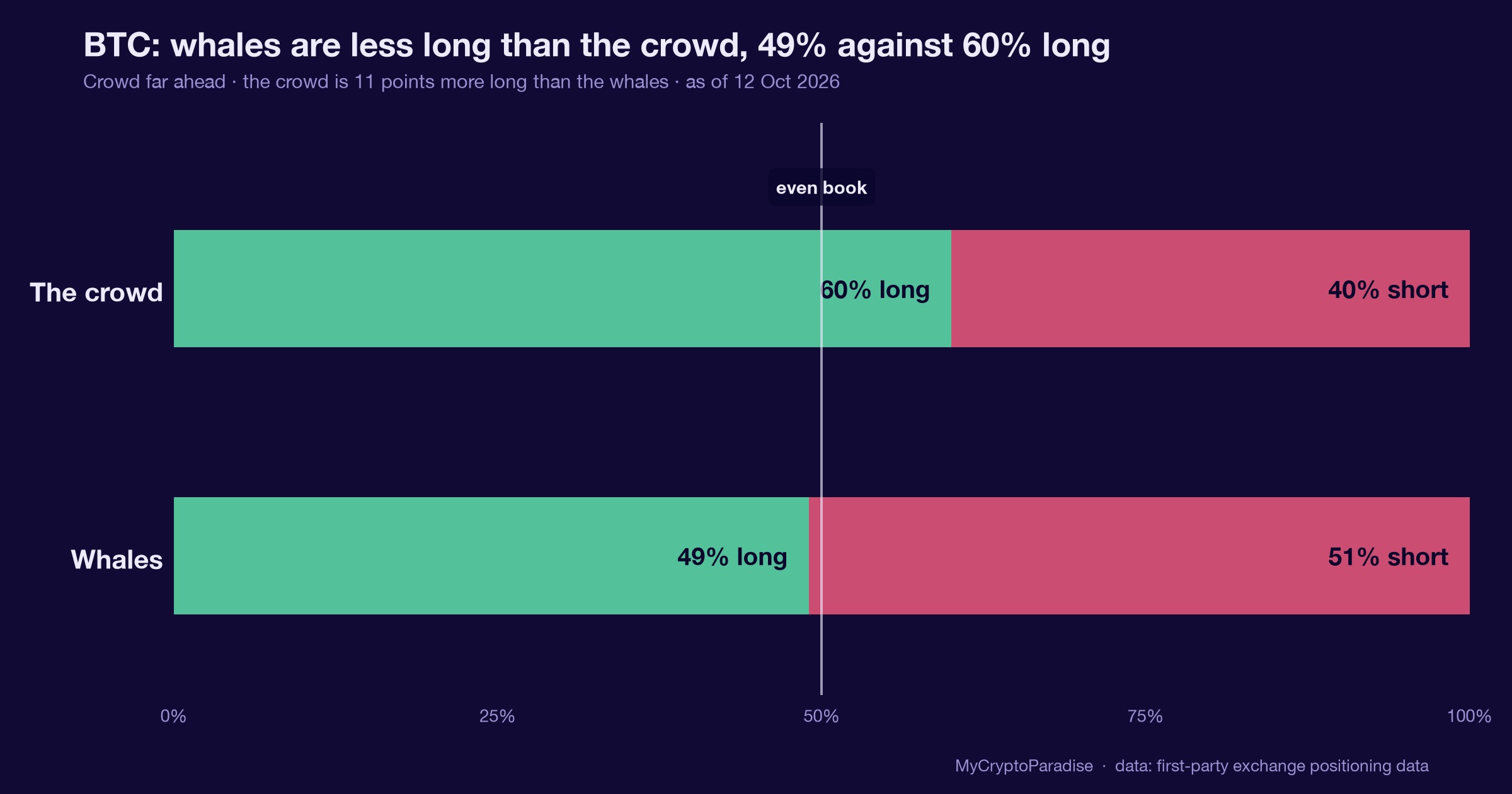
The ParadiseTeam maintains a cautious bias, anticipating a possible rejection around the $88k to $90k weekly resistance. This range carries a 60% probability of a significant pullback, despite the current medium-term bullish control evidenced by aggressive whale accumulation.
Although whale buying has been strong, potentially fueling a push towards $90k or even $95k on the 4-hour timeframe, vigilance is advised. Daily timeframe bearish divergences on the MACD (Moving Average Convergence Divergence) and RSI (Relative Strength Index) histograms indicate that bullish momentum may be fading.
Confirmation of $82k transitioning into robust support is crucial for the current upside to sustain. Failure to maintain this level could invalidate shorter-term bullish scenarios. The ParadiseTeam advises focusing on the underlying structure of price moves and volume confirmation rather than external, non-market-moving headlines.
Traders should watch for decisive volume on any breakouts and carefully assess whether subsequent moves are corrective or motive waves. These internal market dynamics, not military policy, will determine the next significant shift in Bitcoin's trajectory.
The read behind this: we framed this story through our own market analysis, Can Bitcoin Reach $90K After Whale Buying?
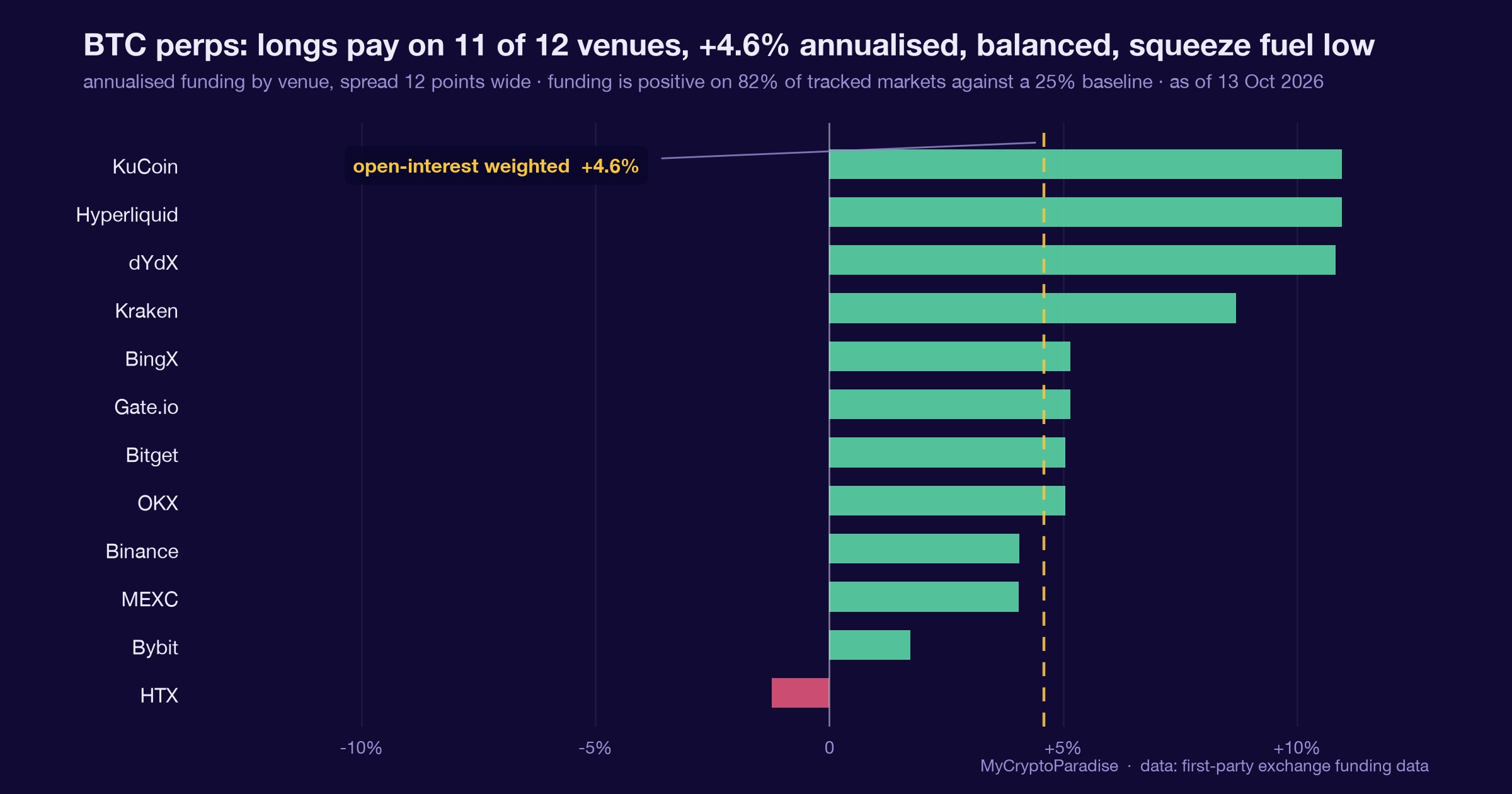
Track it live: our live crypto funding rates and the Crypto Fear and Greed Index both update in real time, so you can watch this shift for yourself.
Related coverage
For exact entries, targets, and stop losses with full risk management, that is what ParadiseFamilyVIP is for. New to reading these moves? Start with our crypto trading strategies guide.
ParadiseTeam is monitoring the market situation closely, and we are taking these developments into consideration while building our trading tactics inside ParadiseFamilyVIP.
Crypto trading involves substantial risk. Prices are volatile and you can lose money. This article is educational and is not financial advice. Past performance does not guarantee future results.
Which factor will most influence crypto prices this quarter?
This is how 27 Paradisers are calling it. Tap your call.
No calls on this one yet. Tap yours to be the first.
Free account, no password. Members just sign in.







Join the discussion 37
I mostly look at factors that affect stablecoins... so military spending not impacting crypto directly makes sense to me. Thanks for this...
yeah military spending is more about fiat stability for me too
its a big part of how much a government needs to print
It makes sense... military budgets are usually tied to sovereign debt and currency strength much more than direct capital flows into risk assets... 📉. That's what I watch.
Yeah I'm always checking teh news for unexpected connections like this, like maybe a new defence contract means more mining farms🤔. usually ends up being a stretch tho 😅📈.
yeah, figured as much 🤔. military spending usually feels more like a slow burn impact for general economics than a direct market mover for my crypto tracking 📉.
I think that's why we don't see an immediate crypto impact--it's less about new tech and more about maintenance, right? 😅
them banks just hold people back from making moves, always acting like they protect us 🙄. no impact on crypto cause they dont get to freeze our funds here 🙅♀️📈.
agree, any impact would be more indirect. usually those macro narratives get priced in on longer timeframes, if at all.
They're saying "no *direct* impact," but even an indirect impact on global stability is a massive UI shift for markets, no? That feels like cluttering the definition. 🤨
I'd be curious to see if there's any on-chain data for defense sector treasuries flowing into stablecoins or crypto funds. Where did the article get its source data?
Still, the Cyprus headlines in 2013 were a stark reminder: capital controls and frozen assets can drive people elsewhere, even if not military spending. It was then I printed the whitepaper.
Isabella its all talk about capital controls until the level breaks and then its a different game for everyone.
Isabella, I actually see it differently. My backtests on military spending and Bitcoin's price history show pretty consistently near-zero correlation.
i remember watching the lira in 2021 thinking "this is a slow burn" too, but liquidity decides fast... prices get repriced.
It often feels like chasing after a new altcoin when you’re trying to find a direct market impact from something so far removed, knowing full well you’d be better off holding your sats.
no direct impact though? i guess i usually think *everything* eventually touches everything else here 🤔 kinda like me and a 1m scalp, always getting chopped up no matter what. 🤷♂️
Even if it's not direct, military spending shifts national debt levels, and those usually show a pretty solid correlation with overall market sentiment, no?
Okay, so no direct impact, huh? 🤔 I was kinda wondering if it could affect things indirectly, like, if it frees up other capital... or does that just not happen in real life? 😅
Exactly! 💯 And less capital tied up in the military means more for things like infrastructure projects that *actually* move goods & money. 🛣️💰 That's what I'm watching for! 👀
Yeah, but what about the psychological impact on investors, Noah? 🧠 When people see big government shifts, even if indirect, it can make them feel a certain way about risk, no? 🤷♂️
still i think these reforms free up capital elsewhere, not directly but it has to ripple out somehow for new tech.
Tommy, I see your point about ripple effects 🤔 but maybe the *perception* of stability or instability in defense spending also plays a part? 🤷♂️
that's a fair point on the capital allocation Tommy, although one could also consider the impact on sovereign debt markets and interest rate differentials.
i think your point about freed-up capital elsewhere is a good one, and it could lead to increased private sector investment in AI and quantum computing.
Tommy, I'm seeing capital redirected, not freed up... that's a different kind of ripple.
no derek it frees up capital from old systems and puts it into new ones you cant stop that tide
Tommy, capital redirection from old to new systems isn't freed capital. It's a reallocation of a finite pool… not new money entering. My journal entries from the 2022 Fed rate hikes show this exact scenario...
the capital was trapped derek unable to move its freed now and can flow different places its not just moving money around it can create value out of nothing
militairy spending is a capital drain, not an investment driving new tech. i dont see how it ever directly pumps anything, Amara.
it’s actually reassuring how often things like this dont move the market much at all, even big news. i try to check for indirect effects, but it's hard. sorry if that's a silly observation!
totally, it's wild how often big news just… doesn't. i'm always checking for the news bots to react, too, for a quick chop 🔪. do you guys even bother with that?
hmm, I always figured government spending, military or otherwise, had *some* trickle-down effect on every market eventually? 🤷♀️ Four-hour noise is not a signal, though.
Yeah, military spending is like me with a small altcoin position 🤏 - I always think it'll pump eventually, but usually it's just a slow bleed to nothing 😂📉. So much for my genius macro plays!!
Ah, I know that feeling! 😂 For military spending though, I always wonder about the impact on specific tech sectors, not just general economics.
Military spending is not a small altcoin. It's an allocation that defends existing purchasing power, even if it doesn't create new tech.
lol carlos, for real tho. it's like waiting for a coin to do something and it just sits there for *months*. then you dump it and it rips 🚀
it says no *direct* impact but where is the protocol for measuring that? feels like a variable is missing somewhere 🤔