

In short
A gold futures contract, often searched as future contract gold, locks a price to buy or sell gold on a fixed future date. Crypto perpetuals copy the leverage but drop the expiry. Instead of settling, they charge funding payments to hold price near spot. That funding is a recurring cost gold futures never carry. Perpetuals also liquidate faster, because crypto moves harder than metal. If you already trade dated futures, you own most of the mechanics. The three differences that cost money are funding, speed, and how fast leverage erases a position. Learn those, and everything else transfers directly.
What is a gold futures contract?
A future contract on gold is a standardized agreement to buy or sell metal at a set price on a fixed expiry date. It trades on regulated exchanges. Both sides post margin. On expiry it settles, in cash or physical gold, and the position closes.
The exchange fixes the size, the tick, and the expiry months. That standardization is why gold futures trade with deep liquidity on venues like the CME. You can read the full gold futures contract specification on the exchange itself.
One point matters for everything ahead. A dated future has a finish line. On expiry it settles and the trade closes, unless you roll it into the next contract month.
How do crypto perpetual futures differ from dated futures?
Crypto perpetual futures behave like dated futures with one change: they never expire. There is no settlement date to pull price back to spot. So exchanges use a funding payment, swapped between traders every few hours. That keeps the perpetual near the underlying while you hold leverage indefinitely.
This is the bridge from gold to crypto. If you already trade gold futures, you understand margin, leverage, and going long or short. Perpetuals keep all of it. They remove the calendar and add a recurring payment, which changes how a position behaves over time.
What is different here
The ParadiseTeam reads funding across all major exchanges before sizing any perpetual setup. That recurring cost often decides whether a trade is worth holding at all.
What are funding rates and why do they cost you?
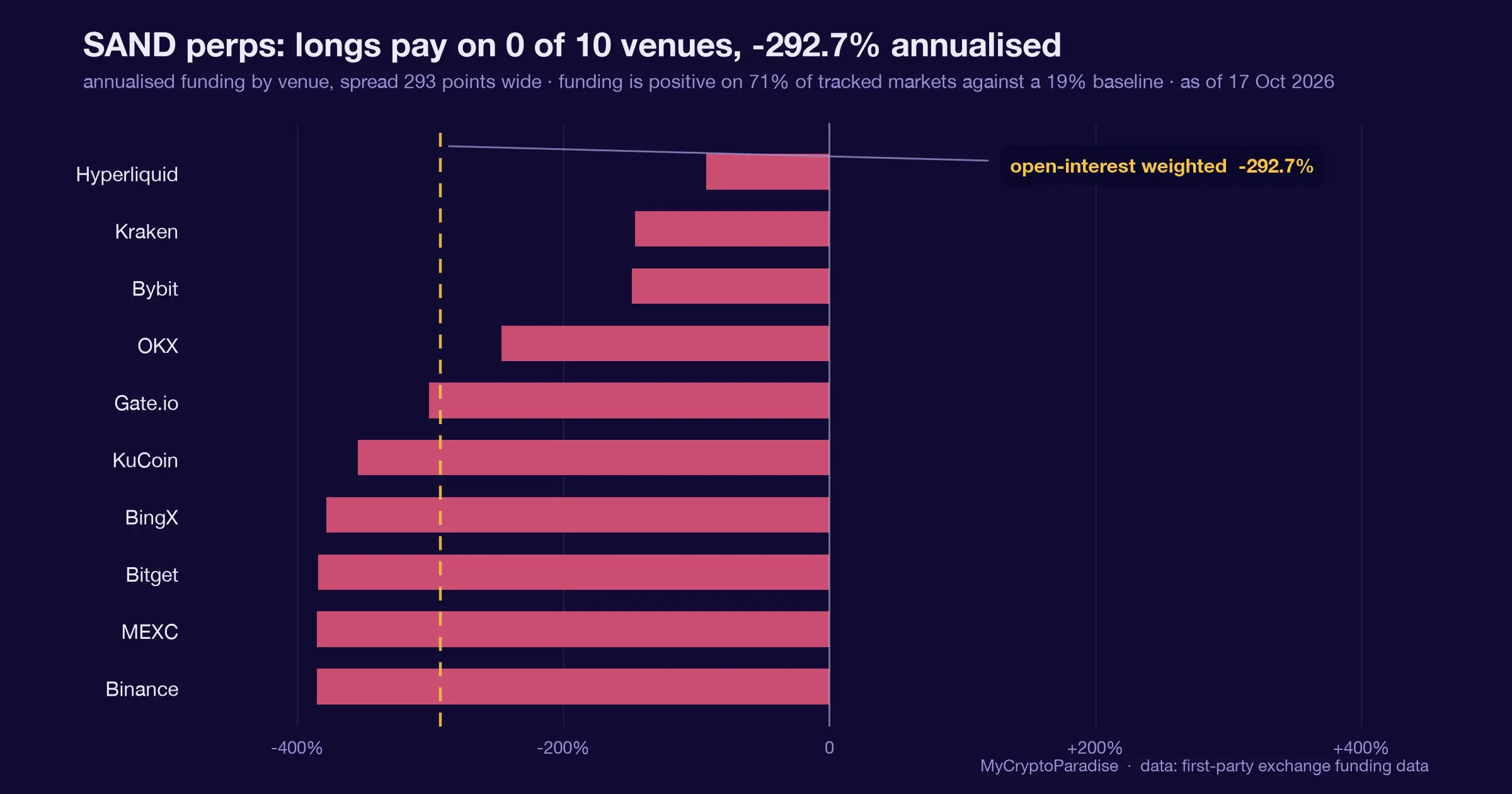
Funding is a periodic payment swapped directly between long and short traders, not a fee to the exchange. When longs dominate, they pay shorts, and the reverse when shorts crowd in. It runs roughly every eight hours. Held for days, it becomes a cost gold futures never charge.
The rate is usually tiny, a fraction of a percent. In a crowded trade it can spike, and it flips sign as sentiment shifts. That makes it a signal as well as a cost. A disciplined channel reads that positioning before acting, which is the point of our primer on what crypto signals are.
Professionals do not just pay funding. They use it. Extreme readings warn that a move is overcrowded and prone to snapping back, so a full perpetual is worth a second look at those moments.
How does liquidation risk compare in gold and crypto?
Both markets use leverage, so both can liquidate you when price runs past your margin. The difference is speed. Gold is calmer, so at equal leverage liquidation arrives slower. Crypto can wick violently in minutes, and perpetuals allow far higher leverage, which shortens the distance to a wipeout.
Leverage is the multiplier that magnifies both sides. It does not make a trade more likely to work. It makes the same move bigger, up and down. Regulators repeatedly warn that most retail leveraged accounts lose money, a point worth keeping in view; see the regulator’s resources on crypto derivatives.
| Contract type | Expiry | Recurring cost | Typical leverage | Liquidation speed |
|---|---|---|---|---|
| Gold futures (CME) | Fixed date | None, roll cost only | ~10x to 20x | Slower, gold moves less |
| Crypto dated futures | Fixed date | None, roll cost only | Up to ~50x | Fast |
| Crypto perpetual futures | No expiry | Funding every ~8 hours | Up to ~100x or more | Fastest |
What should you check before trading perpetuals?
Use gold futures as your mental anchor, then adjust for three things: no expiry, funding, and faster liquidation. Anyone who arrived from a future contract gold search already owns the core mechanics. Before you open a perpetual, run a short checklist so the differences do not surprise you mid trade.
- Confirm whether the contract expires or runs on funding.
- Check the current funding rate and which side pays.
- Know your effective leverage and exact liquidation price.
- Set a stop before entry, never after.
- Size the position to survive a sudden wick.
The last two matter most. A stop and a sane size protect you when a fast market ignores your thesis. The same rigour applies to any group you follow. Our guide on choosing a signals channel lists the questions to ask before you trust one.
To see how funding stacks up on a real position, drop your own numbers in below.
Risk first: what can go wrong?
The fastest way to lose on a perpetual is high leverage with no stop, held through funding while price grinds against you. Gold futures punish the same mistake more slowly. Crypto punishes it in minutes. Respect the downside first, and size so a single wick cannot end your account.
Red flags to watch for
Certain patterns almost always precede a blown account. Treat these as stop signs, not challenges.
- Any promise of certain returns or zero downside.
- Maximum leverage on a coin you cannot watch closely.
- No stop, plus a plan to add on the way down.
- Ignoring funding on a position held for days.
- A group that posts only wins and never a loss.
How we measure up
We have traded through several cycles since 2016, and the habit that survived all of them is risk-first. We read funding across all major exchanges, size for survival, and treat every read as a probability read, not a forecast. That discipline is what we share inside our vetted Telegram signal channels.
Gold futures taught a generation of traders discipline. Crypto perpetuals reward the same discipline faster, and punish its absence faster too.
Frequently asked questions
Do crypto perpetual futures ever expire?
No. Perpetual futures have no expiry date, which is the core difference from a gold futures contract. Instead of settling, they use a funding payment every few hours to pull price toward spot. You can hold indefinitely, but funding keeps costing you while the position stays open.
Is a gold futures contract safer than a crypto perpetual?
Safer is the wrong frame. Gold moves less than crypto, so liquidation tends to be slower at similar leverage. But both use leverage, and both can drain a margin balance fast. Risk comes from your size and stop, not only the asset. Treat both with equal discipline.
What does funding cost on a perpetual position?
Funding is a small percentage exchanged between longs and shorts, usually every eight hours. In a calm market it is tiny. In a crowded trade it can turn sharply positive or negative. Held for days, that recurring cost adds up and can erode an otherwise correct trade.
Can you trade gold as a crypto perpetual?
Some exchanges list tokenized gold or gold-linked perpetuals, so you gain gold exposure with crypto-style leverage. The mechanics then follow perpetual rules: no expiry, funding payments, fast liquidation. Read the contract specification first, because the ticker looks familiar but the risk profile does not.
Crypto trading involves substantial risk and is not suitable for everyone. Nothing here is financial advice; it is education only. Never risk more than you can afford to lose.





Join the discussion
No comments yet. Members, share how you are reading this.