


Listen: the breakdown
Developing story: This story is still unfolding. We are tracking it and will update this article as more details are confirmed.
Market briefing: Fidelity is moving to add staking and quarterly payouts to its near $900 million ether ETF. Price barely reacted, with BTC near $63,598 and ETH near $1,885, so we read this as slow structural demand, not a same-day catalyst.
- Fidelity is adding staking and quarterly payouts to its near $900 million ether ETF.
- The upgrade turns a passive ETH wrapper into a yield-bearing institutional product.
- Price stayed flat, so we read this as a slow structural tailwind, not a same-day catalyst.
Fidelity is adding staking and quarterly payouts to its $900 million ether ETF, yet the chart barely moved. Is this quiet news the tell smart money wanted?
Fidelity just moved to upgrade one of the largest regulated ether products on the market. The firm is adding staking and quarterly payouts to its Ether exchange-traded fund (ETF), a vehicle already valued near $900 million. That single change matters more than the flat chart suggests.
Until now, this ETF simply tracked the price of ETH. Investors held exposure, but the coins sat idle. Staking flips that logic. It puts the underlying ether to work securing the network, then routes a yield back to holders every quarter.
For an institution, that is a meaningful shift. A passive price wrapper becomes a cash-flowing instrument. Pension allocators and treasuries think in yield, not vibes, so a quarterly payout speaks their language.
And yet the market shrugged. ETH traded near $1,885, down a fraction on the day. BTC sat near $63,598, also barely moved. A press release promising yield met a tape that could not be bothered.
That gap between the headline and the candle is the real story here. Big structural news often lands with no fireworks, because the capital it unlocks arrives over quarters, not minutes. Retail wants an instant pump. Institutions fill slowly and quietly.
So we treat this as a demand-side upgrade to ETH's long-term plumbing. It widens the door for yield-seeking money to hold ether inside a familiar, regulated wrapper. The flow is not here today. The door is now open.
Why a yield wrapper changes ETH demand
The transmission here runs through incentives, not hype. A staking ETF pays holders to own ETH, which changes who is willing to buy it and why.
Most large pools of capital are mandated to seek yield. A price-only ether product forces them to bet purely on appreciation, which many charters simply forbid. Add a quarterly payout, and ether suddenly fits inside a yield bucket those allocators are already funding.
That is how a niche crypto asset gets a wider address book. The wrapper is the same regulated ETF these desks already trust. The difference is that idle ether now produces a return, which lowers the psychological hurdle to holding it.
There is a supply angle too. Staked ether is locked to secure the network, so coins routed into staking are, for a time, off the freely tradable float. When a growing pool of ETH shifts from passive holding into staking, sell-side liquidity thins at the margin.
None of this moves price in a day. It is a slow tightening, not a shock.
That is exactly why the tape stayed quiet. The market is pricing the announcement, not the eventual flows. Structural demand builds through allocation cycles that run over quarters, and it rarely announces itself with a green candle. The setup that matters is the one nobody is trading yet.
Reading the flat tape across BTC and ETH
Start with the obvious: the immediate market impact was almost nothing. ETH slipped 0.2 percent on the day, BTC eased 0.5 percent, and the hourly candles barely twitched. A yield upgrade to a $900 million product produced a rounding error on the chart.
That muted reaction is information. When genuinely positive news fails to lift price, either the flow has not arrived yet, or larger forces are steering the tape. Here we think both are true.
The liquidity cascade from this news is gradual by design. Staking flows into an ETF accumulate through allocation decisions, not market orders. So the first real effect is a slow thickening of demand-side liquidity for ETH, not a visible spike.
BTC leads, as it usually does, and BTC is presently trading its own structure, not Fidelity's headline. Because Bitcoin is not reacting, ETH has no macro tailwind to amplify the news. The alts, which take their cue from both, stayed asleep.
So the honest read is layered. Short term, this is close to a non-event for price. Medium term, it quietly strengthens ETH's demand base relative to BTC.
When a story is structurally bullish but the candle is flat, patient money tends to be the one accumulating. It does not need the pump. It needs the position.
What confirms the ETH demand thesis next
The first thing to watch is whether this stays a plan or becomes a live product. A move to add staking is a filing, not a switch already flipped, so the confirmation is regulatory clearance and an actual go-live date.
Once live, the tell is flow. Watch whether the ether ETF's holdings grow in the weeks after launch. Rising assets under management would confirm that yield-seeking capital is choosing this wrapper. Stagnant holdings would say the demand was theoretical.
On the chart, watch ETH's behavior relative to BTC. If ether starts to outperform Bitcoin on quiet days, that relative strength is the market voting for the structural upgrade. If ETH keeps drifting with the pack, the news stays a slow burner.
Invalidation is simple to define. If BTC breaks down through its own support and drags the whole market lower, this ETH tailwind gets buried under macro selling. A structural positive does not save an asset from a broad liquidity flush.
We also watch for the classic trap. If ether rallies hard on this headline straight into a known resistance while retail piles in euphoric, that strength is often distribution, not a breakout. So the checklist is: real launch, growing holdings, ETH strength versus BTC, and no macro breakdown. Get those, and the demand thesis earns its keep. Miss them, and it stays a good story waiting for buyers.
What this yield upgrade means at current levels
The ParadiseTeam frames this against a cautiously bullish daily map, not the Fidelity headline itself. BTC was trading near $63,598, sitting just above the $62,500 four-hour pivot we care about. That pivot is the hinge. While $62,500 holds as support, our path points toward $69,000, then a stretch objective near $79,000. A clean loss of $62,500, followed by a failed reclaim, flips the near-term read and opens $61,000 and $58,000.
ETH's staking upgrade does not change those Bitcoin levels. What it does is quietly improve ether's medium-term demand floor while BTC decides direction. That is why we treat it as background support for ETH, not a trigger.
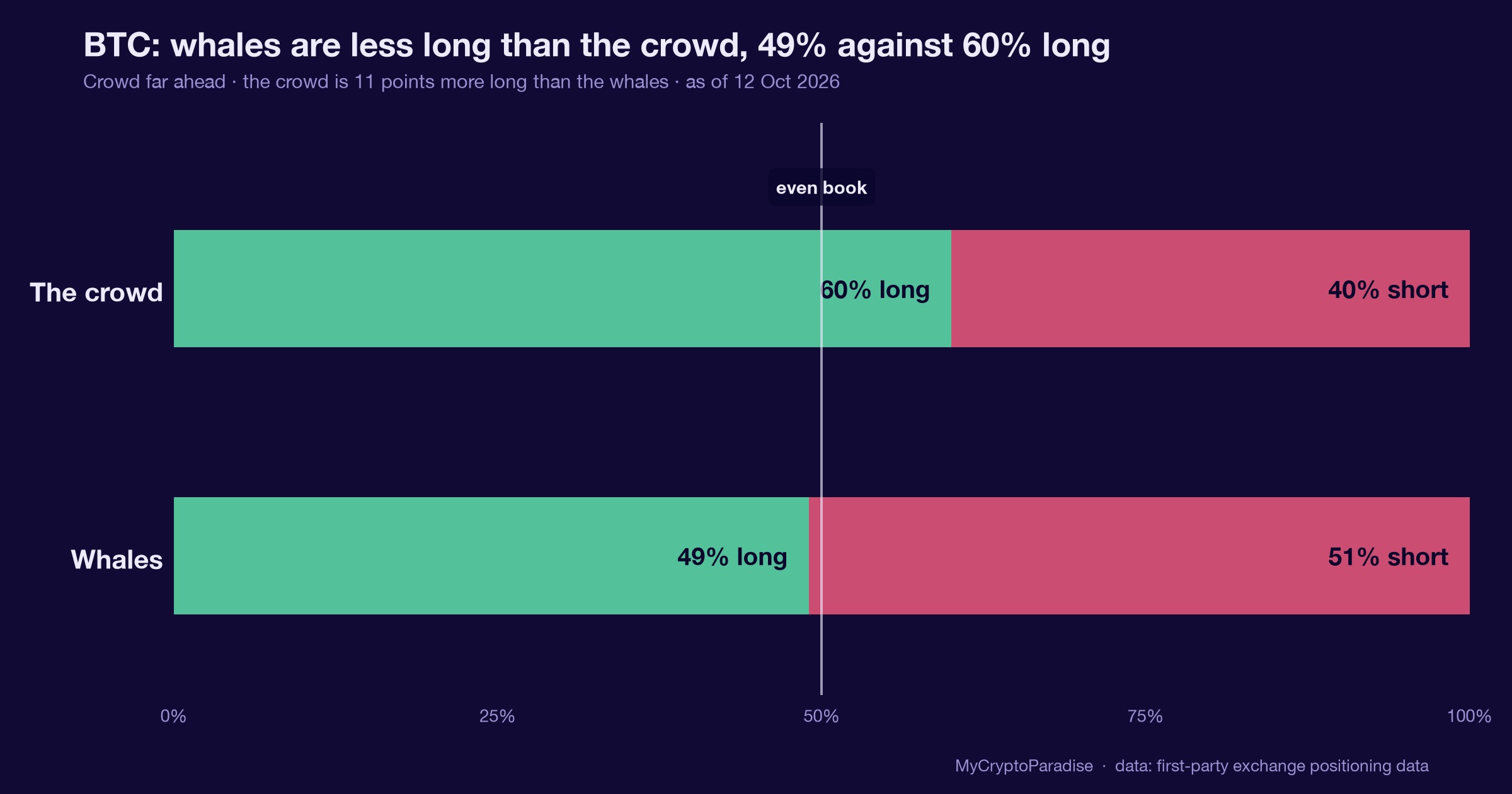
Our wider read still applies. We see smart money absorbing selling pressure down here, with retail bears leaning short into a market that refuses to break. A yield-bearing ETH wrapper gives patient institutional buyers one more reason to accumulate through the noise.
Watch the $69,000 zone with respect, not greed. That is where we expect distribution, where a bullish story meeting resistance often becomes an exit for the crowd rather than an entry.
And we stay honest about the tail risk. A deeper flush toward the $55,000 to $44,000 macro reaccumulation zone remains on our map before any larger leg. Structural news like this rarely front-runs that kind of move. It simply makes the eventual recovery in ETH better funded.
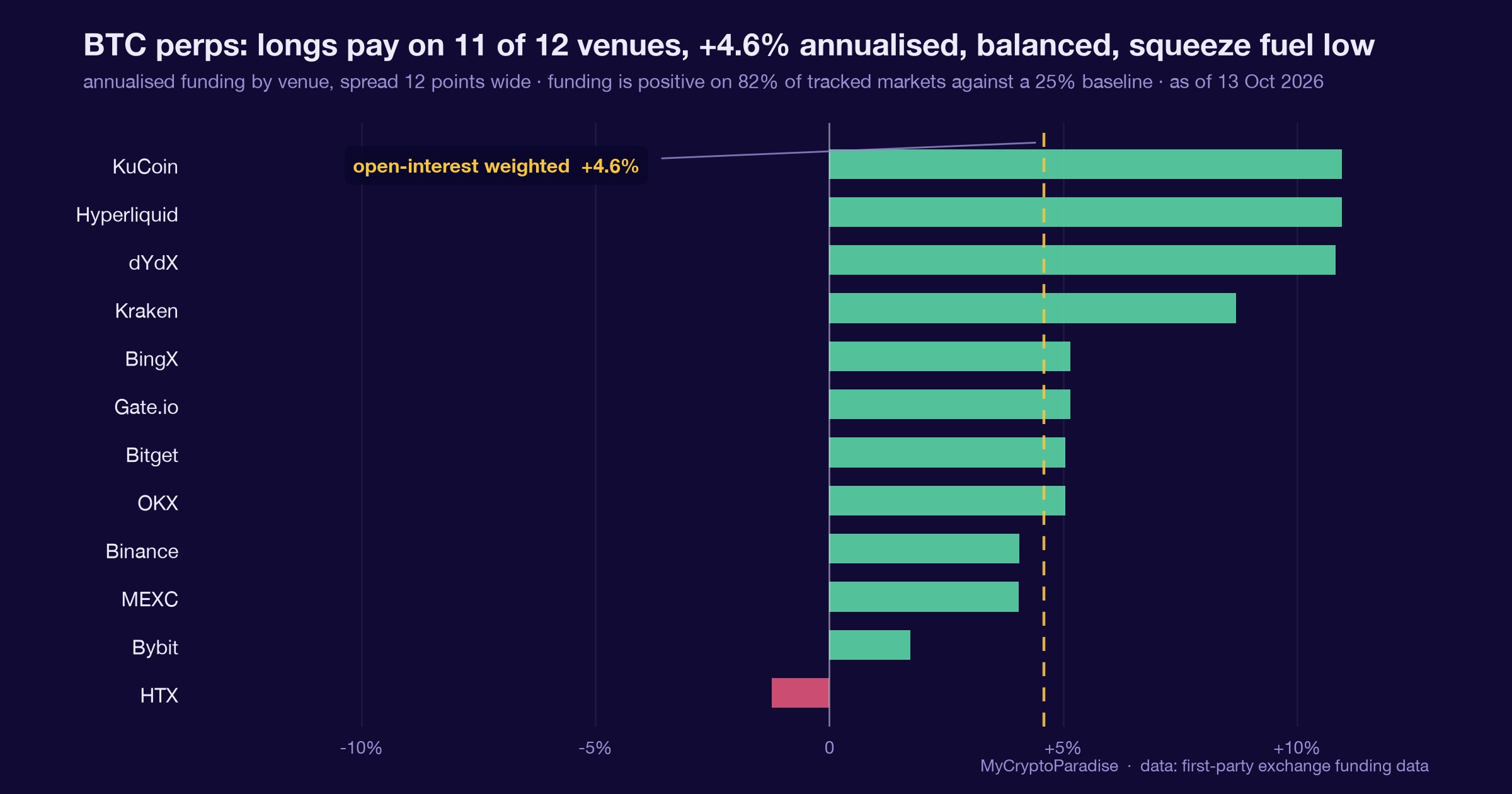
Track it live: our live crypto funding rates and the crypto liquidation heatmap both update in real time, so you can watch this shift for yourself.
Related coverage
For exact entries, targets, and stop losses with full risk management, that is what ParadiseFamilyVIP is for. New to reading these moves? Start with our crypto trading strategies guide.
ParadiseTeam is monitoring the market situation closely, and we are taking these developments into consideration while building our trading tactics inside ParadiseFamilyVIP.
Crypto trading involves substantial risk. Prices are volatile and you can lose money. This article is educational and is not financial advice. Past performance does not guarantee future results.
Will Fidelity's staking upgrade pull fresh capital into ETH over the next quarter?
This is how the Paradisers are calling it. Tap your call.
No calls on this one yet. Tap yours to be the first.
Free account, no password. Members just sign in.
Follow this topic: Ethereum ETF news









Join the discussion
No comments yet. Members, share how you are reading this.