

Listen: the breakdown
Developing story update (September 25, 2026, 05:49 UTC):
Federal Reserve Unveils Stablecoin Rules on Reserves and Capital. The central bank opened two proposals for comment under the GENIUS Act, requiring issuers it supervises to back tokens fully with safe assets and creating an application process for banks seeking to issue stablecoins.
Market briefing: The Federal Reserve has unveiled two proposals under the GENIUS Act to regulate stablecoin issuers. Bitcoin was trading near $84,544, showing a marginal +0.3% change over 24 hours.
- U.S. Federal Reserve unveils two stablecoin proposals under the GENIUS Act.
- Proposals cover reserve, capital, risk management, and custody rules for issuers.
- A tailored application process is established for banks seeking to issue stablecoins.
Source: U.S. Federal Reserve
The U.S. Federal Reserve just unveiled two crucial proposals under the GENIUS Act, targeting stablecoin issuers with new reserve and capital requirements. This move promises regulatory clarity, but is it merely another piece of 'positive' news retail will buy into while smart money continues to distribute?
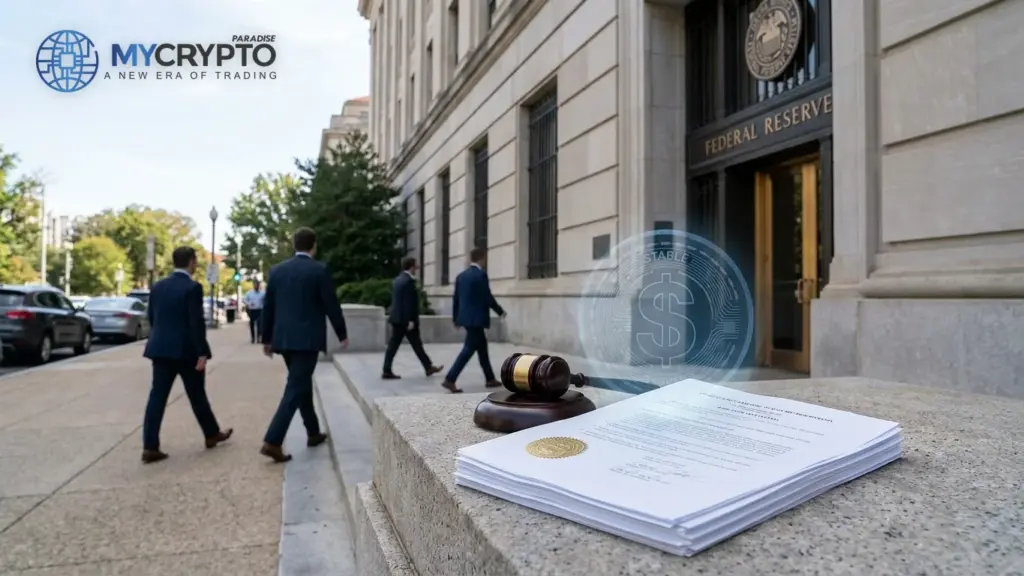
The U.S. Federal Reserve has officially unveiled two significant proposals aimed at establishing a comprehensive regulatory framework for stablecoin issuers under the GENIUS Act. These initiatives were announced on Thursday, September 24, 2026, marking a pivotal step towards formalizing oversight within the digital asset space.
One proposal mandates full reserve backing for supervised stablecoin issuers. It also sets standardized requirements for capital, risk management, and custody, addressing core stability concerns that have long lingered in the market.
The second proposal introduces a tailored application process designed specifically for banks. This pathway allows traditional financial institutions to issue stablecoins under a clear regulatory umbrella, potentially bridging the gap between conventional finance and the crypto economy.
The Federal Reserve Board has invited public comment on both proposals. This open dialogue aims to gather feedback from industry stakeholders and the public, ensuring a robust and well-informed final framework. While seemingly a positive development, the immediate market reaction was muted, with Bitcoin trading near $84,544, reflecting a modest +0.3% gain over the past 24 hours.
Why new stablecoin rules matter for market structure
These proposals represent a critical evolution in how the U.S. views and intends to integrate stablecoins into the broader financial system. Formalizing reserve, capital, and custody requirements directly addresses systemic risks and aims to bolster consumer confidence.
For the crypto market, this regulatory clarity is a long-term positive. It provides a more defined operational environment for institutional players and could unlock new avenues for adoption as traditional finance gains comfort with regulated digital assets.
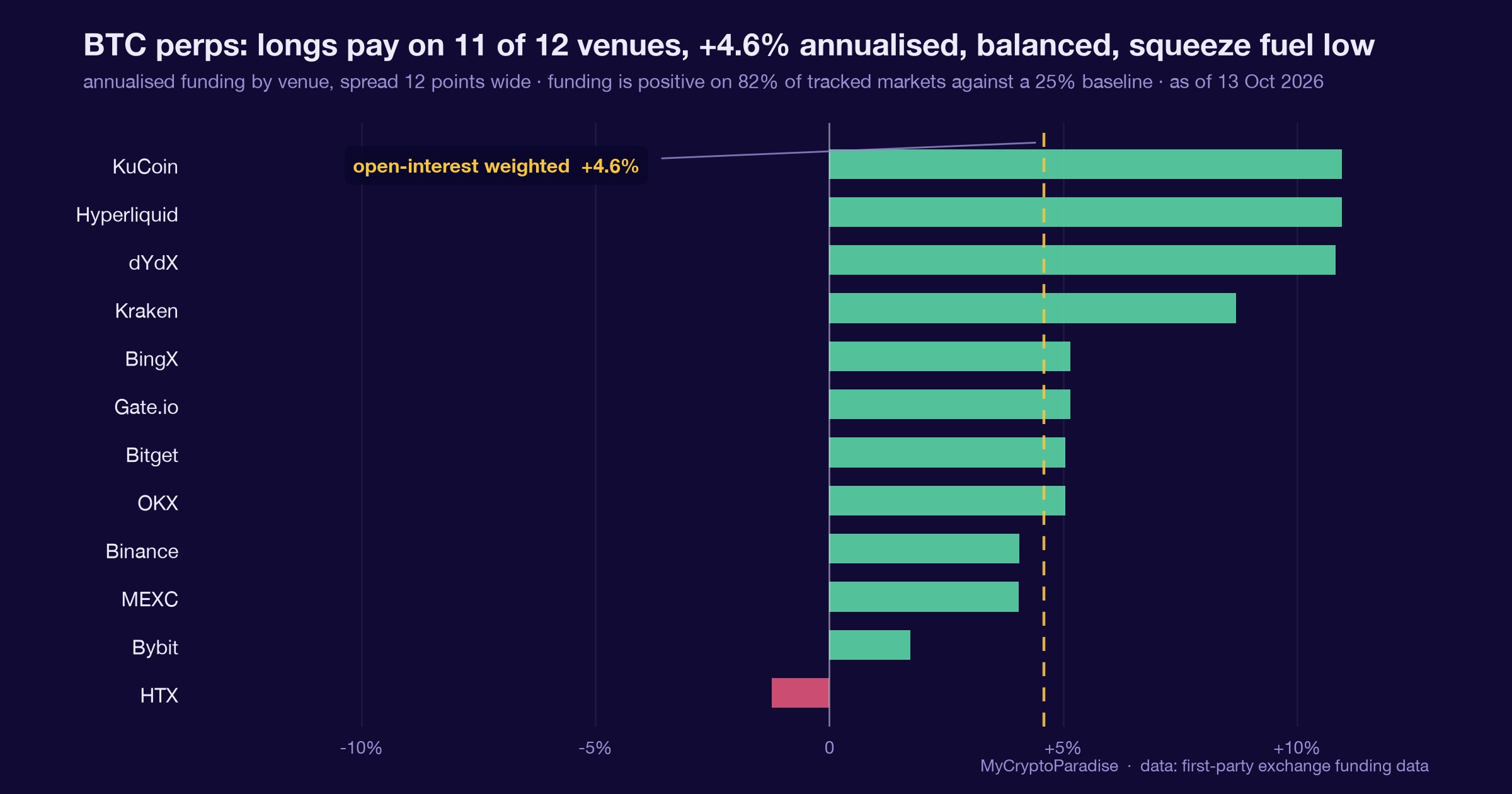
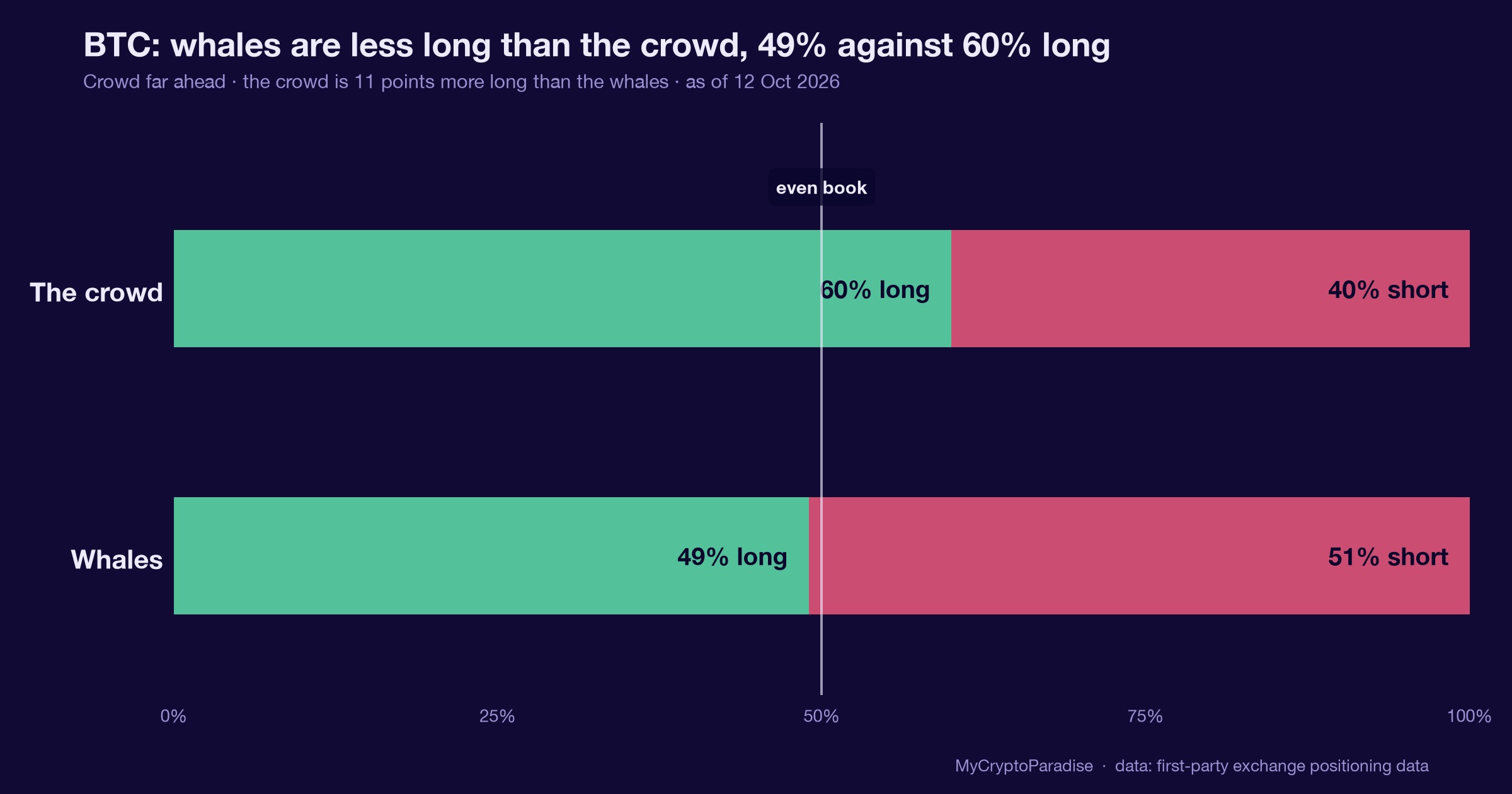
However, in the immediate term, the market's current structure suggests a different read. Smart money is actively distributing positions into what appears to be extreme retail greed, as evidenced by rising prices with significant underlying divergences.
Regulatory clarity, while inherently good, can be misinterpreted by retail as an immediate bullish catalyst. This often provides the necessary exit liquidity for larger players to offload their holdings without causing significant price dislocations. The market rarely moves on a single piece of news when the broader structural dynamics are pointing elsewhere.
How stablecoin proposals affect crypto liquidity
The direct impact on immediate crypto liquidity from these proposals appears minimal. Bitcoin (BTC) barely reacted, showing only a 0.26% increase over 24 hours, trading at $84,544. This lack of a strong directional move suggests the news is being absorbed by an already established market narrative.
For Ethereum (ETH) and altcoins, the effect was similarly subdued, with ETH posting a 0.9% gain over 24 hours, trading at $2690.11. There was no cascade of buying pressure, nor any significant sell-off triggered by the announcement. This reinforces the view that the market is in a distribution phase, where even seemingly positive news struggles to ignite sustained rallies.
Smart money typically leverages such announcements to offload positions into retail's buying enthusiasm. The absence of a major liquidity event, either to the upside or downside, implies that market participants are not viewing this as a primary catalyst for a shift in the current distribution cycle.
Instead, the proposals are likely seen as a gradual, long-term development. They do not alter the short-to-medium term liquidity dynamics driven by overleveraged retail positions and the ongoing smart money distribution.
Confirming the market’s next stablecoin move
To confirm the bearish bias, we would expect Bitcoin to continue showing weakness around key resistance levels. The minimal reaction to the Federal Reserve's stablecoin proposals reinforces the idea that positive news is being used for distribution rather than accumulation.
Further consolidation below the $88,000 resistance level would signal continued smart money distribution. A failure to reclaim this level, especially with any increased selling volume or negative funding rates, would confirm the expectation of a deeper correction.
Conversely, an invalidation of the bearish outlook would require a decisive break and hold above $88,000, ideally accompanied by strong spot volume and a significant reduction in open interest (OI) from over-leveraged long positions. This would suggest a genuine shift in market structure, absorbing the current distribution.
However, given the current macro context and smart money positioning, such a strong bullish reversal appears unlikely in the immediate aftermath of this stablecoin news. We continue to monitor for signs of retail capitulation, which typically precedes true accumulation opportunities.
What Fed proposals mean for smart money positioning
The ParadiseTeam maintains a bearish bias, viewing the Federal Reserve's stablecoin proposals through the lens of ongoing smart money distribution. Bitcoin's minimal price reaction at $84,544, barely moving +0.3% over 24 hours, underscores this perspective. This regulatory news, while positive in isolation, does not change the core market structure. Retail investors are likely to interpret it as bullish adoption, potentially increasing their long exposure. This provides opportune exit liquidity for smart money, which has been actively offloading positions.
Our key resistance level at $88,000 remains critical. The ParadiseTeam is watching for a clear rejection or continued consolidation below this point. This would confirm that even seemingly constructive news struggles to break through the current distribution phase.
Traders should continue to secure existing long positions, moving stop-losses (SL) to profit or breakeven, and consider taking profit where appropriate. Opening new aggressive long positions remains ill-advised given the significant divergences and the prevailing market sentiment of extreme retail greed.
We anticipate a significant correction and capitulation event, targeting the $44,000 to $55,000 zone, where smart money will likely re-accumulate aggressively. Until then, any positive news is merely another opportunity for distribution.
The read behind this: we framed this story through our own market analysis, Can Bitcoin Reach a New High at $169K?
Track it live: our live crypto funding rates and the Crypto Fear and Greed Index both update in real time, so you can watch this shift for yourself.
Related coverage
For exact entries, targets, and stop losses with full risk management, that is what ParadiseFamilyVIP is for. New to reading these moves? Start with our crypto trading strategies guide.
ParadiseTeam is monitoring the market situation closely, and we are taking these developments into consideration while building our trading tactics inside ParadiseFamilyVIP.
Crypto trading involves substantial risk. Prices are volatile and you can lose money. This article is educational and is not financial advice. Past performance does not guarantee future results.
Will Fed stablecoin clarity bring sustained upside for BTC?
This is how 36 Paradisers are calling it. Tap your call.
No calls on this one yet. Tap yours to be the first.
Free account, no password. Members just sign in.
Follow this topic: Stablecoin news












Join the discussion 6
So they want to get their hands dirty with the stablecoins... always happens when something starts to work. Will keep my stablecoin allocation to a minimum.
Right, so more rules coming down then 🤦♂️. Will this make stablecoins actually, you know, _stable_ for everyone or just the big players? 🤔💰
Finally! 🤩 Lower fees for my brother's transfers home would be amazing 🥳. Let's see if these rules actually help or just add more gates. 🤷🏽♀️💸
yes this stability would be very useful, especially for planning future transfers so you dont get caught out 📉
seems like they want to formalize whats backing them, i just watch the audit reports for the big ones anyway.
I'm considering what impact this could have on collateral requirements for market makers and the resulting basis.