


Listen: the breakdown
Developing story update (October 26, 2026, 12:05 UTC):
Update: the backdrop to this flush now has hard numbers. October ETF outflows have reached roughly $1.2 billion, and long liquidations across the month total around $170 million. That frames the single-hour $11.52 million long wipeout as part of a broader, sustained bleed in leveraged demand rather than a one-off shakeout.
At the same time, based on our sources, early signals of longer-term accumulation are beginning to appear beneath the institutional selling pressure. This does not cancel the distribution read, but it suggests some patient buyers may be positioning into weakness while overleveraged longs are cleared. Price has held near $2,329 with little net 24-hour movement.
What to watch now: Whether ETF outflows keep widening past $1.2B or stall, and if accumulation signals firm up near the $2,282 low.
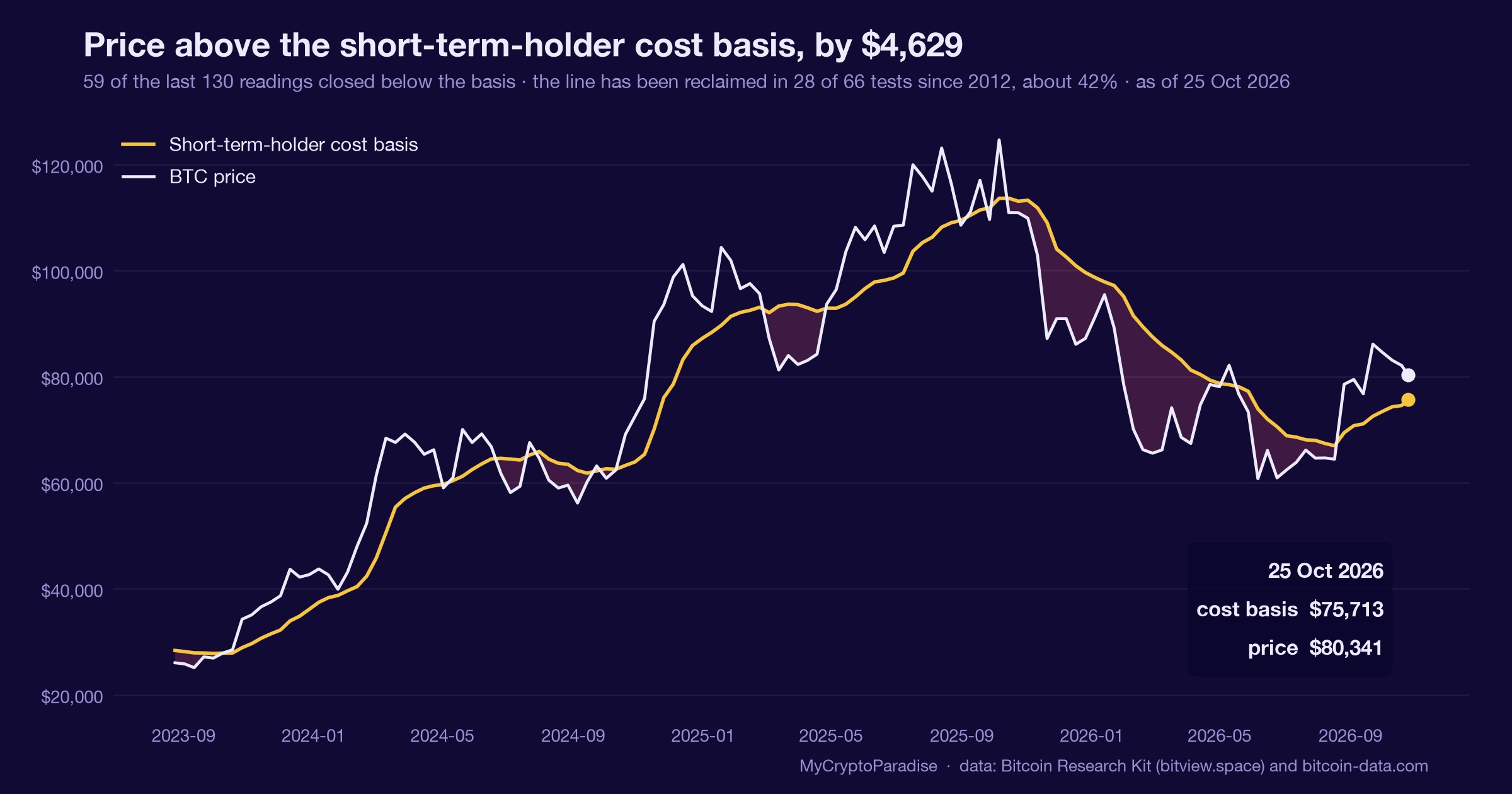
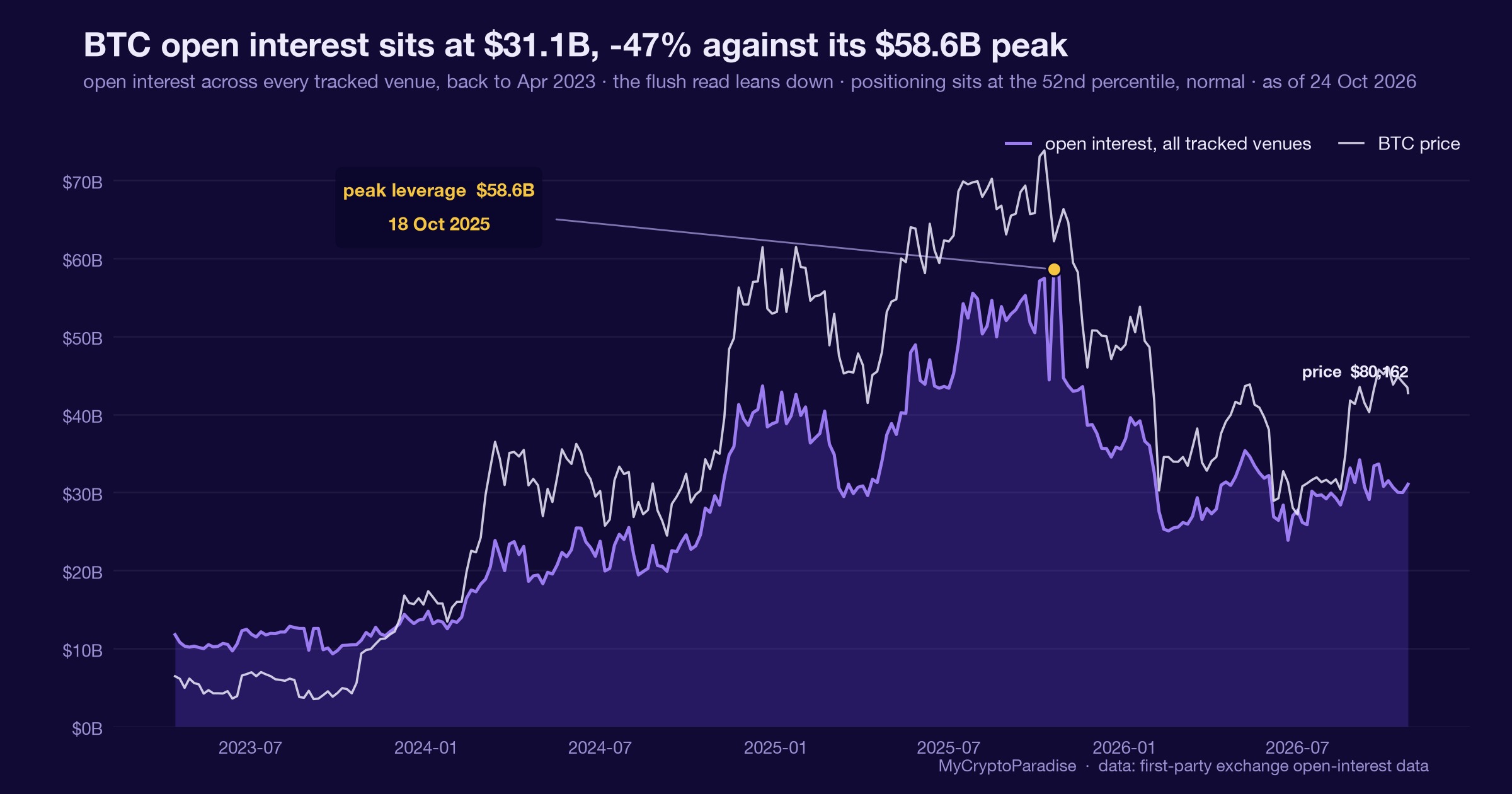
Market briefing: Ethereum longs are being flushed while short liquidations barely register, and with October ETF outflows near $1.2 billion the risk tilts lower; BTC traded near $80,429 as of 09:29 UTC.
- About $11.52M in ETH longs liquidated in one hour versus just $250K in shorts
- Roughly $117M in longs flushed across the market in 24 hours
- Below $2,245 the long liquidation pool swells to $561M
The Ethereum longs flushed story just killed the short squeeze dream, with October ETF outflows near $1.2 billion. So who really paid for the crowded bet?
The script flipped. For weeks the crowd leaned on one idea: trapped shorts above price would fuel an inevitable squeeze higher. The tape says otherwise.
Ethereum longs are the ones getting flushed. In a single hour ending 7:51 p.m. ET on October 25, about $11.52 million in ETH longs were liquidated across Binance, Bybit and OKX. Shorts lost just $250,000 in the same window. That is a ratio no squeeze thesis survives.
The move was almost quiet. ETH slipped only 1.12%, from $2,345 to $2,319, yet that gentle dip was enough to detonate the leverage stacked beneath it. Price then printed a low of $2,282 later that night at 11:00 p.m.
Zoom out and the damage widens. Roughly $117 million in long positions were liquidated across the market over 24 hours. This is not a one-crypto-exchange accident; it is a market-wide clear-out of the same optimistic bet.
We treat the single-day cause honestly: there is no one confirmed catalyst that pressed the button. What we can measure is the backdrop. October ETF outflows reached about $1.2 billion, a steady drain of spot demand that sits behind every bounce attempt.
So the structure matters more than any headline. Longs crowded in expecting fireworks. Instead they became the fuel. And with spot buyers stepping back, the cushion under price keeps thinning.
How ETF outflows amplified the long flush
The transmission runs through liquidity, not sentiment. When about $1.2 billion leaves spot Ethereum products in a month, the natural buyer of first resort goes quiet. That is the demand side thinning out while leveraged longs keep stacking on the other side.
Thin spot demand changes how price behaves. With fewer real buyers to absorb sell orders, each push lower travels further than it should. Market makers do not need a crisis to move price; they need only enough air beneath it, and ETF outflows helped create that air.
That is why a 1.12% drop could liquidate $11.52 million in longs. The percentage was small. The leverage behind it was not. Small moves do large damage when positioning is lopsided and the book is shallow.
The macro piece is our read, stated plainly: outflows do not force a crash, but they remove the shock absorber. Without steady spot bids, liquidation cascades feed themselves, because every forced sale becomes the next sale's trigger.
There is a quieter lesson here. A narrative can be popular and still be wrong, and the market has a dry habit of charging admission to find out which. The squeeze everyone waited for never arrived, because the fuel sat on the wrong side of the book the whole time.
Where $561 million in longs sits exposed
The near-term pressure point is specific. If ETH breaks below $2,245, the cumulative long liquidation intensity on mainstream centralized exchanges reaches about $561 million. That is a pool of forced selling waiting just under current price.
Contrast that with the upside. A move above $2,478 would unlock roughly $560 million in short liquidations. The two pools are almost mirror-sized, but price sits closer to the trapdoor than the trampoline, and ETH traded near $2,314 through the recent flush.
That asymmetry drives the whole chain. ETH weakness bleeds first into sentiment on the majors. When Ethereum longs get cleared this cleanly, risk appetite across the board thins, and BTC feels it even while holding near $80,429.
From BTC the pressure usually rolls down to alts last and hardest. Lower-liquidity tokens carry the same leverage habits with none of the depth, so a cascade that starts in ETH can hollow out the long tail fast.
The bear case has a destination. A break of the critical 200-day EMA risks a sharp move toward $2,000, with that $1.2 billion in outflows and $170 million in long liquidations weighing on every attempt to hold. None of that is a forecast. It is the map of where the stops sit, and stops are where price likes to go when liquidity is scarce.
The $2,245 trapdoor against a $2,478 reclaim
Two levels decide the next chapter. The clean invalidation of the bearish pressure is a reclaim above $2,478, because that is where the real short liquidation fuel, around $560 million, finally sits. Until price takes that, the squeeze thesis stays a story without a tape.
The confirmation of further downside is simpler. A decisive break below $2,245 opens the $561 million long liquidation pool, and that is the kind of air pocket that turns a slow bleed into a fast one.
Between those rails, watch the 200-day EMA. Losing it is the structural tell that bulls have run out of defenders, and it is the gate on the path toward $2,000.
Watch the short liquidation prints too. A real reversal shows itself when shorts start paying, not when longs stop dying. So far shorts have barely registered, $250,000 against millions in longs, which keeps the burden of proof on the bulls.
Finally, track whether ETF outflows ease. The $1.2 billion October drain is the slow weight under price. If that demand returns, dips get bought; if it does not, every bounce meets a seller. Shrinking liquidation size on the next flush would hint the forced selling is nearly done. Expanding size says the clear-out has further to run.
Smart money's edge in a one-sided flush
The ParadiseTeam reads this flush as retail paying for a crowded trade. The evidence is in the ratio: $11.52 million in longs wiped against $250,000 in shorts is not a squeeze building, it is overleveraged longs being harvested into thin liquidity. That pattern rhymes with what we see on BTC, which traded near $80,429 as of 09:29 UTC. Our standing lens flags longs being crowded while price refuses to follow, and sentiment merely tracking the tape. Low liquidity lets market makers press below levels and clear those longs with ease.
So we respect the bearish verdict here, but we stay honest about the two-way risk. A reclaim of $2,478 would release real short fuel, and that is precisely the trap on the other side of a one-sided book.
Our caution is structural. Until shorts start paying and spot demand steadies, strength into resistance reads as distribution, not breakout. The squeeze everyone wanted is exactly the setup smart money loves to fade.
For positioning, the message is discipline over conviction. We frame risk first: define where you are wrong before you define what you hope to earn. In a market clearing leverage this aggressively, the edge is not predicting the bounce. It is surviving the flush with enough capital to act when forced selling finally exhausts itself, somewhere near that $2,245 shelf or below.
The read behind this: we framed this story through our own market analysis, Bitcoin at Support: Can Bulls Fight Back?
Track it live: our live crypto funding rates and the crypto liquidation heatmap both update in real time, so you can watch this shift for yourself.
Related coverage
For exact entries, targets, and stop losses with full risk management, that is what ParadiseFamilyVIP is for. New to reading these moves? Start with our crypto trading strategies guide.
ParadiseTeam is monitoring the market situation closely, and we are taking these developments into consideration while building our trading tactics inside ParadiseFamilyVIP.
Crypto trading involves substantial risk. Prices are volatile and you can lose money. This article is educational and is not financial advice. Past performance does not guarantee future results.
Which happens first for ETH from here?
This is how 4 Paradisers are calling it. Tap your call.
No calls on this one yet. Tap yours to be the first.
Free account, no password. Members just sign in.
Follow this topic: Crypto liquidation news












Join the discussion 1
oh, reading about this reminds me of when I first started and was so tempted by leverage! i'm really trying to stick to spot only now, much less stress, przepraszam.