

In short
Crypto signals for swing trading are trade ideas built to be held for days or weeks, not minutes. They flag a coin, a rough entry zone, a target, and a stop. Used well, they save you screen time and add a second opinion to your own read. Used badly, they become tips you follow blind. The difference is risk management. A good signal tells you where you are wrong before it tells you where you might be right. Treat each one as a hypothesis you size, place a stop on, and check against your own analysis.
What is swing trading in crypto?
Swing trading in crypto means holding a position for several days to a few weeks to capture one clear price move, or swing. You are not scalping minutes, and you are not investing for years. You enter on a setup, ride the trend, and exit at a planned target or stop.
The style sits between two extremes. Day traders open and close inside a single session. Long-term holders ignore the chart for months. Swing traders work the middle ground, where a trend has room to develop but a stop still protects you.
That timeframe suits people with jobs. You plan a trade in the evening, set your orders, and let the market work while you sleep. For a broader primer, the Investopedia entry on swing trading covers the mechanics well.
- Hold time of several days to a few weeks.
- One clear trend or reversal as the trade thesis.
- A defined entry zone, target, and stop before you enter.
- Position size based on the distance to your stop.
What is different here
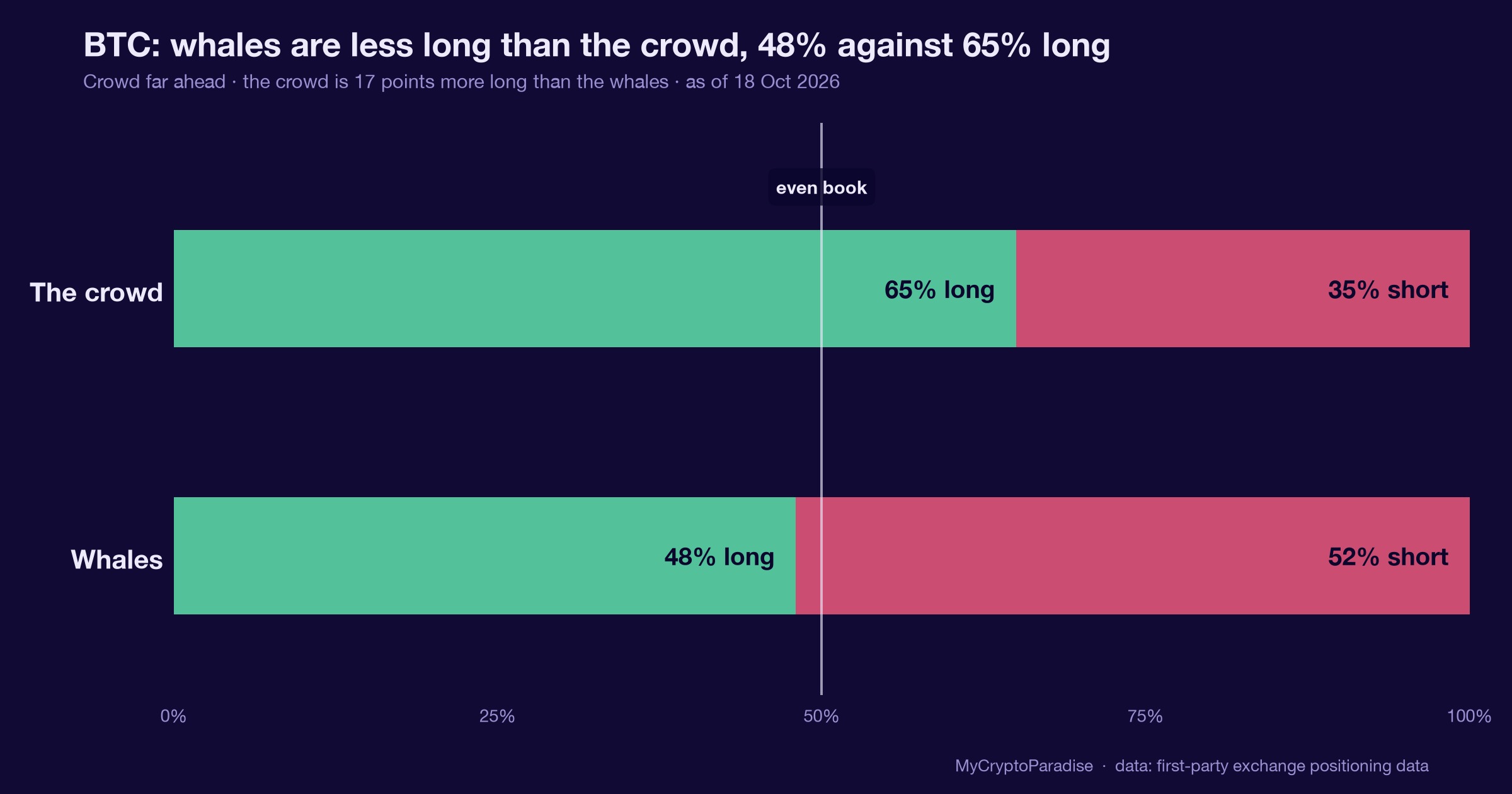
The ParadiseTeam reads live positioning across all major exchanges before building a swing setup. A signal then reflects where the crowd is leaning, not only where price has already been.
How can crypto signals support a swing trading strategy?
Crypto signals support swing trading by doing the slow scanning for you. A good signal narrows a huge market to a few coins with a real setup. It gives you a starting entry, a target, and a stop. You still decide the size and whether the idea fits your plan.
This matters most if you cannot watch charts all day. A well-run channel flags a setup, and you check it in a few minutes. Our guide to crypto signals for busy professionals covers that workflow in detail.
Signals also add a second opinion. When your read and the signal agree, conviction rises. When they clash, you have a reason to slow down and look again. Both outcomes are useful.
Key considerations for signal-based swing trading
Signal-based swing trading works only if the signal timeframe matches your plan. A scalp alert held for a week is not a swing trade. It is a mistake waiting for a stop. Read every alert for its intended horizon before you act.
| Factor | Swing signals | Day-trade signals |
|---|---|---|
| Typical hold | Days to weeks | Minutes to hours |
| Screen time | Low, checked daily | High, near constant |
| Stop distance | Wider, trend based | Tight, level based |
| Alerts per week | Few, selective | Many, fast |
You also place entries and exits yourself. A signal gives a zone, not a promised fill. Learning how to read crypto charts lets you refine an entry rather than chase a candle.
Why is risk management essential for medium-term holds?
Medium-term holds face overnight risk. Crypto trades every hour, so a coin can gap hard while you sleep on a weekend headline. Risk management caps that damage. You size each trade small, set a stop before you enter, and never let one bad swing dent the account.
The core rule is simple. Decide how much you can lose on a trade first, then work out size from your stop. Most disciplined traders risk a small fixed percentage per position. Our notes on disciplined risk management with signals lay out the maths.
Common errors repeat across cycles. Traders move a stop to dodge a loss. They add to a loser. They size up right after a win. We collected the worst offenders in this review of common risk management mistakes.
Position sizing is the professional edge, not prediction. A primer on risk management makes the same point across every market, and crypto is no exception.
How do you identify reliable signals for swing opportunities?
You judge a signal provider by transparency, not promises. Reliable services show real dated results, including losers, and always attach a stop to every call. They explain the thesis in plain terms. Anyone promising certain profit or hiding the losing trades is selling hope, not a tradable edge.
Some warning signs are consistent across the space.
- Promises of certain profit, or a claim that losing is impossible.
- No dated track record you can check.
- Calls with a target but no stop.
- Anonymous operators and pump-style hype.
Judge any service on how it treats risk first. We wrote about picking a signal service built around risk management for exactly this reason.
To see how a swing setup reads across entry, target, and stop, try the explorer below.
Combining signals with your own analysis
A signal should start your work, not end it. Before you take any swing call, run a quick check of your own. Look at the trend, the nearest support and resistance, and the wider market mood. If your read agrees, the trade earns its place.
This habit protects you from following blind. It also builds skill. Over months you learn which setups suit you and which to skip. A signal you understand is one you can hold through noise, because you know why you are in it.
Remember that every setup is a probability read, not a forecast. Some good trades still lose. The aim is a process where your winners outweigh your losers across many swings, not certainty on any single trade.
Frequently asked questions
Are crypto signals more effective for swing trading or day trading?
Signals often suit swing trading better for most people. Swing calls need fewer, higher-quality setups and far less screen time. Day-trade signals fire fast and demand instant execution. If you have a job and cannot watch charts all day, swing signals fit your schedule and your risk tolerance more comfortably.
How many crypto swing signals should I follow at once?
Keep it small, usually two to four open swing trades. Each position needs a stop and a share of your risk budget. Too many at once means you cannot track them or size them properly. Fewer, well-chosen swings almost always beat a crowded, unmanaged watchlist.
Do I still need to analyse charts if I use signals?
Yes, always. A signal is a starting point, not a finished decision. You confirm the trend, mark support and resistance, and check the wider market before you act. This habit filters weak setups and builds skill. Over time you learn which signals fit your style and which to skip.
What stop-loss should a swing signal use?
A swing stop sits beyond a meaningful level, such as below a recent support or a key moving average. It should give the trade room to breathe across days. Then you size the position so that hitting the stop costs only a small, fixed share of your account.
Crypto trading involves substantial risk and is not suitable for everyone. Nothing here is financial advice; it is education only. Never risk more than you can afford to lose.





Join the discussion
No comments yet. Members, share how you are reading this.