

Listen: the breakdown
Market briefing: New analysis puts Bitcoin losses from a Coldcard firmware flaw near $70 million, up from earlier estimates. BTC trades near $63,009, down 3 percent, still balanced on Simon's $62,500 line.
- Coldcard vulnerability losses now estimated near $70 million, about 1,083 BTC drained.
- Nearly 1,196 addresses hit in a tight 41 minute window on July 30.
- The flaw sits in wallet firmware seed randomness, not in the Bitcoin network itself.
The Coldcard vulnerability tally just grew from roughly $38 million to about $70 million. So is this a reason to panic, or a story the market already knew?
The number attached to the Coldcard vulnerability just got bigger. Fresh analysis now puts the total Bitcoin losses near $70 million, up from the roughly $38 million figure we covered earlier today. The mechanism has not changed, only the scale of what has been mapped.
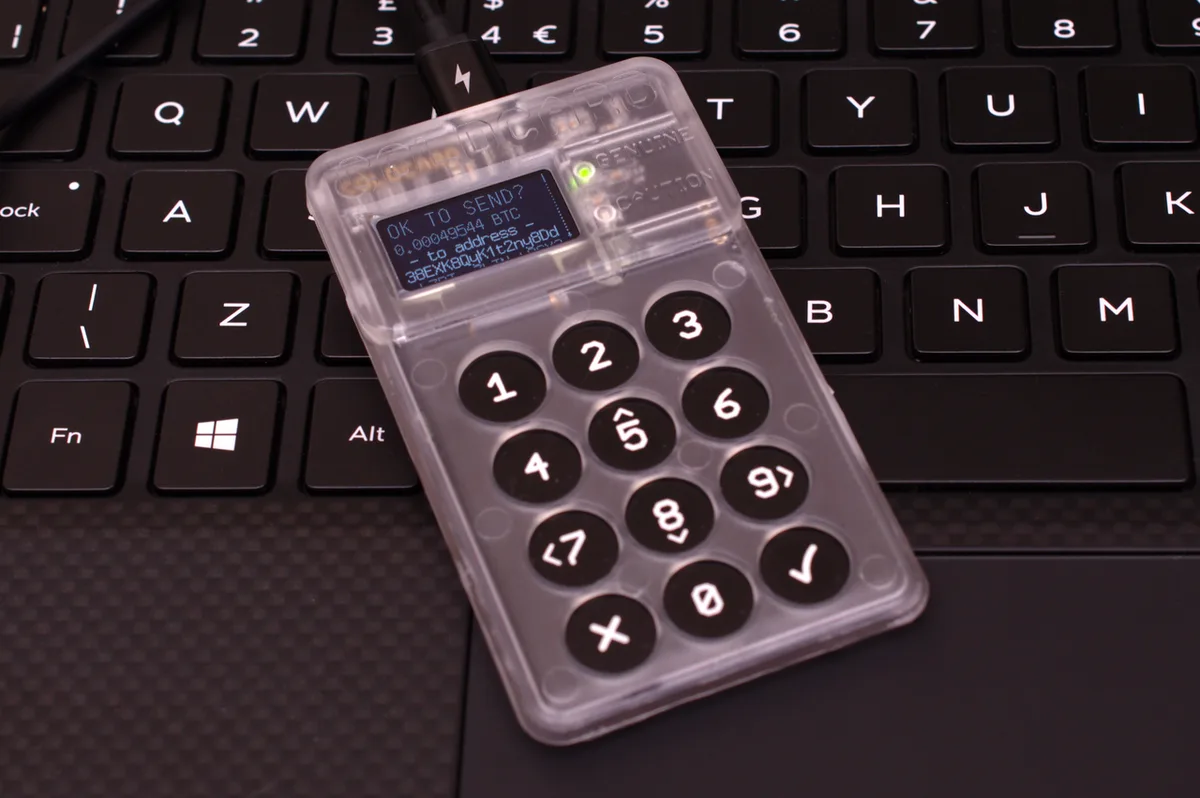
Around 1,083 BTC was drained from nearly 1,196 addresses. The activity was fast and concentrated. It ran between 01:10:20 and 01:51:26 UTC on July 30, a window of about 41 minutes. Whoever moved these coins knew exactly what they were doing.
The root cause is not a break in Bitcoin. It is a firmware bug affecting the randomness of seed generation. In plain terms, some wallets produced private keys that were more guessable than they should have been. Weak randomness is the quiet killer of self-custody, because the coins can look perfectly safe right up until they leave.
That distinction matters for how you read this. The Bitcoin protocol did nothing wrong. A hardware wallet's key generation did. For affected users the outcome is identical, but for the market the difference is everything.
BTC was trading near $63,009 as of the latest read, down about 3 percent on the day. That is a normal daily move, not a crisis print. The market has seen the headline, absorbed the earlier version of it, and so far declined to treat $70 million as systemic. It rarely does, until it suddenly decides to.
Why a firmware flaw is not a Bitcoin flaw
The transmission mechanism here is confidence, not liquidity. Roughly 1,083 BTC leaving compromised wallets is a tiny fraction of daily volume. It does not drain the market. What it can drain is trust in self-custody, and trust is the real fuel of this cycle.
Self-custody is Bitcoin's core promise. When a hardware wallet, the very tool people buy to stay safe, becomes the point of failure, the fear spreads wider than the actual loss. Holders start asking whether their own setup is exposed. Some move coins to exchanges. Some just sit on edge.
That is the honest read, and we will flag it as our interpretation rather than confirmed fact. The $70 million did not move price. The story around it can, by nudging sentiment at a moment when the tape is already fragile.
Context keeps this in proportion. Against Bitcoin's total market value, $70 million is a rounding error. Against a single nervous holder's peace of mind, it is everything. Both things are true at once, and headlines tend to amplify the second while ignoring the first.
So the macro effect is muted but real. This is a security event, not a supply shock or a regulatory shift. It changes the emotional weather more than the structural picture. And emotional weather is exactly what smart money watches, because fear is what hands them cheap coins.
How a small drain meets a fragile tape
Start with the size, because size decides everything here. About 1,083 BTC is not enough selling pressure to bend the market on its own. If price is soft today, the Coldcard vulnerability is a contributor to mood, not the mechanical cause.
BTC leads, as always. It slipped roughly 3 percent to near $63,009, which puts it uncomfortably close to the $62,500 level we treat as the line for the current bullish structure. That proximity is what makes a minor story feel heavier than its dollar figure.
Ethereum and the majors tend to mirror BTC's mood on days like this. When the driver is fear rather than flows, ETH usually just tracks Bitcoin's beta, no better and no worse. There is no Coldcard specific reason for it to decouple.
Alts sit at the far end of the whip. If BTC probes support and holds, alts stabilise with it. If BTC loses $62,500 and momentum turns, the smaller names bleed faster, because thin liquidity always punishes the last coins bought.
The part worth watching is where stops sit. Plenty of late longs likely placed protective orders just under $62,500, a level everyone can see. A clean sweep of that zone would trigger those stops. That is precisely the kind of liquidity a patient buyer waits for, and precisely the trap an impatient seller walks into.
The levels that turn fear into a signal
The first thing to watch is not the exploit. It is the $62,500 line. Coldcard is the noise. That level is the signal, because it decides whether this dip is routine or the start of something larger.
Confirmation of resilience looks simple. BTC holds above $62,500, absorbs the fear, and buyers step in around the $61,000 to $59,000 zone. If the drop stalls there and reverses with genuine volume, the security scare gets filed as a wobble, not a turn.
Invalidation is just as clear. A decisive break and hold below $62,500 changes the near-term read. It would suggest the bullish structure is failing, and at that point the Coldcard headline becomes the convenient story the crowd blames for a move that was already loading.
Volume is the tiebreaker. We want to see whether any bounce carries real spot buying behind it, or whether it is thin and hollow. Higher highs in price should come with higher highs in volume. Without that, a recovery is suspect.
One honest caveat. This is a single security event, not a trend. It is entirely possible it fades from the tape within a day, exactly as the earlier $38 million version largely did. Do not let a dramatic headline overwrite what the levels are actually telling you.
What this exploit means at the invalidation line
The ParadiseTeam reads this through position, not panic. The Coldcard vulnerability does not change Bitcoin's structure. What matters is that BTC near $63,009 is sitting right on the $62,500 invalidation, and a fearful headline landing exactly there is worth respecting.
Our working map still points higher first. The bias is a final push toward $79,000 before a larger reversal, with reaccumulation clustered around $61,000. A security scare that pushes retail to sell into the $61,000 to $59,000 support zone fits that map neatly. It is the kind of fear that hands coins to patient buyers.
So who benefits. If nervous holders dump near support while the structure holds, that is retail funding an accumulation, not a collapse. The exploit becomes the excuse for a shakeout, not the cause of a trend change.
We stay risk-first, because the same $62,500 line cuts both ways. Above it, we treat dips into $61,000 as the market working as expected. A firm break below it, and the last bullish leg is in question regardless of any headline.
The signal we want is volume confirming a hold, not a headline confirming a fear. Bearish divergences on momentum are already flashing caution. This is a moment to watch the reaction at support, not to chase the story.
Track it live: our Crypto Fear and Greed Index and the live crypto funding rates both update in real time, so you can watch this shift for yourself.
Related coverage
For exact entries, targets, and stop losses with full risk management, that is what ParadiseFamilyVIP is for. New to reading these moves? Start with our crypto trading strategies guide.
ParadiseTeam is monitoring the market situation closely, and we are taking these developments into consideration while building our trading tactics inside ParadiseFamilyVIP.
Crypto trading involves substantial risk. Prices are volatile and you can lose money. This article is educational and is not financial advice. Past performance does not guarantee future results.
With the Coldcard losses near $70M, where does BTC go from here?
This is how the Paradisers are calling it. Tap your call.
No calls on this one yet. Tap yours to be the first.
Free account, no password. Members just sign in.








Join the discussion
No comments yet. Members, share how you are reading this.