

Listen: the breakdown
Market briefing: A Coldcard exploit drained roughly 594 BTC, about $38 million, from around 500 wallets in a 25 minute window. Bitcoin shrugged it off, trading near $62,951 as the self-custody debate flares again.
- About 594 BTC, roughly $38 million, was stolen from around 500 Coldcard wallets.
- The theft ran from 01:31 to 01:56 UTC Friday, tied to a key generation flaw.
- BTC held near $62,951 with no material price impact from the Coldcard exploit.
A Coldcard exploit just drained roughly $38 million from around 500 wallets, yet Bitcoin barely flinched. So is this a real crack in self-custody, or noise before the next leg?
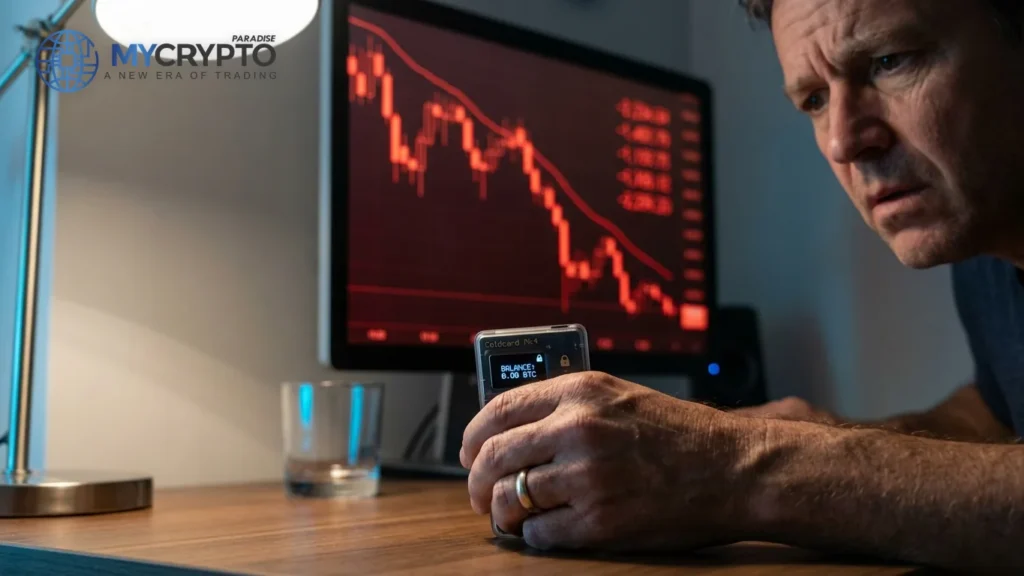
A hardware wallet is supposed to be the safe part. This week, for around 500 Coldcard users, it was the failure point.
Approximately 594 Bitcoin, worth about $38 million, left those wallets between 01:31 and 01:56 UTC on Friday. The whole event lasted 15 to 25 minutes. That speed matters, because it points to a systemic flaw, not 500 separate mistakes.
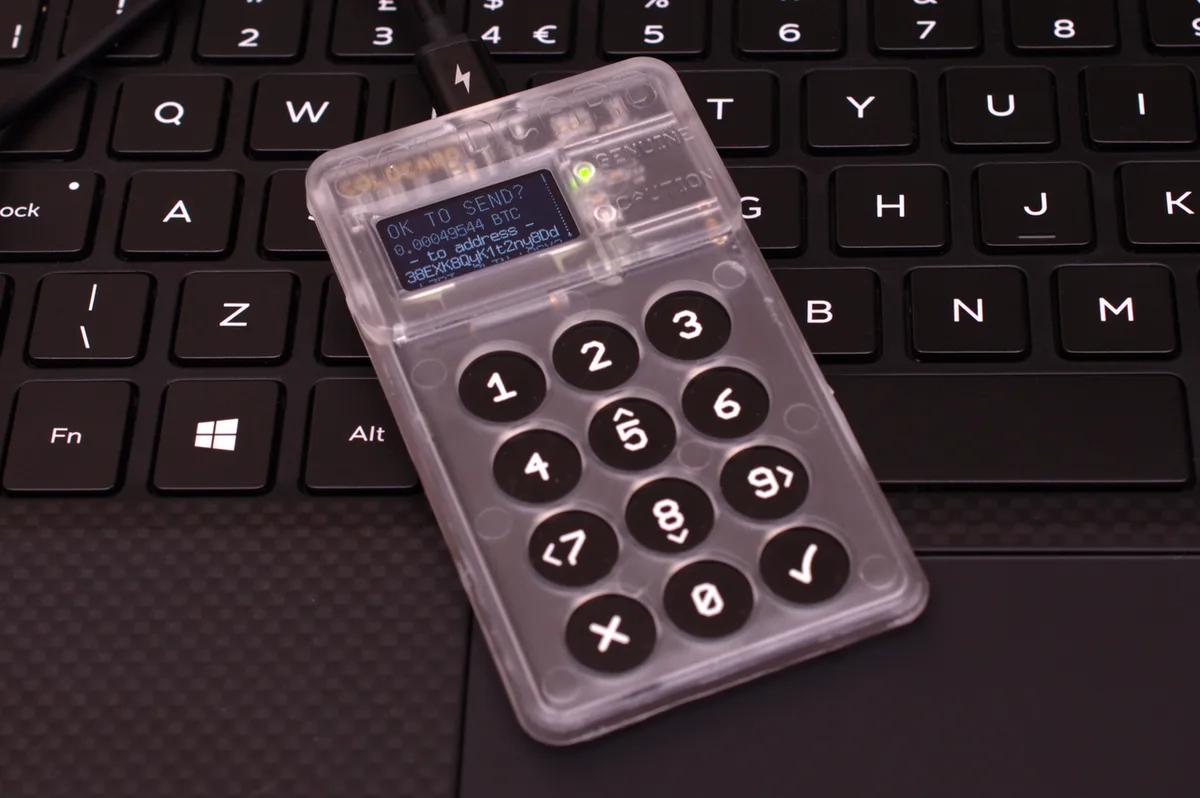
The cause traces back to how affected Coldcard devices generated their keys. If the private keys were predictable, an attacker did not need to phish anyone or break into a house. They needed the math. Once you can reproduce the keys, the wallet stops being a vault and becomes a lockbox with the combination printed on the side.
Coldcard is now urging users to move their Bitcoin to freshly generated wallets. That is the right advice and also a quietly alarming one, because it asks holders to distrust the exact tool they bought to be trustworthy.
The price reaction told its own story. Bitcoin sat near $62,951, down about 3.1% on the day, but that move belongs to the broader tape, not to this theft. The market treated the Coldcard exploit as an isolated device problem, not a Bitcoin problem.
Still, the narrative damage is real. Every self-custody failure hands ammunition to the argument that ordinary holders are safer inside regulated custodians and spot Bitcoin ETFs. The coins were never the weak link here. The hardware was.
Why a wallet flaw feeds the ETF case
The Coldcard exploit matters less for what it did to price and more for what it does to trust. Self-custody rests on one promise: hold your own keys and no third party can lose your coins. A key generation flaw attacks that promise at the root, because the user did everything right and still lost everything.
That reframes the custody debate in real time. For years the industry sold self-custody as the mature endpoint, the graduation from leaving coins on an exchange. Now a premium device has shown that the endpoint has its own single points of failure.
Here is the transmission mechanism into markets. When retail confidence in holding their own keys erodes, the natural destination is a regulated custodian or a spot Bitcoin ETF. Those products remove the seed phrase, the firmware update, and the 2 a.m. panic. They also remove the coins from direct on-chain circulation and park them inside institutional structures.
Over time, that shifts liquidity. Coins move from millions of independent wallets into a smaller set of professional custodians. Supply on exchanges and in self-custody thins, while the institutional layer thickens.
That is a slow, structural drift, not a same-day catalyst. But it aligns neatly with the institutionalization trend already underway. Every headline that makes self-custody feel fragile nudges the marginal retail holder toward the regulated wrapper, and the Coldcard exploit is a loud one.
How the market absorbed the theft
Bitcoin's response was the most revealing part. Near $62,951 and down about 3.1% on the day, BTC showed no isolated reaction to a $38 million theft. The tape is being driven by structure, not by this headline.
That is normal for a device-level exploit. The stolen coins are a transfer of ownership, not new selling pressure hitting the whole market. Unless the attacker dumps 594 BTC at market, and there is no sign of a forced liquidation cascade, the direct price effect stays minimal.
Ethereum tracked the same broad move, sitting near $1,865 and down about 3.3%. ETH has no Coldcard exposure of its own, so its softness reflects the general risk tone, not contagion from this specific flaw.
Alts, as usual, amplify whatever BTC and ETH do. With no fresh liquidity event and no panic, they drifted rather than cracked. A wallet exploit does not rotate capital the way an exchange insolvency would, because customer balances elsewhere are untouched.
The more interesting impact is on flows, not candles. If even a fraction of nervous holders migrate toward ETFs and custodians, that demand shows up as steady institutional bids over weeks, not a single green spike. It is the kind of pressure that supports price quietly rather than announcing itself. For now the market has read the Coldcard exploit as noise, and priced it accordingly.
Signals that turn this from noise to trend
The first thing to watch is on-chain, not on the chart. Track whether the stolen 594 BTC moves toward exchanges. Coins sitting idle mean the attacker is waiting; coins hitting exchange wallets would flag potential selling and a short term supply bump.
Second, watch the custody migration signal. If regulated custodians and spot Bitcoin ETF inflows tick up in the coming weeks, that is the real second-order effect of this exploit playing out. That flow would confirm the thesis that self-custody fear pushes retail into wrapped products.
Third, watch how contained the flaw stays. Confirmation that this is limited to a specific batch of Coldcard devices keeps it an isolated incident. Any evidence that the same key generation weakness reaches other hardware would escalate it from a brand problem to a category problem, and that would genuinely dent sentiment.
On price, the invalidation is simple and mechanical. Bitcoin near $62,951 is holding just above the $62,500 line that defines the current bullish structure. That level is doing the heavy lifting, not the news.
A clean loss of $62,500 would matter far more to traders than the theft itself, opening the door toward the $61,000 to $59,000 zone. A firm hold, with volume, keeps the path toward higher targets intact. In short, let the tape confirm or deny. The Coldcard exploit is a story about trust; the trendline is still the story about price.
What the exploit means for liquidity and positioning
The ParadiseTeam reads this as a sentiment event, not a price event, and the distinction is the whole trade thesis. Bitcoin near $62,951 is sitting right on top of the $62,500 structural line. The theft did not move that line. Positioning did.
Here is the mechanism. Smart money has been reaccumulating around $61,000 and would love more cheap coins from frightened holders. A headline that shakes faith in self-custody is exactly the kind of narrative that pressures retail conviction over time.
But this is a slow burn, not a capitulation trigger. The ParadiseTeam does not see this exploit as the panic-selling flush expected far lower, nearer the $44,000 macro bottom. It is a brick in that wall, not the wall.
For now the read stays constructive while $62,500 holds. Above it, the path toward $69,000 and eventually $79,000 remains the base case, and that is the zone where accumulated Bitcoin gets redistributed into strength.
The risk is honest. A daily close under $62,500 invalidates this bullish structure and shifts focus to the $61,000 to $59,000 buying zone. A bearish MACD (moving average convergence divergence) signal already warns that momentum is tiring, so this is not a moment for oversized risk.
The cleaner long-term takeaway is the flow. If self-custody fear routes retail into ETFs, that is a steady institutional bid the ParadiseTeam expects to support dips, not chase tops.
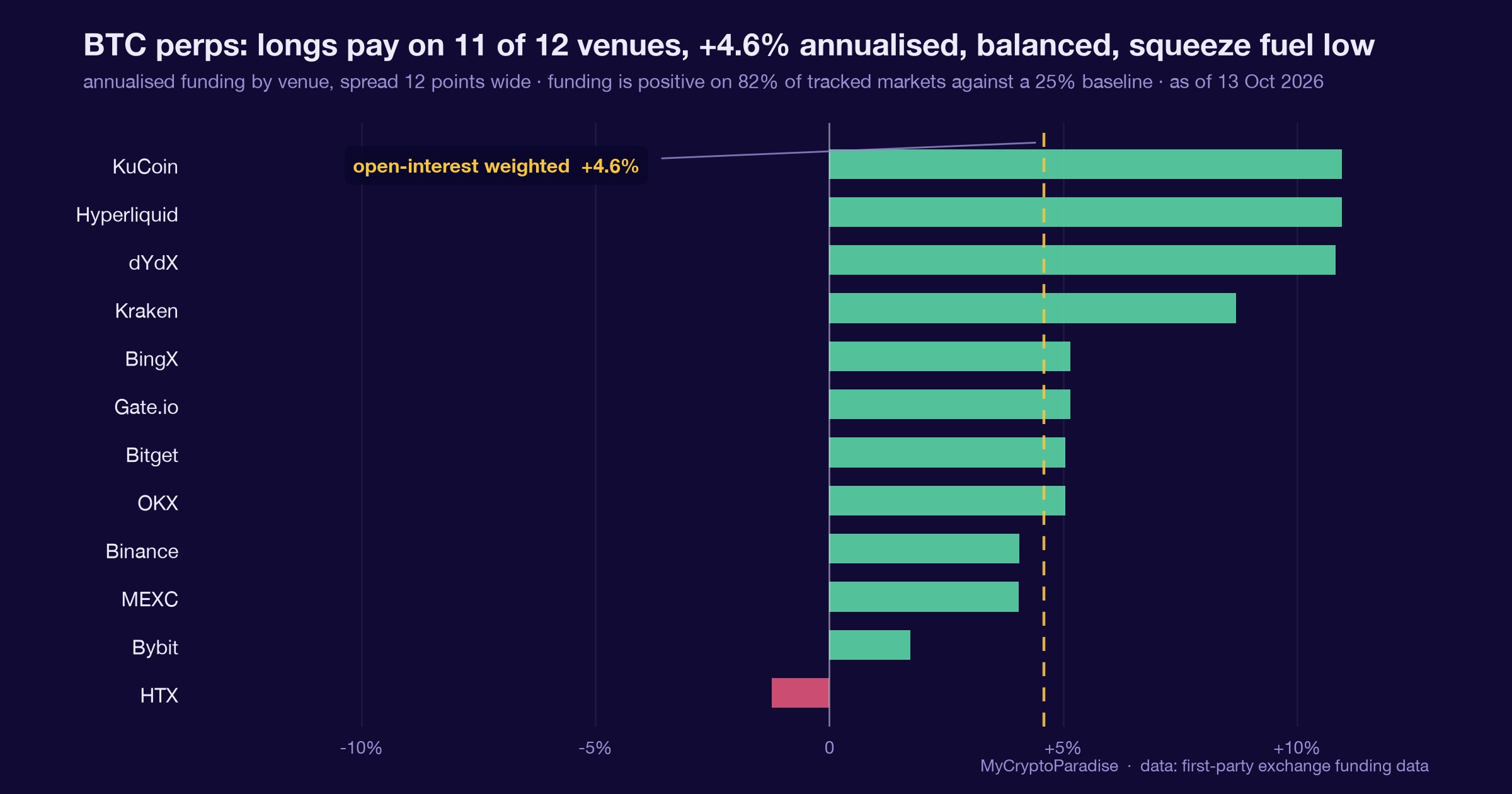
Track it live: our Crypto Fear and Greed Index and the live crypto funding rates both update in real time, so you can watch this shift for yourself.
Related coverage
For exact entries, targets, and stop losses with full risk management, that is what ParadiseFamilyVIP is for. New to reading these moves? Start with our crypto trading strategies guide.
ParadiseTeam is monitoring the market situation closely, and we are taking these developments into consideration while building our trading tactics inside ParadiseFamilyVIP.
Crypto trading involves substantial risk. Prices are volatile and you can lose money. This article is educational and is not financial advice. Past performance does not guarantee future results.
After the Coldcard exploit, where does retail Bitcoin trust go next?
This is how the Paradisers are calling it. Tap your call.
No calls on this one yet. Tap yours to be the first.
Free account, no password. Members just sign in.











Join the discussion
No comments yet. Members, share how you are reading this.