



In short: Read every candlestick pattern inside its context: trend, key levels, and volume. A single shape never predicts the next move on its own. Define confirmation and invalidation before you enter, because any pattern can fail.
Here is the core rule: read every candlestick pattern inside its context before you act. Trend, key levels, and volume decide whether a shape matters. A candle name alone predicts nothing.
This candlestick patterns cheat sheet gathers the most common single, two, and three-candle formations for quick reference. MyCryptoParadise is a professional crypto signals and trading-education service, operating since 2016, and this lesson sits in the technical tools track at MCP University FREE.
How to use this cheat sheet: context first
Start with the market, not the candle name. Identify the current trend, mark nearby support and resistance, and note whether price approaches a meaningful level or drifts through a noisy range.
Then read the pattern in context. A bullish shape at support after a pullback can raise the probability of a reaction. The same shape beneath strong resistance may have less room to develop.
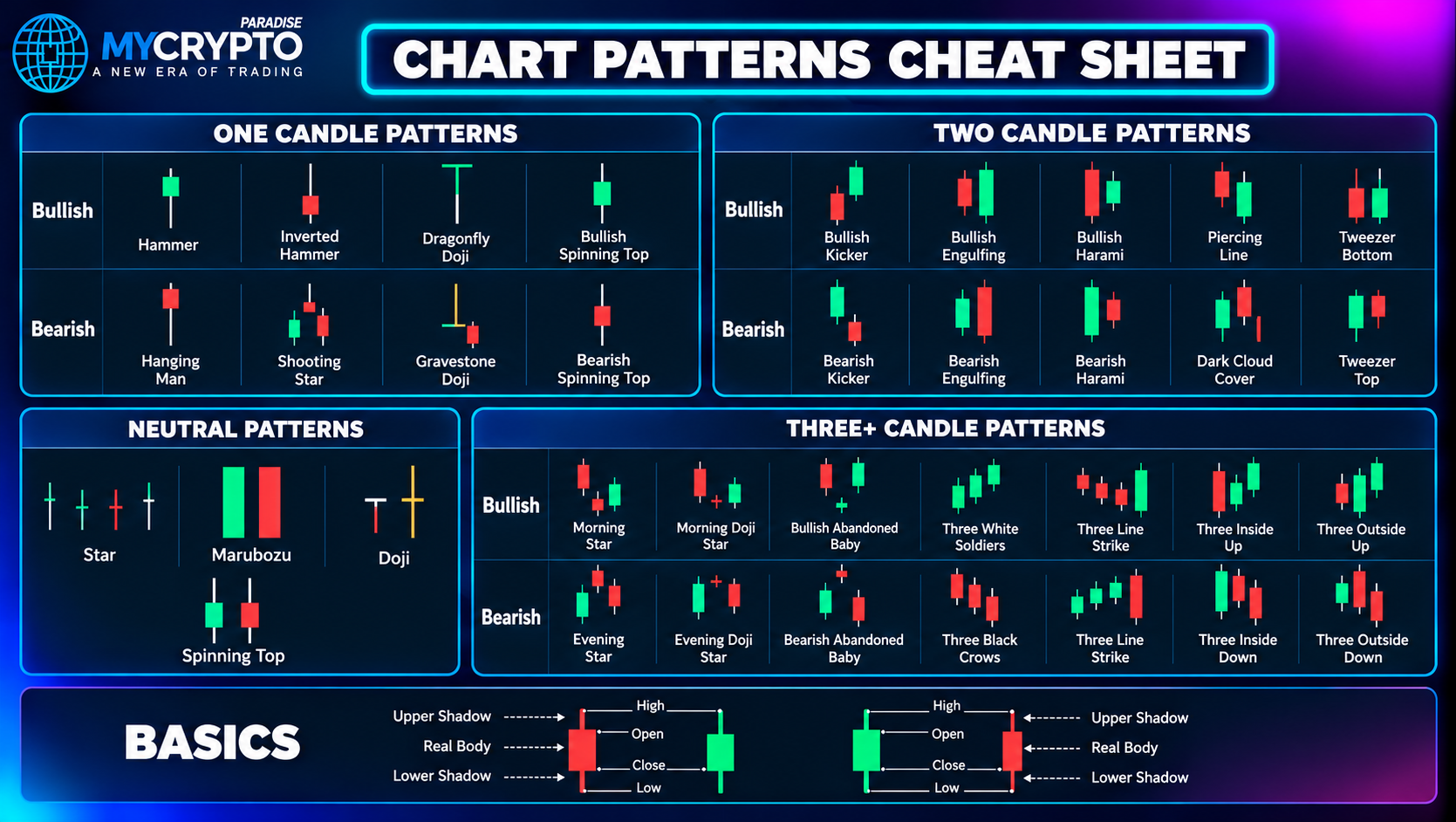
Use volume as supporting evidence, not a verdict. Compare the candle’s range and close with recent action. You can also gauge crowd mood with the crypto fear and greed index before judging any signal.
Single-candle patterns
Hammer
A Hammer has a small body near the top of its range and a long lower wick. After a decline, it can show sellers pushing lower while buyers recover part of the move before the close.
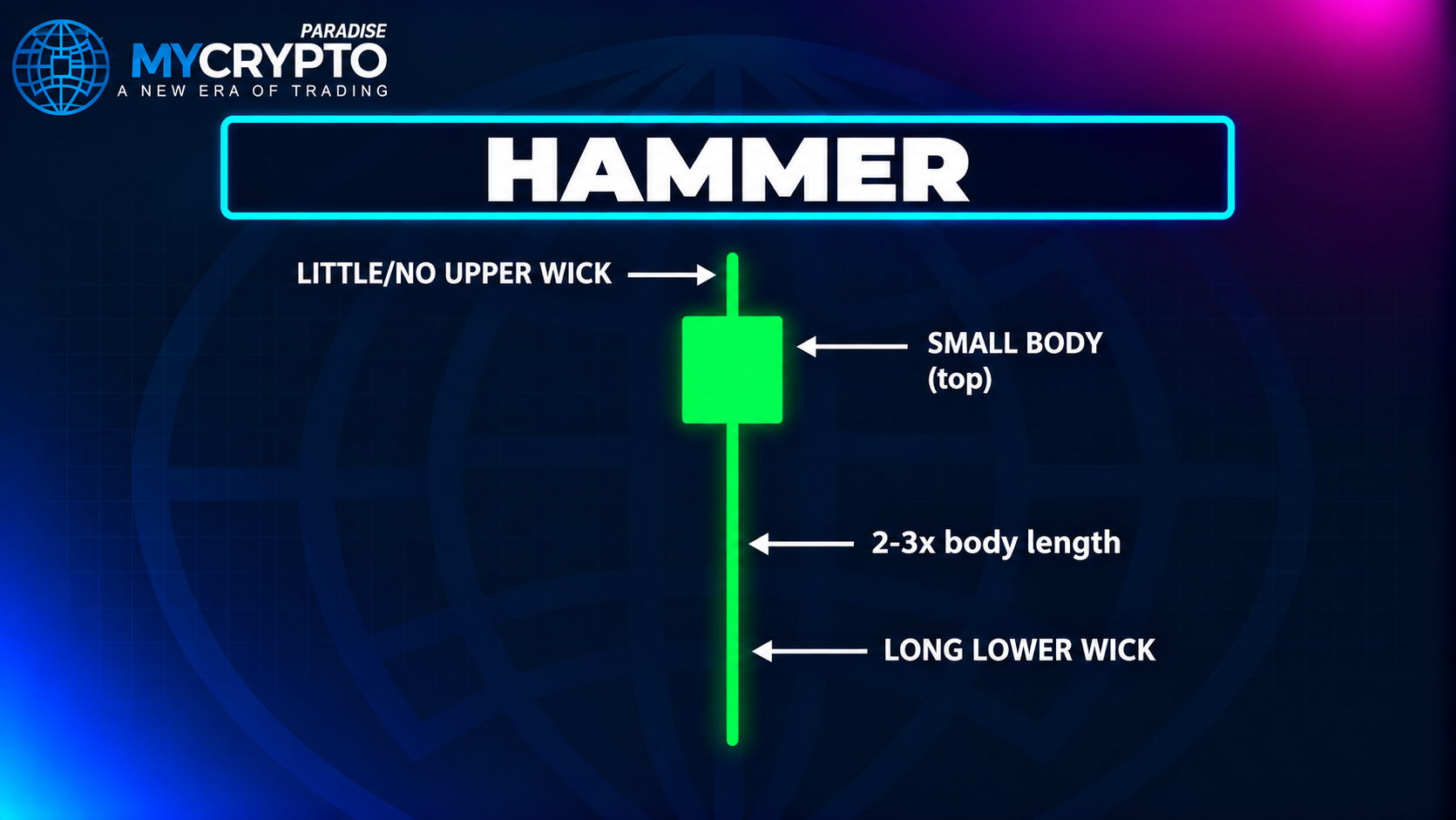
Look for a meaningful support area and follow-through, such as a later close above the Hammer high. A similar shape after an advance may be a Hanging Man, which needs bearish confirmation.
Shooting Star
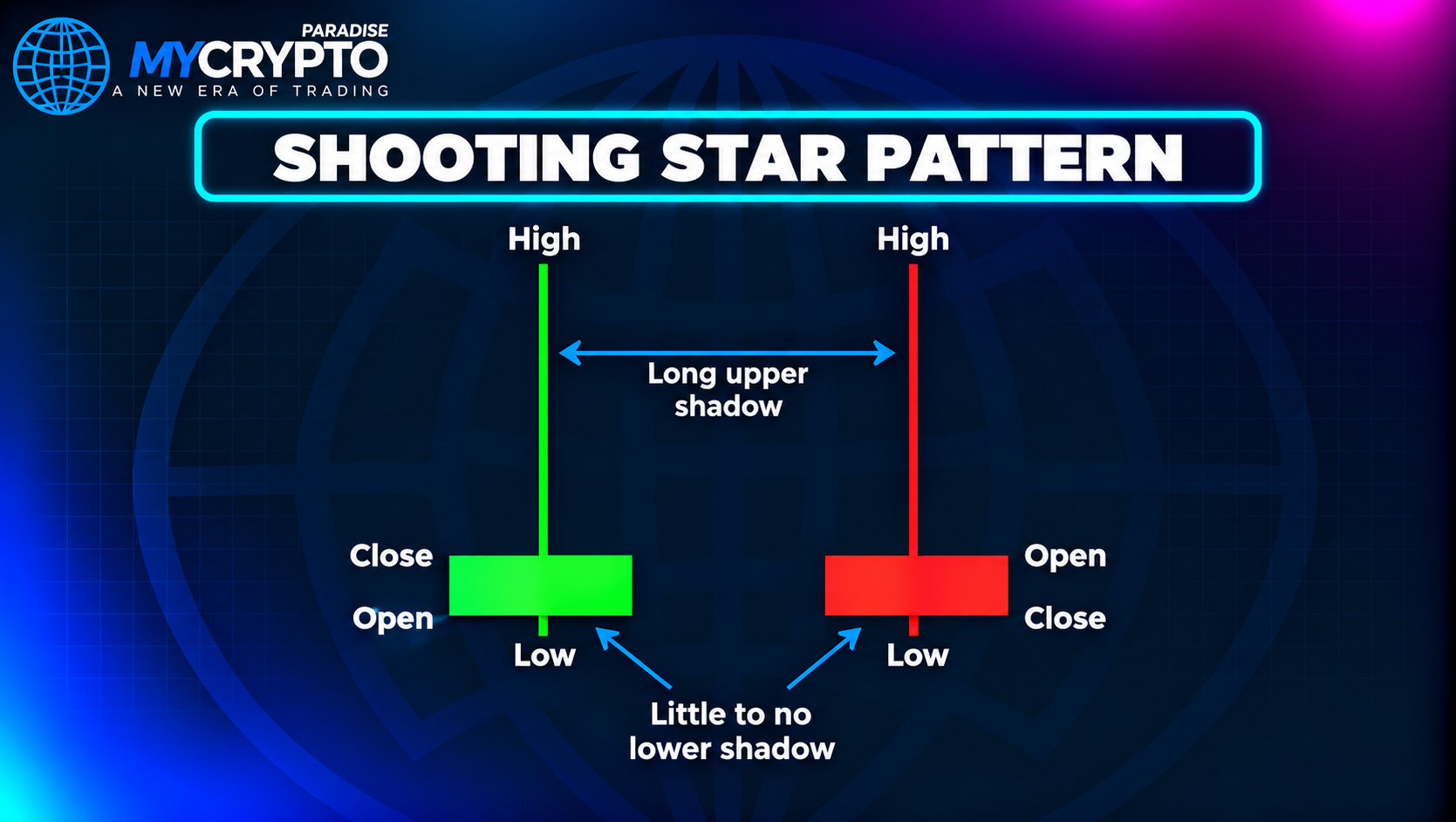
A Shooting Star has a small body near the lower part of its range and a long upper wick. After an advance, it can signal rejection of higher prices, especially near resistance or after a failed breakout.
Doji
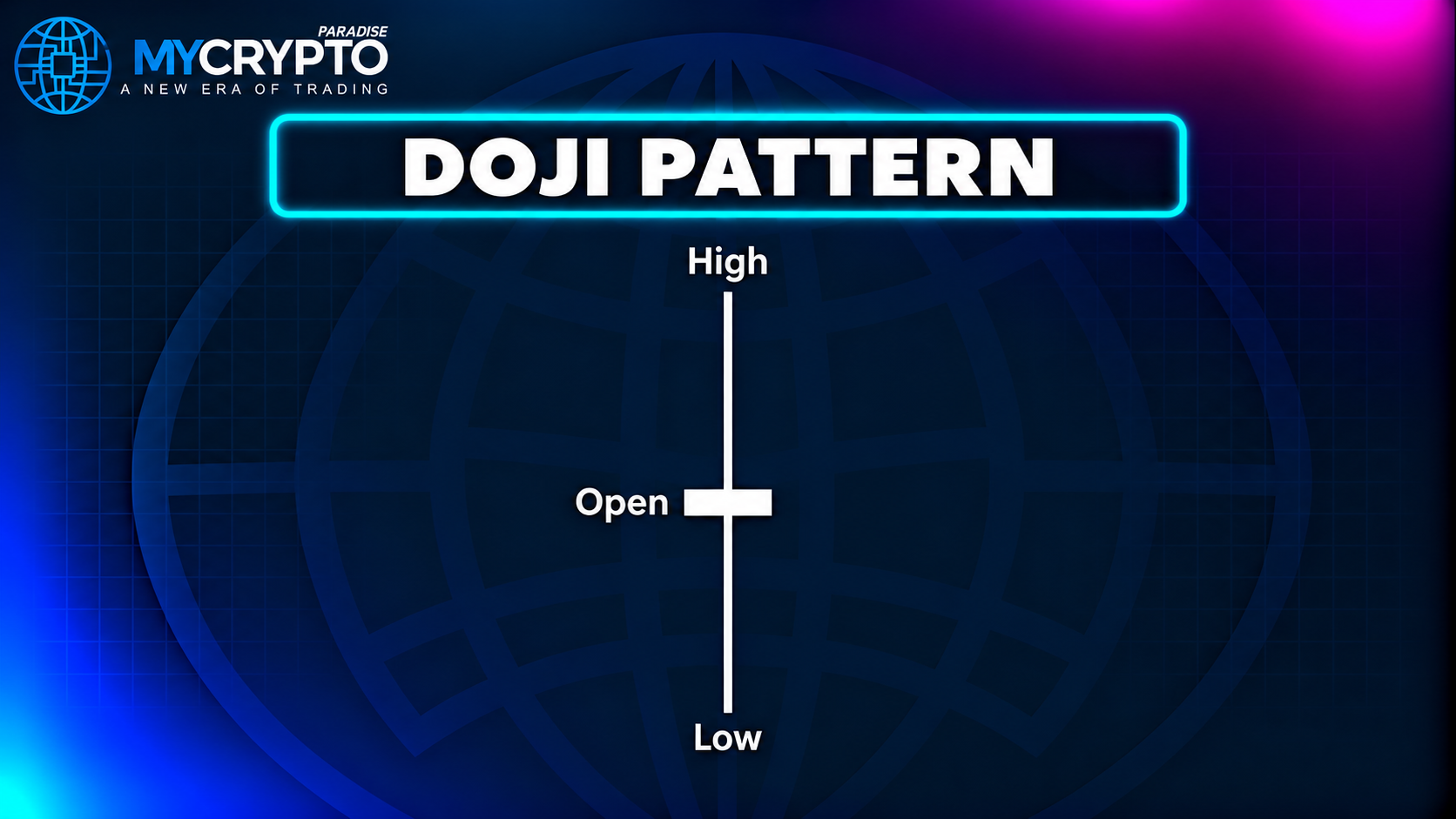
A Doji forms when the open and close sit very close together. It reflects indecision, not an automatic reversal. Its meaning depends on the prior move, the location, and what price does next.
Marubozu and other clues
A Marubozu has a large body with little or no wick, showing strong pressure throughout the candle. At key levels it may mark a breakout, but chasing one after an extended move offers poor risk-to-reward.
- Spinning Top: a small body with wicks on both sides, signalling indecision.
- Long-wick rejection: a long wick near a key level suggests price was rejected there.
Two-candle patterns
Bullish Engulfing
A bullish real body covers the prior bearish body here. It can show buyers overcoming the selling pressure of the previous candle. Support, a pullback, or a failed breakdown makes the setup more relevant.
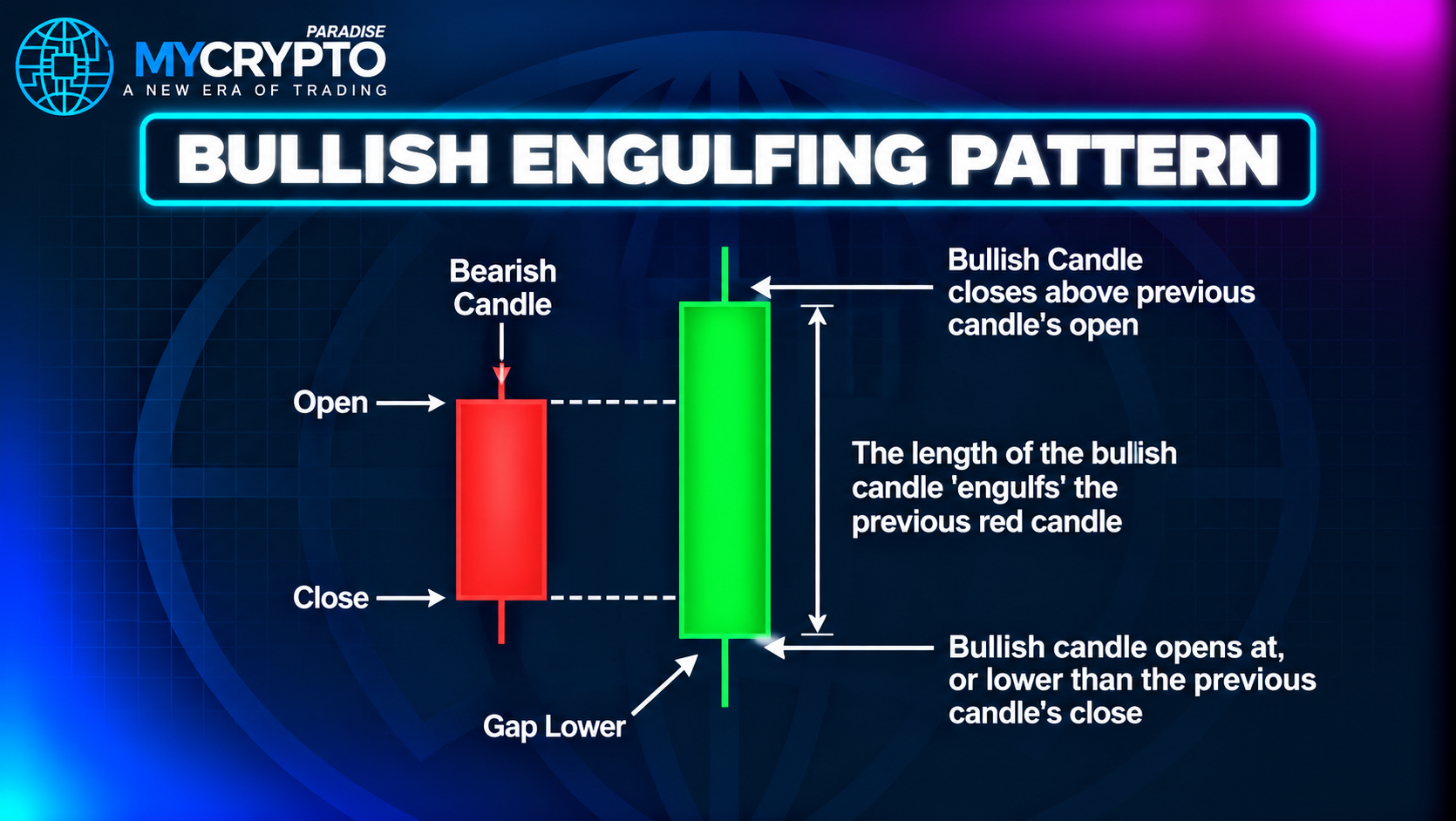
Our dedicated guide to the bullish engulfing reversal signal breaks the context down further.
Bearish Engulfing
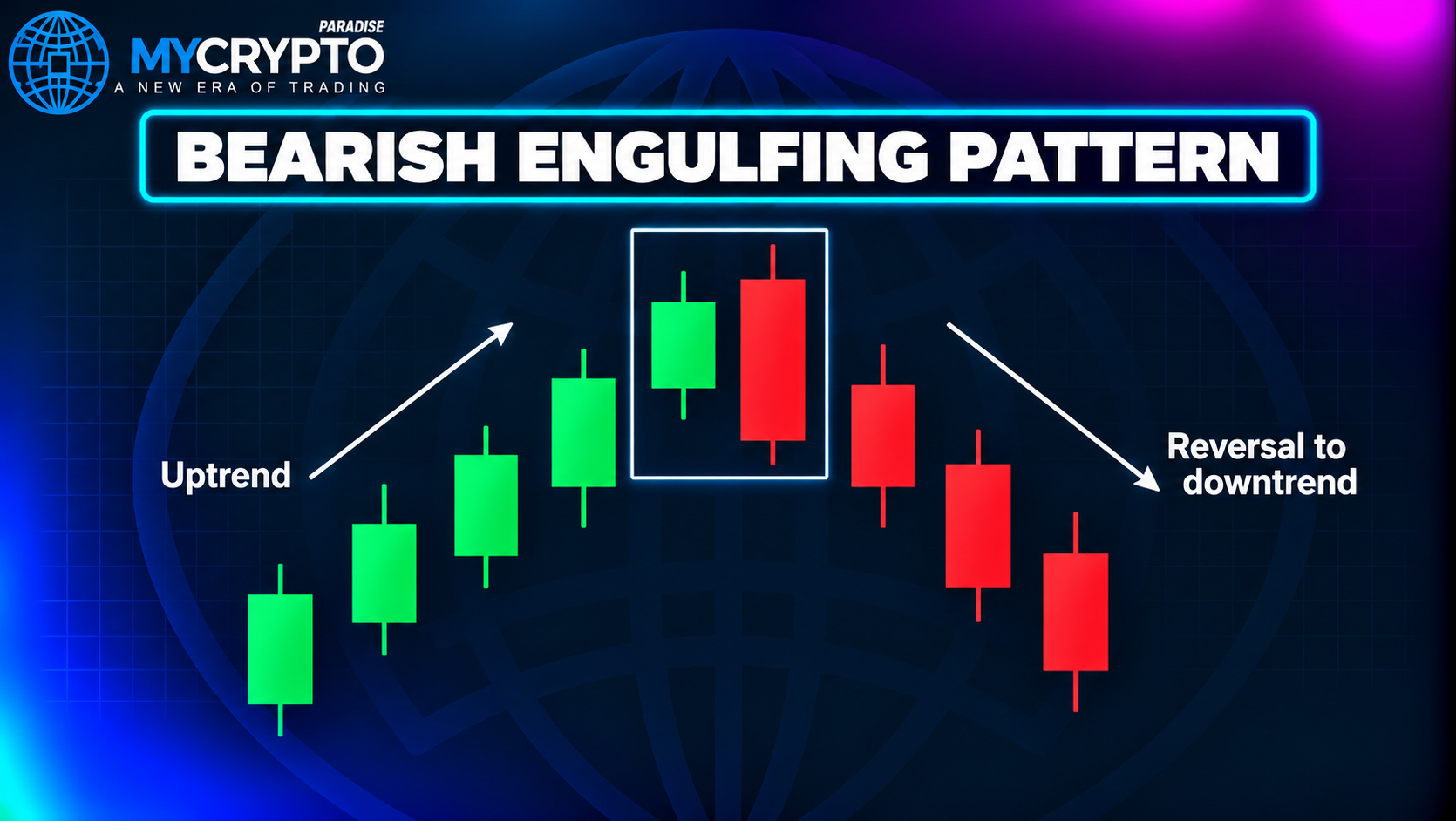
A bearish real body covers the prior bullish body. Near resistance or after an extended advance, it can indicate that sellers have taken control of the short-term move.
Piercing Line and Dark Cloud Cover
The Piercing Line is bullish: the second candle closes above the midpoint of the prior bearish body. Dark Cloud Cover is its bearish counterpart, closing below the midpoint of the prior bullish body.
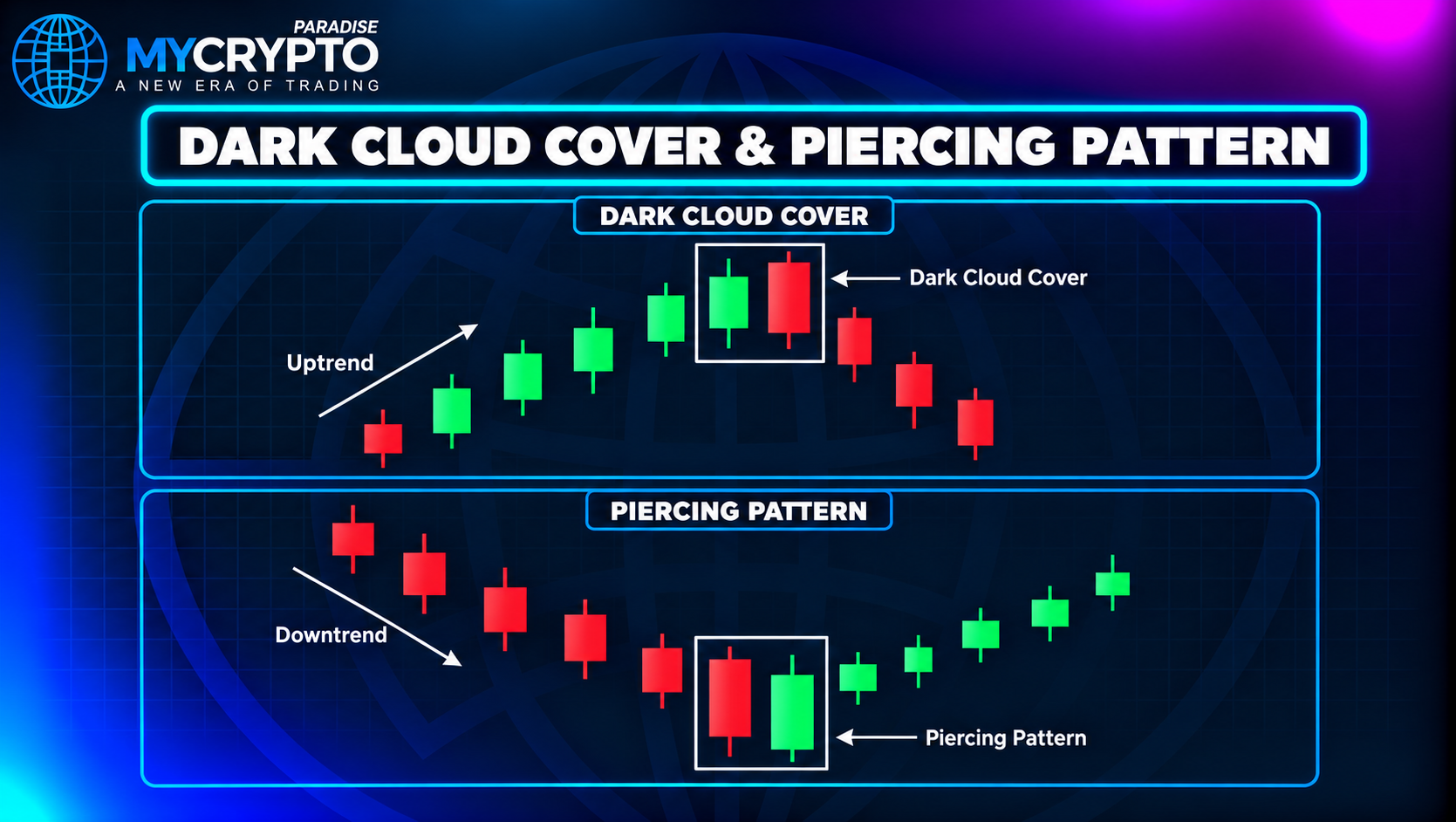
Both describe a meaningful shift of control, not a guaranteed reversal. For the bullish case, study the piercing line reversal signal in depth.
Harami, Tweezers, and Counterattacks
A Harami sits inside the prior larger body and can mark slowing momentum. Tweezer tops show twin highs that fail, while tweezer bottoms show twin lows that hold. Counterattack candles close near the previous close.
Each of these needs confirmation from structure or follow-through. The close alone does not establish a new trend.
Three-candle patterns
A Morning Star follows a decline: a strong bearish candle, a small hesitation candle, then a bullish candle closing well into the first body. An Evening Star reverses that sequence after an advance.
Three White Soldiers and Three Black Crows show sustained directional pressure across three candles. After an extended move, though, they may arrive late. Rising and Falling Three Methods describe continuation through a brief consolidation.
Why crypto candles behave differently
Crypto markets trade around the clock, unlike stock markets with a daily opening auction. Classic patterns that depend on a large session gap can look different here. A candle may open at the prior close and still form a valid relationship.
Binance Academy offers a solid primer on candlestick basics if you want the foundations. Focus on the open, close, and body relationship, plus the price response that follows.
When comparing charts, use the same exchange and timeframe. Daily candles can close at different times across platforms, which changes a pattern’s shape. Pair this reading with a crypto liquidation heatmap for added context.
Common mistakes
- Naming a pattern before checking trend, level, and volume.
- Entering before the candle closes, when the body can still change.
- Treating a single shape as proof instead of probability.
- Chasing a Marubozu or three-candle run late in an extended move.
- Mixing candles from different data feeds when judging a precise formation.
Confirmation rules for every pattern
First, wait for the candle to close when the definition depends on its final body or wick. Then check the trend, nearby support or resistance, and whether price confirms through follow-through or a structure shift.
Second, define invalidation before entry. Position size should follow the planned loss, allowing for fees and slippage. A stop order may not fill at the exact price in a fast market.
Third, treat volume and other signals as context, not proof. Confluence helps most when your observations are genuinely independent.
Practice this
- Open a daily chart and mark trend plus the nearest support and resistance.
- Find one pattern from this sheet and name its likely context.
- Write the confirmation you would need and the exact invalidation level.
- Size a hypothetical position from that stop, including fees.
- Review later whether follow-through matched your plan.
Candlestick patterns describe price behaviour, not certain outcomes. This article is education, not financial advice, and every pattern can fail. Always define invalidation and position size before trading.
FAQs
What is a candlestick patterns cheat sheet?
It is a quick reference that summarises common candle shapes, their typical interpretations, and the context traders check before acting. It organises patterns, not predictions.
Which candlestick patterns should crypto traders learn first?
Start with Hammer, Hanging Man, Shooting Star, Doji, Bullish and Bearish Engulfing, Morning Star, and Evening Star. Add continuation patterns as you learn market structure.
Do candlestick patterns work in crypto without gaps?
Yes. Many patterns rely on candle bodies, wicks, and follow-through rather than gaps. Crypto trades 24/7, so some traditional gap-based definitions need contextual interpretation.
Is a Bullish Engulfing pattern a buy signal?
Not by itself. It can raise the probability of a bullish reaction in the right context. Confirmation, invalidation, and risk sizing still matter.
Are candlestick patterns financial advice?
No. This content is for education, not financial advice. Crypto trading involves substantial risk, and every pattern can fail. Always define invalidation first.
Risk disclaimer: Crypto trading involves substantial risk of loss. This class is education only, not financial advice. Never trade with money you cannot afford to lose. Past results do not guarantee future results.









Join the discussion
No comments yet. Members, share how you are reading this.